
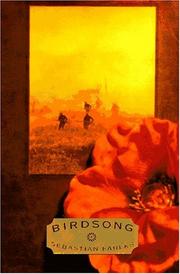
Birdsong
2,041-word summary 9 min read 407 pages in the book
- First published
- 1993
- Publisher
- Hutchinson
- Pages
- 407
- ISBN
- 9780091773731
Reading options
What's inside (8 sections)
Amiens, 1910
The novel has a seven-part structure that alternates between France during the First World War and England in the 1970s. It follows two people: a British soldier named Stephen Wraysford and his granddaughter, Elizabeth Benson. The first section is set in 1910, before the war, and it is a love story.
Stephen is twenty and arrives in Amiens to learn the textile trade from a factory owner named René Azaire. He lives in the Azaire household with René, his much younger wife Isabelle and her children. Stephen observes comfortable French middle-class life alongside industrial unrest. René is humiliated by his inability to father a child and beats Isabelle in a jealous rage. Isabelle's donations to the families of striking workers fuel rumors of an affair.
Stephen and Isabelle, who is nine years older, begin a passionate relationship. She confronts her husband, he evicts Stephen, and the two flee south together. In the south Isabelle becomes pregnant with the child who will be Stephen's daughter, Françoise. Then she loses faith in the escape. She runs back to her sister Jeanne, and her father brokers a deal with René for her return, supposedly to maintain her honor. She never contacts Stephen again, though the novel makes clear that she regrets it for the rest of her life.
The affair is written with a physical directness that makes the later separation bearable. Stephen and Isabelle are not soulmates in any mystical sense. They are two people who notice each other in a household where attention is scarce, and the relationship grows out of that scarcity. Isabelle is bored and lonely in her marriage. Stephen is young and far from home. Faulks gives them humor as well as desire, which is why the ending of the section hurts.
René is not a cartoon villain. He is a man whose pride has been wounded by his wife's inability to give him a child, and his violence comes out of that wound. That does not excuse him, and the book does not try. It simply refuses to make him monstrous in a way that would distance him from the ordinary life of the household. The factory and the home are the same place in this section, and the pressures of one bleed into the other.
That first section is the book's most complete story. It has a beginning, a middle and a devastating end, and it gives the war sections their emotional weight. When Stephen refuses leave and writes letters to a woman who never receives them, the reader understands exactly what he is carrying. Faulks never has to explain the obsession.
The tunnels
In 1916 Stephen is a lieutenant in the British Army. The narrative covers the first day on the Somme in July and the Battle of Messines near Ypres in 1917. Stephen is a cold, distant officer who refuses all leave. His only respite is his friendship with Captain Michael Weir.
Interleaved with his story is that of Jack Firebrace, a former miner serving as a "sewer rat" with the Royal Engineers' tunnelling companies. Firebrace listens for the enemy through the earth and plants mines beneath German trenches. The underground sections are the most physically vivid in the book, and they are the reason it is often read as an early work of PTSD fiction. Men live in darkness, listen to the enemy digging, and wait for a charge to go off. Stephen is badly injured in an expedition across No-Man's Land and writes to Isabelle confessing that he has only ever loved her and fearing that he will die.
Firebrace is the book's great creation. He is a miner by trade, a man who understands the earth in a way the officers do not, and his expertise becomes the only thing that matters underground. He listens to the German tunnels through the wall of a dugout and can tell what they are doing. That skill is described with the same respect Faulks gives to Stephen's military knowledge. The novel's regard for practical competence is one of its quiet themes.
The underground chapters also have a specific horror that the surface battles do not. Men can be buried alive, suffocate or be blown up by their own charges. Faulks writes these scenes with short sentences and very little metaphor, which makes them more frightening. He does not ask the reader to admire anyone. He asks the reader to understand what the place was like.
Faulks writes the horror without ornament. A body is a body, and the book is unsparing about what happens to bodies in a war of attrition. What makes it bearable is the precision of the attention. Firebrace's knowledge of mining is as exact as Stephen's knowledge of a battlefield, and the two men's friendship develops in the few scenes where they are not trying to survive.
Weir's death by a German sniper is one of the book's great shocks because the novel has given him so little space. He is Stephen's only human connection at the front, and he is gone in a paragraph. After that, Stephen's refusal to go home becomes a form of punishment.
Elizabeth's search
In 1978, Elizabeth Benson is struggling with a married boyfriend named Robert. She unearths Stephen's encoded wartime journals and tries to decipher them. A colleague's husband, Bob, offers to help translate the code. She interviews veterans named Gray and Brennan who knew Stephen, visits war memorials and learns about the Marne, Verdun and the Somme.
These chapters were less well received than the war sections, and it is easy to see why. Elizabeth's life with Robert is not as compelling as Stephen's with Isabelle, and the modern plot sometimes feels like a device to get the reader back to the past. But the metahistorical idea is strong. Elizabeth is trying to recover a life that was deliberately silenced, and she can only do it through fragments: an encoded diary, a veteran's memory, a name on a memorial. Faulks is writing about the way the past survives in pieces, and about how much effort it takes to assemble them.
Bob's help with the code is a small but important piece of the structure. Elizabeth cannot read the journals alone, which means the past requires another person to be recovered. That pattern repeats with Gray and Brennan and with Françoise. Every piece of Stephen's life comes to Elizabeth through someone else, which is the novel's account of how history is actually known. There is no single authoritative record. There are only people willing to tell you what they remember.
She becomes pregnant with Robert's child, which gives her a reason to think about what she will pass on. The pregnancy is the 1970s plot's best idea. A woman carrying a child is trying to understand a grandfather she never knew, and the two projects mirror each other.
The trapped men
In 1917, on leave in Amiens, Stephen encounters Jeanne and persuades her to arrange a meeting with Isabelle. He finds her face scarred and disfigured by a shell injury. She is living with a German soldier named Max. The scene is a terrible reversal of the early romance, and Faulks does not let Stephen turn it into a lesson. He sees what he sees and goes back to England. In Norfolk he tells Jeanne he dreads returning to the front.
In 1918, a German mine explosion traps Stephen and Firebrace underground. As they wait for death, they tell each other about their lives. Firebrace grieves his dead son John. Stephen confesses his love for Isabelle. It is the quietest and best chapter in the book. Two men who have spent years doing violence are finally still, and what they have to say is ordinary and heartbreaking.
Firebrace, dying, instructs Stephen how to lay explosives to blast free. The explosion works, Firebrace dies, and a Jewish German soldier named Levi rescues Stephen as the war ends. That last rescue is one of the book's small acts of grace. An enemy saves the man who spent the war trying to kill people like him.
What Elizabeth learns
In 1979, Elizabeth tells her mother Françoise that she is pregnant. Françoise is supportive. Over dinner, Elizabeth learns that Françoise was raised by Stephen and Jeanne, who married and settled in Norfolk after Isabelle died in the postwar influenza epidemic. That revelation reorders the whole book. The woman Stephen lost and the woman who raised his daughter are different people, and the family's history is more complicated than Elizabeth's research suggested.
Elizabeth and the still-married Robert holiday in Dorset. She gives birth to a son and names him John, after Jack Firebrace's late son. The novel ends with Robert walking in the cottage garden, overwhelmed with joy. It is an unusual ending for a war novel. After all the tunnels and the bodies and the silences, Faulks chooses a man alone in a garden with a new baby.
That choice has been debated. The 1970s sections are more sceptically received than the war chapters, and the ending can feel unearned if the reader has stayed for the trenches. I think it is deliberate. The book is not only about the horror of war. It is about what comes after, and about the strange persistence of love in a life that failed to make sense.
Faulks published the novel in 1993, and the book reached a much wider audience after paperback release. Its reputation rests mainly on the war sections, which is understandable, but the frame is what makes it more than a trench memoir. Elizabeth's search asks how a generation that never saw the war still carries it.
The book's reputation
Birdsong was published in Britain in 1993 by Hutchinson and reached the United States in 1996. It is part of a loose, unnamed grouping with The Girl at the Lion d'Or and Charlotte Gray, though the site treats it as a standalone. It became one of the most widely read British novels about the First World War, and it helped establish a mode of war fiction that moves between past and present to show how history survives into ordinary life.
The strengths are the ones reviewers have always identified. The trench and tunnel sections are extraordinary, the historical detail is worn lightly, and the love story gives the violence somewhere to land. The weaknesses are the ones I have already noted. Elizabeth's plot is thinner than Stephen's, and some of the 1970s material feels like research assembled after the fact. Faulks's prose is competent rather than dazzling. He is not trying to be a stylist. He is trying to make you understand what it was like to be underground while a war went on above you.
One more thing about the photograph of Isabelle with her scarred face. Stephen has spent years writing to a woman who could not receive his letters, and when he finally sees her she has been changed by a shell. The scene does not offer them a second chance. It simply shows him that the person he has been faithful to is alive somewhere, living with another man and carrying a body that no longer resembles the one he loved. Faulks refuses the consolation of a reunion. That refusal is what makes the book more than a romantic war novel.
The novel is also a study of how war enters a family. Françoise grew up with a father who never spoke of what he had seen, and Elizabeth has to reconstruct it from documents because he would not tell her. That silence is presented as a kind of injury passed down to the next generation, which is why the search matters as much as it does.
I finished the book thinking about the title. Birdsong is what the men in the trenches hear at dawn, a sound that has nothing to do with the war and everything to do with the world they are fighting to return to. Faulks uses it without sentiment. The birds sing whether the men live or die. That indifference is the book's final statement, and it is more honest than a lesson about courage would have been.
FAQ
Is Birdsong part of a series?
No. It shares a loose grouping with The Girl at the Lion d'Or and Charlotte Gray, but it is a standalone novel and the site treats it that way.
Why is the book considered an early PTSD novel?
Its trench and tunnel sections present the physical and psychological horror of the war with unusual directness, including men living underground and listening to the enemy dig.
When was Birdsong first published?
The first UK edition appeared from Hutchinson in September 1993 and ran to 407 pages. The US edition followed from Random House in 1996.
Similar books
The English Patient
In a ruined Italian villa in 1945, a burned man, a nurse, a thief, and a sapper trade pasts shaped by desert love and war.
2,006-word summary · 9 min read
The Loneliness of Sonia and Sunny
Two Indian families, a failed arranged match, and years between Allahabad and New York shape a slow, sprawling romance.
2,092-word summary · 9 min read

Of Love and Other Demons
In colonial Cartagena, a twelve-year-old girl bitten by a rabid dog is locked in a convent, where the priest sent to exorcise her falls in love.
2,258-word summary · 10 min read

The Shoemaker's Wife
Two young Italians meet in the Alps, are separated by fate, and find each other again in New York before war pulls them apart, in a saga drawn from Adriana…
2,261-word summary · 10 min read
The Paying Guests
A widowed mother and her unmarried daughter take in lodgers in 1922 south London, and a secret affair between Frances and Lilian pulls them into a murder case.
2,661-word summary · 12 min read
Possession: A Romance
A London Library discovery sends two scholars chasing a secret Victorian love affair, in a Booker-winning novel of invented letters, poetry and the race to own…
2,394-word summary · 11 min read

My Policeman
In 1999 a retired teacher writes a confession to the dying man her husband once loved, unpacking a 1950s Brighton love triangle that cost three people…
2,450-word summary · 11 min read

Endling
A Ukrainian scientist breeds endangered snails from her van and funds the work by posing as a mail-order bride, until a kidnapping plot meets the outbreak of…
3,041-word summary · 14 min read
The Bronze Horseman
On the day Germany invades the Soviet Union, Tatiana Metanova meets a mysterious Red Army officer, and their love is tested by the Siege of Leningrad.
2,461-word summary · 11 min read

Corelli's Mandolin
A British doctor's daughter on a Greek island falls for the Italian captain billeted with her, until the German arrival turns a gentle occupation into a fight…
2,247-word summary · 10 min read

Violeta
A woman born in 1920 writes her life story to her grandson, from one pandemic to another, through wealth, ruin, passion, and dictatorship in South America.
2,555-word summary · 11 min read
The Stationery Shop
Two teenagers fall in love in a Tehran stationery shop in 1953, are separated by the coup and a family deception, and meet again sixty years later.
2,024-word summary · 9 min read

The Shadow Sister
Star D'Apliese steps out of her sister's shadow and follows a bookshop clue into the Edwardian life of Flora MacNichol, a woman who gave up love for duty.
2,260-word summary · 10 min read

Sophie's Choice
A young Southern writer in 1947 Brooklyn befriends a brilliant, unstable couple and slowly learns the story of the Polish Catholic woman at the center of their…
2,798-word summary · 12 min read

The Lowland
Two brothers grow up beside a marshy lowland in Calcutta, and the choices of the younger one draw the older into a life of duty, distance, and quiet grief that…
2,213-word summary · 10 min read
Stones from the River
Trudi Montag is born a dwarf in a small German river town in 1915 and grows up to keep the town's library and its secrets, from the First World War to the…
2,818-word summary · 13 min read

Ivanhoe
A disinherited Saxon knight, a great tournament, a besieged castle and a trial by combat. Scott's most famous novel, set in England in 1194.
2,834-word summary · 13 min read
Euphoria
Three anthropologists in 1930s New Guinea turn fieldwork into a love triangle, and a real history breathes behind them.
2,048-word summary · 9 min read
The Silence of the Girls
Briseis, queen of Lyrnessus, is captured by Achilles and narrates the Trojan War from inside the Greek camp, where women are prizes and survival is its own…
2,098-word summary · 9 min read

Doctor Zhivago
A doctor and poet lives through revolution, war, and love in Pasternak's novel of private life under the pressure of Russian history.
2,213-word summary · 10 min read
Edge of Eternity
Five families cross civil rights, Cold War and Berlin Wall to the eighties.
2,489-word summary · 11 min read

The Island of Missing Trees
A talking fig links 1970s Cyprus lovers Kostas and Defne with their grieving London daughter Ada years later.
3,172-word summary · 14 min read
The Evening and the Morning
Edgar, Ragna, and Aldred build a bridge town that becomes Kingsbridge around 997, facing Viking raids, harsh law, and a scheming bishop in Follett's prequel.
2,833-word summary · 13 min read
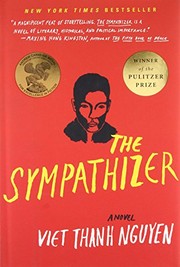
The Sympathizer
Double agent captain spies in Saigon fall and LA exile while confessing to commandant.
2,169-word summary · 10 min read

Daughter of Fortune
Eliza Sommers flees Chile for California gold rush San Francisco, disguised and searching for her lover, finding freedom with Tao Chi'en.
2,009-word summary · 9 min read

Brooklyn
Eilis Lacey leaves Enniscorthy for Brooklyn boarding house work, love with Tony, then a home death forces divided choice.
2,143-word summary · 10 min read
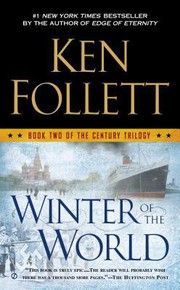
Winter of the World
Five families from Berlin to Moscow live through the Nazis, World War II, and the atomic age in Follett's second Century volume.
2,402-word summary · 11 min read

The Girl You Left Behind
Two women a century apart fight for what they love, joined by a portrait painted in wartime France and claimed in modern London.
2,613-word summary · 12 min read
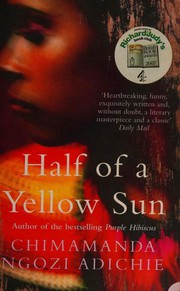
Half of a Yellow Sun
Ugwu, Olanna and Richard are pulled from Nsukka comfort into the Biafran war, where love and hunger test every loyalty.
2,973-word summary · 13 min read

Snow Falling on Cedars
A Japanese American fisherman stands trial for murder on a snowy island, while a reporter faces lost love and wartime prejudice.
2,224-word summary · 10 min read