
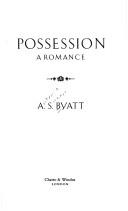
Possession: A Romance
2,394-word summary 11 min read 511 pages in the book
- First published
- 1990
- Publisher
- Chatto & Windus
- Pages
- 511
- ISBN
- 9780701132606
Reading options
What's inside (9 sections)
I picked this up because a friend quoted a poem to me that I assumed she had written herself. It turned out to be one of A.S. Byatt's inventions, verses she composed and then attributed to a fictional Victorian poet, and that small confusion is a decent introduction to the whole book. Published in 1990 by Chatto & Windus, winner of that year's Booker Prize, and 511 pages in the first edition, this is a novel that asks you to believe in documents that never existed and then makes you care about them more than most people you meet in ordinary fiction. Byatt subtitled it A Romance, and she meant the word in several senses at once. There is a love story buried in the nineteenth century, a love story unfolding in the present, and a scholarly chase built with all the machinery of a detective novel. There is also a great deal of poetry. I stopped counting the invented verses somewhere past a thousand lines, and a reviewer in The Guardian put the total above seventeen hundred. This matters, because the poems are not set dressing. They are where the evidence lives.
The letter in the London Library
The book opens with Roland Michell, an obscure scholar doing low-status work on the papers of Randolph Henry Ash, a famous Victorian poet. Roland is not a heroic figure. He is poorly paid, slightly shabby, and stuck in the basement of academic life, filing and transcribing material that nobody thinks will yield anything new. While working in the London Library he finds two drafts of a letter in Ash's hand, an unfinished note that clearly belongs to a correspondence nobody has catalogued. The married Ash appears to have been writing to a woman whose name is not on the envelope.
Roland does something a careful scholar would not do. He pockets the drafts and walks out with them. He knows it is a serious breach of professional trust, and the knowledge shades everything he does afterwards. From that moment he is not merely researching; he is concealing. The theft gives the plot its early momentum, because every step forward is also a step into deeper trouble. If he is found out, his career is over. If he puts the papers back, the mystery dies.
He follows the paper trail through libraries, archives and private collections, and the trail leads to Christabel LaMotte, a minor poet of Ash's century, and then to Dr Maud Bailey, a modern academic who has built her reputation on LaMotte. Roland has to decide how much to tell her. Maud is protective of her subject and wary of a man who turns up with claims she cannot verify. Their early exchanges are prickly, and that prickliness is part of the design. Byatt is interested in how scholars behave when a discovery could change their standing, and she watches these two circle each other with a mixture of amusement and impatience.
Ash and LaMotte
The nineteenth-century poets at the centre of the mystery are inventions, but they are built from real materials. Ash draws loosely on Robert Browning and Alfred, Lord Tennyson, a public figure with a grand manner and a formidable appetite for work. LaMotte is modelled largely on Christina Rossetti, a quieter poet who lives in the country with her companion Blanche Glover and writes a long poem called The Fairy Melusina. Byatt gives both of them voices. We read their letters, their diaries and their poems, and the effect is oddly intimate. I found myself forming an opinion of Ash before I had decided whether to trust him, which is exactly what the novel wants.
Ash is married to Ellen, and their marriage was never consummated, though the two remained devoted to one another. That detail matters later, because it changes what the discoverers think they have found. LaMotte's household with Blanche is similarly hard to reduce to a label. Byatt leaves the nature of their bond deliberately open, and Blanche's jealousy when LaMotte's attention turns elsewhere is one of the saddest threads in the book.
The correspondence between Ash and LaMotte begins formally and warms by degrees. He writes first; she answers with caution; then the letters grow longer, cleverer and more personal. They quote poetry at each other, argue about art, and slowly arrange a meeting. Byatt's gift here is that the letters read like the work of two distinct minds rather than like two versions of the author. LaMotte's poems are spare and exact, full of fairy material and quiet dread. Ash's are larger, more rhetorical, more sure of their place in the world. Reading them side by side, I could see why scholars in the story would fight over who got to interpret them.
Maud Bailey and the rival scholars
Once Maud agrees to help, the modern plot widens into a race. Other academics have caught wind of the letters, each with a reason to want the story. There is a possessive biographer who has spent a career on Ash and resents an interloper, an American critic who sees LaMotte through a theoretical framework she is reluctant to surrender, and a wealthy collector who would like to own the physical documents rather than merely interpret them. Byatt is very good on the small cruelties of academic life: the guarded email, the conference panel, the footnote that quietly claims priority. I recognised enough of it to wince a few times.
Maud herself is the most interesting of the modern figures. She has kept her emotions under tight control for years, and her scholarly closeness to LaMotte is partly a way of not having to be vulnerable herself. As she and Roland work together, their own relationship begins to echo the one they are uncovering. Neither of their lives is satisfying at the start. Both are lonely in ways they have learned to manage. Byatt lets the parallel develop without ever announcing it, and the restraint is welcome. The modern romance is quieter than the Victorian one, and that feels right. People in the present have fewer grand gestures available to them.
The rival scholars provide much of the book's comedy, and some of its coldness. Byatt's satire of conferences, grants and competing interpretations is sharp enough that I enjoyed it even when I suspected I was the sort of person being laughed at. Yet the academic machinery occasionally takes up more room than the human story. There are passages where the chase feels like a clever puzzle about ownership of manuscripts rather than a story about two people falling in love. I noticed the shift and did not mind it much, but readers who came for the romance alone may find those stretches dry.
The affair in Brittany
The middle of the book assembles the lost history piece by piece. Ash and LaMotte meet, and the meeting leads to a journey together in Brittany. Byatt never gives us a breathless account of what happened on that holiday. Instead we get fragments: a reference in a letter, a line in a diary, a gap in a manuscript that has to be read against another gap. The scholars, and the reader, infer that the affair was consummated. The inference is the point. This is a novel about how knowledge of the past is made from partial evidence, and it keeps reminding you that the certainty you feel is a construction.
The consequences are grave. Blanche Glover, left behind and increasingly isolated, drowns herself. LaMotte discovers she is pregnant and spends a year in Brittany, where she gives birth to a daughter named Maia. She then leaves the child with her sister, to be raised as the sister's own. Ash is never told that he has a daughter. The affair ends, the poets return to their separate lives, and the secret survives in a handful of papers buried with Ash and in objects passed down through LaMotte's family.
This is the section where Byatt's invention of primary material does its heaviest work. The Fairy Melusina is more than a title dropped into the narrative; we are given substantial passages of it, and those passages carry themes that the plot later confirms. Ash's verses do the same. At one point I caught myself reading a poem for its own sake and then realising I had been looking for a clue. That double duty is the book's cleverest trick, and it is why the poetry cannot be skipped without losing part of the story. Byatt also uses a nineteenth-century narrator a few times, stepping into the historical sections to tell the reader something the scholars in the present never learn. Those intrusions are deliberate, and they widen the book's scope without breaking its rules.
The storm at the grave
The climax arrives during the Great Storm of 1987, when trees came down across England and the country was briefly cut off from itself. Byatt uses the storm as more than weather. It gathers all the interested parties in one place, at Ash's grave, where they believe documents buried by his wife Ellen hold the final answer. The scene has a slightly farcical edge: academics standing around a grave in a gale, each convinced that the truth is about to belong to them. It is funny, and it is also tense, because Roland is still carrying the knowledge of what he took from the London Library.
What they find changes the meaning of everything they have assembled. Alongside letters, they uncover a lock of hair, which the scholars assume is LaMotte's, a keepsake from a lover. Maud reads the buried documents and learns that she is not descended from LaMotte's sister, as she has always believed. She is directly descended from Maia, the illegitimate daughter of LaMotte and Ash. That makes Maud the heir to the correspondence, and it means the original letters Roland stole now belong to someone who has every right to possess them. His offence quietly evaporates. An academic future opens in front of him, and Maud, who has spent her adult life keeping feeling at a distance, can imagine a life with him.
I liked the practical neatness of this resolution. Byatt could have wrapped the mystery up with a simple discovery about who wrote what. Instead she makes the answer depend on a family secret and a question of inheritance, which ties the book's title to its plot rather than leaving it as a theme. The storm scene also lets the rival scholars reveal themselves one last time, and their disappointment is handled with a dry amusement that never quite turns cruel.
The epilogue's small reversal
There is a coda that reframes the lock of hair. Years after the affair, Ash encounters his daughter Maia in the countryside without knowing who she is. They talk briefly. He makes her a crown of flowers and asks her for a lock of her hair. He also asks her to give LaMotte a message, that he has moved on from their relationship and is happy now. Then he walks away. Maia goes home, breaks the flower crown while playing, and forgets to deliver the message.
The hair Ash requested is the hair buried with him and found at the grave. The scholars read it as a lover's token from LaMotte; in fact it came from the daughter neither poet's public biography admitted. Byatt lets that fact settle without comment, and it changed how I thought about the whole investigation. The object at the centre of the quest pointed to a parent's claim on a child, not to a grand romantic gesture. The message Ash wanted sent was never sent, and the book ends with that small human failure rather than with a tidy revelation. I found it a brave choice. It refuses to reward the reader with the neat meaning the academics have been chasing.
What I loved and what I would cut
The parts that dragged for me were the ones where the scholarly contest threatened to take over. There are conversations about editorial method and academic priority that I skimmed on the first read, and I suspect a reader without an interest in how literary research works would skip more. The density of allusion can also be exhausting. Byatt expects you to keep up with Victorian poetry, fairy symbolism and a fair amount of theory, and she does not stop to explain the references. That is part of the book's pleasure if you are willing to work, and a wall if you are not.
What won me over was the warmth underneath the cleverness. Jay Parini, writing in The New York Times in 1990, called the book a tour de force and singled out Byatt's invention of letters, poems and diaries as its most dazzling achievement. Christopher Lehmann-Haupt, in the same paper, described it as a wonderfully extravagant novel that is at once a detective story and an adultery novel, and he noted that the subtitle A Romance is pointed. Sam Jordison, a self-described Byatt sceptic writing in The Guardian, admitted he was caught off guard by the book's warmth and wit, and concluded that its true centre is a big, beating heart rather than its cerebral pursuits. I think all three saw something real. The puzzle is delicious, but the reason to finish is that Byatt cares about these invented people.
The book won the 1990 Booker Prize and the Irish Times-Aer Lingus International Fiction Prize, and it was later named to Time magazine's list of the hundred best English-language novels from 1923 to 2005. A 2002 film starring Gwyneth Paltrow, Aaron Eckhart, Jeremy Northam and Jennifer Ehle differs considerably from the source, which is worth knowing if you go in expecting the same story. There was also a fifteen-part radio serial on BBC Radio 4's Woman's Hour in 2011 and 2012.
I would hand this to a reader who likes books about books, detective plots with an emotional payoff, and poetry that does actual work. I would be cautious with a reader who wants a fast, uncluttered narrative or who has no patience for invented Victorian verse. For me the slow parts were the price of the parts that stayed with me, and the epilogue alone made the whole chase worth following.
FAQ
Is Possession a romance or a mystery?
It is both. Christopher Lehmann-Haupt called it a detective story and an adultery novel, and Byatt's subtitle, A Romance, was chosen deliberately.
Did Possession win the Booker Prize?
Yes. It won the 1990 Booker Prize for Fiction and the Irish Times-Aer Lingus International Fiction Prize, and later made Time magazine's list of the hundred best English-language novels from 1923 to 2005.
Are the poets in Possession based on real people?
Randolph Henry Ash draws loosely on Robert Browning and Alfred, Lord Tennyson, while Christabel LaMotte is modelled largely on Christina Rossetti. Their letters and poems are Byatt's own inventions.
Similar books
The Paying Guests
A widowed mother and her unmarried daughter take in lodgers in 1922 south London, and a secret affair between Frances and Lilian pulls them into a murder case.
2,661-word summary · 12 min read
The Luminaries
Eleanor Catton's Booker-winning novel drops a young prospector into an 1866 New Zealand gold town where twelve men untangle a web of hidden gold, murder and…
2,949-word summary · 13 min read
The Christie Affair
Agatha Christie vanishes for eleven days in 1926, and her husband's mistress claims to know why. Nan O'Dea's account runs from an Irish convent to a Yorkshire…
2,384-word summary · 11 min read

Ivanhoe
A disinherited Saxon knight, a great tournament, a besieged castle and a trial by combat. Scott's most famous novel, set in England in 1194.
2,834-word summary · 13 min read
The Prisoner of Heaven
Fermin Christmas past returns with a stranger and a prison debt.
2,388-word summary · 11 min read
Bleak House
Jarndyce and Jarndyce grinds through Chancery while Esther finds her family.
2,480-word summary · 11 min read
The New York Trilogy
Three linked novels turn a wrong-number call into a puzzle about names, authorship, and the stories people tell to stay sane.
2,259-word summary · 10 min read
Of Love and Other Demons
In colonial Cartagena, a twelve-year-old girl bitten by a rabid dog is locked in a convent, where the priest sent to exorcise her falls in love.
2,258-word summary · 10 min read
The Tunnel
A painter in a Buenos Aires prison recounts the glance, the woman and the jealousy that led him to murder the only person who understood him.
2,313-word summary · 10 min read
The Binding
In an alternate Victorian England, binders remove unbearable memories into books, and a young apprentice discovers his own past was erased from him.
2,036-word summary · 9 min read
My Policeman
In 1999 a retired teacher writes a confession to the dying man her husband once loved, unpacking a 1950s Brighton love triangle that cost three people…
2,450-word summary · 11 min read
Marina
A fifteen-year-old boarder in 1979 Barcelona follows a singing voice into a ruined mansion and finds a girl, a watch, and a mystery the city has kept buried…
2,352-word summary · 10 min read
Broken Country
A historical love story built like a thriller: a farmer's wife in 1968, a son lost two years before, and the return of the man who once broke her heart.
2,461-word summary · 11 min read
Birdsong
A love affair in Amiens before the First World War and a granddaughter's search through encoded journals decades later, joined by the tunnels of the Somme.
2,041-word summary · 9 min read
The Crying of Lot 49
A California woman named executor of her ex-lover's estate follows a muted post horn into a possible centuries-old postal conspiracy, and Pynchon refuses to…
2,003-word summary · 9 min read

Anatomy: A Love Story
In 1817 Edinburgh, a noblewoman who wants to be a surgeon disguises herself to study anatomy and falls for the grave robber who supplies her with bodies.
2,031-word summary · 9 min read

Sophie's Choice
A young Southern writer in 1947 Brooklyn befriends a brilliant, unstable couple and slowly learns the story of the Polish Catholic woman at the center of their…
2,798-word summary · 12 min read
The Echo of Old Books
Barbara Davis's 2023 novel sends a rare-book dealer in 1984 New Hampshire hunting for the authors of two unpublished volumes that tell opposite sides of one…
2,491-word summary · 11 min read

Last Night at the Telegraph Club
The 2021 National Book Award winner follows Lily Hu, a Chinese American teenager in 1954 San Francisco, as she falls for Kath and learns what it costs to be…
2,336-word summary · 10 min read
Euphoria
Three anthropologists in 1930s New Guinea turn fieldwork into a love triangle, and a real history breathes behind them.
2,048-word summary · 9 min read
Wide Sargasso Sea
Jean Rhys gives the first Mrs. Rochester a Caribbean childhood, a marriage built on money and suspicion, and a voice that Charlotte Bronte left in the attic.
2,021-word summary · 9 min read
Mother Night
Howard W. Campbell Jr., a Nazi propagandist and American spy, tells the story of his double life from an Israeli prison cell while waiting to be tried for war…
1,988-word summary · 9 min read
Doctor Zhivago
A doctor and poet lives through revolution, war, and love in Pasternak's novel of private life under the pressure of Russian history.
2,213-word summary · 10 min read
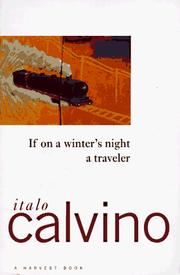
If on a Winter's Night a Traveler
You, the Reader, chase a defective novel through bookshops and translators while ten other novels keep interrupting. Calvino's famous puzzle about the act of…
2,173-word summary · 10 min read
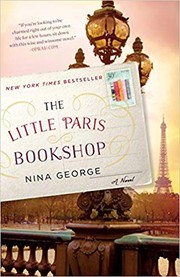
The Little Paris Bookshop
A Paris bookseller who prescribes novels as medicine finally opens a twenty one year old letter from his lost love and sails south through France to find her.
2,050-word summary · 9 min read
I Capture the Castle
Cassandra journals six months of love and money trouble in a castle.
2,402-word summary · 11 min read
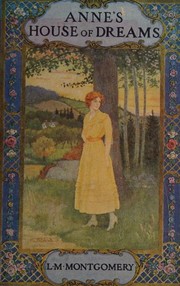
Anne's House of Dreams
Newlyweds Anne and Gilbert start in a seaside house with kind neighbors.
2,465-word summary · 11 min read
Song of Solomon
Milkman Dead leaves Michigan to hunt for family gold and finds instead the old song of his ancestor Solomon.
2,465-word summary · 11 min read
The House at Riverton
In 1999, ninety eight year old maid Grace Bradley tapes the truth about a 1924 shooting at Riverton Manor, poet Robbie Hunter, two sisters and a lie held for…
2,433-word summary · 11 min read
The English Patient
In a ruined Italian villa in 1945, a burned man, a nurse, a thief, and a sapper trade pasts shaped by desert love and war.
2,006-word summary · 9 min read