
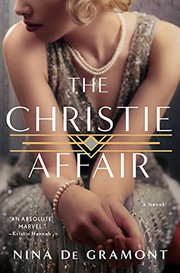
The Christie Affair
2,384-word summary 11 min read 320 pages in the book
- First published
- 2022
- Publisher
- St. Martin's Press
- Pages
- 320
- ISBN
- 9781250274618
Reading options
What's inside (10 sections)
- The woman who wanted the husband
- Eleven days and a car at Newlands Corner
- Ballycotton, a Claddagh ring, and the convent
- The Bellefort Hotel and its odd guests
- Agatha at Timeless Manor
- Who killed the Marstons
- The ledger, the escape, and the ending Nan chooses
- What works and what I kept questioning
- Key takeaways
- FAQ
I have always thought the 1926 disappearance of Agatha Christie was a strange, thin story: eleven days, a car at the edge of a chalk pit, a writer found in a hotel under another name, and no good explanation. Nina de Gramont's 2022 novel fills that gap with a narrator who has no business knowing as much as she does. St. Martin's Press published it in the United States, my copy is the 320 page hardcover, ISBN 9781250274618, and the book is a standalone historical mystery that became a Reese Witherspoon Book Club pick and a New York Times bestseller.
The woman who wanted the husband
Nan O'Dea opens the story on the eve of the disappearance, and she is not shy about what she is doing. It is 2 December 1926. She has been the mistress of Archie Christie for a while, and she is pushing him to leave his wife. Archie is a colonel, charming and weak in the ways that matter, and he is planning to buy Nan an engagement ring the next day.
Agatha Christie is 36, famous, and busy with a new literary agent named Donald Fraser. She asks Nan to lunch. The lunch is one of the best scenes in the book because Agatha says out loud what everyone else is dancing around. She tells Nan that she is sleeping with her husband and that she does not love him, and she says Nan should leave him to the person who does. Nan knows the accusation is right. She does not care. She wants the life, the house, and the place beside Archie, and she is quite prepared to be honest about wanting them.
Archie breaks the news at Styles, the house named after one of Agatha's own novels. He wants a divorce and wants adultery cited, but he means to keep Nan's name out of the papers. Honoria, Agatha's assistant and Teddy's nanny, hears the row. Teddy is the Christies' young daughter, and Teddy matters more than she can know yet.
Eleven days and a car at Newlands Corner
The next morning Agatha is gone. Archie's first reaction is that it is a ruse to get him back, which tells you almost everything about their marriage at this point. Then her Morris Cowley is found parked at the lip of a chalk pit below Newlands Corner, with a fur coat, a packed suitcase and a driving licence in the back. The engine still has petrol and nothing appears to be broken. There is a pond nearby called the Silent Pool, and the police talk about dredging it. Archie has a letter he tears up and burns, and Nan, sent away because her presence looks bad, starts packing for Harrogate.
Here de Gramont introduces one of the book's quieter pieces of luck. An elderly woman named Annabelle Oliver, confused and thinking she is a young girl off to a party, takes a black Bentley that belongs to her brother and crashes it on a country road. She walks away and is not found for days. The abandoned car becomes the vehicle in which Agatha travels north. It is a clever use of the kind of noise that surrounds a missing-person case, and it also gives the novel its first plausible way out of a very public problem.
By the third day the search is national. Over a thousand men will eventually be involved, and the papers treat the case as both tragedy and sport. Readers send in sightings from every direction, and the famous names arrive in person later. De Gramont is good on this kind of attention. She understands that fame turns a missing woman into a story other people get to tell, which is exactly what Nan is doing in her own chapters, only with a grudge behind it. Archie, meanwhile, is questioned and then questioned again, and each time he looks a little less like the wronged husband.
Ballycotton, a Claddagh ring, and the convent
Nan's account keeps breaking away into her girlhood, and those chapters are the real heart of the book. She grew up in a house full of sisters in England and spent summers at her Uncle Jack's farm in Ballycotton, Ireland. There she met Finbarr Mahoney, the fisherman's son who worked for her uncle. He gave her a Claddagh ring before he went off to fight in the Great War. Her sister Colleen got pregnant, was turned out by their father, and killed herself. Nan took the money her mother had been saving in a tin and left.
Finbarr came back and they slept together. She became pregnant, he fell ill with the flu, and his family refused to take her in. They sent her to a convent instead. There, pregnant girls worked until they gave birth, stayed on to nurse their babies, and then watched them adopted out. Father Joseph, the priest, abused a girl named Bess, and when Bess left his attention turned to Nan. Sister Mary Clare played the friend while allowing all of it.
Nan named her baby Genevieve and was allowed ten days with her before the adoption papers arrived. She choked Sister Mary Clare and stopped short of killing her, then ran. Years later, working in London and scanning every child she saw, she spotted a girl she was certain was Genevieve. That girl is Teddy. It is the reason Nan went after Archie in the first place.
I believed every word of this while I was reading it, which is a tribute to the writing, and then I remembered that Nan is the one telling it.
The Bellefort Hotel and its odd guests
Nan checks into the Bellefort Hotel and Spa in Harrogate under the name Mrs Genevieve O'Dea. The place is run by Mrs Leech, a black woman who owns the hotel with her family, and the guest list reads like a joke with a very dark punchline. There are Mr and Mrs Marston, an older couple on a second honeymoon. There are Mr and Mrs Race, a young couple who fight in the lobby. There is an American couple, Lizzie and Donny Clark. There is a Miss Cornelia Armstrong, who travels alone and has opinions about everybody.
Inspector Frank Chilton arrives too, a former policeman called back to help with the search, and he is staying at the same hotel because the chief's relatives own it. Then Finbarr turns up. He has received Nan's letter about her engagement and has come to talk her out of it, and when she refuses he says he will stay nearby.
At breakfast one morning Mr Marston starts choking. A nurse among the guests tries to help, but he dies. The autopsy finds potassium cyanide and a mark on his hip where it was injected through his clothing. That night Mrs Marston dies too, from strychnine. Two people in a hotel full of witnesses, and the local police are happy to settle on a suicide pact. Chilton is not so sure.
Agatha at Timeless Manor
Chilton finds Agatha sooner than anyone expects. She is at a modest country house with Finbarr, having left the first hiding place after he recognized her at the door. Chilton gives her a day to sort herself out. She disappears and turns up squatting in another empty house, which he finds by following Finbarr. From there the novel becomes a small, strange idyll. The four of them, Agatha, Finbarr, Nan and Chilton, spend days at the place Nan calls Timeless Manor. They play tennis. They eat together. Chilton and Agatha, who are supposed to be on opposite sides of an investigation, fall into a romance that feels both sudden and completely right for two people who have spent their lives being watched.
Agatha tells Chilton why Nan is really after Archie. She says Nan believes Teddy is the child she lost. She also tells him that Finbarr carved the little wooden dog that Teddy keeps on her windowsill, visiting the girl under the name Mr Sonny. Outside the house the search becomes increasingly farcical. Sir Arthur Conan Doyle takes an interest and consults a clairvoyant who declares Agatha dead. Dorothy Sayers is mentioned among the literary figures drawn in. Meanwhile Archie sits with Teddy and begins to understand what he has done.
The manor chapters are the best argument for the novel's structure. De Gramont is writing a mystery in which the detective is trapped in the same house as the woman he is looking for, and the disappearance itself becomes the least interesting question in the room.
Who killed the Marstons
The answer comes together through gossip at the hotel and a spa called the Karnak Baths. Miss Armstrong mentions that Mrs Marston had once been a nun and Mr Marston a priest, that they renounced their vows and ran away together, and that they came from an orphanage in Ireland. Chilton does the arithmetic. Mrs Marston is Sister Mary Clare. Mr Marston is Father Joseph. The honeymoon couple are the two people Nan has the most reason to want dead.
The rest of the guests turn out to be Nan's people too. Lizzie Clark is Bess, the girl from the convent, now married and living in Philadelphia. The Races are Bess's sister and brother in law, putting on a quarrel so nobody would ask why they were so tense. Bess killed Father Joseph first because he recognized her. Nan killed Sister Mary Clare by bringing her a poisoned cup of tea, something the nun had no reason to refuse from a girl she no longer remembered.
Chilton wants to arrest Nan. Agatha tells him not to, and says that what some people call murder others might call justice. He resists for a while and then agrees to look the other way. This is where the book asks you to sit with an uncomfortable arrangement: a police inspector letting a killer go because the victims were cruel and the narrator makes a persuasive case.
The ledger, the escape, and the ending Nan chooses
The net closes through ordinary clerical mistakes. A librarian named Miss Barnard becomes sure she saw Agatha in the Harrogate library. A woman working in the gift shop reports a Miss O'Dea. Archie arrives at the Bellefort with the chief, sees Agatha's handwriting in the guest ledger under a false name, and finds her coming down the stairs with Chilton. Agatha says she cannot remember where she has been. Chilton tells the hotel that Agatha had been staying there as Genevieve O'Dea, and in exchange he announces that Mrs Marston poisoned her husband and then herself. It is the conclusion everyone wanted, and it clears Nan.
Nan slips out of the hotel while the confrontation is happening and drives to the train station. She leaves Finbarr behind. She has chosen Teddy, or at least the child she believes is Teddy, and by 1928 she is married to Archie and raising the girl at Styles. Finbarr goes back to Ireland, marries an Irish woman, and has three sons. The carved dog stays on the windowsill. Agatha's marriage ends, she sends Teddy back to be raised at Styles, and Nan says she goes off to have adventures on the Orient Express. In the last pages Agatha takes Teddy and seeks out Chilton in Brixham, and they embrace.
Whether Teddy is really Genevieve is left open on purpose. Agatha tells Nan that the child is hers, then later says the opposite, and Nan admits in retrospect that she may have been told what she wanted to hear. I liked that choice more than I expected to. A book about a woman who decides what is true for her ought to end with a fact nobody can settle.
What works and what I kept questioning
What works is the voice. Nan is funny, bitter, greedy, and grieving in about equal measure, and she never stops explaining herself. The structure supports her. We learn about the convent in fragments, timed so that each new horror changes how the present-day murders look. The reveal that the hotel guests are Nan's old circle is genuinely satisfying, and the Agatha and Chilton romance gives the book a warmth that the grim backstory keeps threatening to smother.
There is also a nice piece of symmetry in the title. The affair of the book is bigger than Archie's arrangement with Nan. It is the whole business of other people deciding what happened to Agatha and why. Nan claims the right to explain an event she barely understood at the time, and her account keeps shifting to keep herself in the best light. By the end I did not know how much of her story to believe, and I did not think I was meant to.
What I kept questioning was the coincidence. Finbarr happens to be on the road when Agatha crashes. The confused elderly woman leaves a car at exactly the right moment. Almost everyone at the Bellefort turns out to have a connection to Nan's convent years. For a novel this pleased with its own cleverness, that is a lot of convenient traffic. There are also stretches in the middle where the manor idyll goes on longer than the mystery needs, and Agatha sometimes sounds like a modern woman in a 1926 dress rather than a person of her time.
The abuse material is the hardest part and the book does not soften it. Girls are used and silenced, a baby dies, and two people get away with murder because their victims were cruel. Nan calls what she did justice, and the novel half agrees with her while leaving Chilton to carry the moral cost. If you want a historical mystery with clean lines and a tidy verdict, this one will leave you unsatisfied on purpose.
I would give it to readers who like their historical fiction with a narrator who cannot be trusted and their mysteries with a second story running underneath. It is not a book about solving Agatha Christie's disappearance. It is a book about what a woman might have been willing to do beside it, and about how much of a life can be built on a story you chose to believe.
FAQ
Is The Christie Affair based on a true story?
It reimagines Agatha Christie's real eleven-day disappearance in December 1926, but Nan O'Dea and the murders at the Bellefort Hotel are invented.
Do I need to know Agatha Christie's biography to enjoy it?
No. The novel supplies the basics of her marriage, her daughter Teddy, and the found car at Newlands Corner as it goes.
Is this a conventional mystery?
Only partly. The disappearance is solved early for the reader, and the real questions are who killed the couple at the hotel and whether Nan can be trusted.
Similar books
The Paying Guests
A widowed mother and her unmarried daughter take in lodgers in 1922 south London, and a secret affair between Frances and Lilian pulls them into a murder case.
2,661-word summary · 12 min read

The Luminaries
Eleanor Catton's Booker-winning novel drops a young prospector into an 1866 New Zealand gold town where twelve men untangle a web of hidden gold, murder and…
2,949-word summary · 13 min read
Possession: A Romance
A London Library discovery sends two scholars chasing a secret Victorian love affair, in a Booker-winning novel of invented letters, poetry and the race to own…
2,394-word summary · 11 min read
The Prisoner of Heaven
Fermin Christmas past returns with a stranger and a prison debt.
2,388-word summary · 11 min read
There Will Be Bodies
Digging out a villa buried by Vesuvius, Flavia Albia finds chained corpses and a death someone tried to hide for ten years.
2,152-word summary · 10 min read
The Hangman's Daughter
In 1659 Bavaria, a hangman ordered to torture an innocent midwife instead investigates the deaths of children marked with a strange tattoo.
2,523-word summary · 11 min read
Eight Perfect Murders
A Boston bookseller's old blog post listing eight perfect fictional murders becomes the blueprint for a real killer, and the narrator knows more than he admits.
2,292-word summary · 10 min read

Child 44
Tom Rob Smith's 2008 debut follows Soviet secret policeman Leo Demidov as he hunts a child killer in a country that officially has no crime.
2,428-word summary · 11 min read
The Art Forger
A disgraced Boston painter agrees to copy a Degas stolen from the Gardner Museum, then begins to suspect the original she is copying is itself a forgery.
2,117-word summary · 9 min read
The Black Dahlia
James Ellroy builds a fiction around the real Black Dahlia murder, following two Los Angeles cops whose partnership and obsessions destroy them.
2,533-word summary · 11 min read

The Echo of Old Books
Barbara Davis's 2023 novel sends a rare-book dealer in 1984 New Hampshire hunting for the authors of two unpublished volumes that tell opposite sides of one…
2,491-word summary · 11 min read
Death Comes to Pemberley
P.D. James drops a murder onto the Pemberley estate and sends Wickham to trial, reading Austen's most famous marriage through the machinery of Georgian justice.
2,318-word summary · 10 min read

The Redbreast
Harry Hole chases an ageing sniper through modern Oslo while two Norwegian volunteers on the Eastern Front carry a fifty-year-old betrayal toward a royal…
2,453-word summary · 11 min read
Notes on an Execution
Ansel waits on death row while three women carry what he broke.
2,527-word summary · 11 min read
Fingersmith
A thief plots to cheat an heiress, then the scheme flips twice in Victorian London.
2,532-word summary · 11 min read
Case Histories
A Cambridge PI takes three cold cases that tangle with his own loss.
2,465-word summary · 11 min read
Bleak House
Jarndyce and Jarndyce grinds through Chancery while Esther finds her family.
2,480-word summary · 11 min read
Maisie Dobbs
A maid turned war nurse opens a London inquiry agency in 1929 and traces a quiet case to a refuge for shattered soldiers.
2,382-word summary · 11 min read

Burial Rites
Condemned for murder in 1829 Iceland, Agnes Magnusdottir spends her final winter on a crowded farm while a young priest listens to her story.
2,976-word summary · 13 min read

The Round House
At thirteen, Joe Coutts hunts for his mother's attacker when the law stalls, in Louise Erdrich's National Book Award novel of family, jurisdiction, and revenge…
2,391-word summary · 11 min read
The Angel's Game
In 1920s Barcelona, a young writer accepts a strange publisher's offer to write an impossible book and finds his life turning into a ghost story.
2,699-word summary · 12 min read
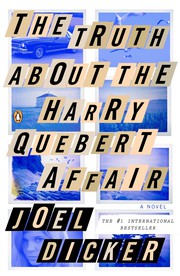
The Truth About the Harry Quebert Affair
A blocked writer tries to clear his mentor Harry Quebert after a girl missing since 1975 is found buried with his famous manuscript.
2,192-word summary · 10 min read

Snow Falling on Cedars
A Japanese American fisherman stands trial for murder on a snowy island, while a reporter faces lost love and wartime prejudice.
2,224-word summary · 10 min read
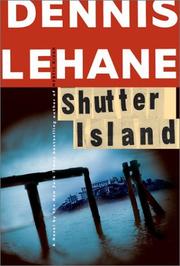
Shutter Island
A U.S. marshal hunts a missing patient on a locked asylum island in 1954, where every clue turns back on him.
2,761-word summary · 12 min read
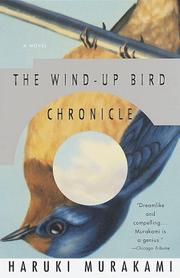
The Wind-Up Bird Chronicle
An unemployed Tokyo man hunts a lost cat, then his missing wife, and slips from quiet suburbs into wells and wartime memory.
3,344-word summary · 15 min read
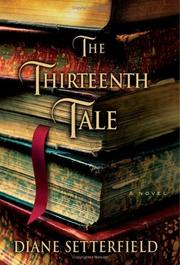
The Thirteenth Tale
A dying novelist tells her true story at last to a bookseller's daughter, and the mystery of the Angelfield twins comes into the open.
2,928-word summary · 13 min read
Perfume: The Story of a Murderer
Born with a perfect nose in 1738 Paris, Grenouille masters perfume craft then murders young women in Grasse to bottle the ultimate scent.
2,561-word summary · 11 min read
The Shadow of the Wind
In postwar Barcelona, Daniel finds a cursed novel and hunts its vanished author while a burned man watches.
2,000-word summary · 9 min read

The Yiddish Policemen's Union
An alcoholic detective in an alternate Sitka investigates a murder that leads toward a messianic plot and his own family's past.
2,247-word summary · 10 min read
The New York Trilogy
Three linked novels turn a wrong-number call into a puzzle about names, authorship, and the stories people tell to stay sane.
2,259-word summary · 10 min read