
Reading options
What's inside (9 sections)
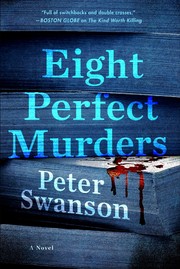
I picked this up for the premise alone. A bookseller writes a blog post naming the eight most perfect murders in fiction, and years later someone starts carrying them out in real life, one by one, following his list. It sounds too neat to work, the kind of gimmick dressed up as a thriller. What surprised me is how fully Swanson commits to it, and how little the book is actually about the copycat. Most of it turns out to be about the man who wrote the list, and the things he left out of his own story. By the end I cared less about unmasking the killer than about working out what the narrator had been hiding from me in plain sight.
Malcolm Kershaw owns a small bookstore in Boston called Old Devils. He is a widower who lives alone above or around his shop, and the book is narrated in his voice, which means everything we learn comes filtered through him. Years before the novel opens he wrote a blog post titled "Eight Perfect Murders," a catalogue of fictional killings he considered especially clever or hard to solve. The list is not a ranking of his favourite books. It is a catalogue of methods, of murders that were engineered so neatly that they almost had to work. That distinction matters later, because the person reproducing them is interested in the engineering, not the literature.
The eight books on Malcolm's list
The list runs through the history of the genre, and Swanson gives each entry enough attention that you can follow the logic even if you have not read the books. There is the disappearance and frame-up of A. A. Milne's The Red House Mystery, the slow poisoning of Anthony Berkeley Cox's Malice Aforethought, and the patterned victim selection of Agatha Christie's The A.B.C. Murders. James M. Cain's Double Indemnity contributes a death staged along railroad tracks. Patricia Highsmith's Strangers on a Train supplies the idea of a murder pact between two people each killing the other's target. John D. MacDonald's The Drowner gives a killing by drowning, Ira Levin's Deathtrap a death brought on by terror, and Donna Tartt's The Secret History a murder shaped by obsession and class.
What links them, in Malcolm's telling, is not a theme but a kind of elegance. Each murder is designed so that the person who commits it can either vanish or be mistaken for someone else. Malcolm clearly loves these books, and he loves the puzzle of them. He rereads them as the real killings begin, hunting for the instruction manual he thinks someone is following. There is a pleasure in watching a genuine book person work, and Swanson writes those passages with real affection.
But the list is also a mask. Malcolm keeps offering literary explanations for what is happening, and I gradually realised that his learning is a way of controlling the conversation. If he can name the book a killing comes from, he can appear to be solving it while steering us away from his own life. The list is a decoy as much as a clue.
Agent Mulvey arrives in the snow
The story gets moving on a snowy February day, when FBI Special Agent Gwen Mulvey walks into Old Devils. She has connected a string of recent deaths to Malcolm's old post and wants to know whether a real killer is working through it. Malcolm plays the helpful bookseller. He gives her readings and interpretations, talks about which method fits which victim, and generally performs the role of the clever man assisting the authorities.
The killings are staged with a schoolmaster's patience. Several victims have names connected to birds, an echo of The A.B.C. Murders and its alphabet of victims. Robin Callahan, an author, is one of them, as are Ethan Byrd and Jay Bradshaw. Bill Manso is killed and left beside train tracks, a direct nod to Double Indemnity. Elaine Johnson, a difficult regular customer with a heart condition, dies of a heart attack after someone frightens her with a clown mask, borrowing the machinery of Deathtrap. Nicholas Pruitt is forced to drink scotch laced with benzodiazepine so that his death will resemble the poisoning in Malice Aforethought.
I liked how Swanson lets these set pieces breathe. Each one is introduced with the calm of a puzzle box, then ties back to a life that someone has decided to end. Under the clever arrangement there is real cruelty, and Elaine's death in particular made me uncomfortable in a way the literary framing tries to tidy away. A woman with a bad heart is terrorised because a killer needs a method. The book does not look away from that, even while Malcolm keeps reaching for a title to explain it.
Gwen is a good counterweight to Malcolm. She is patient, a little wary, and not impressed by his store of literary knowledge. She keeps asking the plain questions he would rather skip. During this stretch, Malcolm also becomes surrounded by people who might be suspects or sources: his employees Emily Barsamian and Brandon Weeks, his co-owner Brian Murray, Brian's wife Tess, and an old drinking companion named Marty Kingship, a retired police officer. Malcolm asks Marty to help him look into the copycat, which is one of those decisions that reads differently once you know who Marty is.
What Malcolm is not telling Gwen
The book is built on a first-person narrator who withholds, and Swanson is not subtle about it. Malcolm knows far more about these deaths than he admits, and the gap between what he says and what he knows becomes the real engine of the novel. The central hidden history concerns his late wife, Claire. She was dependent on drugs, and as a schoolgirl she had been sexually abused by her teacher, Steven Clifton. Malcolm presents her death as an accident, but the story unravels in stages.
He describes using a dark-web murder-swap site called Duckburg to retaliate against Eric Atwell, the man who supplied Claire's drugs and was having an affair with her. The arrangement is monstrous in its simplicity. One participant kills Eric, and Malcolm kills that participant's chosen target, a man named Norman Chaney. Malcolm describes Norman's death in softened language, the way someone might edit a memoir to make himself look less guilty, and he even brings Norman's cat, Nero, to the bookstore. That cat is a small, ugly detail, and it stayed with me. It is a trophy disguised as an act of kindness.
The Duckburg thread is where the book starts to double back on itself. Malcolm frames his actions as grief and revenge, the behaviour of a man who lost his wife to drugs and a predator. Yet every step he describes involves paying someone to kill, or killing someone himself. Swanson keeps the reader nodding along with Malcolm's reasoning for a while, then lets the coldness of it sink in. I found myself rereading passages I had accepted the first time, because the tone had been doing work I had not noticed.
The copycat closes in
As the murders continue, the pattern tightens around people Malcolm knows. Robin Callahan turns out to be an author whom Marty blames for encouraging infidelity, and the bird names begin to look less like a literary game and more like a personal grievance dressed up as one. Marty deliberately points Malcolm toward Nicholas Pruitt and plants clues that make Brian and Tess look implicated. The investigation stops being a puzzle about books and starts feeling like a frame built around the people in Malcolm's orbit.
Then Gwen is pulled off the case. The FBI learns that Steven Clifton, the teacher who abused Claire, was her father. That connection is because it puts her objectivity in question, and it also gives the novel one more reason to distrust the people who claim to be seeking the truth. Gwen keeps pressing anyway. She is the one character who behaves as if facts matter more than the story anyone wants to tell about them.
The book's great trick is that every time Malcolm seems to be closing in on the killer, he is really being herded somewhere. His rereading of the novels, his conversations with Marty, his careful explanations to Gwen, all of it is happening on a path someone else has laid out. The list that once made him feel clever has become a script he is being made to act in. I appreciated that turn, because it pays off the premise in a way that feels earned rather than sprayed on.
The reveal at Brian's house
The confrontation comes when Malcolm receives a message from his anonymous Duckburg contact, who signs himself Charlie. The writer says he enjoyed killing Eric and announces a plan based on The Red House Mystery, which puts Brian and Tess in danger. Malcolm races to Brian's house and finds Tess drugged. The armed man waiting there, the one called Charlie, is Marty Kingship.
Marty explains himself, and the explanation is both simpler and stranger than the literary game suggests. He accepted Malcolm's original murder-swap offer after his own wife was unfaithful, killed Eric, and later discovered Malcolm's list while researching the case. He moved to Boston and used the list as a framework for the killings that followed. He wants Malcolm to kill Brian and make it look as though Tess did it, completing another design from the books. In other words, the copycat is not a stranger who stumbled on a blog post. He is a man Malcolm himself let into the machinery years earlier, and Malcolm has been asking him for help ever since.
Malcolm takes Marty's gun and shoots him. It is a clean, sudden end to a long game of clues, and it left me with the sense that the book had only just started its real work. The mystery was a container. What matters is what Malcolm does once there is no one left to blame.
The whole truth, and the man in the mirror
After the shooting, the book shifts into a section that promises the whole truth, and this is where it becomes a different and darker novel. Malcolm admits that Claire's death was no accident. He followed her to Eric's house, watched her take drugs and kiss Eric, then pursued her car and deliberately swerved into her lane. She went off an overpass. He also confesses that he killed Steven Clifton by striking him with his car, revenge for what Clifton had done to Claire when she was a girl.
Those confessions reframe everything that came before. The widower seeking justice becomes a man who has killed at least twice and written a careful account designed to manage how a reader sees him. The parallel with Marty is deliberate. They share initials, both have been betrayed by wives, and both have killed people they claimed a reason to kill. Swanson pushes the resemblance until a unsettling question appears: could Malcolm and Marty be two names for one narrator, two halves of a story a man tells himself so he does not have to face what he did? Malcolm insists they are separate people. The novel never makes that entirely comfortable, and I think leaving it unresolved is the bravest choice here.
That ambiguity is the point where the book stops being a conventional thriller. It is asking how a person builds a flattering version of himself out of facts, and how easily a list of clever murders can become an excuse for the ordinary, brutal business of killing people who inconvenience you. Malcolm's learning does not make him wiser. It gives him better vocabulary for his own crimes.
The ending, and what I think of it
After shooting Marty, Malcolm confirms that Brian and Tess are alive, calls emergency services, and contacts Gwen. He tells her the truth about Steven and leaves the police evidence connecting Marty to Nicholas's murder. Then he hides in Elaine's house, the home of the woman killed by the clown mask, and writes the account the reader has just finished. The final move is his plan to drown himself, deliberately echoing The Drowner, the last title on his list. The book ends with that intention rather than showing a confirmed death, which is the right call. A tidy suicide would have let him turn his own ending into one more perfect murder. Leaving it open keeps the judgment where it belongs.
I finished the book impressed and a little uneasy, and I mean that as a compliment. The premise is contrived, and there are moments when the literary scaffolding feels laid on thick, as if every death needs a footnote. Some readers will find the constant references to classic mysteries cleverer than the characters who make them. Malcolm's voice can also be a burden. He is a manipulative narrator, so every explanation he gives has to be double-checked, and that tired me in the later chapters.
Still, the design holds. Swanson takes a one-note idea and uses it to build a story about grief, revenge, and self-deception, with a narrator who is genuinely frightening because he sounds so reasonable. The killings are inventive without becoming gore for its own sake, and the slow reveal of Malcolm's own crimes gives the book a weight I did not expect from its cover. I would hand this to a reader who enjoys puzzles and does not mind a narrator who lies to them. I would be careful with someone who wants a clean hero or a tidy solution. There is no clean version of Malcolm Kershaw, and the book knows it.
FAQ
What are the eight murders in Eight Perfect Murders?
They come from classic crime novels that Malcolm Kershaw admires, including The Red House Mystery, Malice Aforethought, The A.B.C. Murders, Double Indemnity, Strangers on a Train, The Drowner, Deathtrap and The Secret History. The list is a catalogue of clever methods rather than favourite books.
Is Eight Perfect Murders part of a series?
No. It stands alone, though its author Peter Swanson also wrote The Kind Worth Killing, which features detective Henry Kimball. Malcolm Kershaw and the Boston bookseller case do not continue in another book.
Who is the copycat killer in Eight Perfect Murders?
The killer following Malcolm's list is Marty Kingship, a retired police officer and Malcolm's drinking companion whom Malcolm originally recruited through the Duckburg murder-swap site. The novel also reveals that Malcolm has committed murders of his own.
Similar books
The Kind Worth Killing
A plane seat chat about murder becomes a pact, then a game where no one tells the full truth.
2,080-word summary · 9 min read
The Unquiet Grave
In Dervla McTiernan's fourth Cormac Reilly novel, a body found in a Galway bog turns out to be a missing school principal, and the case opens into something…
2,253-word summary · 10 min read
The Reversal
Mickey Haller prosecutes a child killer's retrial with ex-wife Maggie and half-brother Harry Bosch on his team.
2,056-word summary · 9 min read
The Brass Verdict
Mickey Haller takes over a murdered lawyer's caseload and a Hollywood double-murder trial, with Harry Bosch circling the edges.
2,672-word summary · 12 min read
Fractured
In Karin Slaughter's second Will Trent novel, a mother kills the wrong man in an Atlanta mansion, and a GBI agent with a hidden reading difficulty finds a…
2,219-word summary · 10 min read
The Tenant
A marketing VP loses his job and rents out a room, and his Manhattan brownstone becomes a trap built from planted evidence, old identities and staged…
2,264-word summary · 10 min read
Nightshade
Connelly launches Detective Stilwell on Catalina Island, where a beheaded buffalo and a Jane Doe in the harbor pull a quiet sheriff's post into violence and…
2,272-word summary · 10 min read

What She Knew
Rachel lets her eight-year-old son run ahead in a Bristol park, and the nine-day search turns her into a suspect in the public eye.
2,952-word summary · 13 min read

Still Missing
A realtor is abducted at a Vancouver Island open house and held for more than a year. Told through therapy sessions, the novel follows her escape and the hunt…
2,466-word summary · 11 min read

3rd Degree
The third Women's Murder Club novel follows a San Francisco terror cell and a three-day killing schedule, and it costs the club a member.
2,685-word summary · 12 min read

The Widow
A widow of a suspected criminal faces reporters and police while hiding what her marriage really cost.
2,599-word summary · 12 min read
The Night Swim
A true crime podcaster covers a rape trial while probing an old drowning in a small town.
2,260-word summary · 10 min read
The Club
A luxury island resort for the rich turns deadly when secrets, staff and guests collide.
2,386-word summary · 11 min read
Twenty Years Later
A TV host reinvestigates a 20-year-old murder after a 9/11 victim ID names the accused, and the case pulls her own hidden past into view.
2,726-word summary · 12 min read
The Good Lie
A psychiatrist and a grieving lawyer reopen a closed serial killer case in California and find the profile points somewhere painful.
2,964-word summary · 13 min read
Jar of Hearts
At sixteen Geo helped bury her best friend. Fourteen years later the body is found, she goes to prison, and the killing starts again.
2,389-word summary · 11 min read
The Silent Patient
Alex Michaelides's The Silent Patient retold: Alicia's silence, Theo's obsession, the Alcestis clue, and the final flip.
2,412-word summary · 11 min read
The Girl on the Train
Paula Hawkins's The Girl on the Train retold: Rachel's commute, Jess and Jason, Megan missing, and what really happened that night.
2,391-word summary · 11 min read
Gone Girl
Gillian Flynn's Gone Girl fully retold: Nick and Amy Dunne, the diary, Desi, the treasure hunt, and why the ending stays ugly.
2,334-word summary · 10 min read

There Will Be Bodies
Digging out a villa buried by Vesuvius, Flavia Albia finds chained corpses and a death someone tried to hide for ten years.
2,152-word summary · 10 min read
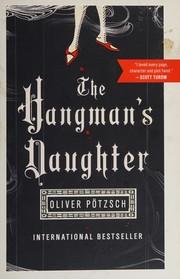
The Hangman's Daughter
In 1659 Bavaria, a hangman ordered to torture an innocent midwife instead investigates the deaths of children marked with a strange tattoo.
2,523-word summary · 11 min read
The 5th Horseman
Two linked cases pull Lindsay Boxer and the Women's Murder Club into a hospital full of strange deaths and a luxury-car murder spree.
2,609-word summary · 12 min read
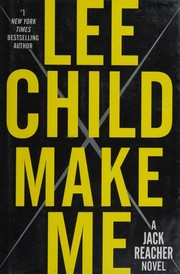
Make Me
Reacher drifts into a quiet Midwestern town and finds a missing investigator, a trail of killers, and a deep web secret.
2,352-word summary · 10 min read
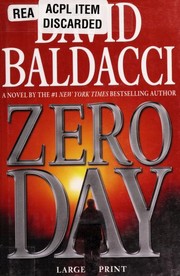
Zero Day
Army investigator John Puller is sent alone to a West Virginia coal town to solve a colonel's murder, and finds a much larger secret buried nearby.
3,434-word summary · 15 min read
You Are Not Alone
A lonely New Yorker witnesses a subway suicide and falls in with the dead woman's friends, where a makeover and a framed murder hide a hidden mastermind.
2,588-word summary · 12 min read
We Live Here Now
After a near-fatal fall, a woman moves with her husband to a remote Dartmoor house where strange events happen only when she is alone, and a raven watches from…
2,016-word summary · 9 min read
The Word Is Murder
A fictionalised Anthony Horowitz is talked into chronicling a prickly ex-detective's case: a woman murdered hours after planning her own funeral. A clever…
2,296-word summary · 10 min read
The Summons
A law professor is summoned home to find his judge father dead and more than three million dollars hidden in the house.
2,265-word summary · 10 min read
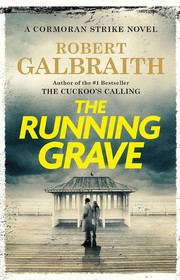
The Running Grave
In the seventh Cormoran Strike novel, Robin goes undercover inside a Norfolk cult while Strike digs into a child's death from decades earlier.
2,615-word summary · 12 min read
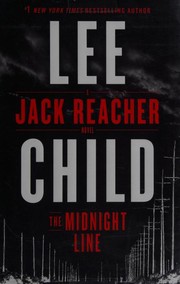
The Midnight Line
A West Point class ring in a Wisconsin pawnshop sends Jack Reacher across the Midwest, from a biker's lie to a wounded veteran hiding from the opioid trade.
2,590-word summary · 12 min read