
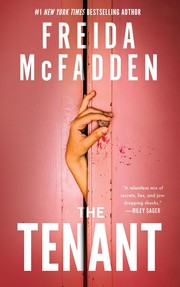
The Tenant
2,264-word summary 10 min read 368 pages in the book
- First published
- 2025
- Publisher
- Poisoned Pen Press
- Pages
- 368
- ISBN
- 9781464238819
Reading options
What's inside (10 sections)
- Blake Porter loses his job and his grip
- The tenant interviews get strange
- Whitney moves in and the house turns hostile
- Krista sees a different house
- A clock, a bloodstain and three fingers
- The woman in the photograph is Krista
- The machine behind the impostor
- The last act and what Blake does with it
- Key takeaways
- FAQ
I read this one over two nights, which is probably exactly what Freida McFadden intends. The Tenant was published in 2025 by Poisoned Pen Press, runs 368 pages, and carries ISBN 9781464238819. It is a domestic psychological thriller that begins with a man losing his job and ends with bodies on the floor of his own living room. Most of it is told through Blake Porter, with later chapters shifting to Krista and to Amanda. The book is a machine built for last-act reversals, and it works best if you stop asking whether anyone is behaving sensibly and just let it turn.
Blake Porter loses his job and his grip
Blake is a marketing VP at Coble & Roy. He has just been promoted and he is engaged to Krista Marshall, a meticulous baker who makes snickerdoodle cookies. The couple are stretched thin on the mortgage of a Manhattan brownstone, the kind of beautiful old house that costs more than two incomes can comfortably cover. Blake believes his life is moving in one direction until his boss, Wayne Vincent, fires him for leaking a campaign he did not leak.
What follows is a slow unravelling that McFadden writes with real patience. Blake does not immediately find another job. He spirals into unemployment and obsessive exercise, running and lifting while Krista bakes. The cookies become a kind of clock. Every tray that comes out of the oven is another day they cannot afford. Krista keeps baking because baking is what she does when she is worried, and Blake keeps exercising because it is the only thing he can still control. McFadden gives this stretch enough space to feel like a real collapse rather than a quick montage. Blake applies for jobs and hears nothing. He replays the conversation with Wayne Vincent, trying to work out how anyone could believe he leaked that campaign. The reader is invited to sit in the same confusion, which is exactly where the book wants us. A man who cannot explain what happened to his own career is a man ready to accept someone else's explanation of everything else.
The firing is the first piece of machinery in the book. It is not random. Wayne Vincent did not leak that campaign on a whim, and Blake's descent is not simply bad luck. For a long time the reader is meant to see a man having a breakdown. The truth, when it arrives, is that somebody planned the breakdown down to the smallest humiliating detail.
The tenant interviews get strange
With money running out, Blake and Krista decide to rent out the spare room. The interviews are played for both comedy and dread. The first candidate is a kickboxer, who demonstrates his credentials by kicking a hole in the wall. The second is a man with a drill, which is exactly as comforting as it sounds. The third is a self-styled psychic named Quillizabeth, who salts the doorway and tells Blake, without any preamble, that he will stab Krista with a kitchen knife.
That warning is the book's most memorable throwaway line. Quillizabeth is absurd, and McFadden clearly enjoys writing her, but the prophecy lodges in Blake's head anyway. The scene establishes the rule of this household: anything said aloud, however ridiculous, will later be revisited as possible evidence. The kickboxer, the man with the drill and the psychic all feel like auditions for a part in a nightmare, which is precisely what they are. In hindsight the interviews read as a bit of cruel theatre, staged for an audience of two. Each candidate is designed to make the next one look reasonable, so that by the time quiet, polite Whitney Cross sits down, renting her the spare room feels like the only sane decision available. Blake and Krista believe they are choosing a tenant. They are being guided toward one.
Then Whitney Cross arrives. She is quiet and polite and has almost no possessions. In a book full of people performing, she seems to be the one person with nothing to hide. Blake and Krista rent her the spare room, and the house changes temperature immediately.
Whitney moves in and the house turns hostile
The hostility starts small and physical. Blake develops an itchy rash, eventually traced to limonene in citrus-scented laundry detergent. He finds rotting fruit and maggots on a high shelf. After his goldfish Goldy dies, he smells bleach. These are not ghost-story details. They are the sour, domestic details of a home being made uninhabitable, and McFadden is very good on the way a smell or a stain can make a person doubt their own senses.
Whitney's provocations are more personal. She eats his cereal. She uses his soap. She leaves lipstick on his collar. His phone turns up in her bed. Each act is calibrated to make Blake look unstable to anyone who might observe the household, and each one is also designed to make Blake suspect that he is losing his mind. The goldfish, the detergent, the lipstick: they accumulate until Blake is reacting to the room itself rather than to a person. The death of Goldy is a small thing in the plot and a large thing in Blake's head. He smells bleach afterward and cannot make anyone else smell it, which is the precise point at which his private reality stops matching the shared one. The cruelty is in how carefully it is aimed. Whitney never does anything that could be filmed and used as proof. She leaves a trace that only Blake will notice, so that every complaint he makes sounds like paranoia. The gaslighting is deliberate and aimed at a specific result.
I have to admit the pacing here is the book's great strength. McFadden keeps the stakes moving from irritation to suspicion to fear without ever pausing for a breather. Whitney is almost disappointingly ordinary on the page, which is the point. She is polite, she is quiet, and she is always just slightly in the wrong place, so that Blake's reactions make him look like the problem.
Krista sees a different house
The chapters that shift to Krista reframe everything. Krista cannot smell the bleach Blake keeps describing. She finds a bleach bottle in his closet. She hears him sleep-talk Whitney's name. From her side of the wall, the house looks like a man becoming dangerous, and she eventually leaves to stay with friends Becky and Malcolm.
This is where the book starts to show its hand about point of view. Blake believes he is the victim of an intruder in his own home. Krista believes she is living with a man who is coming apart. Both versions are supported by evidence that has been planted for exactly that purpose. McFadden is telling two stories at once, and the gap between them is where the suspense lives.
The supporting characters are thinner than the central trio. Becky and Malcolm exist mostly to give Krista somewhere to go, and Wayne Vincent is a convenient villain-of-the-moment. That is a fair criticism, but it also suits the speed of the book. There is no room here for a fully realized ensemble. Everyone exists to move Blake toward the next discovery.
A clock, a bloodstain and three fingers
Alone in the house, Blake finds a bloodstain under the living room rug. Detective Garrison tells him that his elderly neighbour, Mr Zimmerly, has been bludgeoned to death with an antique kitchen clock. The clock matches one that has gone missing from Blake's own kitchen. Then Blake finds three severed fingers with pink nail polish in a paper bag behind the refrigerator.
Detective Garrison's visit is handled with a dry sensibility that I appreciated. He is not a fool, and he is not especially warm. He is a detective with a dead man, a missing antique clock and a homeowner whose story keeps shifting, and he listens the way a person listens when they have heard this kind of thing before. That skepticism raises the stakes for Blake. He needs to be believed by someone, and the evidence keeps pointing the other way. The severed fingers are the final escalation, a message that can no longer be explained as a product of a troubled mind.
This is the stretch where the book tips from psychological thriller into outright horror, and I found it effective. The missing clock is a nice piece of domestic menace, an ordinary object turned into a murder weapon and placed neatly in Blake's kitchen by somebody who knew exactly what they were doing. The fingers in the bag behind the fridge are a shock, and they are also a signal that the game has moved beyond making Blake look unstable. Somebody wants him to find these things.
Blake drives to Telmont, New Jersey, to confront Whitney's mother, and that trip produces the first true reversal. A family photo reveals that the teenage girl in the picture is Krista. The woman living in Blake's spare room is not Whitney Cross at all. She is an impostor wearing a dead woman's name.
The woman in the photograph is Krista
The revelation rewrites the entire book. Krista was born Whitney Cross. A tech-savvy friend named Elijah Myers created her new identity after she killed her boyfriend, Jordan Gallo. Then, spotting a waitress being called Miss Cross, and convinced that Blake had cheated with a coworker named Stacie Parker, Krista decided to destroy both the impostor and her fiance.
The person calling herself Whitney is Amanda Lenhart, who took the dead identity to escape gambling debts. She had lied about her mother's cancer to get money, which tells you how little she will let a convenient story get in the way of what she wants. Frank Gallo, Jordan's uncle, offered her a deal: erase the debt if she killed Krista. That arrangement is the book's coldest idea. A man who lost a nephew recruits a woman he has never met to kill a woman he has never met, and offers a ledger entry as payment. From that point the plot becomes a machine of betrayals, with each character using the others and nobody telling the whole truth.
Krista engineered Blake's firing. She hired the actors who sabotaged the tenant interviews, including the kickboxer, the man with the drill and Quillizabeth. She planted the evidence, poisoned the detergent, and murdered Zimmerly, Stacie and Elijah. It is a staggering list of crimes for one person, and the book asks you to accept that she did all of it while still baking cookies and sleeping beside Blake. That is where the pileup of coincidences starts to strain belief.
The machine behind the impostor
What makes the reveal work despite the strain is that it explains the small details. The rash, the maggots, the bleach smell, the lipstick, the phone in the bed: all of it was engineered. Even Blake's spiralling exercise and unemployment were engineered, because the firing was arranged and the money pressure was real. The house was not haunted. It was managed, by a woman who knew exactly which of Blake's buttons to press and how long to press them.
The plan's elegance is in how it uses Blake against himself. Every planted clue had two audiences. Blake saw a home turning hostile; Krista saw a man becoming violent. The bleach bottle in his closet, the sleep-talking, the blood under the rug: all of it made him look guilty to the person he most wanted to believe him. By the time Detective Garrison arrives with the story of the antique clock, Blake has been prepared to look like a murderer.
I found the machinery satisfying to look back on, even as I noticed the seams. The supporting characters are thin, the coincidences pile up, and Blake spends a very long stretch being acted upon rather than acting. For a thriller built on a passive protagonist, that is a real weakness. A reader who needs a hero who fights back from the first chapter will find Blake's long passivity frustrating.
The last act and what Blake does with it
The finale is a knife fight of a scene. A poisoned Blake watches Krista stab Amanda. Then Amanda rises and stabs Krista dead. It is the kind of ending that McFadden's readers expect from her: sudden, violent, and arranged so that the last person standing is not the one you were following. The book does not pause to let anyone explain their feelings about it.
Four months later, Blake has sold the brownstone and moved to Ohio to run his father's hardware store. Amanda stays silent about having killed for herself rather than for him. That last detail is the sharpest thing in the closing chapters. The whole novel has been about people assuming they know why someone else acted, and Amanda refuses to give Blake the comforting answer. She killed to save herself, not to save him, and she will not let him turn it into a love story.
The Tenant is not a subtle book, and it does not try to be. It is a speed run through a haunted-house structure with a domestic thriller's engine underneath. The last-act reversals arrive fast enough to forgive the coincidences, at least while you are reading. Later, the thin support and Blake's passivity are harder to ignore. Still, for anyone who wants a book that keeps flipping its own story just as you think you have it worked out, this one delivers.
FAQ
Who is the tenant in The Tenant?
The polite woman who rents Blake's spare room calls herself Whitney Cross, but she is an impostor named Amanda Lenhart who took the identity of a dead woman to escape gambling debts.
Is The Tenant part of a series?
No. It is a standalone domestic thriller published in 2025 by Poisoned Pen Press. Freida McFadden's other novels share a publisher and a style, but this one does not continue an ongoing story.
Why is the ending so violent?
The final scene has Krista stab Amanda, then Amanda rise and stab Krista dead. It fits the book's appetite for reversals and leaves Blake unable to claim he was the hero of his own story.
Similar books
The Divorce
A Long Island mother is evicted by her hedge-fund husband on their anniversary, and a twisty custody fight hides an older secret about her son.
2,227-word summary · 10 min read
The Maid's Diary
A cleaner who snoops through her wealthy clients' lives finds a secret that could destroy them, while a detective investigates a bloody waterfront house with…
3,459-word summary · 15 min read
You Are Not Alone
A lonely New Yorker witnesses a subway suicide and falls in with the dead woman's friends, where a makeover and a framed murder hide a hidden mastermind.
2,588-word summary · 12 min read
The Lies I Tell
A con artist returns to Los Angeles to ruin the man who took her family's home, while a journalist who has hunted her for ten years closes in.
2,201-word summary · 10 min read
Eight Perfect Murders
A Boston bookseller's old blog post listing eight perfect fictional murders becomes the blueprint for a real killer, and the narrator knows more than he admits.
2,292-word summary · 10 min read
The Unknown
A struggling actress joins an isolated film shoot about five women who vanished on a Vermont island in 1926, and the staged haunting turns deeply personal.
2,424-word summary · 11 min read
The End of Her
A sleep-deprived mother of twins faces a stranger's accusation that her husband murdered his first wife in Shari Lapena's domestic suspense novel.
2,383-word summary · 11 min read
The Therapist
A couple moves to a gated street where the previous therapist was murdered in their house.
2,437-word summary · 11 min read
We Live Here Now
After a near-fatal fall, a woman moves with her husband to a remote Dartmoor house where strange events happen only when she is alone, and a raven watches from…
2,016-word summary · 9 min read
The Unquiet Grave
In Dervla McTiernan's fourth Cormac Reilly novel, a body found in a Galway bog turns out to be a missing school principal, and the case opens into something…
2,253-word summary · 10 min read
The Reversal
Mickey Haller prosecutes a child killer's retrial with ex-wife Maggie and half-brother Harry Bosch on his team.
2,056-word summary · 9 min read
The Cellar
Abducted in her small English town, sixteen-year-old Summer is locked in a cellar with three other girls. Their captor calls himself Clover and wants a perfect…
2,551-word summary · 11 min read
The Brass Verdict
Mickey Haller takes over a murdered lawyer's caseload and a Hollywood double-murder trial, with Harry Bosch circling the edges.
2,672-word summary · 12 min read
Fractured
In Karin Slaughter's second Will Trent novel, a mother kills the wrong man in an Atlanta mansion, and a GBI agent with a hidden reading difficulty finds a…
2,219-word summary · 10 min read
Blood Orange
A criminal barrister with a drinking problem takes on her first murder case and finds the defendant's story mirroring her own crumbling marriage in this sharp…
2,469-word summary · 11 min read
The Flight Attendant
A flight attendant wakes in a Dubai hotel beside a dead man she may have killed, and spends the rest of the novel lying to everyone who could help her.
2,496-word summary · 11 min read
The Anniversary
Alex Finlay's standalone revisits May 1 in a Nebraska town for ten years as two former classmates close in on the May Day Killer.
2,237-word summary · 10 min read
Nightshade
Connelly launches Detective Stilwell on Catalina Island, where a beheaded buffalo and a Jane Doe in the harbor pull a quiet sheriff's post into violence and…
2,272-word summary · 10 min read

What She Knew
Rachel lets her eight-year-old son run ahead in a Bristol park, and the nine-day search turns her into a suspect in the public eye.
2,952-word summary · 13 min read

Still Missing
A realtor is abducted at a Vancouver Island open house and held for more than a year. Told through therapy sessions, the novel follows her escape and the hunt…
2,466-word summary · 11 min read
Saving Noah
A seventeen-year-old swimmer confesses to molesting two girls he coached, and his mother must decide what unconditional love is worth.
2,976-word summary · 13 min read

Bad Luck and Trouble
A deposit of $1,030 summons Jack Reacher back to his old army unit, which is being picked off one name at a time.
2,366-word summary · 11 min read

3rd Degree
The third Women's Murder Club novel follows a San Francisco terror cell and a three-day killing schedule, and it costs the club a member.
2,685-word summary · 12 min read
The Best of Friends
Three lifelong friends discover their teenage sons were hiding more than anyone knew after a night that leaves one dead, one in a coma and one silent.
2,040-word summary · 9 min read
Strange Sally Diamond
Sally Diamond takes her dying father's joke literally and burns his body, then learns her whole childhood was built on a kidnapping and a lie.
2,411-word summary · 11 min read
One of Us Is Dead
In Buckhead, Atlanta, five women narrate a murder among manicures, fundraisers, and social warfare. Jeneva Rose's 2022 thriller is a gossipy revenge fantasy…
2,471-word summary · 11 min read

The Woods
Twenty years after two teenagers were murdered and two vanished at summer camp, prosecutor Paul Copeland identifies a fresh corpse as one of the missing.
2,490-word summary · 11 min read

The Redbreast
Harry Hole chases an ageing sniper through modern Oslo while two Norwegian volunteers on the Eastern Front carry a fifty-year-old betrayal toward a royal…
2,453-word summary · 11 min read
Razorblade Tears
Two ex-con fathers, one Black and one white, hunt their murdered sons' killers in a Richmond that never gave the boys a fair shake.
2,880-word summary · 13 min read

Things We Do in the Dark
A comedian kills her husband, then a podcaster digs up her teen murder past.
2,427-word summary · 11 min read