
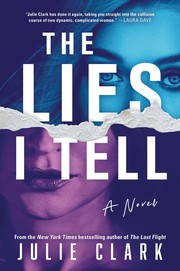
The Lies I Tell
2,201-word summary 10 min read 320 pages in the book
- First published
- 2022
- Publisher
- Sourcebooks Landmark
- Pages
- 320
- ISBN
- 9781728247595
Reading options
What's inside (9 sections)
I came to this one after reading Julie Clark's The Last Flight and liking how she puts two women under pressure and lets them surprise each other. The Lies I Tell does something similar with a con artist and the journalist who has spent a decade hunting her. What surprised me is that the book keeps asking who actually deserves to be called a criminal. By the end I was rooting for a woman who lies for a living and feels more trustworthy than almost everyone around her.
The woman at the fundraiser
The story opens in the present, in June, at a ten thousand dollar a plate campaign fundraiser for Ron Ashton, a developer running for state senator. Kat Roberts is there with her press credentials, working the room from the perimeter. She spots Meg Williams across the room and has one thought: she is back. Kat has had a Google Alert running on Meg's name for ten years. It finally pinged when a website appeared for Meg Williams, Real Estate Agent, using her real name, which Kat takes as a statement that Meg is done hiding.
Meg, for her part, has spent six months preparing. She targeted Veronica, a woman in Ron's inner circle, in a yoga class, built a friendship, and helped her buy a house she wanted. Meg lied about the listing price and had Veronica pay two hundred thousand dollars over the asking price while convincing her she had scored a deal. It is a small, clean con that buys her entry into the room and gives Ron a reason to want a new real estate agent, which is Meg's real objective.
Kat is not really a reporter anymore. She writes fluff pieces for pennies a word at a content mill, a long way from the newspaper job she lost, and she lives with the sense that she has disappointed both herself and her mother, who wanted an award winning journalist for a daughter. Her fiance Scott thinks chasing Meg is a bad idea and says so. Kat goes anyway, because she believes this is the story that will finally set her free. That conviction gives her a stubborn, almost strained energy, and it is easy to see why she would mistake obsession for purpose.
The two women circle each other at the party, and the chapters alternate between their points of view. That choice is the book's best decision. We always know more than both of them, and the pleasure comes from watching them misread each other.
Ten years earlier, the van and the principal
To understand why Kat is so fixated, Clark takes us back ten years. Meg's mother had terminal illness, and Ron Ashton talked her into signing over the family home in Brentwood. Meg was left living in her mother's van, working the front desk at a YMCA, and getting her meals from a friend named Cal or from dates she found through an online dating site. Her mother had died. Meg was angry, broke, and very good at reading people who wanted something from her.
She picks a target: Cory Dempsey, the high school principal who had been her math teacher. Meg had heard that he had carried on with an underage student named Kristen Gentry, a girl who had been kind to her at school. Under a made up identity, Meg moves into Cory's house and starts a relationship with him. She is painstaking about it. She shows him receipts for everything she buys, then slowly tests how much he will tolerate, drains money from his accounts in small amounts, sells her mother's van to a family with kids for six thousand dollars in cash, and talks him into putting a replacement car in her name.
While going through his paperwork she finds emails between Cory and a student named Stacy that escalate in a disturbing direction, along with photographs of him and Kristen. Meg makes three copies of everything. She plants the photos in his desk, sends the material to the newspaper, his rival at school, and the school board, and then walks away with the money and the car. It is a brutal, effective piece of revenge on a man who hurt a girl he was supposed to protect.
The anonymous call that ruined Kat
This is where the two timelines knot together. Cory's best friend was Nate Burgess. Meg called the LA Times anonymously and pointed a young reporter named Kat toward Nate as a source on the scandal. Kat, eager for the angle her boss did not want her to pursue, went to a bar where Nate drank and tried to get him talking. He flirted, offered to tell her what she wanted over another drink, and the next thing she remembered she woke up in his apartment with a pounding head and no memory of the night.
She realized she had been raped. She did not get a rape kit and did not go to the police. She went to the school interview she was supposed to do and tried to hold on to her job. She lost it anyway, and with it the career she had built. She traced the anonymous call back to Meg and decided that Meg had ruined her life. For ten years she studied everything she could find about the woman, waiting for her to resurface.
The hard thing to sit with is that Meg never knew. She made the call to help expose a predator and had no idea it would put Kat in Nate's path. Kat's certainty that she has been wronged is completely understandable and completely misplaced. Clark does not make Kat foolish for it. She makes her wounded, and the book is far more interested in how a person builds a whole life around a grievance than in proving her wrong for sport.
Playing both ends
Back in the present, Meg's plan against Ron is coming together. She has gone to the trouble of getting a real estate license, because there is no way to do what she is doing without one, and fingerprints and a Social Security number mean she has to use her own name. That is part of the point. She wants Ron to know who took him apart. Earlier, she pulled a similar job on Phillip Montgomery, swindling him out of his house and money to help his wife Celia keep her share of the assets in a divorce he was trying to rig.
Kat approaches Meg at the fundraiser under the name Kat Reynolds, posing as a wealthy buyer. Meg sees through her almost immediately, finds out about her fiance Scott, and does the smart thing: she keeps Kat close and hires her as an assistant so she can control what Kat sees. What follows is a strange sort of friendship, a fauxship in which both women are performing and both start to care about the other despite themselves.
Meg explains her method in the chapters from her side, and it is less like improvisation than research. She reads the quizzes people share online, the check ins and geo tags and shameless self promotion, and uses the answers to invent a shared past. Four names you go by, five places you have lived; the questions look harmless until someone like Meg has them. She profiles the people around a target and finds the one who can introduce her. Watching that machinery turn is genuinely interesting, and it makes the later moments when she lets her guard down with Kat feel earned rather than sentimental.
Meanwhile Kat's personal life is coming apart in a way she misreads completely. Missing bank statements and unexplained debt, about thirty one thousand dollars, strain her relationship with Scott. Meg becomes the convenient villain in that story too. Then Kat finds a burner phone in Scott's car and learns the truth: Scott, a recovering gambler who has relapsed, stole her identity to cover his losses. The person she trusted at home was lying to her, and the woman she was hunting was not.
I found this stretch the most satisfying part of the novel. The con is not really the exciting part. The excitement is watching two women who have each been trained to expect the worst from people slowly realize they are on the same side of something.
The seven million dollar house
Meg's finish is a piece of theater. She shows Ron a vacant property in Mandeville Canyon and convinces him it once belonged to Ronald Reagan, paying another agent to leave so the illusion holds. He agrees to a seven million dollar all cash offer. Meg sets up a fake escrow company called Orange Coast Escrow and routes the wiring instructions through it, so the money lands in an account she controls.
She confronts Ron while he is out for a jog and tells him the money is gone, wired to a homeless cooperative in his name. A confession statement is ready to go to the media if he talks. If he exposes the theft, his illegal campaign transfers and tax fraud come out with it. His campaign is finished, his house is gone, and he has no clean way to fight back. Meg's mother used to talk about winners and losers, and Meg gets to hand Ron that lesson in her mother's words.
There is a certain neatness to all of this that I enjoyed and also mistrusted a little. Real life rarely arranges itself into a single flawless trap, and the book's faith in the perfect con is part of its fantasy. But the emotional logic works. Meg is not doing this for the money. She is doing it so a man who took a home from a dying woman loses everything he cares about, and the thriller gives her that satisfaction without asking her to apologize.
What Meg left on the table
When Kat goes to Meg's rented house, it is empty and staged. On the table are Meg's journals, a letter, and a cashier's check for thirty one thousand one hundred twenty five dollars to cover Kat's debt. Meg knew Kat was lying the whole time. She writes that Kat should go write her story, and Kat reads the notebooks and understands what Meg has actually been doing for years: targeting corrupt men and helping the women they hurt get justice.
The aftermath is quiet. Ron loses the election. Scott enters treatment. Kat's mother wants a vicious exposé on Meg, and Kat refuses, saying she has found clarity. Two months later, in December, Kat packs up her apartment and drives to Portland with a plan of her own. She is going to use what she learned from Meg to con Nate Burgess, the man who raped her, so he cannot do it again. Meg is on a flight to Costa Rica, done with conning and ready to live simply.
That final turn is the one I keep thinking about. The book is not really about catching a criminal. It is about what a person is allowed to do when the official channels have failed her, and whether revenge changes the person who carries it out. Kat and Meg end up facing the same question from opposite directions.
What I think of it
There are things here that did not fully work for me. The past timeline moves in big, tidy steps, and Meg's rise from living in a van to running elaborate cons feels speedier than the book can quite justify. Some of the coincidences are convenient, especially the way Kat keeps ending up exactly where Meg is working. And the framing of a con artist with a heart of gold is familiar territory; Clark leans on it enough that you can see the outline of the character before she fills it in.
Even so, the two woman structure carries the book. Meg's cons are fun to read because she treats them as craft, all observation and patience and careful roles. Kat's anger is convincing because it has a real wound behind it. The novel keeps asking whether justice and revenge are the same thing, and it never gives an easy answer, since both women break laws and both women are right about the men they target. Clark is careful about the cost, too. Meg's journal shows a person who has given up a normal life to keep doing this work, and Kat's decision at the end is not treated as a victory but as a choice she will have to live with.
That ambiguity is a welcome complication in a thriller. The book does not argue that con artists are harmless or that powerful men deserve whatever happens to them. It asks what a person should do with anger when the systems meant to handle it have failed, and it lets two women arrive at different answers. For me that was the real payoff, more than the wiring instructions or the final confrontation. It is a fast, smart read, and the ending left me wanting to argue about it, which is more than I can say for most books in this genre.
FAQ
When was The Lies I Tell published and by whom?
Sourcebooks Landmark published it in 2022. The hardcover runs 320 pages with ISBN 9781728247595.
Is The Lies I Tell part of a series?
No. It is a standalone novel from Julie Clark, the author of The Last Flight.
Do I need to read The Last Flight first?
No. The books share an author but no characters or continuity. This one follows con artist Meg Williams and journalist Kat Roberts.
Similar books
You Are Not Alone
A lonely New Yorker witnesses a subway suicide and falls in with the dead woman's friends, where a makeover and a framed murder hide a hidden mastermind.
2,588-word summary · 12 min read
The Divorce
A Long Island mother is evicted by her hedge-fund husband on their anniversary, and a twisty custody fight hides an older secret about her son.
2,227-word summary · 10 min read
The Maid's Diary
A cleaner who snoops through her wealthy clients' lives finds a secret that could destroy them, while a detective investigates a bloody waterfront house with…
3,459-word summary · 15 min read
The Tenant
A marketing VP loses his job and rents out a room, and his Manhattan brownstone becomes a trap built from planted evidence, old identities and staged…
2,264-word summary · 10 min read
The Drowning Woman
Living in her car in Seattle, Lee saves a wealthy stranger from drowning. The friendship that follows draws her into abuse, murder, and a plan to disappear.
2,578-word summary · 11 min read
The Moonlight Child
On a cold January night, Sharon Lemke sees a child washing dishes in a neighbour's kitchen and decides she cannot ignore it.
2,169-word summary · 10 min read

The Sacrifice
On her wedding day Laikyn Minson is handed to Tyson Crawford, a Lord who wants her family's ruin, in a dark revenge romance set inside a brutal secret society.
2,603-word summary · 12 min read

The Obsession
After a childhood in the shadow of her serial killer father, photographer Naomi Carson puts down roots in a coastal town, only to face a copycat killer…
2,230-word summary · 10 min read
The Cellar
Abducted in her small English town, sixteen-year-old Summer is locked in a cellar with three other girls. Their captor calls himself Clover and wants a perfect…
2,551-word summary · 11 min read
Pretty Things
A grifter and an heiress collide at a decaying Lake Tahoe mansion in Janelle Brown's sharp novel about social media, deception and the stories people tell to…
2,725-word summary · 12 min read
Hidden Bodies
Joe Goldberg flees to Los Angeles chasing the woman who robbed him, falls for a wealthy grocery heir, and finds the bodies he buried in New York resurfacing in…
2,247-word summary · 10 min read

Flawless
A's texts turn the four Rosewood friends against Toby Cavanaugh in the second Pretty Little Liars novel, where the truth about Jenna's fire finally surfaces.
2,811-word summary · 12 min read
When She Returned
Eleven years after vanishing from a California parking lot, Kate Bennett reappears in Montana with an infant, and her family learns that coming home may not…
2,338-word summary · 10 min read
The Unknown
A struggling actress joins an isolated film shoot about five women who vanished on a Vermont island in 1926, and the staged haunting turns deeply personal.
2,424-word summary · 11 min read

The Flight Attendant
A flight attendant wakes in a Dubai hotel beside a dead man she may have killed, and spends the rest of the novel lying to everyone who could help her.
2,496-word summary · 11 min read

The Anniversary
Alex Finlay's standalone revisits May 1 in a Nebraska town for ten years as two former classmates close in on the May Day Killer.
2,237-word summary · 10 min read
Intensity
A college student survives a brutal home invasion, then follows a killer's motor home in a bid to save the teenage girl he holds captive.
2,290-word summary · 10 min read

What She Knew
Rachel lets her eight-year-old son run ahead in a Bristol park, and the nine-day search turns her into a suspect in the public eye.
2,952-word summary · 13 min read

Six Years
A professor who promised to forget the woman he loved sees her husband's obituary and discovers that the wedding, the marriage, and the woman herself may never…
2,076-word summary · 9 min read
Persuader
Reacher goes undercover in a Maine crime family to find a missing DEA agent and the man he once failed to kill, and Lee Child keeps the whole thing tight,…
2,278-word summary · 10 min read
The Troop
A Boy Scout troop on a Canadian island takes in a stranger who cannot stop eating, and the worm inside him turns a camping trip into a war.
2,457-word summary · 11 min read

Still Missing
A realtor is abducted at a Vancouver Island open house and held for more than a year. Told through therapy sessions, the novel follows her escape and the hunt…
2,466-word summary · 11 min read
Saving Noah
A seventeen-year-old swimmer confesses to molesting two girls he coached, and his mother must decide what unconditional love is worth.
2,976-word summary · 13 min read

Bad Luck and Trouble
A deposit of $1,030 summons Jack Reacher back to his old army unit, which is being picked off one name at a time.
2,366-word summary · 11 min read

The Ex
Cassie thinks her new boyfriend's ex is the woman harassing her, but Freida McFadden's thriller keeps rearranging who the ex actually is.
2,103-word summary · 9 min read

The Best of Friends
Three lifelong friends discover their teenage sons were hiding more than anyone knew after a night that leaves one dead, one in a coma and one silent.
2,040-word summary · 9 min read
The End of Her
A sleep-deprived mother of twins faces a stranger's accusation that her husband murdered his first wife in Shari Lapena's domestic suspense novel.
2,383-word summary · 11 min read

One of Us Is Dead
In Buckhead, Atlanta, five women narrate a murder among manicures, fundraisers, and social warfare. Jeneva Rose's 2022 thriller is a gossipy revenge fantasy…
2,471-word summary · 11 min read

Girl, Forgotten
A rookie US marshal guards a judge with a stalker and ends up reopening the 1982 prom-night murder of the judge's pregnant daughter.
2,111-word summary · 9 min read

The Woods
Twenty years after two teenagers were murdered and two vanished at summer camp, prosecutor Paul Copeland identifies a fresh corpse as one of the missing.
2,490-word summary · 11 min read