
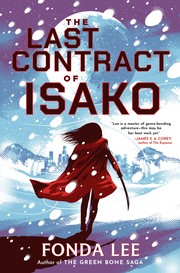
The Last Contract of Isako
2,099-word summary 9 min read 528 pages in the book
- First published
- 2026
- Publisher
- Orbit
- Pages
- 528
- ISBN
- 9780316568630
Reading options
What's inside (9 sections)
I picked this one up because I had read the Green Bone Saga and wanted to see what Fonda Lee does when she leaves the clan halls of Jade City behind and heads off-world. What I found instead of a return to that intimate family politics was something colder and sleeker: a standalone science fiction novel set on a planet called Aquilo, published in 2026 by Orbit and running to 528 pages in the edition I read. It took me a while to settle into the change. Once I did, I found a book that is equal parts corporate thriller and sword-and-honor story, with a puzzle box underneath, built around a heroine I have not stopped thinking about.
A planet where your job is your worth
Aquilo is not a kindly place. Lee sets it up as a world where a person's work is the whole measure of them, where the job you hold decides what your life is worth, and where the people at the top carry the power to extend a life or end one. That is a brutal premise, and the book does not soften it. Status here is something assigned from above, and it can be taken away. I found the setting easy to picture and hard to inhabit, which I think is the point. It is a place built to sort people.
Into this world steps Isako, a legendary swordswoman, a corporate samurai who charges the highest price for her blade. The phrase corporate samurai does a lot of work in this book. She is not a wandering knight or a rebel. She is a professional who sells her skill to the highest bidder, and she is very good at it. Decades of work have made her rich and famous and alone. Lee paints her as someone whose reputation is enormous and whose daily life has shrunk to the contract and the code. She commands a price nobody else can match, and the cost of that price is a life with almost nobody in it.
What interests me is how the book treats her fame. Isako is a legend, but Lee writes her as a working professional, not a myth. There is a job to do, a client to answer to, a rate to be paid. The grandeur is in the estimation of others; the reality is a woman who has spent years at work while everything else fell away. That gap between the legend and the person is where the novel lives.
When the client retires
The story opens with something that sounds almost comic until you understand what it means for Isako: her longtime client retires. For someone whose whole life is organized around serving one powerful patron, this is not a minor inconvenience. It is the removal of the structure that held her life together. Having spent decades at work and cut off from the people around her, Isako decides to follow the code and walk out into Aquilo's frozen wasteland with her head held high.
This act is meant to enrich her family through her death. I had to sit with that for a moment. In this world, a death done in the proper way, with the right bearing and the right obedience to the code, is worth something to the people left behind. Isako's choice is not despair exactly. It is a calculation made in the language she knows: duty, honor, what a life is worth and how it can be spent. She has spent hers on work; now she will spend the last of it in a way that pays out to people she has not been close to in years. There is something quietly devastating about a heroine who thinks of her own death as a final transaction done correctly.
I read this opening as the book's real question in miniature. What is a life for, and what is it worth when you have spent it all on a job? Isako's answer, at first, is that the code will tell her. She will walk into the cold, head up, and let the arithmetic work itself out. The rest of the novel is what happens when that clean answer stops being enough.
One last contract, and Martim
Before she can go, Isako is offered one final mission she feels she cannot refuse. The word feel matters here. This is not a contract she takes for money or glory. It is one she takes because of who she is and what she believes she owes. I liked that the book makes the pull personal rather than financial. A lesser story would have dangled a bigger fee. Lee knows her heroine would not be moved by that.
Then comes the jolt that turns the book from a character study into a thriller. When Isako learns who sits at the center of the mission, she finds Martim, her last and worst apprentice, who has somehow climbed to the top. The apprentice she thought least of, the one who failed or disappointed her most, is now a person of power. That changes everything. The job stops being about the code and starts being about the two of them. Lee uses this turn to make the question of worth personal: if Aquilo says Martim is now valuable and Isako is nearly finished, what does that say about either of them?
Martim is not given much softness in the setup, and that is what makes the dynamic crackle. Isako's relationship with him is built on old judgment, on the certainty that she was the better sword and the better person. Finding him at the summit forces her to reconsider the story she has told herself about her own life. This is the most engaging thread in the book for me, because it pits a veteran's hard-won certainty against a world that has quietly rewritten the rankings.
A murder mystery told from more than one side
From there the plot moves into corporate espionage and shadowy secrets, and Isako is drawn into a murder mystery. This is where the book shows its noir side. The contracts and the code give way to hidden motives, back rooms, and people who do not say what they mean. Reviewers have described the twist as a serious one, and the structure as Rashomon-like, with the reader kept guessing until the end. Both descriptions fit. The mystery is built so that different accounts of events do not line up, and Isako has to weigh who is telling her the truth.
I enjoyed this part more than I expected. A story about a swordswoman could easily rest on fights alone, and Lee does write fights well. But the mystery gives the book a different engine. Every answer opens another question, and the shifting accounts make it hard to know whom to trust, including the people closest to Isako. The Rashomon quality is not a gimmick here. It fits a world where status is assigned and stories are told to protect it.
My one reservation is the ending of the puzzle. Some reviewers note that the solution leans on a sizable final reveal, and I think that is fair. The book spends so long making you doubt every account that when the answer arrives it needs a big piece of information to settle things. That reveal works on the level of surprise, but it also feels a little like the mystery is being resolved by a door opening rather than by the detective work that got us there. I did not mind it much, but it is worth knowing going in.
The people she left behind
What gives the book its weight beyond the mystery is the people Isako finds again. During her years of work-obsessed isolation she left family and friends behind, and the plot brings her back into contact with them. These reunions are quieter than the action, and they are the parts I remember most. Lee is good at the small awkwardness of returning to people you have not been present for. There is affection here, and also the residue of years of absence that cannot be wished away.
Alongside these reunions the book explores transhumanism and disability. I want to be honest that these threads arrive late. They are part of what Isako uncovers, and what she uncovers could forever change humanity's existence among the stars. That is a big idea for a book that spends most of its length on contracts and swords, and the late arrival makes the theme feel a bit bolted on. Still, it connects to the central question. If a person's worth is assigned by a job and a body, then questions about changing the body and about whose lives count become questions about who gets to decide. The transhumanist material pushes the honor code into a future where the terms of a life can be rewritten.
Honor and duty run through all of this, along with the question of what is ultimately worth living or dying for. Isako begins ready to die for a code. By the end she has met people again and seen things that complicate that simple readiness. The book does not hand her a new creed. It lets the old one fray and leaves her to decide what to hold onto. That is a more interesting ending than a victory would have been.
Blade Runner cool and the cost of the code
Lee has said in effect that this is an homage to corporate-samurai, noir, and cyberpunk traditions, mixing Blade Runner cool with codes of honor and vengeance. You can feel all of those ingredients. There are neon-lit corporate spaces and a rain-slick feel to the world, and a heroine who moves through it with the wary competence of someone who has seen a great deal. The revenge strain sits under the honor code, because a code that demands repayment for insult and loss is never far from vengeance.
The result is a visually slick, action-heavy space opera built around a mature, veteran woman warrior. That last part matters to me. Isako is not a young hero finding her power. She is someone at the end of a long career, still formidable, dealing with the consequences of choices made decades ago. Lee's skill with fight scenes and character work is on full display, and the two reinforce each other. The fights are not empty set pieces; they are arguments about what Isako believes she is owed and what she is willing to spend.
That said, the coolness can be a barrier. This is a deliberately stylish book, and style can keep a reader at arm's length. The corporate, off-world setting is colder than the clan politics that made Jade City so intimate. Readers who came for the dense family ties of the Green Bone Saga may find the movements of companies and contracts less gripping, and I think that is an honest reaction rather than a failure of attention.
Where it drags
At 528 pages the world-building is dense, and there are stretches where the machinery of Aquilo, the contracts, and the corporate arrangements weigh on the pace. I found myself skimming a few passages that were clearly there to make the world feel solid. Lee clearly cares about the rules of this place, and some readers will love that precision. For me the book is at its best when it is following Isako rather than explaining Aquilo.
The transhumanist and disability threads, as I said, are raised late, and they never get the room the premise suggests they deserve. The final reveal, too, asks a lot of the reader. These are not flaws that sink the book. They are the cost of a novel that is trying to hold a mystery and a sword epic in the same hands, with a speculative idea on top.
I would hand this to a reader who wants a sharp thriller with a woman at its center who is past her prime and still dangerous. I would be cautious with someone looking for the warmth of the Green Bone Saga, because this is a colder book by design. What stayed with me was Isako's decision to walk into the cold with her head up, and everything that makes her reconsider it. The book asks what a life spent entirely on work is worth, and it lets a veteran warrior find out that the answer is more complicated than the code allows.
FAQ
Is The Last Contract of Isako part of the Green Bone Saga?
No. It is a standalone science fiction novel by Fonda Lee, the author of the Green Bone Saga and Jade City. It moves off-world to Aquilo and shares no characters with that series.
What happens when Isako's longtime client retires?
With no client left to serve, Isako decides to follow the code and walk into Aquilo's frozen wasteland with her head held high, an act meant to enrich her family through her death. A final mission stops her before she goes.
Does the book deliver a satisfying mystery?
The murder mystery uses a Rashomon-like structure and a serious twist that keeps readers guessing until the end. Some reviewers feel the solution relies on a sizable final reveal rather than pure detective work.
Similar books
Morning Star
Broken in a box by the Jackal, Darrow rises with Howlers to open Mars mines to sky.
2,009-word summary · 9 min read
The 100
Three centuries after a nuclear war, a hundred teenage prisoners are sent from a failing space colony to test whether Earth is livable again.
2,152-word summary · 10 min read
Saga, Volume 4
Book Two opens with Alana and Marko trying to raise Hazel in hiding on Gardenia, while a vengeful robot kidnaps Prince Robot IV's newborn son.
2,003-word summary · 9 min read

Babylon's Ashes
Three months after the Free Navy's strikes, the Rocinante crew returns as Earth, Mars, and the Belt unite to retake the Ring station of Medina.
2,245-word summary · 10 min read

Carve the Mark
On a planet divided between conquered and conqueror, the tyrant's sister and a kidnapped oracle's son discover that their gifts make them useful to everyone…
2,340-word summary · 10 min read
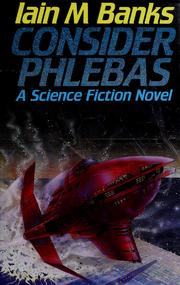
Consider Phlebas
The first Culture novel follows a spy for the opposing side, a man hired to hunt a fugitive through a war between an anarchist post-scarcity utopia and a…
2,350-word summary · 10 min read
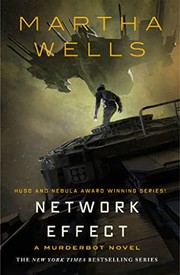
Network Effect
Murderbot's contract job turns into a rescue mission when a hijacked research ship and a colony of corrupted colonists appear.
2,256-word summary · 10 min read
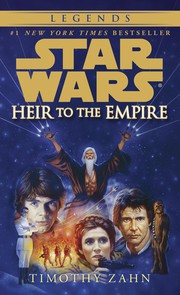
Heir to the Empire
Grand Admiral Thrawn returns from the Unknown Regions and outmaneuvers the New Republic while Luke, Leia, Han and smuggler Talon Karrde race him toward…
2,323-word summary · 10 min read
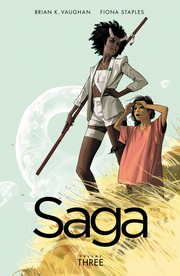
Saga, Volume 3
Marko, Alana, and Hazel hide on the planet Quietus with the reclusive author who inspired their romance, while assassins and a prince close in.
1,989-word summary · 9 min read
We Are Legion (We Are Bob)
A dead software engineer wakes up as a self-replicating space probe, clones himself into a squabbling fleet of Bobs, and tries to keep a ruined Earth alive.
2,357-word summary · 10 min read
Never Fade
Ruby, now a leader in the Children's League, must track down the boy whose memories she erased, because he holds the only proof of what caused the disease that…
2,188-word summary · 10 min read
Nemesis Games
The Rocinante crew scatters across the solar system just as Marco Inaros and the Free Navy bombard Earth. The Expanse reaches its turning point.
2,506-word summary · 11 min read
Ancillary Justice
A ship mind trapped in one human body hunts the emperor who betrayed her across frozen worlds.
2,595-word summary · 12 min read
Y: The Last Man, Vol. 1: Unmanned
Yorick Brown and his monkey Ampersand survive a plague that kills every Y-chromosome mammal and cross a collapsed America.
2,525-word summary · 11 min read

Under the Never Sky
Exiled from her Pod, Aria crosses a storm-scarred wilderness with Outsider Perry to find family and the fabled Still Blue.
2,572-word summary · 11 min read
Cibola Burn
Settlers and a company fight over a new world while Holden tries to stop a war.
2,011-word summary · 9 min read

The Fall of Hyperion
Keats persona Severn dreams pilgrims to the Time Tombs as Hegemony falls and TechnoCore war breaks the farcasters.
2,115-word summary · 9 min read
Abaddon's Gate
A dead detective guides Holden, an assassin hunts him, and a pastor walks unarmed into a mutiny as the Ring opens new worlds.
2,672-word summary · 12 min read
Ready Player Two
Wade finds the ONI headset and seven new shards, reuniting the High Five against Anorak for the OASIS future.
2,157-word summary · 10 min read

The City of Ember
Two twelve-year-olds trade jobs and chase a chewed-up note to save their fading underground city before its lights fail.
2,998-word summary · 13 min read
Leviathan Wakes
A destroyed ice hauler, a missing heiress, and an alien growth pull a crew and a tired detective toward war across the solar system.
3,653-word summary · 16 min read
Golden Son
Darrow serves House Augustus as a Gold officer while plotting revolt, until a gala refusal, a duel with Cassius, and a Triumph betrayal break his rise.
2,747-word summary · 12 min read
The Death Cure
Thomas refuses WICKED's final test, remembers too much, and runs with the Gladers toward a last cure and a ship north.
2,955-word summary · 13 min read

The Host
Stephenie Meyer imagines Earth settled by Souls, where Wanderer wakes inside Melanie Stryder and hears her voice refuse to fade, sparking a desert flight to…
2,288-word summary · 10 min read
Ready Player One
In 2045 Wade Watts hunts Halliday's three keys inside the OASIS, racing IOI with Art3mis, Aech, Daito and Shoto for the Jade Key onward.
1,971-word summary · 9 min read

Wayward
With Ethan Burke now sheriff, Wayward Pines runs on cameras, fear and a founder's private plan, until a murder forces him to choose between order and the truth.
2,252-word summary · 10 min read
The Atlantis Gene
A geneticist and an intelligence operative chase two kidnapped boys through a global conspiracy about human evolution and a weapon built to cull humanity.
2,369-word summary · 11 min read
MaddAddam
Toby and Ren rebuild a camp after the plague while Zeb reveals the past and the Crakers invent a religion around Oryx and Crake.
2,201-word summary · 10 min read