
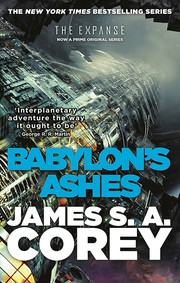
Babylon's Ashes
2,245-word summary 10 min read 544 pages in the book
- First published
- 2016
- Publisher
- Orbit Books
- Pages
- 544
- ISBN
- 9780316334747
- Series
- The Expanse (#6)
Reading options
What's inside (8 sections)
I came to Babylon's Ashes as the sixth book in The Expanse, which means I already knew the score. James S.A. Corey is the pen name of Daniel Abraham and Ty Franck, and by 2016 they had spent five books building a solar system divided between Earth, Mars, and the Belt. Orbit published this one in December 2016, it runs 544 pages, and it picks up three months after the Free Navy's surprise attack in Nemesis Games. What surprised me was how different it feels from the book before it. Nemesis Games was intimate, a story about the Rocinante crew pulled apart by their own pasts. Babylon's Ashes widens the lens to the whole system and never really narrows it again. It won the 2017 Dragon Award for Best Science Fiction Novel, and it is easy to see why it connected. The title is a quiet clue. The fall of Babylon stands in for the fall of an empire, and the book is about an order collapsing and something untested taking its place.
A system at war
The novel opens with the aftermath of the Free Navy's strikes. Asteroids have been falling on Earth, and the damage is catastrophic. Marco Inaros, the Belter leader who built the Free Navy, is consolidating power in the Belt, stealing supplies from colony ships heading for the Ring, and cutting off contact between Medina Station and the colonies. Medina sits at the center of the alien ring network, the Slow Zone, and the Free Navy has installed rail guns around it to stop any hostile ship from passing through. Meanwhile Winston Duarte, a rogue Martian faction leader, has taken residence in the Laconia system through the gates and is working on something nobody understands. Ships that pass through the Ring gates sometimes simply vanish, and no one knows why.
Avasarala, the acting UN secretary, is on Luna, running what is left of Earth's government. She has identified the Azure Dragon, the Free Navy ship that coordinates the asteroid strikes, and she sends the Rocinante to disable it. This is where the book's ensemble comes into view. The crew includes Holden, Naomi Nagata, Alex Kamal, Amos Burton, and Clarissa Mao, the sister of Julie Mao, who had once tried to kill Holden and is now a permanent part of the crew after Amos rescued her from Earth. Bobbie Draper, a former Martian Marine, is assigned as mission commander. The Rocinante goes after the Azure Dragon, disables it, and brings its crew back to Luna as prisoners. The immediate threat of more rocks falling on Earth is blunted.
Ceres, betrayal, and a funeral
With the asteroid threat eased, Avasarala plans a major offensive to take Ceres back from the Free Navy. Marco does not defend the station. He evacuates it, strips it of everything useful, and leaves the arriving Earth and Martian fleets responsible for millions of stranded citizens. It is a ruthless piece of strategy and one of the sharper political moves in the series. Michio Pa, who had led the pirate fleet stealing from colony ships, decides she has had enough of Marco's methods. She breaks with him and uses her ships to distribute the stolen supplies to Belt colonies that need them. Marco answers by destroying some of her ships.
The Ceres sequence is where the book's politics get most interesting. Marco's argument is that the Belt has been used as a colony and a resource for Earth and Mars long enough, and that only independence can end it. The book never dismisses that grievance, even though Marco pursues it through terrorism. Avasarala, for her part, is willing to abandon the moral high ground to deny him a victory, and the stranded citizens of Ceres become pieces on a board. Neither figure is written as a villain in a simple sense. Corey gives both of them a logic that a reader can follow, which is why the conflict has more weight than a standard good versus evil space war.
Fred Johnson, the old OPA leader who runs Tycho station, calls a meeting of the OPA factions that did not join the Free Navy. The Rocinante ferries him there, and the ship is ambushed by Free Navy vessels under Marco's command. They drive Marco off, but Fred suffers a stroke during the high-G maneuvers and dies. His death is one of the book's genuine emotional punches. Fred had been a stabilizing figure since the first book, a man who had chosen a side and lived with the cost. Holden takes over the meeting after Fred's death and manages to talk the leaders of Earth, Mars, and the OPA into forming a combined fleet. It is a big political lift, and the book gives it enough room to feel earned.
The plan to take Medina
The combined fleet agrees on a plan. Medina Station is the key objective because it controls access to the Ring network, so the allies will launch a system-wide offensive to distract the Free Navy while the Rocinante escorts thousands of small unmanned craft, carried on the ice hauler Giambattista, to the Ring. The idea is to overwhelm the rail guns installed in the Slow Zone, after which a second wave can take Medina back. Michio Pa brings her pirate fleet into the fight, which adds weight to the distraction and gives her a way back into the Belter community.
The offensive works in outline and costs a great deal in ships and lives. Pa's fleet is crippled. Bobbie leads the force tasked with taking the rail guns, but when her team gets there they find Duarte's marines defending the guns, an enemy nobody had expected. Rather than seize the weapons, Bobbie destroys the reactor that powers them. The Rocinante takes Medina's surrender, but without the guns the station is exposed to a counterattack. Marco orders the rest of the Free Navy to burn hard for Medina, hoping to retake it and crush the allied fleet in one move.
This is the part of the book where the scale becomes almost overwhelming. Corey keeps a dozen threads in the air at once, from Avasarala's political maneuvering on Luna to Praxidike Meng's work on Ganymede to a group of Medina Station workers named Salis, Jakulski, Roberts, and Vandercaust who are just trying to survive the fighting. The effect is impressive and occasionally exhausting.
The other fronts
One of the reasons the book feels so large is that Corey refuses to stay with the Rocinante. The novel has fifteen point-of-view characters, far more than the earlier entries, and the story keeps stepping away from the main fleet to show what the war looks like from other angles. The prologue belongs to Namono, called Nono, living in Abuja, Nigeria, with her wife Anna Volovodov and their daughter Nami in the aftermath of the meteorite strike on North Africa. Her chapters are about scarcity, queueing for supplies, and the slow work of keeping a family alive when the systems around you have stopped functioning. It is a long way from the bridge of the Rocinante, and it is the point. The war is not an abstraction that happens to ships.
Praxidike Meng, the plant researcher introduced on Ganymede, gets his own thread too, working the agricultural problems that a system at war makes worse. On Ceres, Anderson Dawes appears as the governor and long-time OPA figure caught in the collapse of the order he helped build. The Medina Station workers, Salis, Jakulski, Roberts, and Vandercaust, are given small, tense scenes as the station changes hands. None of these people can influence the big battle. Their chapters are there to keep the reader aware that the fleet's decisions land on ordinary people, and that the people who run the stations have to choose who to serve as the weather changes.
Bobbie Draper carries another kind of viewpoint. As a former Martian Marine now working for Avasarala, she is inside both the military and the political worlds, and she is the one who leads the assault on the rail guns. Her scenes are the most direct combat writing in the book. When her team finds Duarte's marines holding the guns, the plan collapses into a fight, and she makes the call to destroy the reactor rather than try to take the weapons intact. That choice, to deny the enemy the guns rather than possess them, is the clearest statement of the book's military logic.
The risk of all this breadth is that some threads never quite pay off. A chapter that follows a minor character through a single crisis can feel like it is filling space rather than building toward anything. But the best of these sections, especially Namono's, give the book a human weight that a pure fleet-level story would lack. When the asteroids are falling, it helps to remember who is underneath them.
Naomi's discovery and the end of the Free Navy
The resolution comes from Naomi. She has been studying the data on ships that vanish after passing through Ring gates, and she works out the conditions: when a certain threshold of mass has passed through a gate and another ship goes through shortly afterward, that ship disappears. The coalition uses this. They send the right amount of mass through the Ring and time it so that Marco's incoming ships vanish as they enter. Marco and the Free Navy are gone, sent to a fate the book does not describe.
Before that, there is a quieter and better scene. Filip Inaros, Marco's son and Naomi's son, has spent the book arguing with his father about what the Free Navy is doing. In the end he leaves Marco behind on Callisto and renames himself Filip Nagata, taking his mother's name. It is a small moment next to the space battles, but it is the emotional center of the novel. Filip had been shaped by his father's war, and walking away is the first real choice he makes for himself.
Six months later the governments of the system meet to plan the rebuild. The Laconia gate is blockaded by Earth, though Duarte has not tried to leave his system. Holden proposes a transport union of Belters to manage the flow of resources from the colonies back to the inner system. Avasarala tries to put Holden in charge of it, and he refuses, naming Michio Pa instead. Holden and the Rocinante crew, now permanently including Bobbie and Clarissa, will do freelance work for the union. With the Free Navy gone, the gates to the stars reopen. The series is about to change gear. A short story called Strange Dogs, set between this book and the next one, picks up the thread of the alien gates from another angle. The novels that follow jump decades forward, so Babylon's Ashes is the last look at this version of the solar system, with Holden, Avasarala, and the Rocinante crew as the reader first met them.
What works, what drags
The best thing here is the political imagination. Corey treats Earth, Mars, and the Belt as real political actors with conflicting interests, and Avasarala and Marco are written as people who genuinely believe they are doing the right thing. Avasarala's move to strip Ceres of the moral high ground by simply not defending it is the kind of cold thinking that makes the series feel grown up. The combined fleet scene, where Holden brokers an alliance between three powers that distrust each other, pays off years of setup. And the book gives Naomi one of the best intellectual victories in the series, a solution that comes from careful observation rather than firepower.
The sprawl is also the problem. Wikipedia counts fifteen point-of-view characters in this book, and at times it feels like all of them get a chapter whether or not they move the story. The Medina Station workers and the Namono sections in Abuja, Nigeria, in the aftermath of the strike on North Africa, read as texture rather than plot. Prax's chapters on Ganymede can feel like a detour. The pacing sags in the middle, and the final trick with the Ring gates, though it is seeded earlier, arrives with a convenience that some readers will find hard to accept. Marco is less interesting than Avasarala or Holden, more a force than a person, which makes the last confrontation feel mechanical.
The ending also asks the reader to accept a great deal at once. The Free Navy is removed not by a battle but by a mechanism that makes ships vanish, and Duarte's faction is left in place as a threat for later books. That is honest to the series habit of never fully resolving anything, but it can feel like the war ends off screen. The gates reopen, the governments meet, and Holden turns down power, yet the sense of a job finished is weaker than in the earlier books. This is a closing chapter for one era and an opening for another, and it reads that way.
Still, this is a major entry in the series and one that earns its scale. It closes the arc that began with the first book, it moves several characters to new places, and it sets up the time jump that follows. Read it after Nemesis Games, not before, because nearly every scene depends on knowing what the Free Navy did and why.
FAQ
Which book in The Expanse series is Babylon's Ashes?
It is book six, following Nemesis Games and preceding Persepolis Rising. Orbit published it in December 2016.
Do I need to read the earlier books first?
Yes. The story depends on the Free Navy's attack from Nemesis Games and on years of setup about the Ring gates, the OPA, and the crew of the Rocinante.
Who is James S.A. Corey?
It is the pen name of Daniel Abraham and Ty Franck, who write The Expanse novels together. Babylon's Ashes won the 2017 Dragon Award for Best Science Fiction Novel.
Similar books
More from The Expanse first, then related titles.
Leviathan Wakes
A destroyed ice hauler, a missing heiress, and an alien growth pull a crew and a tired detective toward war across the solar system.
3,653-word summary · 16 min read
Caliban's War
Ganymede burns, Bobbie survives it, Avasarala curses through politics, and Prax hunts daughter Mei.
2,080-word summary · 9 min read
Abaddon's Gate
A dead detective guides Holden, an assassin hunts him, and a pastor walks unarmed into a mutiny as the Ring opens new worlds.
2,672-word summary · 12 min read
Cibola Burn
Settlers and a company fight over a new world while Holden tries to stop a war.
2,011-word summary · 9 min read
Nemesis Games
The Rocinante crew scatters across the solar system just as Marco Inaros and the Free Navy bombard Earth. The Expanse reaches its turning point.
2,506-word summary · 11 min read
Prelude to Foundation
A young Hari Seldon arrives on Trantor with a theory he cannot yet prove, and a hunt through the planet-city forces him to turn psychohistory into a real…
2,013-word summary · 9 min read
Starsight
Spensa Nightshade goes undercover aboard the Superiority space station Starsight to steal a hyperdrive, and finds a frightened bureaucracy where she expected…
2,568-word summary · 11 min read
Network Effect
Murderbot's contract job turns into a rescue mission when a hijacked research ship and a colony of corrupted colonists appear.
2,256-word summary · 10 min read
Heir to the Empire
Grand Admiral Thrawn returns from the Unknown Regions and outmaneuvers the New Republic while Luke, Leia, Han and smuggler Talon Karrde race him toward…
2,323-word summary · 10 min read
We Are Legion (We Are Bob)
A dead software engineer wakes up as a self-replicating space probe, clones himself into a squabbling fleet of Bobs, and tries to keep a ruined Earth alive.
2,357-word summary · 10 min read
Ancillary Justice
A ship mind trapped in one human body hunts the emperor who betrayed her across frozen worlds.
2,595-word summary · 12 min read

The Moon Is a Harsh Mistress
In 2076 Lunar colonists led by Mannie, Wyoh, Prof, and computer Mike revolt against Earth with rocks and rhetoric.
2,003-word summary · 9 min read
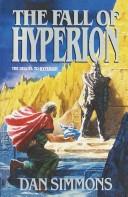
The Fall of Hyperion
Keats persona Severn dreams pilgrims to the Time Tombs as Hegemony falls and TechnoCore war breaks the farcasters.
2,115-word summary · 9 min read
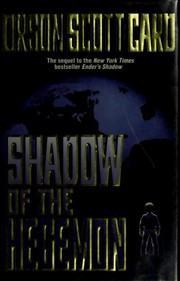
Shadow of the Hegemon
Battle School graduates return to Earth in 2197, where Achilles kidnaps Ender's Jeesh and Bean works to free them while Peter Wiggin plays for the title of…
2,093-word summary · 9 min read
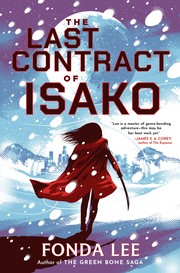
The Last Contract of Isako
On a planet where your job is your worth, a legendary corporate samurai is offered one last contract that turns personal when her worst apprentice sits at its…
2,099-word summary · 9 min read
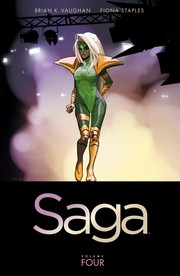
Saga, Volume 4
Book Two opens with Alana and Marko trying to raise Hazel in hiding on Gardenia, while a vengeful robot kidnaps Prince Robot IV's newborn son.
2,003-word summary · 9 min read
Red Mars
Kim Stanley Robinson's 1992 novel sends the First Hundred to Mars aboard the Ares, where a murder, a fight over terraforming and a struggle with Earth decide…
2,206-word summary · 10 min read
A Parade of Horribles
The eighth Dungeon Crawler Carl book drops Carl and Princess Donut onto a deceptively simple tenth floor of races, upgrades and glitches, with a comic tone…
2,670-word summary · 12 min read

Heretics of Dune
Fifteen centuries after Leto II, the Bene Gesserit raise a new Duncan Idaho while the Honored Matres return and Rakis burns.
2,673-word summary · 12 min read
Foundation's Edge
Exiled councilman Golan Trevize hunts for the Second Foundation and the lost world of Earth, and finds a planet with one mind waiting to change the galaxy.
2,335-word summary · 10 min read

Carve the Mark
On a planet divided between conquered and conqueror, the tyrant's sister and a kidnapped oracle's son discover that their gifts make them useful to everyone…
2,340-word summary · 10 min read
Consider Phlebas
The first Culture novel follows a spy for the opposing side, a man hired to hunt a fugitive through a war between an anarchist post-scarcity utopia and a…
2,350-word summary · 10 min read
Saving the World and Other Extreme Sports
Max and the flock split in two to take down the lab behind their lives, one half in California and the other in Europe.
2,175-word summary · 10 min read
Saga, Volume 3
Marko, Alana, and Hazel hide on the planet Quietus with the reclusive author who inspired their romance, while assassins and a prince close in.
1,989-word summary · 9 min read
Out of the Silent Planet
A Cambridge philologist is kidnapped and taken to Mars, where the natives are civilized and the humans are the dangerous invaders.
2,612-word summary · 12 min read
Children of the Mind
Ender's children split across worlds as Jane faces shutdown and Lusitania flees.
2,532-word summary · 11 min read
Saga, Volume 2
Alana and Marko flee with baby Hazel while exes, princes, and ghosts close the net.
2,028-word summary · 9 min read
Exit Strategy
Murderbot returns to help its humans as corporate hunters close in and old friends risk all.
2,088-word summary · 9 min read
Seveneves
Stephenson 880-page William Morrow epic, May 2015: the Moon shatters, the Cloud Ark fails, seven women restart humanity, and heirs meet survivors on Earth.
2,389-word summary · 11 min read
School's Out - Forever
The bird kids try normal school under FBI guard until hunters crash class and chase them to Itex in Florida.
2,584-word summary · 11 min read