
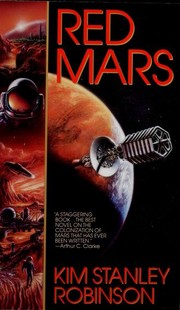
Red Mars
2,206-word summary 10 min read 519 pages in the book
- First published
- 1992
- Publisher
- Bantam Spectra
- Pages
- 519
- ISBN
- 9780553092042
- Series
- Mars Trilogy (#1)
Reading options
What's inside (9 sections)
I picked this up on the strength of a recommendation that it was the most scientifically serious novel about settling Mars ever written, and I expected a long, dry engineering manual with a few characters attached. What I got was a novel that opens with a murder and then spends five hundred pages explaining, with real patience and real anger, how a group of brilliant people could build a new world and then watch it get taken away from them. It is the first volume of Kim Stanley Robinson's Mars trilogy, published in 1992, and it won the Nebula Award the following year. It is also much more political than I was ready for.
A ship made of fuel tanks and a hundred very different people
The story starts in 2026 with the first colonial voyage to Mars aboard the Ares, the largest interplanetary spacecraft anyone has built. Robinson gives it a wonderful origin: it was assembled from clustered space shuttle external fuel tanks that, instead of burning up on reentry, were boosted into orbit and saved until there were enough to bolt together into a ship. It is a joint American and Russian venture, and seventy of the colonists come from those two countries. The group is called the First Hundred, though there are really a hundred and one, because Hiroko Ai smuggles a man known as Coyote aboard.
The First Hundred are not a uniform bunch of astronauts. They are a cross-section of scientists, engineers, doctors and political types, and Robinson takes care to give many of them a distinct voice. There is John Boone, the famous astronaut who was the first human to walk on Mars back in 2020 and whose cheerful public manner hides a private dependence on a drug called omegendorph. There is Frank Chalmers, the hard-nosed head of the American contingent, who wanted that first walk for himself and never forgave Boone for getting it. There is Maya Toitovna, the leader of the Russians, who becomes the object of a rivalry between the two men. There is Nadia Chernyshevski, a Russian engineer who used to build nuclear reactors in Siberia, and Saxifrage Russell, a scientist with a patient, spreading curiosity, and Ann Clayborne, a geologist who loves the red rock exactly as it is. A French psychologist named Michel Duval comes along to observe their behaviour.
I remember being surprised at how quickly I cared about these people, because Robinson does not hand you a hero. He gives you a crew, and then he lets them disagree. That is where the book lives.
The murder at the front of the book
The novel's first chapter shows John Boone being assassinated, and only then does Robinson step back and take us all the way to the launch and the trip out. It is a strange structure, and it works as a kind of promise: everything that follows is an examination of how a man who was universally liked ended up dead. Much of the answer lies with Frank Chalmers. Chalmers is Machiavellian in the way he handles people, but Robinson is careful to show that his cynicism is partly a shell around a disappointed idealist. He slept with Maya during the outward voyage; she later turned to Boone. Between professional jealousy and romantic rivalry, Chalmers has more than one reason to want Boone gone. The assassination plot he sets in motion succeeds and leaves him in charge of Mars affairs, which turns out to be a poisoned prize.
This is the book's thriller strand, and it runs quietly under the science for hundreds of pages. I found it the most immediately gripping part, partly because Robinson refuses to make it simple. When he finally gives us Boone's point of view, the cheerful everyman turns out to have been performing a version of himself for political effect, and that late complication made me go back and rethink scenes I had already read. Boone's first words on the surface, "Well, here we are," suddenly carry a different weight.
Underhill, Phobos, and the business of staying alive
Once the Ares arrives, the colonists set about the work of not dying. Nadia takes the lead in building the first settlement, eventually called Underhill, and teams establish a base inside the hollowed-out asteroid moon Phobos. Robinson is at his best in these pages, describing the sheer physical difficulty of making a home somewhere that has no breathable air, no liquid water on the surface, and a gravity that will ruin you if you ignore it. Suits fail. Dust gets everywhere. A person can freeze or suffocate through a single mistake.
Interleaved with the engineering is the slow, messy business of people living together under pressure. Relationships form and break. Old power structures from Earth travel with the crew and reassert themselves in new forms. Maya, who uses both wit and seduction to get where she is, becomes a stabilizing force as well as a destructive one, and Robinson gives her a bipolar disorder that makes her later behaviour both dangerous and pitiable. The First Hundred are not saints. They are a small, gifted, flawed community trying to govern themselves while their own leaders plot against one another.
Two more figures deserve mention because they keep resurfacing later. Arkady Bogdanov, part of the Russian contingent, is the loudest voice for the idea that Mars owes Earth nothing and should throw off its traditions and authority. He is a possibility named after a real Russian polymath and science fiction writer, and the book later makes the connection a family one. Hiroko Ai, the chief of the agricultural team, is quieter and stranger. She plants the seeds of the Areophany, the belief system that eventually shapes the Greens, and she has a habit of vanishing into the background at exactly the moment you want to know where she went. I spent a good part of the book trying to work out how much she understands about what is coming.
Red versus Green: the argument that becomes a war
The central intellectual fight of Red Mars is about terraforming, and Robinson personifies it in two colonists. Sax Russell argues that their mere presence on Mars has already begun changing the planet, and that spreading life is a duty because life is the rarest thing in the known universe. Ann Clayborne argues that humanity has no right to reshape an entire world at a whim. These two positions gather followers and names. Sax's view blends with Hiroko Ai's Areophany, a belief system centred on the greening principle she calls viriditas, and the pro-terraforming side becomes the Greens. Ann's naturalist stance becomes the Reds. The argument is not abstract for long.
Terraforming gets under way after the United Nations Organization of Mars Affairs, or UNOMA, gives the go-ahead. The methods are wonderfully concrete: drilling deep "moholes" to release trapped heat, thickening the atmosphere with a biochemical recipe that comes to be called the Russell cocktail after Sax, and detonating nuclear devices deep in the permafrost to free water. An asteroid named Clarke is placed in areosynchronous orbit and a space elevator cable is tethered to it, tying Mars physically to its orbital economy and, eventually, to Earth. Sax also creates genetically engineered algae designed to survive the Martian cold and convert the atmosphere, a piece of biology that grows into something much larger in the later books.
I loved this part of the novel and also found it the heaviest. Robinson will spend pages on the chemistry or the orbital mechanics of a plan, and then more pages on the politics of who gets to decide. There is a reason this book is often called the most scientifically detailed science fiction about Mars. There is also a reason a reader sometimes has to push through it. The debate is the point, though, and Robinson keeps both sides honest. Sax's love of life and Ann's love of the untouched rock are each presented as a genuine moral position rather than a strawman waiting to be knocked down.
Earth pushes back
While the colonists argue, the world they left is changing in ways that make their argument quaint. Earth falls increasingly under the control of transnational corporations, the "transnats", which are powerful enough to manipulate governments, especially small nations used as flags of convenience. Their reach extends into Martian affairs. As UNOMA's authority erodes, the Mars treaty is renegotiated under Frank Chalmers, and the new agreement looks impressive until the transnats find the loopholes in it. Earth's nations start colliding over debt, resources and population, and access to a longevity treatment developed by Martian scientists becomes one more thing to fight over, because it promises lifespans stretching into the hundreds of years.
Robinson is writing a far future here, but the corporate creep felt uncomfortably familiar when I read it. The book is from 1992 and yet its transnats behave like a version of globalization with the brakes taken off. This is the part of Red Mars that has aged most interestingly, and it is also where the novel stops being only about Mars and becomes about power wherever people concentrate it.
The revolution of 2061
By 2061 the situation on Mars has curdled. Boone is dead. Immigration from Earth is rising fast enough to threaten the fabric of the colony. Many colonists now see the transnat troops as an occupying force operating under a rubber-stamp UNOMA approval. Arkady Bogdanov, a Russian who has argued all along that Mars should reject Earth's traditions and authority, launches a revolution.
It fails, and it fails brutally. Earth's troops prove far more willing to use violence than the rebels expected, and the rebels have an awful vulnerability: on a planet without a breathable atmosphere, a cut pipe or a broken dome is a death sentence. One side cuts the space elevator cable. Martian cities are bombarded, including the city where Bogdanov is organizing the rebellion, and he is killed. Phobos and its military complex are destroyed. Nuclear detonations meant to free groundwater instead loose a great flood of torrential water through the caves and canyons. Frank Chalmers, fleeing with Maya and others toward the hidden refuge, is caught outside their vehicle during an aquifer flood in Valles Marineris and dies. Phyllis Boyle, who has aligned herself with the transnats, is on Clarke when the cable is cut and is flung out of orbit, her fate left unknown.
This is the book at its most overwhelming. Robinson throws almost everything at the wall: assassination, revolution, bombardment, flood, and a full-scale world war back on Earth that kills hundreds of millions before the transnats retreat to heavily armed developed nations and impose police states to keep order. I felt battered by it, which I think is the intention. The clash is the book's way of showing that the political argument was never merely academic.
What survives under the south pole
By the end, most of the First Hundred are dead. The survivors, among them Sax, Ann, Maya and Nadia, flee to a refuge called Zygote, hidden under the Martian south pole and built years earlier by Hiroko and her followers. The revolution is crushed and Mars settles back under heavy transnat control. But Robinson closes on a note that is less bleak than all that destruction suggests. A new generation of humans born on Mars is growing up, and the book treats them as the real promise of the future. The surviving First Hundred settle into life at Zygote, and the trilogy's next volumes pick up roughly fifty years later.
Reading it now, I think the great strength of Red Mars is that it never reduces its characters to positions in a debate. Sax and Ann stand for opposite answers about terraforming, but they are also people with affections, embarrassments and private griefs. Robinson's habit of stepping into many different heads means that even the people I disliked got a case made for them. The weakness is the sheer density. Whole stretches read like a briefing document, and a few of the personal scenes feel thin next to the geological and political ones. This is not a book for someone who wants a brisk adventure, and the reader who wants a tight plot may find the murder mystery an irritating frame for five hundred pages of infrastructure.
What stayed with me is the picture of a place being made real. Robinson clearly loves Mars, and he makes you feel the weight of every decision to change it. He also understands that the fight over a planet is really a fight over who gets to decide, and that the people who build a new world are not necessarily the people who get to keep it. It helps that the trilogy as a whole spans nearly two centuries, from 2026 into the twenty-third century, so this first book is really the prologue to a much larger argument about what a settled humanity becomes. Red Mars is slow, angry, meticulous and often thrilling, and it earns its length by making the argument matter. I closed it already wanting to know what happens to the survivors under the ice.
FAQ
Is Red Mars part of a series?
Yes, it is the first volume of Kim Stanley Robinson's Mars trilogy, followed by Green Mars (1993) and Blue Mars (1996), with the short story collection The Martians (1999) set in the same universe.
Does Red Mars contain a lot of hard science?
Yes. Robinson describes the engineering of the Ares, the biochemistry of terraforming and the orbital mechanics of a space elevator in detail, which is why the book is known for its scientific thoroughness and why some readers find it slow.
Who are the Reds and the Greens in Red Mars?
They are the two factions in the terraforming debate. The Greens, influenced by Sax Russell and Hiroko Ai, want to spread life on Mars, while the Reds, led by Ann Clayborne, believe humanity has no right to reshape the planet.
Similar books
More from Mars Trilogy first, then related titles.
Shadow of the Hegemon
Battle School graduates return to Earth in 2197, where Achilles kidnaps Ender's Jeesh and Bean works to free them while Peter Wiggin plays for the title of…
2,093-word summary · 9 min read

Babylon's Ashes
Three months after the Free Navy's strikes, the Rocinante crew returns as Earth, Mars, and the Belt unite to retake the Ring station of Medina.
2,245-word summary · 10 min read

Prelude to Foundation
A young Hari Seldon arrives on Trantor with a theory he cannot yet prove, and a hunt through the planet-city forces him to turn psychohistory into a real…
2,013-word summary · 9 min read

The Moon Is a Harsh Mistress
In 2076 Lunar colonists led by Mannie, Wyoh, Prof, and computer Mike revolt against Earth with rocks and rhetoric.
2,003-word summary · 9 min read

Caliban's War
Ganymede burns, Bobbie survives it, Avasarala curses through politics, and Prax hunts daughter Mei.
2,080-word summary · 9 min read
Rendezvous with Rama
In 2131 a silent cylinder enters the solar system, and Commander Norton's crew explores its seas and empty cities before Rama seals itself and sails on.
3,108-word summary · 14 min read

The Martian
Mark Watney is stranded on Mars after his crew leaves him for dead, and survives with botany, repairs, and stubborn humor.
2,271-word summary · 10 min read
Gemina
A commander's daughter and a crime boss's son team up when BeiTech attacks a remote station, told through chats, reports and redacted files.
2,221-word summary · 10 min read

When the Moon Hits Your Eye
The Moon turns into cheese, and a loose collection of stories follows how institutions, billionaires, pastors and ordinary people respond to the impossible.
2,002-word summary · 9 min read

State of Fear
In Michael Crichton's 2004 thriller, a lawyer is pulled into a plot in which eco-terrorists stage natural disasters to sell the public on climate catastrophe.
2,292-word summary · 10 min read

Heretics of Dune
Fifteen centuries after Leto II, the Bene Gesserit raise a new Duncan Idaho while the Honored Matres return and Rakis burns.
2,673-word summary · 12 min read

Foundation's Edge
Exiled councilman Golan Trevize hunts for the Second Foundation and the lost world of Earth, and finds a planet with one mind waiting to change the galaxy.
2,335-word summary · 10 min read

Starsight
Spensa Nightshade goes undercover aboard the Superiority space station Starsight to steal a hyperdrive, and finds a frightened bureaucracy where she expected…
2,568-word summary · 11 min read
Network Effect
Murderbot's contract job turns into a rescue mission when a hijacked research ship and a colony of corrupted colonists appear.
2,256-word summary · 10 min read

Out of the Silent Planet
A Cambridge philologist is kidnapped and taken to Mars, where the natives are civilized and the humans are the dangerous invaders.
2,612-word summary · 12 min read
We Are Legion (We Are Bob)
A dead software engineer wakes up as a self-replicating space probe, clones himself into a squabbling fleet of Bobs, and tries to keep a ruined Earth alive.
2,357-word summary · 10 min read

The Illustrated Man
A tattooed drifter's moving pictures retell eighteen Bradbury stories of children, rockets, Mars and the last night of the world.
2,791-word summary · 12 min read
Nemesis Games
The Rocinante crew scatters across the solar system just as Marco Inaros and the Free Navy bombard Earth. The Expanse reaches its turning point.
2,506-word summary · 11 min read

Redshirts
Ensigns realize they die to serve a bad TV show's narrative.
2,152-word summary · 10 min read
Children of the Mind
Ender's children split across worlds as Jane faces shutdown and Lusitania flees.
2,532-word summary · 11 min read
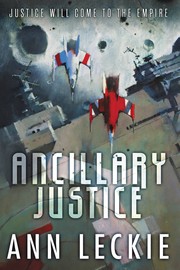
Ancillary Justice
A ship mind trapped in one human body hunts the emperor who betrayed her across frozen worlds.
2,595-word summary · 12 min read

Solaris
Kelvin reaches a silent station above Solaris and finds grief made solid when the ocean returns his dead wife Rheya, testing memory, science, and the limits of…
2,548-word summary · 11 min read
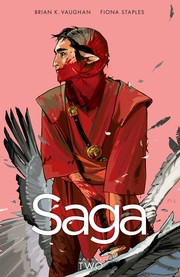
Saga, Volume 2
Alana and Marko flee with baby Hazel while exes, princes, and ghosts close the net.
2,028-word summary · 9 min read
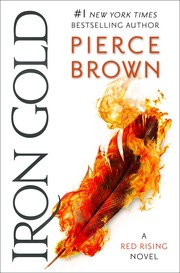
Iron Gold
Ten years after victory, Darrow and new rebels face peace that feels like another war.
2,158-word summary · 10 min read

Exit Strategy
Murderbot returns to help its humans as corporate hunters close in and old friends risk all.
2,088-word summary · 9 min read

Cibola Burn
Settlers and a company fight over a new world while Holden tries to stop a war.
2,011-word summary · 9 min read
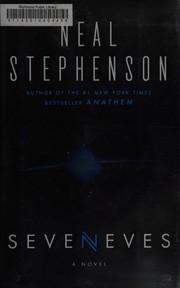
Seveneves
Stephenson 880-page William Morrow epic, May 2015: the Moon shatters, the Cloud Ark fails, seven women restart humanity, and heirs meet survivors on Earth.
2,389-word summary · 11 min read

Across the Universe
Frozen teen Amy wakes early on ship Godspeed and joins heir Elder to stop cryo murders and expose Eldest's drugged rule in this January 2011 Razorbill series…
2,430-word summary · 11 min read
The Fall of Hyperion
Keats persona Severn dreams pilgrims to the Time Tombs as Hegemony falls and TechnoCore war breaks the farcasters.
2,115-word summary · 9 min read
The Dispossessed: An Ambiguous Utopia
Physicist Shevek leaves anarchist Anarres for capitalist Urras to share time theory, finding walls both places.
2,288-word summary · 10 min read