
Reading options
What's inside (9 sections)
- The spark in the Siberian oil field
- Deception, a false flag, and a spy who gets caught
- Iceland and the Dance of the Vampires
- Tanks at Alfeld and a general who leads from the front
- The long way back across the Atlantic
- A coup in Moscow and a war that ends on paper
- What holds up and what does not
- Key takeaways
- FAQ
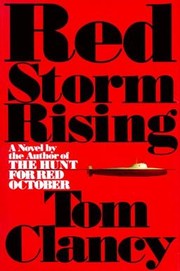
I came to this book through a side door. It is the Clancy novel without Jack Ryan, the one he wrote with Larry Bond, a wargame designer who plotted the shape of the story before Clancy wrote nearly all of the actual prose. The jacket names only Clancy, but his own author's note calls Bond a coauthor and says the book is as much Bond's as his. Bond later said in an interview that he wrote about one percent of the text. That odd split stuck with me. So did the report that Ronald Reagan handed a copy to Margaret Thatcher after the 1986 Reykjavik summit, hoping she would learn something about how Soviet leaders thought. A novel used as a briefing document is a strange thing to be, and it is part of why I picked it up. It appeared in August 1986 from G. P. Putnam's Sons, runs a little over six hundred pages, and reads at times like a military brief that someone forgot to turn into a story.
What surprised me once I got into it is how little it behaves like a thriller in the familiar sense. There is no detective, no chase, no single hero who carries the whole thing. There is a war, seen from dozens of angles, and most of the people in it exist to operate the machines they are assigned to. That can be gripping, and very often is. It can also read like an after-action report written by someone who genuinely loves hardware. Both things are true throughout, and I never stopped noticing the collision.
The spark in the Siberian oil field
The war does not begin with a declaration or an assassination. It begins with a fire. Ibrahim Tolkadze, an oil field engineer of Azerbaijani descent working in Soviet Azerbaijan, slips into a refinery at Nizhnevartovsk with two confederates named Rasul and Mohammed. They kill security men and technical staff, rupture pipes, and set the whole complex and the surrounding field burning. They die when troops storm the control room, but the damage is done. The Soviet Union's oil supply is badly hurt, and the men in the Kremlin know that their economy cannot absorb the loss.
This opening is small and intimate, a few men in a control room, and it sets off a chain of decisions made by people who will never hear their names. That is the book's real structure. A local action by a handful of fanatics becomes a calculation in Moscow, which becomes an order to an army group, which becomes a tank battle in a German valley. Clancy is very good at those handoffs. He keeps the scale changing without ever losing the thread of cause and effect.
The Politburo debates what to do. The energy minister, Mikhail Sergetov, lays out the scale of the shortage. The men around the table decide that the only way to replace the lost oil is to take the Persian Gulf by force. There is one problem. The United States has pledged to defend the oil states there. So before anyone moves on the Gulf, NATO has to be made harmless. If West Germany can be neutralized and occupied, the argument goes, the Americans will not risk a war in the Middle East, because they could cover their own oil needs from the western hemisphere. It is a monstrous piece of reasoning, and the book gives it enough internal logic to be frightening. The Soviet leadership is not portrayed as mad. It is portrayed as desperate and careful.
Deception, a false flag, and a spy who gets caught
Before the tanks roll, the Soviets try to make everyone look in the wrong direction. They announce a plan to scrap their obsolete nuclear missile submarines, a gesture that sounds like disarmament and costs them nothing they still value. At the same time the KGB, led by Boris Kosov, stages a bombing in a Kremlin building and frames a man named Gerhard Falken as a West German intelligence agent. The Politburo publicly denounces West Germany and talks of retaliation. The stage is set for a war that the Germans are supposed to have started.
There is also a Spetsnaz operation against a NATO communications facility at Lammersdorf. The officer assigned to it, Andrei Chernyavin, gets arrested before he can finish the job. The plan is compromised, and a reader might expect the whole offensive to be called off. It is not. The Soviets push ahead anyway, and that decision tells you a lot about how this book sees its villains. They are willing to absorb a blown cover and keep going, because the oil math has not changed.
I found these chapters the most interesting in the book, and not only because the plotting is tense. Clancy and Bond interviewed the Soviet defector Arkady Shevchenko while working on the Politburo scenes, and the scenes have the feel of a room where people are afraid to speak plainly. The conversations are formal, layered, and full of people waiting to see who will be blamed. It is the one part of the novel where the exercise in military detail turns into something like political fiction.
Iceland and the Dance of the Vampires
The first real shots go against NATO's air forces in Germany. Colonel Douglas Ellington commands an F-19 stealth squadron, and on the opening night his aircraft and other fighter-bombers knock out Soviet fighters and airborne warning aircraft and destroy bridges that the Soviet army still needs to cross. For a moment it looks as if the attack might stall. Then the other side of the ledger appears. Every Warsaw Pact crew has been trained to speak Russian, because the Soviets insisted on commanding the alliance. NATO crews, made up of several nationalities, keep running into confusion about who is in charge and who should be talking to whom. It is a small structural detail, and Clancy uses it to explain why the German front keeps bending.
At sea the Soviets win bigger. They land troops on Iceland and take the NATO airbase at Keflavik. This matters far more than the size of the island suggests, because Iceland sits in the gap between Greenland and Britain. Whoever holds it controls the sea lanes across the Atlantic. Michael Edwards, a young Air Force weather officer stationed there, ends up hiding from the occupiers and running an intelligence effort under the code name Beagle. He also rescues an Icelandic civilian named Vigdis Agustdottir, and the two become involved by the time the book closes. Edwards earns a Navy Cross, which is about as much emotional payoff as Clancy allows himself in this stretch.
Then comes the chapter the authors called Dance of the Vampires, which they worked out with the Harpoon wargame before writing. A combined American and French carrier group has been sent to reinforce Iceland with a load of Marines. Soviet bombers armed with missiles draw the group into a trap and attack. The French carrier Foch is sunk. The landing ship Saipan explodes and more than two thousand sailors and Marines die with her. The Nimitz has to limp off to Britain for long repairs. NATO's fleet is still dangerous afterward, but the Soviets have the Atlantic gap and can threaten the convoys that would resupply Europe.
I had two reactions to this sequence. As a piece of operational writing it is superb, all timing and radio calls and confused reports coming in from aircraft that may or may not be friendly. As a human story it is brutal in a flat way. The deaths are numbers. A ship goes up and the book moves on to the next platform. That is the price of the design. Clancy is writing a war in which the system is the main character, and systems do not grieve.
One bright thread in the dark: Amelia Nakamura, an F-15 pilot nicknamed Buns, shoots down three Soviet Badger bombers while ferrying aircraft, becoming the first American woman fighter ace. Later she uses an air-to-air missile against Soviet naval reconnaissance satellites and becomes, in the book's playful term, the first space ace. She is the closest thing here to a hero people might actually remember.
Tanks at Alfeld and a general who leads from the front
On land the fighting settles into a grinding retreat. Terry Mackall, a sergeant in an M1 Abrams tank with the 11th Armored Cavalry Regiment, gets a battlefield commission for holding his unit together. Robert Toland, an NSA analyst and naval reservist, is pulled into the intelligence fight and promoted. General Eugene Robinson, the NATO commander in Europe, turns out to be a skilled gambler, and he uses that skill late in the book to bluff his way through ceasefire talks while NATO is nearly out of options. These are the human faces of the Allied side, and they are drawn in broad, competent strokes rather than deep ones.
The Soviet counterpart is Pavel Alekseyev, a general who keeps exposing himself to fire. When NATO artillery wipes out the command staff of a Soviet tank division, Alekseyev takes over the division himself and drives the breakthrough at Alfeld that opens the way past the Weser River. He is easily the most vivid figure in the novel. He is also a man the Politburo comes to fear, because he keeps winning in a war they are losing politically. Clancy gives him a soldier's bluntness and a professional's contempt for the men in Moscow who are directing the war from offices.
I liked Alekseyev far more than I expected to. The book never asks us to agree with him. It just lets him be good at his job while the men above him make catastrophes. That is a nicely observed piece of character work, and it gives the middle of the book a center it otherwise lacks.
The long way back across the Atlantic
The turn comes from below the sea. American attack submarines, including the Chicago under Daniel McCafferty, launch cruise missiles against Soviet bomber bases. With those bases damaged, the Soviets cannot easily cover an amphibious assault, and the United States uses the window to retake Iceland. Chuck Lowe, a Marine officer with three Vietnam tours behind him, leads the regiment in that fight. During the operation the Americans capture a Soviet prisoner who reveals the real reason for the war, the shattered oil production back home. Knowledge of the shortage spreads through the Allied command and changes what everyone thinks is possible.
From there the momentum shifts quickly, though never without cost. NATO air power goes after Soviet fuel stores, and much of the available petroleum is destroyed. The Warsaw Pact starts pulling old T-55 tanks out of storage, and the move only adds to the casualty lists. Soviet bomber formations and tank armies take losses they cannot replace at the same rate NATO can. The tide does not turn because of one brilliant stroke. It turns because the side with the oil begins to run out and the side with the sea lanes starts getting its supplies again. That is the book's argument in its plainest form, and it is a logistical argument rather than a moral one.
Edward Morris, who starts out commanding the frigate Pharris and later the Reuben James, and his helicopter pilot Jerry O'Malley get their share of the anti-submarine fighting in these chapters. O'Malley earns a Distinguished Flying Cross. William Calloway, a Reuters man who is also British intelligence, keeps turning up at the edges of events. The book has a large cast, and keeping track of who flies what and who commands which ship becomes a job of its own. I did not mind it at first. By the later chapters I was skimming some of the safer passages just to get back to the front.
A coup in Moscow and a war that ends on paper
The ending is political, and it arrives after the military outcome is already clear. The Soviet General Secretary starts talking about using nuclear weapons to force a favorable settlement. Alekseyev, who has been preparing a final attack on Germany, is enraged. He is also being lined up for execution because his timetable has been too slow. Kosov, the KGB chief, puts together a coup with Alekseyev and other Politburo members. The new government asks NATO for a ceasefire and a return to the prewar borders. General Robinson, still the gambler, sits down with Alekseyev and negotiates. The war ends with nothing gained by either side, which is the point of a book about how a war like this might actually stop.
There is a grim epilogue for Kosov, who is killed by Major Arkady Sorokin, an officer whose daughter died in the false flag bombing that Kosov arranged. Alekseyev ends up as deputy minister of defense and chief of the general staff. Mikhail Sergetov becomes acting General Secretary. The book closes with the machinery of government reassembling itself after a catastrophe that it created. That is a colder ending than most war novels give us, and I respected it.
The one thing I kept thinking about while reading was the claim that this is a war fought entirely with conventional weapons. No nuclear strikes, no chemical attacks, just the ordinary machinery of armies and fleets used at enormous scale. That premise is what made the book feel like a warning when it came out, and it is what still gives the whole exercise its shape. Clancy is not asking whether such a war could be won in a heroic sense. He is asking what it would take to fight one at all, and how quickly the fuel and the shipping and the spare parts would decide the result.
What holds up and what does not
I would hand this to a reader who likes technical detail and does not need a warm character to follow. The battle scenes are constructed with real care, the kind of care that comes from people who played the battles out on a table first. The "Dance of the Vampires" chapter is still a tremendous piece of suspense, and the Politburo scenes have a tension that the rest of the book rarely matches. For a novel written in 1986, some of the hardware guesses proved uncannily close to what appeared in the Gulf War a few years later, which says something about the research behind it.
The limits are real. Most of the people in the book are functions in uniform, and even the ones with names and decorations tend to disappear for a hundred pages at a time. The technical passages can go on long enough that the story stops moving, and the battle descriptions sometimes read like transcripts of a game session rather than scenes in a novel. The politics are of their moment, and the confidence that NATO's systems would work as advertised has aged in ways I will leave for the reader to judge. I also found the treatment of women thin even by the standards of the genre, with Nakamura's remarkable feats standing out precisely because there is so little else around them.
Still, I finished it understanding why people talk about this book the way they do. It is not trying to teach a lesson about the human cost of war or the courage of ordinary soldiers. It is trying to build a complete machine of a conflict and run it until it stops. At that narrow thing it is very good, and the narrowness is honest. Read it for the engineering of the fighting, for Alekseyev's reckless competence, and for the strange historical fact that a work of fiction was passed between two leaders who were trying to work out what the other side might do. Those are the reasons it stuck with me, and they are reasons enough.
FAQ
Is Red Storm Rising part of the Jack Ryan series?
No. It is one of the few Clancy novels set outside the Ryanverse, and it was written with wargame designer Larry Bond, who is named in the author's note though not on the jacket.
Does the novel use nuclear weapons?
No. The conflict is fought entirely with conventional forces, from stealth fighters and tanks to submarines and cruise missiles, and that premise is what the book is built around.
What role does Iceland play in the story?
Iceland holds the NATO airbase at Keflavik and sits in the gap between Greenland and Britain, so the Soviet seizure of the island threatens the Atlantic supply lanes until American forces retake it.
Similar books
Clear and Present Danger
Jack Ryan uncovers a secret U.S. drug war in Colombia and fights to bring abandoned soldiers home.
2,954-word summary · 13 min read
Patriot Games
Jack Ryan saves royals in London then faces IRA revenge aimed at his family in America.
2,089-word summary · 9 min read
The Hunt for Red October
Soviet captain Ramius defects with stealth sub Red October while Jack Ryan must prove intent.
2,305-word summary · 10 min read
Zero Day
Army investigator John Puller is sent alone to a West Virginia coal town to solve a colonel's murder, and finds a much larger secret buried nearby.
3,434-word summary · 15 min read

The Kill Artist
Daniel Silva introduces art restorer and former operative Gabriel Allon in this 2000 spy thriller about a revenge hunt that turns personal.
2,303-word summary · 10 min read
American Assassin
Before he became the CIA's most feared counterterrorist, Mitch Rapp was a Syracuse student mourning his girlfriend, killed on Pan Am Flight 103. Then came…
2,114-word summary · 9 min read
The Troop
A Boy Scout troop on a Canadian island takes in a stranger who cannot stop eating, and the worm inside him turns a camping trip into a war.
2,457-word summary · 11 min read

The Chemist
A former government interrogator on the run takes one last job, then learns the case she was handed was built to pit her against him.
2,249-word summary · 10 min read

Bad Luck and Trouble
A deposit of $1,030 summons Jack Reacher back to his old army unit, which is being picked off one name at a time.
2,366-word summary · 11 min read
Tinker, Tailor, Soldier, Spy
Retired spymaster George Smiley is brought back to find a Soviet mole inside British intelligence, and the trail leads through old friends, old betrayals, and…
2,092-word summary · 9 min read
Gone Tomorrow
Reacher stops a suicide bomber on the subway, then hunts her handlers.
2,308-word summary · 10 min read
The Enemy
In January 1990, MP major Jack Reacher investigates a dead general, a stolen briefcase, and three murders tied to an Army power struggle.
2,123-word summary · 9 min read
The Day of the Jackal
An English assassin takes an OAS contract to kill de Gaulle while a quiet French detective races to stop him in 1963 Paris.
2,969-word summary · 13 min read
Eye of the Needle
German spy Faber races D Day photos to a U boat while MI5 hunts and Storm Island Lucy stands last.
2,083-word summary · 9 min read
Wayward
With Ethan Burke now sheriff, Wayward Pines runs on cameras, fear and a founder's private plan, until a murder forces him to choose between order and the truth.
2,252-word summary · 10 min read

The Moonlight Child
On a cold January night, Sharon Lemke sees a child washing dishes in a neighbour's kitchen and decides she cannot ignore it.
2,169-word summary · 10 min read
The Guns of August
Tuchman narrates the first month of World War I, from a 1910 royal funeral to the Marne, and the decisions that trapped Europe.
2,405-word summary · 11 min read
The Atlantis Gene
A geneticist and an intelligence operative chase two kidnapped boys through a global conspiracy about human evolution and a weapon built to cull humanity.
2,369-word summary · 11 min read
The 5th Horseman
Two linked cases pull Lindsay Boxer and the Women's Murder Club into a hospital full of strange deaths and a luxury-car murder spree.
2,609-word summary · 12 min read
Th1rt3en
A former con artist turned defense lawyer takes a celebrity murder trial while a serial killer sits on the jury, steering the verdict.
2,254-word summary · 10 min read
State of Terror
A new secretary of state and her team unpick a web of attacks across Pakistan, Afghanistan, and Iran in this 2021 political thriller.
2,307-word summary · 10 min read
Make Me
Reacher drifts into a quiet Midwestern town and finds a missing investigator, a trail of killers, and a deep web secret.
2,352-word summary · 10 min read
I Must Betray You
In 1989 Romania, a seventeen-year-old is forced to inform on an American diplomat's family and records the truth in a hidden notebook.
2,258-word summary · 10 min read

You Are Not Alone
A lonely New Yorker witnesses a subway suicide and falls in with the dead woman's friends, where a makeover and a framed murder hide a hidden mastermind.
2,588-word summary · 12 min read

These Silent Woods
A father and his eight-year-old daughter live off-grid in the Appalachian woods, hiding from a past he cannot outrun. When their yearly supply run fails, their…
2,274-word summary · 10 min read
The Secret of Secrets
Robert Langdon travels to Prague with Katherine Solomon, a scientist whose work on consciousness has made her a target. A dream, a bomb and a killer called the…
2,251-word summary · 10 min read
The Running Grave
In the seventh Cormoran Strike novel, Robin goes undercover inside a Norfolk cult while Strike digs into a child's death from decades earlier.
2,615-word summary · 12 min read

The Obsession
After a childhood in the shadow of her serial killer father, photographer Naomi Carson puts down roots in a coastal town, only to face a copycat killer…
2,230-word summary · 10 min read
The Midnight Line
A West Point class ring in a Wisconsin pawnshop sends Jack Reacher across the Midwest, from a biker's lie to a wounded veteran hiding from the opioid trade.
2,590-word summary · 12 min read
The Maid's Diary
A cleaner who snoops through her wealthy clients' lives finds a secret that could destroy them, while a detective investigates a bloody waterfront house with…
3,459-word summary · 15 min read