
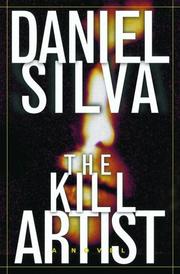
The Kill Artist
2,303-word summary 10 min read 428 pages in the book
- First published
- 2000
- Publisher
- Random House
- Pages
- 428
- ISBN
- 9780375500909
- Series
- Gabriel Allon (#1)
Reading options
What's inside (8 sections)
I picked up The Kill Artist because it is where Gabriel Allon starts, and I wanted to see what twenty plus books of spy fiction had grown out of. What surprised me is how complete this 2000 novel feels on its own. It is a thriller with a revenge plot, yes, but it is just as much a book about a man who stopped working because his family was killed and cannot quite bring himself to start again. Daniel Silva gives you a hero who restores old paintings for a living, notices things that other people miss, and is terrible at the domestic life he keeps pretending he wants. That combination hooked me faster than the gunplay, and the gunplay is fine.
The book was published in 2000 by Random House in the United States, where the first edition hardcover runs 428 pages. It is the opening volume of the Gabriel Allon series, and it establishes nearly every piece the later books play with: the Mossad, the art world as a cover and a skill set, the dead family, the difficult boss, the beautiful and compromised female operative. Knowing that now, reading it back feels like watching a machinery get assembled. On a first read it just moves.
An art restorer who used to be somebody
Gabriel Allon lives in southern England under a quiet name and does meticulous work restoring paintings. The book takes its time with this side of him, and I liked that. He studies brushwork and varnish, he cares about the physical object in front of him, and the patience of the craft is a real contrast to the violence waiting in his past. The title of the book refers to both kinds of work, the killing and the restoring, and Silva is canny enough to let the two reflect on each other without making a speech about it.
The past arrives in the form of Ari Shamron, who has been reinstated as director of Mossad by Israel's prime minister. Shamron is old, formidable, and used to getting his way, and he shows up at Gabriel's door with a problem he cannot solve through normal channels. Israel's ambassador has been murdered in Paris, and the markings point to Tariq al-Hourani, a Palestinian terrorist who has spent years planning a final round of vengeance. Shamron wants Tariq dead and does not have the support of his own department heads, so he asks Gabriel to run a private operation outside the official structure.
Shamron is the second great creation of the book, and he is built from the same stubborn material as Gabriel. He runs the Office like a man who has outlived everyone who might have restrained him, and his return to the directorship sets the whole plot in motion. Silva gives him a blunt, aphoristic way of speaking that I enjoyed, and a habit of treating other people's grief as a resource to be spent. The department heads who resist him are drawn quickly but effectively, and through them you get a picture of an agency that has become cautious and political. Uzi Navot, the senior agent operating in Europe, is the most slippery figure: he knows more than he says, and his conversations with Yusef are the first hint that the operation has a hidden floor. This is not a book about a clean agency hunting a bad man. It is about an institution using one of its own.
To understand why this is personal, you have to go back seventeen years. Gabriel led the team that tracked down the people responsible for the Munich attack, and Tariq lost family in that aftermath. Years later Tariq answered in kind: a bomb placed under the Allon family car in Vienna. Gabriel's son Dani died in the blast. His wife Leah survived with her mind and body shattered, and Gabriel watched it happen. By the time the novel opens, nine years have passed, Leah is in care, and Gabriel has cut himself loose from the Office and from the idea that he belongs to anything. Shamron is asking him to walk back into the exact room where he was broken.
The model and the mark
Gabriel's route to Tariq runs through Yusef, a member of Tariq's tight organization. He starts with surveillance, the patient kind, and decides he needs to put a woman into Yusef's path. The woman is Jacqueline Delacroix, whose real name is Sarah Halévy, a French fashion model who has helped the Office on previous operations. She and Gabriel have a history of their own. They had an affair years ago, and Gabriel is careful to keep their interactions strictly professional now, which anybody can see is a form of pretending. Her modeling career is fading and she is bored, so she takes the assignment.
The affair between Gabriel and Jacqueline is more than texture, because it explains the worst thing in the book. When their relationship was exposed years earlier, Leah decided to accompany Gabriel on the Vienna operation, and she was in the car because of that choice. Gabriel has carried that fact ever since, which is why he keeps his distance from Jacqueline now, and why his grief has curdled into something close to self punishment. Silva handles this quietly, in glances and refusals rather than confessions, and it is the best thing he does with the character. The surveillance scenes work well too. The stakeout of Yusef, the planted listening device, the careful reading of who enters a doorway and when, all have the plain procedural pleasure of a craft being shown rather than asserted.
The seduction works. Jacqueline gets close enough to Yusef that Gabriel can plant a listening device in his apartment, and for a while the operation looks clean. Then the usual friction arrives. Yusef finds her making imprints of his keys, and he spots Gabriel in the building. The cover is burned. Gabriel wants to pull her out, and Shamron refuses, insisting that her identity as Dominique Bonard is still secure and that the mission has to continue. This is the first clear sign that Shamron is running two plans at once and only telling Gabriel one of them.
Jacqueline is the weakest piece of the book for me, and I say that as someone who enjoyed her scenes. She is written as a collection of appealing traits, beautiful, capable, wry, wounded, and the plot keeps using her as bait without letting her want much of anything outside the assignment. There is a suggestion that her feelings for Gabriel complicate her judgment, and that is interesting, but Silva never lets it become the story. Still, the cat and mouse between her, Yusef, and Gabriel carries real tension, especially once she realizes the trap is closing around her and the man who sent her in is not coming to get her.
Tariq's answer
Tariq turns out to be a better opponent than Gabriel expected. Yusef warns him that Gabriel is hunting him, and Tariq works out a counterstroke built around Jacqueline. He recognizes her from earlier Office operations and sees that she can be used as bait. The plan sends her on a supposed diplomatic mission to the United States in his company, a test of how much she really cares for Yusef, and a way of drawing Gabriel into the open. At the same time the book lets a second thread surface: Yusef has been dealing with Uzi Navot, a senior Office agent in Europe who is one of the few people who knows about Shamron's secret operation. Nobody in this story is entirely on one side.
Tariq moves Jacqueline through Quebec and into New York, and the chase crosses the border with them. The reason for the chosen weekend becomes clear only late. Israel's new prime minister and Yasser Arafat are both in the city for a major step toward peace between Israelis and Palestinians. Gabriel assumes Tariq is there for the Israeli. He is wrong. Tariq's target is Arafat, a former associate whom he has come to kill for what he sees as a betrayal. Gabriel works out the real plan too late and phones Arafat just as the disguised assassin closes in.
The confrontation that follows is the strangest scene in the book. Arafat, face to face with the man who has come to murder him, talks to him calmly about their old relationship and talks him out of the kill. It is an audacious choice for a thriller, and I am not sure it fully works. A man who has planned a killing for years does not usually talk himself out of it in a few minutes of conversation. But it gives the novel a moral wrinkle it would otherwise lack, and it sets up the payoff: Tariq spares Arafat, turns, and shoots Gabriel in the chest. Jacqueline goes after him and kills him. The terrorist who destroyed a family is finished, and the man who wanted him dead survives by a matter of inches.
The bill in the market
Gabriel recovers in Israel, and Jacqueline is pushed out of the country because the press has caught wind of her role in the shooting. The final movement of the book is small and, to my mind, the best written. Gabriel spots Yusef in a market, takes him at gunpoint, and gets the answer that has been hiding in plain sight. Yusef was a double agent working for Shamron all along. The entire operation, the model, the surveillance, the trip to New York, was built so that Gabriel would be the one to finish Tariq. Shamron wanted the kill to belong to the man who had lost a family, not to the state.
Gabriel confronts Shamron, who makes no apology. The old director argues that Tariq had to die and that it was right for Gabriel to be the one who did it, grief and all. It is a sharp ending because it refuses to tell you whether Shamron was wrong. He manipulated a wounded man into becoming an instrument, and he also removed a genuine threat and gave that man a way to close a chapter. Gabriel returns to southern England and to his paintings, which reads less like a fresh start than like a man accepting the shape of his life. The last pages are quiet, and after the New York shootout the quiet lands hard.
What lingers after the reveal is the question Shamron leaves hanging. He broke Gabriel's rules, and also fulfilled his stated wish. If Tariq had been left alive, more people would likely have died, and Shamron knew it. But building a trap around a man's worst memory so that he will do the killing himself is a different thing from asking for a volunteer, and the book never pretends otherwise. Gabriel's return to England reads as acceptance of that bargain rather than triumph. He has the calm of someone who has finally spent the anger that sustained him, and Silva leaves him with a life that is smaller and more honest than the one he left. It is a restrained ending for a thriller, and it is the reason I wanted the next book, to see whether that calm can last.
What holds up and what does not
The tradecraft is glossy rather than rigorous. People notice details that ordinary people never would, phones and keys and marks on doors do a lot of work, and the plot occasionally turns on a character being exactly as observant as the scene requires. The international politics are drawn in broad strokes, and several officials behave in ways that mostly serve the plot. Silva's prose is clean and fast but not distinctive; he is not trying to write literature, and the book is better for knowing that. Entertainment Weekly called it pure political popcorn when it came out, and that seems about right, though I would add that the grief underneath gives the popcorn some weight.
The art restoration material is the part I would keep. It is specific without becoming a lecture, and it makes Gabriel's quiet life feel real enough that leaving it costs something. The Vienna bombing and its aftermath are handled with more restraint than I expected, and those few pages explain the whole series better than any amount of mission detail. If you like your spies morally complicated and your endings unresolved, the final confrontation with Shamron is worth the price of the book on its own.
Where this sits in the series
Read it as a starting point, because that is what it is. It introduces Gabriel Allon, Ari Shamron, the Office, and the art cover, and it gives you the wound that drives everything after it. At the same time it closes its own case cleanly, so you can read it and stop if the mood does not take. The tone is leaner and less elaborate than the later Gabriel Allon novels, which have twenty years of continuity to carry. For a first book it is remarkably sure of itself, and it made me want the next one immediately, which is the only job a series opener really has.
If you are buying the American edition, check the edition details before you compare page counts with friends. The UK Orion edition is a different book block with a different page count and its own ISBN. The story is the same either way: a man who restores paintings is asked to do one last violent thing, and the people who ask him turn out to have planned the whole thing around his pain. That is a strong hook for a first novel, and The Kill Artist earns it with a plot that keeps moving and a hero worth following.
FAQ
Is The Kill Artist the first Gabriel Allon book?
Yes. Published in 2000 by Random House in the US, it introduces Gabriel Allon, Ari Shamron, and the art restoration cover that define the series.
Do I need to have read Silva's other novels?
No. The Kill Artist stands on its own and closes its own case. It is the first book of the Gabriel Allon series, which began in 2000.
How violent and dark is it?
It is a straightforward spy thriller with shootings and a family bombing shown in flashback. The violence is present but handled with restraint rather than lingering detail.
Similar books
More from Gabriel Allon first, then related titles.
American Assassin
Before he became the CIA's most feared counterterrorist, Mitch Rapp was a Syracuse student mourning his girlfriend, killed on Pan Am Flight 103. Then came…
2,114-word summary · 9 min read
Red Storm Rising
A fired Siberian oil field pushes the Politburo toward the Persian Gulf, and a conventional Third World War opens with stealth strikes and a fight for Iceland.
2,661-word summary · 12 min read
Casino Royale
Ian Fleming's first Bond novel sends 007 to a French casino to bankrupt a Soviet paymaster, then asks what winning costs the man who does it.
2,370-word summary · 11 min read

The Chemist
A former government interrogator on the run takes one last job, then learns the case she was handed was built to pit her against him.
2,249-word summary · 10 min read
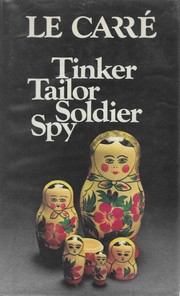
Tinker, Tailor, Soldier, Spy
Retired spymaster George Smiley is brought back to find a Soviet mole inside British intelligence, and the trail leads through old friends, old betrayals, and…
2,092-word summary · 9 min read
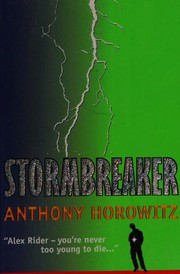
Stormbreaker
A fourteen-year-old boy loses his uncle, then his ordinary life, when MI6 sends him undercover to a Cornish computer plant where the giveaway machines hide a…
2,822-word summary · 13 min read
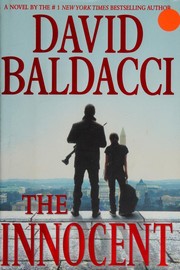
The Innocent
A government hitman refuses one kill and must protect a teenage girl at the center of a cover-up.
2,403-word summary · 11 min read
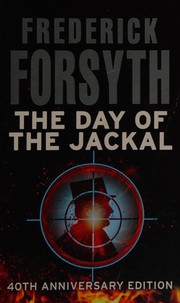
The Day of the Jackal
An English assassin takes an OAS contract to kill de Gaulle while a quiet French detective races to stop him in 1963 Paris.
2,969-word summary · 13 min read
Eye of the Needle
German spy Faber races D Day photos to a U boat while MI5 hunts and Storm Island Lucy stands last.
2,083-word summary · 9 min read
The Bourne Supremacy
David Webb is pulled back into Jason Bourne when an impostor kills in his name in Hong Kong and Marie is kidnapped. Ludlum's dense 1986 sequel stretches…
3,266-word summary · 15 min read
Wayward
With Ethan Burke now sheriff, Wayward Pines runs on cameras, fear and a founder's private plan, until a murder forces him to choose between order and the truth.
2,252-word summary · 10 min read
The Moonlight Child
On a cold January night, Sharon Lemke sees a child washing dishes in a neighbour's kitchen and decides she cannot ignore it.
2,169-word summary · 10 min read
The Atlantis Gene
A geneticist and an intelligence operative chase two kidnapped boys through a global conspiracy about human evolution and a weapon built to cull humanity.
2,369-word summary · 11 min read
The 5th Horseman
Two linked cases pull Lindsay Boxer and the Women's Murder Club into a hospital full of strange deaths and a luxury-car murder spree.
2,609-word summary · 12 min read
Th1rt3en
A former con artist turned defense lawyer takes a celebrity murder trial while a serial killer sits on the jury, steering the verdict.
2,254-word summary · 10 min read
State of Terror
A new secretary of state and her team unpick a web of attacks across Pakistan, Afghanistan, and Iran in this 2021 political thriller.
2,307-word summary · 10 min read
Make Me
Reacher drifts into a quiet Midwestern town and finds a missing investigator, a trail of killers, and a deep web secret.
2,352-word summary · 10 min read
Zero Day
Army investigator John Puller is sent alone to a West Virginia coal town to solve a colonel's murder, and finds a much larger secret buried nearby.
3,434-word summary · 15 min read

You Are Not Alone
A lonely New Yorker witnesses a subway suicide and falls in with the dead woman's friends, where a makeover and a framed murder hide a hidden mastermind.
2,588-word summary · 12 min read

These Silent Woods
A father and his eight-year-old daughter live off-grid in the Appalachian woods, hiding from a past he cannot outrun. When their yearly supply run fails, their…
2,274-word summary · 10 min read
The Secret of Secrets
Robert Langdon travels to Prague with Katherine Solomon, a scientist whose work on consciousness has made her a target. A dream, a bomb and a killer called the…
2,251-word summary · 10 min read
The Running Grave
In the seventh Cormoran Strike novel, Robin goes undercover inside a Norfolk cult while Strike digs into a child's death from decades earlier.
2,615-word summary · 12 min read

The Obsession
After a childhood in the shadow of her serial killer father, photographer Naomi Carson puts down roots in a coastal town, only to face a copycat killer…
2,230-word summary · 10 min read
The Midnight Line
A West Point class ring in a Wisconsin pawnshop sends Jack Reacher across the Midwest, from a biker's lie to a wounded veteran hiding from the opioid trade.
2,590-word summary · 12 min read
The Maid's Diary
A cleaner who snoops through her wealthy clients' lives finds a secret that could destroy them, while a detective investigates a bloody waterfront house with…
3,459-word summary · 15 min read
The Lies I Tell
A con artist returns to Los Angeles to ruin the man who took her family's home, while a journalist who has hunted her for ten years closes in.
2,201-word summary · 10 min read
The Keeper of Lost Causes
Jussi Adler-Olsen introduces Carl Mørck and Department Q, a Copenhagen cold-case unit in a basement, and a missing politician whose file refuses to stay closed.
2,759-word summary · 12 min read
The Hard Way
A man Reacher sees drive a ransom-laden Mercedes pulls him into a retired colonel's hunt for his missing wife and stepdaughter.
2,637-word summary · 12 min read

The Cellar
Abducted in her small English town, sixteen-year-old Summer is locked in a cellar with three other girls. Their captor calls himself Clover and wants a perfect…
2,551-word summary · 11 min read
The Cabin at the End of the World
A family vacation in a New Hampshire cabin turns into an impossible choice when four strangers arrive demanding a sacrifice to stop the apocalypse.
2,571-word summary · 11 min read