
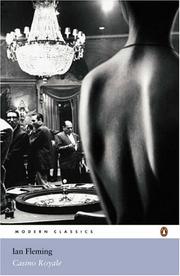
Casino Royale
2,370-word summary 11 min read 192 pages in the book
- First published
- 1953
- Publisher
- Penguin Books Ltd
- Pages
- 192
- ISBN
- 9780141187587
- Series
- James Bond (#1)
Reading options
What's inside (9 sections)
I came to Casino Royale expecting the smooth machine I knew from the films and found something stranger and much shorter. The first edition was 213 pages, published by Jonathan Cape in Britain on 13 April 1953, and it reads like a rough draft of a myth that later got polished past recognition. The edition cited here is the 2004 Penguin Modern Classics paperback, 192 pages, ISBN 9780141187587. Fleming wrote this as his first novel while unsure it was fit to publish. The James Bond who walks out of it is not the elegant figure of the screen. He is blunt, dull, a little brutal, a man things happen to rather than a man who choreographs them. That is how Fleming wanted him.
A name borrowed from a bird book
Fleming started writing on 17 February 1952 at Goldeneye, the house he had built in Jamaica, while waiting for his wedding. He typed two thousand words most mornings, working straight from his own experience and imagination, and had a manuscript by March. He called it his "dreadful oafish opus." Clare Blanchard, a former girlfriend, advised him not to publish it, or to do so under a pseudonym. He let his friend William Plomer read the draft. Plomer thought it had promise and passed it to Jonathan Cape, who were cool until Fleming's older brother Peter, an established travel writer on their list, recommended it.
The making of the hero is nearly farcical. Fleming first called him James Secretan, then took the name from the ornithologist James Bond, author of Birds of the West Indies. He told the ornithologist's wife he wanted "the dullest name I ever heard," a brief, unromantic, Anglo-Saxon name for a man to whom things happened. He modeled Bond's looks on a mixture of himself and the singer Hoagy Carmichael, and has Vesper say so, noting that Bond reminds her of Carmichael but has something cold and ruthless. M came from Rear Admiral John Godfrey, Fleming's superior in Naval Intelligence, a man with a bellicose and irascible temper. Le Chiffre seems to have taken his face and his appetite for pain from Aleister Crowley. Joan Howe, the red-haired secretary who retyped the manuscript, left her mark on Miss Moneypenny. Fleming put a great deal of himself into the book and then pretended the character was a dull instrument.
The opening line sets the tone better than any summary. "The scent and smoke and sweat of a casino are nauseating at three in the morning." It is a strange way to introduce a hero, and it tells you that Fleming was interested in the cost of the glamour as much as the glamour itself.
The war behind the cards
Fleming did not make his spy story up from nothing. In 1939 Rear Admiral John Godfrey recruited him into Naval Intelligence, where his codename was 17F, and he worked there for the duration of the war. The people he met and the things he saw supplied the raw material. On a journey through neutral Portugal he and Godfrey visited the casino at Estoril, a place crowded with agents from the warring regimes. Fleming liked to tell how a chief German agent broke him at chemin de fer. Godfrey's account was more prosaic: Fleming played Portuguese businessmen and invented the German later. One version is a good story and the other is probably true, and the book needs both.
The novel also carries the mark of a specific moment. The villain runs a trade union under Soviet control, which was a live fear in Britain in the early 1950s. Fleming's friend Matthew Parker thought this made it the closest Fleming ever came to the morally murky spy stories of John le Carré. The comparison only goes so far, because le Carré's people doubt themselves and Bond never really does, but the shadow of the Cambridge spies Guy Burgess and Donald Maclean, who defected in 1951, lies over the whole book. Britain was still an imperial power on paper and a bomb-damaged one in fact, and the fantasy of a man who could still go abroad and set things right had an obvious audience.
The game at Royale-les-Eaux
M sends Bond, 007, to the casino at Royale-les-Eaux in northern France with a simple objective: bankrupt Le Chiffre, the paymaster of a trade union controlled by SMERSH, Soviet intelligence. The game is baccarat, played in the form called chemin de fer. Bond's cover is a wealthy Jamaican playboy, and M pairs him with Vesper Lynd, a personal assistant in the Soviet section of the British service. The Americans and the French send their own watchers. Felix Leiter of the CIA arrives as a rich Texan, and René Mathis represents the Deuxième Bureau. The scene is a small international conference disguised as a holiday.
Le Chiffre wins the first round and cleans Bond out. Bond considers the humiliation of reporting failure to M, and then Leiter slips him an envelope with a note: "Marshall Aid. Thirty-two million francs. With the compliments of the USA." It is one of the book's neat ironies that the British agent is saved by American money, because Fleming was writing at a moment when British intelligence had been embarrassed by the defections of Guy Burgess and Donald Maclean. The Americans in the story are useful and faintly ridiculous, and the relationship between Leiter and Bond is warmer than the real one between the two services was at the time.
Bond goes back in and wins, taking eighty million francs that belong to SMERSH. He orders a drink in chapter seven that will outlive almost everything else in the book: three measures of Gordon's gin, one of vodka, half a measure of Kina Lillet, shaken until ice cold, with a large thin slice of lemon peel. He names it the Vesper, after the woman sitting beside him. The drink arrives rather late in a short novel, and Fleming takes his time getting there, piling on brand names and small rituals of dress and food. Kingsley Amis later called this the Fleming effect, the imaginative use of information to bolt a fantastic story down to something like reality.
The carpet beater and the letter Ш
Le Chiffre cannot return the money, so he changes the game entirely. He has Vesper kidnapped and tortures Bond, working on him with a carpet beater and a carving knife. This is the part of the novel that the films softened almost beyond recognition. Fleming makes it slow and physical and mean, with Bond left naked and bleeding while his captor waits for the money. A SMERSH assassin walks in before Le Chiffre can finish. He shoots Le Chiffre, a punishment for losing Soviet funds, and then studies Bond. He has no orders to kill a British agent, he says, so he leaves him alive and cuts a Cyrillic Ш into his hand instead, the first letter of the Russian word for spy. The mark is a calling card for any SMERSH man who meets him later.
The episode is where the book's taste for extremity and its politics meet. Fleming had used a real incident as the model for the failed attempt on Bond's life earlier in the story, when Bulgarian assassins attacked with bombs and trees saved the victim, drawing on the attempted killing of Franz von Papen. The villain's trade-union cover spoke directly to British anxieties about Communist influence in the unions in the early 1950s. A conversation between Bond and Mathis in a chapter called The Nature of Evil gives the novel its argument: Le Chiffre's evil creates a standard of badness against which goodness can be measured. Bond says he does what he does because of such men, not because of any code. It is a bleak idea for a book that is also full of champagne and tailored shirts.
Vesper
The last movement of the plot is quieter and crueler than the casino. Vesper visits Bond every day in hospital, and he realizes gradually that he loves her. He thinks about leaving the Secret Service to settle with her. When they are well enough they take a room at a guest house by the sea and become lovers. Then Bond notices a man named Gettler following them, and Vesper's manner changes completely. The next morning she is dead, by her own hand, and a note explains everything.
She had been an unwilling double agent for the Soviet Ministry of Internal Affairs. SMERSH had seized her lover, a pilot in the Polish Royal Air Force, and tormented him until he gave them something they could use against her. They used it to force her to undermine Bond's mission, including the faked kidnapping that had made the torture scene possible. She had tried to begin a new life with him, but the sight of Gettler told her there would be no end to it. Staying with Bond would only put him in danger, so she killed herself. Bond reports the facts to his service and says of Vesper, "The bitch is dead now." The line is usually quoted as proof of how hard-boiled the book is. Read now, it sounds like what it is: a clever man refusing to feel anything in front of his boss.
Hooks, brands, and a postwar mood
Fleming defended the book by saying that thrillers need not be literature with a capital L, and that it was possible to write thrillers designed to be read as literature. Critics argued about the claim for decades. Raymond Benson identified what he called the Fleming Sweep, the use of hooks at the end of chapters to pull the reader into the next one. Anthony Burgess described a heightened journalistic style that hurries the reader past the points where the story might otherwise look silly. Umberto Eco, examining the death of Le Chiffre, thought Fleming had a feeling for words and wrote with art, even if he was not an artist. Not everyone was convinced by the method. Kingsley Amis, who wrote a book about Bond, thought Leiter was a nonentity as a character, an American who took orders from a British agent and was always outclassed by him. Christopher Hitchens later named what he saw as the central paradox of the classic stories: a superficial devotion to the Anglo-American fight against communism paired with open contempt for Americans. David Seed argued the opposite case, that Bond's successes depend throughout on American money and expertise. The argument is built into the action rather than stated in a speech. Leiter is the man who hands over the envelope of Marshall Aid funds. The prose works because it moves fast and because the details are precise. It also works because it was written for a country that had just come through a war.
Britain in 1953 still had bomb sites in central London and rationing for some foods. Bond was an antidote to austerity, a fantasy that the country could still act like a great power. The tension with America runs through the book even when the story tries to smooth it over, and the recent defections of Burgess and Maclean hang behind the plot about a traitor in a trade union. A reader can enjoy the game without noticing any of this, but the book was written for people who did notice. That context is also why some of the language has aged badly. Fleming uses the phrase "Red Indians" four times, borrowed from the nickname he gave a unit of commando troops he helped create, and the troops themselves disliked it.
What happened next
The first print run of 4,728 copies sold out in less than a month, and two more runs followed. Cape offered Fleming a three-book deal. In America three publishers turned the book down before Macmillan took it, and sales there were dreadful, around four thousand copies in the whole of 1954. A 1955 paperback retitled it You Asked for It, against Fleming's own suggestions of The Double-O Agent and The Deadly Gamble, and even renamed the hero Jimmy Bond. None of that helped. Pan Books had better luck in Britain with a 1955 paperback that sold forty-one thousand copies in a year.
Fleming kept the routine for the rest of his life. In a 1963 piece for Books and Bookmen he explained that he wrote for about three hours in the morning and another hour in the evening, never correcting anything or rereading it, and that the formula produced two thousand words a day. It is easy to hear the speed of that method in this first book, for better and worse. The chapters end on hooks and the reader is carried forward, but the seams show when the story stops to explain a card game or a drink.
Reviews were mixed in the way that early reviews of a new kind of book often are. Hugh I'Anson Fausset in the Manchester Guardian called it a first-rate thriller with a breathtaking plot, then called it schoolboy stuff rescued by the hard brilliance of the telling. Alan Ross in the Times Literary Supplement found it an extremely engaging affair, exciting and extremely civilized, and praised the high poetry with which Fleming invested the green baize of the tables. Both reviews understood that the book was offering a new kind of pleasure.
The story has since been filmed three times: a 1954 CBS television production with Barry Nelson as an American Bond, a 1967 comedy with David Niven as Sir James Bond, and the 2006 Eon film with Daniel Craig, which returned to the novel's colder tone. I would read the book before watching any of them. The screen Bond is so much smoother that it is easy to miss the point of the original, which is that this is a story about a man who wins a game and is damaged by winning it. Fleming ends with a ruined woman, a scarred hand, and a hero who has learned nothing he can say out loud. That bleak little coda is the part the adaptations keep trimming away.
FAQ
What happens in Casino Royale?
M sends Bond to a casino at Royale-les-Eaux to bankrupt Le Chiffre, a Soviet paymaster, at baccarat. Winning leads to torture, a Cyrillic spy mark on Bond's hand, and Vesper Lynd's suicide.
Is this the first James Bond novel?
Yes. Ian Fleming published it in 1953 as his first novel, and it introduced Bond, M, Felix Leiter, and the essentials of the character before eleven more Fleming Bond books.
Which edition is cited here?
The metadata cites the 2004 Penguin Modern Classics paperback, 192 pages, ISBN 9780141187587. The original Jonathan Cape hardback of 1953 ran 213 pages.
Similar books
More from James Bond first, then related titles.
The Kill Artist
Daniel Silva introduces art restorer and former operative Gabriel Allon in this 2000 spy thriller about a revenge hunt that turns personal.
2,303-word summary · 10 min read
American Assassin
Before he became the CIA's most feared counterterrorist, Mitch Rapp was a Syracuse student mourning his girlfriend, killed on Pan Am Flight 103. Then came…
2,114-word summary · 9 min read
Stormbreaker
A fourteen-year-old boy loses his uncle, then his ordinary life, when MI6 sends him undercover to a Cornish computer plant where the giveaway machines hide a…
2,822-word summary · 13 min read
The Secret of Secrets
Robert Langdon travels to Prague with Katherine Solomon, a scientist whose work on consciousness has made her a target. A dream, a bomb and a killer called the…
2,251-word summary · 10 min read
Red Storm Rising
A fired Siberian oil field pushes the Politburo toward the Persian Gulf, and a conventional Third World War opens with stealth strikes and a fight for Iceland.
2,661-word summary · 12 min read

Revolutionary Road
A Connecticut couple who believe they are too good for the suburbs plan to move to Paris, and the plan slowly exposes everything they cannot say to each other.
2,085-word summary · 9 min read
Cross My Heart and Hope to Spy
Cammie Morgan returns to Gallagher Academy for a second year of spy training, only to fall for a boy from a rival spy school and hunt a mole in her own school.
2,567-word summary · 11 min read
The Dharma Bums
Ray Smith rides freight trains, climbs Matterhorn Peak and argues about Zen with the poet Japhy Ryder in Kerouac's 1958 road novel.
2,729-word summary · 12 min read

The Chemist
A former government interrogator on the run takes one last job, then learns the case she was handed was built to pit her against him.
2,249-word summary · 10 min read
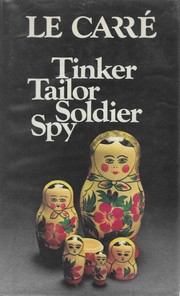
Tinker, Tailor, Soldier, Spy
Retired spymaster George Smiley is brought back to find a Soviet mole inside British intelligence, and the trail leads through old friends, old betrayals, and…
2,092-word summary · 9 min read
The Broker
A disgraced Washington lobbyist is pardoned and hidden in Bologna, where the CIA uses him as bait to find out who wants a stolen satellite.
2,211-word summary · 10 min read
Mother Night
Howard W. Campbell Jr., a Nazi propagandist and American spy, tells the story of his double life from an Israeli prison cell while waiting to be tried for war…
1,988-word summary · 9 min read
The Talented Mr. Ripley
A small-time con man is sent to bring a rich man's son home from Italy and decides to become him instead. Highsmith's amoral classic of the first antihero.
2,074-word summary · 9 min read
The Spy Who Came In from the Cold
A burnt-out Berlin agent takes one last mission that requires him to look like a traitor.
2,578-word summary · 11 min read
The Day of the Jackal
An English assassin takes an OAS contract to kill de Gaulle while a quiet French detective races to stop him in 1963 Paris.
2,969-word summary · 13 min read
Clear and Present Danger
Jack Ryan uncovers a secret U.S. drug war in Colombia and fights to bring abandoned soldiers home.
2,954-word summary · 13 min read
Eye of the Needle
German spy Faber races D Day photos to a U boat while MI5 hunts and Storm Island Lucy stands last.
2,083-word summary · 9 min read
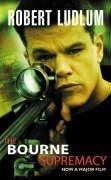
The Bourne Supremacy
David Webb is pulled back into Jason Bourne when an impostor kills in his name in Hong Kong and Marie is kidnapped. Ludlum's dense 1986 sequel stretches…
3,266-word summary · 15 min read
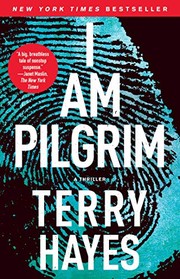
I Am Pilgrim
A retired spy turned crime writer is pulled back when a grisly New York murder points toward a hidden bioterror plot, and the hunt runs from forensics to the…
3,023-word summary · 13 min read
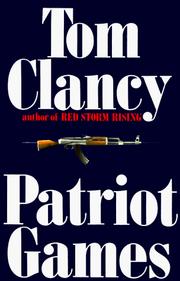
Patriot Games
Jack Ryan saves royals in London then faces IRA revenge aimed at his family in America.
2,089-word summary · 9 min read
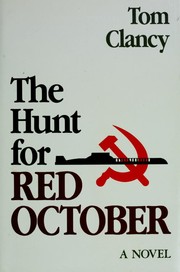
The Hunt for Red October
Soviet captain Ramius defects with stealth sub Red October while Jack Ryan must prove intent.
2,305-word summary · 10 min read
The Bourne Identity
An amnesiac pulled from the sea hunts his identity as Jason Bourne while assassins and the CIA close in.
2,994-word summary · 13 min read
Digital Fortress
NSA cryptographer Susan Fletcher chases a killer code that could expose every secret, across Seville and Fort Meade.
2,125-word summary · 9 min read
The Bell Jar
Esther Greenwood wins a New York internship that should feel bright, then sinks into depression at home. Plath's 1963 novel follows her breakdown, treatment,…
2,504-word summary · 11 min read
The Shining
The Shining retold: Jack winters at Overlook with Wendy and Danny, REDRUM, hedge maze chase.
2,011-word summary · 9 min read
And Then There Were None
And Then There Were None retold: ten to Soldier Island, rhyme deaths, no one left to tell.
2,137-word summary · 9 min read
Whisper Network
Four women at a Dallas sportswear company decide to name their boss in an anonymous spreadsheet of bad men, and the office turns on itself.
2,152-word summary · 10 min read
Wayward
With Ethan Burke now sheriff, Wayward Pines runs on cameras, fear and a founder's private plan, until a murder forces him to choose between order and the truth.
2,252-word summary · 10 min read
The Symposium
At a banquet in Athens, seven men compete to praise Eros, ending with Socrates' account of Diotima and a drunken interruption by Alcibiades.
2,147-word summary · 10 min read
The New York Trilogy
Three linked novels turn a wrong-number call into a puzzle about names, authorship, and the stories people tell to stay sane.
2,259-word summary · 10 min read