
The Bourne Identity
2,994-word summary 13 min read 523 pages in the book
- First published
- 1980
- Publisher
- Richard Marek
- Pages
- 523
- ISBN
- 9780399900709
- Series
- Jason Bourne (#1)
Reading options
What's inside (9 sections)
I picked up The Bourne Identity because I had seen the movies first and a friend told me the book was almost a different story. He was right. The film is lean and modern. The novel from 1980 is thicker and stranger and more paranoid. It moves slower in places, but it sticks with you because the central image is so stark. A man wakes up with no past and finds out that his hands know how to kill.
Ludlum opens with that man floating in the Mediterranean. He has been shot. He should be dead. Fishermen pull him out of the water near the French coast and carry him to a doctor on a small island called Port Noir. That first stretch is genuinely strong. The man drifts in and out of fever. His body is torn up. When he finally wakes, he does not know his name or his language, though he finds he can speak French and English without thinking. The local doctor, Geoffrey Washburn, treats him for months. Washburn is an alcoholic living in exile, and he becomes the only person who believes the patient is telling the truth about the memory loss.
What Washburn finds under the skin changes everything. There is a small piece of microfilm surgically implanted in the hip. On it is a number for a bank account in Zurich. That detail hooked me right away. It is concrete and odd. Someone went to a lot of trouble to hide that number, and that someone might have been the patient himself.
The man has also had plastic surgery on his face, recent enough that the swelling has not fully gone down. His fingerprints are hard to match. He has skills he cannot explain. He notices exits in a room. He handles a gun like he has done it a thousand times. He hates that he knows these things.
Washburn tells him he needs to go to Zurich and follow the account. It is the only thread he has. The man agrees, even though he is terrified. He travels to Switzerland, where he adopts the name Jason Bourne from the account paperwork.
A man pulled from the sea
The Port Noir chapters take their time, and I mean that as praise. Ludlum lets Washburn watch his patient try to rebuild basic facts. The man practices walking again. He stares at the mirror and does not recognize the face. He tries to recall a childhood street or a mother or a school, and nothing comes.
There is a quiet sadness in those scenes that the later action sometimes loses. Washburn drinks too much and knows it. He talks to the man late at night. He warns him that Zurich may bring answers he does not want. He also warns him that whoever shot him may try again. The man listens and keeps going because staying on the island means living as no one.
One scene stayed with me. The man tries to write his own name on a pad and stops with the pen shaking. He can write fluently in two languages, but he cannot sign anything with confidence. Washburn watches and does not push. That small moment says more about amnesia than the shootouts later do.
When he finally leaves, Washburn gives him a little money and a lot of doubt. The parting feels earned. You get the sense both men know they will probably never meet again.
Zurich and the bank that knows his name
Zurich is where the book shifts from survival story to spy puzzle. Bourne walks into the Gemeinschaft Bank on the Bahnhofstrasse and gives the account number. The reaction behind the desk tells him this is not a normal account. The bankers go rigid. They make phone calls. They bring out forms that require a signature to match the one on file.
Bourne signs the name Jason Bourne and it matches closely enough to pass. Then the money appears. The account holds millions in different currencies. There are also other names linked to it, with passports and paperwork to support them. Bourne realizes he can walk out rich if he plays the part, but he has no idea what part he is playing.
Ludlum does a good job with the bank as a physical place. The marble and the hushed voices. The way a clerk watches Bourne a second too long. The back rooms where the real decisions get made. You feel how exposed Bourne is. He is pretending to be himself.
Outside the bank, men start following him. One of them tries to kill him in the stairwell of a hotel. Bourne reacts without thought. He disarms the man and breaks his hold in seconds. Then he stands there shaking, because his body acted before his mind caught up. That pattern repeats through the book. His reflexes save him and frighten him in equal measure.
He goes back to the bank again and again, testing limits, moving money, trying to force whoever watches the account to show themselves. It is risky and a little reckless, and that fits. He has no better plan. He is a blind man tapping the walls.
A second thread starts here too. Someone inside American intelligence is watching Zurich with intense interest. Phone calls go back to New York and Washington. The name Cain keeps coming up. Bourne does not know yet that Cain is supposed to be him.
Marie St Jacques
Marie St Jacques enters as a bystander and quickly becomes the heart of the book. She is a Canadian economist in Zurich for a conference. She is smart and stubborn and tired of men who talk down to her. Bourne first notices her at the bank, where she is also being watched, and later he grabs her as a hostage in a hotel room to get out of a trap.
That hostage scene could have been ugly, and Ludlum handles it better than I expected. Bourne is desperate. He forces Marie to help him leave the hotel and drive him out of the city. She fights him at first. She tries to escape at a roadblock and nearly gets them both killed. Slowly she starts to believe his story, not because he is charming but because his confusion looks real. He does not act like a professional running an operation. He acts like a man making it up as he goes.
I liked how their trust builds in small steps. She watches him count money without caring about it. She watches him stare at his own signature like it belongs to a stranger. She is trained to read numbers and spot lies, and what she sees in Bourne does not fit the idea of a cold assassin. He is too raw. He asks her for help with simple things, like how to behave at a front desk or what to say to a clerk.
They hide in cheap hotels and drive through Swiss villages. At one point they hole up in a room and sleep in shifts. Marie takes the first watch with a gun she barely knows how to hold. That image says a lot about where they are. Neither of them is equipped for this, but they keep moving.
Marie also gives Bourne a reason to stay human. Without her, he could easily turn into the killer everyone claims he is. With her, he keeps checking himself. He apologizes. He explains. He tries to protect her even when it puts him at risk. Their bond grows fast, faster than real life would allow, but in the context of the chase it felt believable to me. Fear speeds things up.
Later, when Marie uses her Canadian government contacts to find shelter, you see how capable she is on her own. She is far from a passenger on this ride. She makes calls. She argues with officials. She puts her own career on the line because she thinks Bourne is innocent of at least some of what he is accused of.
Treadstone Seventy-One
About a third of the way in, Ludlum starts to reveal what Treadstone is. Treadstone Seventy-One is a secret unit inside American intelligence, run out of an office building in New York. Its chief is Alexander Conklin, a man with a limp and a sharp tongue who has spent years hunting a terrorist. The unit created a myth called Cain to draw that terrorist out.
The idea was simple in concept and messy in practice. American intelligence wanted to convince the terrorist known as Carlos that a rival assassin called Cain was taking his contracts and insulting his reputation. If Carlos believed Cain was real, he might make a mistake trying to find and kill him. To sell the lie, Treadstone needed a man to play Cain in Europe, to leave rumors and bank transfers where Carlos would notice them.
Bourne was that man. Or rather, the man who became Bourne agreed to play that part before he lost his memory. His real past, which comes back in fragments, involves Vietnam and a brutal American unit called Medusa. His birth name was David Webb. He was a Foreign Service officer who lost his family early in the war and joined Medusa out of grief and anger. He knew the dark side of operations. Conklin recruited him because he could pass as a killer and because he had little left to lose.
Conklin is one of the best characters in the book. He is not a cartoon villain. He believes in the mission. He thinks sacrificing one man is worth it if it stops Carlos. He also drinks and argues with his superiors and refuses to admit he may have lost control of his own creation. When Bourne starts acting on his own in Zurich, Conklin assumes Bourne has turned. He tells himself the amnesia story is a cover. He sends teams to bring Bourne in dead or alive.
Treadstone Seventy-One works as a portrait of a secret program that believes its own lies. Everyone inside repeats the name Cain until it feels solid. Then Bourne shows up with real wounds and no memory, and the story cracks.
Carlos
Carlos the Jackal hangs over the whole novel without appearing much in person for a long time. Ludlum based him on the real terrorist who was famous in the seventies, a man blamed for bombings and murders across Europe. In the book, Carlos is careful and ruthless. He runs a network of couriers and paid killers. He has contacts inside governments. He never forgives an insult.
The Cain myth was designed to insult him. Treadstone spread word that Cain was taking high priced killings that should have gone to Carlos. They planted stories about a gunman who mocked Carlos as old and slow. Carlos took the bait. He started hunting Cain through his own channels. He sent men to Zurich and Paris to find him.
What makes Carlos frightening here is not superhuman skill. It is patience. He waits. He pays old women to watch stairwells. He uses clerks and chauffeurs as eyes. He kills his own people when they fail. One of the coldest stretches involves a messenger who brings bad news and understands, too late, that Carlos does not accept excuses.
Bourne gradually understands that Carlos is now his only real judge. The CIA thinks Bourne has gone rogue. The police think he is a murderer. Only Carlos believes Cain is real enough to kill, which in a twisted way confirms Bourne played the part well. To survive, Bourne decides he has to do what Treadstone originally wanted. He has to force Carlos into the open and finish it himself.
The core tension never changes. He has the reflexes of a killer and the fear of an innocent man.
I found that idea more interesting than any single shootout. Bourne studies Carlos the way a hunter studies an animal, while privately fearing he might actually be that animal.
Paris and Les Classiques
Paris is where everything tightens. Bourne and Marie move through hotels and metro stations and crowded streets, always watching for tails. Ludlum writes Paris as a working city rather than a postcard. There are rainy sidewalks and late night phone booths. Bourne meets contacts who may be selling him out. Marie tries to keep a low profile while reaching Canadian officials who can protect her.
The center of the Paris section is a dress shop called Les Classiques. On the surface it sells expensive clothes to rich women. Underneath it is a front for Carlos, run by a woman named Jacqueline Lavier. Messages pass through the shop. Money moves. Killers get instructions. Bourne figures this out by following small clues, like a phone number repeated in different places and a clerk who recognizes a face she should not know.
The scenes inside and around the shop are tense in a slow way. Bourne watches the entrance from a cafe. He follows a delivery van. He breaks in after hours and searches drawers while listening for footsteps. He finds ledgers and notes that point to other names. It is patient detective work, and I liked that shift. He has to think like Cain to catch Carlos.
Marie gets pulled deeper here. She is taken and used as bait. Bourne has to choose between chasing Carlos and saving her, and he chooses her without hesitation. It proves to Marie, and to the reader, where he stands. He will not trade her life for the mission.
There is a brutal fight in a hotel room that shows how far Ludlum will go with close quarters violence. No fancy weapons. Just hands and breath running out. Bourne wins because his training takes over, then sits on the floor afterward trying to steady himself. Marie finds him there and does not ask for details. She just helps him clean up and move.
Conklin arrives in Paris convinced he can end the mess with one meeting. He sets up a supposed safe handoff and brings backup. The meeting goes wrong. Carlos has penetrated the operation more deeply than Conklin admits. Men die who should have been protected. Conklin himself is exposed as a man who pushed too hard and trusted too little. His death, when it comes, feels less like justice and more like waste. He was right about Carlos and wrong about Bourne, and that mistake killed people.
The final push takes Bourne to the countryside and back into the city, to houses owned by a French general named Villiers whose wife was murdered by Carlos, and to phone calls that must be answered in person. He finally comes face to face with Carlos in a cemetery and later at Villiers house, where the confrontation turns physical and chaotic. Carlos escapes wounded, which frustrated me a little on first read, but it fits the book. Carlos is a system as much as a man. You cannot shoot a network in one night.
Bourne ends the chase hollowed out. He knows more about David Webb now, about Medusa and the choice he made to become Cain. He knows Treadstone used him. He also knows Marie stayed. The last pages give them a quiet place to rest, far from Paris and Zurich, with new papers and a fragile hope that Carlos will stay quiet for a while. It is not triumph. It is exhaustion with a chance to heal.
What drags and what holds up
This is a long book, 523 pages in the Richard Marek first edition, and you feel the length. Ludlum repeats certain moves. Bourne figures out a clue, explains it to Marie at length, then explains it again to someone else on the phone. Conklin argues with Washington in scenes that blur together. Some of the tradecraft talk about couriers and cutouts goes on past the point where it adds tension. I skimmed a few of those passages on my read.
The Cold War setting also dates the story in ways that are both fun and limiting. There are Telex machines and bank ledgers kept on paper. Everyone smokes and makes international calls from hotel lobbies. It gives the book texture. It also means some of the stakes feel distant if you did not live through that era. The Soviet angle is thin. The focus stays on personal revenge and institutional pride rather than ideology.
Marie is well drawn for long stretches, then sometimes slips into needing rescue just when she was handling things herself. I wished Ludlum had let her keep more agency in Paris. She earns her place early by reading Bourne correctly when no one else does. The book is better whenever she pushes back or makes her own calls.
What holds up is the central engine. A man with no memory trying to prove he is not the monster his file says he is. That question drives every chapter. The Zurich bank scenes still crackle. The use of Cain as a fiction that becomes real still feels clever. And Conklin remains a sad and believable figure, a manager who built a lie so well that he trapped himself inside it.
If you like spy stories with paperwork and long chases through real streets, this will satisfy you. If you want the speed of the movies, be ready to adjust. The novel wants you to sit in hotel rooms and listen to lies unravel slowly. When it works, it works well. When it stalls, Marie and the basic mystery carry you through to the next sharp scene.
I closed it thinking less about Carlos and more about Washburn back on Port Noir, waiting for news that never comes in a form he can share. That early kindness gives the whole violent sprawl something to return to. Bourne started as a patient, not a weapon. Remembering that is the real plot.
FAQ
Is The Bourne Identity book different from the movie?
Yes, in large ways. The novel centers on the Cain fiction, Treadstone, and Carlos the Jackal, with Marie St Jacques as a Canadian economist, and the tone is slower and more Cold War rooted than the films.
Who is Jason Bourne really in the novel?
He is David Webb, a former Foreign Service officer and Medusa veteran from Vietnam, recruited by Treadstone chief Alexander Conklin to pose as an assassin called Cain.
Is The Bourne Identity the first book in a series?
Yes. Published in 1980 by Richard Marek, it is book 1 in the Jason Bourne series and introduces Treadstone, Conklin, Marie, and Carlos.
Similar books
More like The Bourne Identity →More from Jason Bourne first, then related titles.
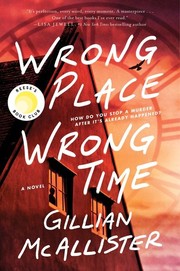
Wrong Place Wrong Time
Jen sees her son Todd kill a stranger, then wakes the day before, slipping back in time to stop the murder.
2,522-word summary · 11 min read

The Outsider
Coach Terry Maitland's DNA and witnesses point to an impossible murder, until Ralph Anderson and Holly Gibney trace it to El Cuco.
2,586-word summary · 11 min read

The Only One Left
Caregiver Kit tends mute Lenora Hope accused of 1929 family murders.
2,592-word summary · 12 min read

The Maidens
Therapist Mariana hunts Cambridge professor Edward Fosca after a Maidens murder.
2,234-word summary · 10 min read

The Locked Door
Surgeon Nora Davis hides serial killer father while patients die.
2,465-word summary · 11 min read

The Last Mrs. Parrish
A con artist targets a rich wife, then the marriage game turns with a hidden past.
2,018-word summary · 9 min read