
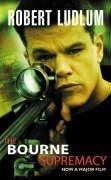
The Bourne Supremacy
3,266-word summary 15 min read 679 pages in the book
- First published
- 1986
- Publisher
- Orion
- Pages
- 679
- ISBN
- 9780752863887
- Series
- Jason Bourne (#2)
Reading options
What's inside (8 sections)
I came to this one straight after finishing The Bourne Identity, mostly because that first book left me with a question I could not shake. If David Webb finally got out, how long would Ludlum let him stay out? The answer, it turns out, is not long at all. I picked up the 1986 sequel, in the Orion 2004 edition that runs 679 pages, expecting a quick return to Hong Kong and gunfire. What I got was slower at first, then crowded, then oddly sad. It is a book about a man trying to hold onto a normal life while other men keep renting out his old name for murder.
Webb is living in Maine when we meet him again. He teaches, he walks, he tries to sleep through the night. Marie St Jacques is with him, and their marriage feels lived in rather than new. She watches him for signs of the other personality, the cold operator called Jason Bourne who was built by Treadstone. He watches himself too. That early section surprised me because Ludlum, who usually likes to start with a bang, lets the quiet sit for a while. You see Webb grading papers, taking calls, trying to be David. Marie is working as well, trying to keep them steady. It is not peaceful exactly, more like a truce.
Then news comes from Hong Kong. Someone has killed a senior official there, and the whispers say Jason Bourne did it. Webb knows he did not do it. Marie knows he did not do it. The CIA officers who hear the name feel their stomachs drop because that name was supposed to be buried. Alexander Conklin, who ran Treadstone and carries his own limp and guilt from the first book, gets pulled back into the file. He has never fully believed Webb is stable, and he has never fully forgiven himself for making Bourne in the first place. When the Hong Kong killing is linked to the Bourne identity, Conklin has to ask the hard question again. Is Webb sleepwalking back into his old role, or is someone else cashing in on the legend?
Ludlum answers it fast. There is an impostor. A hired killer in Asia has started accepting contracts as Jason Bourne. The name still frightens people in the right circles, so it pays well. The impostor does not know Webb, does not care about Treadstone history, and does not follow any old rules. He kills for money and leaves the name behind like a calling card. Behind him sits a wider plot tied to Hong Kong money and power, the kind of taipan circle where shipping, banks, and politics mix. I am keeping this part general on purpose, because the novel throws a lot of names and front companies at you, and not every alliance stays clear. The shape is clear enough. Wealthy men in Hong Kong want influence over events in China, and a famous killer name helps them frighten rivals and steer officials.
What forces Webb onto a plane is Marie. She is taken. The kidnapping is blunt and frightening, and Ludlum writes it without much decoration. One day she is there in their routine, the next she is gone, and Webb gets the message. Come to Hong Kong. Play Bourne again. Do what you are told or she dies. I found this stretch painful to read, not because it is graphic but because Marie has so little power in it. In the first book she talked back, made choices, pushed Webb toward his human side. Here she is mostly a hostage whose absence is used to move Webb around the board. That choice drives the plot, and it works in a mechanical sense, but it left me missing her voice.
A quiet life that does not hold
The Maine chapters matter more than they first seem. Webb is not cured. He has headaches, blank spots, dreams that feel like memories from someone else. He tells himself that teaching Asian studies will keep him close to the part of the world that broke him, as if studying it might tame it. Marie tries to build safety through routine. Groceries, classes, phone calls with friends, small plans for the house. Conklin, far away in Washington, is drinking too much and replaying old decisions. He helped create Cain, the fake assassin identity meant to lure Carlos in the first book, and then he helped turn Webb into the man who had to live inside that lie. He does not trust happy endings.
I liked these pages because they show what Webb stands to lose. He is awkward as a civilian. He checks locks twice. He notices exits in restaurants. He apologizes for it and then does it again. Marie loves him but she is tired, and Ludlum lets that tiredness show in short exchanges rather than speeches. A friend of mine who read this before me said the start was slow, and I see his point. Not much explodes. Yet without this slow start, the later decision to return as Bourne would feel cheap. You need to see the classroom, the house, the attempt at calm, to feel what the kidnappers steal.
There is also a quiet dread in the way Washington reacts to the Hong Kong shooting. Files are pulled. Old Treadstone hands are called in. No one wants to say the name Bourne out loud. Conklin argues that Webb could not have done it, then admits he cannot prove what Webb does in his sleep. That doubt, even from a man who owes Webb his life, tells you how fragile Webb's recovery is. Everyone around him still sees two people in one body.
Hong Kong and the killer using his name
Hong Kong in this book is crowded, wet, loud, and full of watchers. Ludlum loves hotels with too many corridors, press clubs, ferry terminals, and back rooms where men trade rumors. Webb arrives under pressure, told to follow instructions if he wants Marie alive. He is met by people who claim to be helping him and may be using him. CIA station officers try to track him. Local police try to contain the fallout from the murder blamed on Bourne. British officials, still administering Hong Kong in this period, worry about stability and about how any scandal might play in Beijing and London.
The impostor is effective because he is not a mirror of Webb. He is younger, rougher, less trained in the old Treadstone tradecraft, but willing to kill up close and vanish. He likes the fear the name brings. Webb studies the killing the way only he can. Entry point, exit route, timing, choice of weapon, what was staged and what was rushed. He sees quickly that this was not his work. His kills, when he made them as Bourne, followed a pattern drilled into him. This one is close but off, like a forged signature. That detail gave me a chill. Webb has to think like the killer he used to pretend to be in order to catch a stranger pretending to be him now.
Conklin flies in with a small team, and his arrival complicates everything. He wants to protect Webb and Marie, but he also answers to people in Washington who want the Bourne problem solved quietly. There are arguments in safe houses, coded cables, switched meeting places, the usual Ludlum machinery of phones and tails. I got lost once or twice in who authorized what, which is a fair warning for new readers. The novel expects you to keep track of several American officials, several British and Hong Kong contacts, and several Chinese figures without a scorecard. I started jotting names in the margin around page 200 and I was glad I did.
What kept me going was Webb's method. He does not walk into Hong Kong shooting. He listens. He lets himself be seen in the right places so rumors spread that Bourne has returned. He visits bars and hotels tied to the victim, asks questions that sound like threats, and watches who flinches. He uses his fame as bait. It is risky and a little vain, and Ludlum knows it. Webb hates using the name, but the name is the only tool that makes the sponsors nervous enough to make mistakes.
Marie is taken
Marie spends a large part of the book as a prisoner, moved between locations while her captors use her as a phone voice to control Webb. We get glimpses of her thinking, and those glimpses are strong. She tries to memorize sounds, count steps, note accents, stay calm enough to leave clues if she gets a chance to speak to Webb. She is an economist by training, practical by habit, and she refuses to collapse into pure fear. One short scene where she manages to pass a hint during a monitored call stuck with me. She cannot say where she is, so she says something ordinary in a way Webb will hear as strange. It is clever without feeling like a trick.
Still, I wish there was more of her. After such a full role in The Bourne Identity, being reduced to a voice on the phone feels like a step back. Ludlum seems to know this and tries to balance it by giving her a protector figure among the captors, someone with mixed loyalties who ensures she is fed and not harmed beyond the threat itself. That helps keep the tension bearable. You never feel she will be killed casually, but you do feel Webb's panic that she might be. His fear makes him sharper and also more reckless. He agrees to jobs he would never accept if she were safe, meets people in open places, walks into traps with his eyes open because the alternative is silence on the other end of the line.
A phone call becomes the emotional center of the middle third. Webb hears Marie, tries to sound steady, tries to ask questions that will not get her punished. She tries to sound brave. Both fail a little, which makes it feel true. I have read thrillers where hostage plots feel mechanical. This one felt personal because we saw their home life first. Every order Webb follows in Hong Kong costs him a piece of the David Webb identity he built in Maine.
There is a hard scene where Conklin has to tell Webb to stop thinking like a husband for an hour and start thinking like Bourne. Conklin hates saying it. Webb hates hearing it. But the advice works. Bourne notices the surveillance pattern around a drop site. Bourne spots the second team watching the first team. Webb the husband would have rushed in. Bourne waits, follows the watcher, and finds a thread that leads toward the money.
Macau, China, and the taipan plot
The action widens to Macau and then into China, and the scale shifts from a murder mystery to something closer to a political thriller. Macau gives Ludlum casinos, ferries, narrow streets, and easy disappearances. Webb chases contacts who arrange hits, move cash, and sell introductions. He poses, threatens, pays, and sometimes simply outwaits people. One long sequence in a hotel, with Webb moving between floors while teams hunt each other, runs for many pages and shows Ludlum at his best and worst. Best because the geography is clear. You can picture the stairs, the elevator bank, the lobby doors. Worst because it goes on a little too long, with one more reversal after you think it is over.
The taipan thread is where I had to read slowly. A powerful Hong Kong business figure with old colonial ties sits near the center of the conspiracy, using trade, charity boards, and private clubs as cover. Around him gather fixers, former soldiers, and officials who want a piece of a future in which Hong Kong changes hands and China reshapes the region. The impostor Bourne is useful to them because fear clears paths. A rival who fears assassination sells cheap. An official who fears exposure signs papers. Webb has to prove the link without getting killed by either the criminals or the governments watching them.
China sections feel different in tone. The crowds are larger, the surveillance is heavier, the margin for error is smaller. Webb cannot rely on CIA help as openly. He leans on old contacts, on French and British connections left over from earlier postings, and on sheer nerve. There is a figure from Webb's Vietnam era past whose name carries weight, and meeting him again forces Webb to face what Medusa and Treadstone took from him. I will not spell out every turn here because part of the pleasure is watching Webb piece it together while injured, tired, and grieving for the life he left in Maine. The broad strokes are enough. He learns who profits from the fake Bourne killings, he learns why Marie was chosen as pressure, and he learns that stopping the impostor will not be enough unless the sponsors lose their cover.
I appreciated that Ludlum keeps tradecraft general when it counts. He describes watches, dead drops, signal sites, and cover stories without pretending to give a manual. He cares more about fatigue, about what it feels like to stay awake for thirty hours switching hotels, about damp clothes and bad food and a cut that will not stop bleeding. Webb is in his forties here, not a superman, and his body complains. That physical detail grounds the far fetched parts.
Conklin, the CIA, and old ghosts
Conklin is the soul of this book, even more than Webb in some chapters. He arrives in Asia blaming himself, drinking, arguing with superiors, trying to protect two people he helped damage. His limp, his cane, his blunt talk, his sudden softness with Marie's name, all of it makes him feel real. He knows Washington wants a clean outcome. Kill the impostor, bury the name, calm Hong Kong, avoid embarrassing Beijing. He also knows clean outcomes rarely survive contact with frightened men who have already killed. He bends rules, hides Webb's movements from his own chain of command when he must, and takes risks that cost him.
The CIA politics will feel dated to some readers, and I felt that too. This is a Cold War book written in the mid eighties, when China was opening but still closed, when Hong Kong's future was a live anxiety, when Washington and London and Beijing circled each other with formal politeness and quiet threats. Characters talk about communism, capitalism, and colonial handover in ways that now sound stiff. The technology is old. No cell phones, no internet, lots of pay phones and cables and physical photos. If you need a modern thriller pace, this will test you. I found the period detail interesting once I settled into it, like watching an old newsreel where everyone smokes indoors and waits days for confirmation that now takes seconds.
There is a slow burn in the Washington scenes that I did not expect to like. Officials debate whether Bourne is real, whether Webb can be trusted, whether Conklin is fit to run anything. No one wants responsibility if an American asset causes an incident in Hong Kong. Memoss go missing. Orders are phrased so they can be denied later. Ludlum clearly distrusts bureaucracy, and he gives Conklin good lines pushing back against it, though I will not quote them here from memory. The point lands without exact wording. Men in safe rooms ask other men to die politely for policy.
Old ghosts from Vietnam keep surfacing. Medusa, the brutal covert unit Webb served in, left scars on everyone who touched it. Some men from that era now sell their skills to the highest bidder. Others try to atone. Webb meets men who knew him when he was younger and harder, and their memory of him does not match the teacher from Maine. Those meetings hurt. He has to accept that David Webb and Jason Bourne are not two separate people he can switch between. They are layers in one tired man.
What works and what drags
What works first is momentum once Webb commits. Around the middle, when he stops reacting and starts hunting, the book finds a steady pulse. He sets traps for the impostor, feeds rumors to flush out the paymasters, uses Conklin's team as backup without fully trusting them. The Hong Kong set pieces are strong. A chase through crowded streets, a meeting on a ferry, a night search in a warehouse district, all told with clear spatial sense. Ludlum is good at crowds. He uses noise, weather, and traffic as cover, and Webb thinks in routes rather than heroics.
What works second is the marriage at the core. Even when Marie is off page, Webb thinks about her in concrete ways. Not grand speeches, but small things. The way she files papers, the way she pronounces a French phrase, the coat she wore on a cold morning in Maine. Those details keep the stakes human when the conspiracy talk gets thick. When they finally speak freely, the relief is real. I cared whether he got her back, which sounds obvious, but many long thrillers lose that feeling under plot weight. This one does not.
What drags is length and repetition. At 679 pages in the Orion edition I read, there is simply too much circling. Webb learns something, loses it, learns it again. Conklin argues with the same superior twice. A contact who could talk in two pages takes ten. I started skimming some surveillance passages where teams watch teams watch teams. Fans of dense espionage may enjoy that layering. I found myself wanting a firmer edit, especially in the last hundred pages where every thread needs tying and Ludlum ties each one twice.
The politics also date the book. The fear driving the plot made urgent sense in 1986, with Hong Kong's handover on the horizon and Cold War habits still fresh. Now some speeches about East and West sound like museum pieces. That does not ruin the story, but it puts distance between the reader and the danger. The impostor plot still feels current. Killers renting famous names, rich men buying fear, that part could happen tomorrow. The committee debates about ideology feel older.
And Marie being sidelined still bothers me after finishing. She is smart, brave, and central to Webb's humanity, yet the structure keeps her locked away so Webb has a reason to run. Ludlum gives her dignity in captivity, but dignity is not the same as agency. I kept wishing for one chapter where she engineers her own move rather than waiting for rescue or for a captor's mercy. She gets moments, not arcs.
Would I still recommend it? Yes, with conditions. If you liked The Bourne Identity and want to see Webb pay for that survival, this is the honest next step. It is bigger, bloodier, and sadder. Go in knowing it is long and tangled, keep a loose list of names, accept the eighties politics as period texture, and stay for Webb and Conklin. Their tired loyalty to each other, damaged as it is, gives the final sections weight that no explosion could. I closed the book late at night feeling wrung out rather than thrilled, which seems right for a story about a man who has to become his nightmare to save his wife. It is not as tight as the first book. It is heavier, and that heaviness lingers.
FAQ
Is The Bourne Supremacy a sequel to The Bourne Identity?
Yes. Published in 1986, it is book 2 in the Jason Bourne series. It follows David Webb after the events of the first book, when a killer using the Bourne name forces him back into action.
Where is The Bourne Supremacy set?
It opens in New England, then moves mainly to Hong Kong with important passages in Macau and mainland China. The 2004 Orion edition cited here runs to 679 pages.
Who is the fake Jason Bourne?
He is an impostor assassin who takes paid jobs in Hong Kong under the Bourne name. His killings serve a wider taipan backed conspiracy, and Webb must stop him to clear himself and protect Marie.
Similar books
More from Jason Bourne first, then related titles.
The Bourne Identity
An amnesiac pulled from the sea hunts his identity as Jason Bourne while assassins and the CIA close in.
2,994-word summary · 13 min read
American Assassin
Before he became the CIA's most feared counterterrorist, Mitch Rapp was a Syracuse student mourning his girlfriend, killed on Pan Am Flight 103. Then came…
2,114-word summary · 9 min read

The Chemist
A former government interrogator on the run takes one last job, then learns the case she was handed was built to pit her against him.
2,249-word summary · 10 min read
Killers of a Certain Age
Four sixty-year-old assassins discover their retirement cruise is a trap and turn their skills on the agency that trained them.
2,014-word summary · 9 min read

Stormbreaker
A fourteen-year-old boy loses his uncle, then his ordinary life, when MI6 sends him undercover to a Cornish computer plant where the giveaway machines hide a…
2,822-word summary · 13 min read
Persuader
Reacher goes undercover in a Maine crime family to find a missing DEA agent and the man he once failed to kill, and Lee Child keeps the whole thing tight,…
2,278-word summary · 10 min read

61 Hours
A bus crash strands Jack Reacher in a snowbound South Dakota town where a drug gang, a corrupt police force, and a single witness are on a collision course.
2,227-word summary · 10 min read

Bad Luck and Trouble
A deposit of $1,030 summons Jack Reacher back to his old army unit, which is being picked off one name at a time.
2,366-word summary · 11 min read

Worth Dying For
Reacher stops for one night in rural Nebraska and finds a family that runs the county, a missing girl and a shipment worth killing for.
2,021-word summary · 9 min read
Tinker, Tailor, Soldier, Spy
Retired spymaster George Smiley is brought back to find a Soviet mole inside British intelligence, and the trail leads through old friends, old betrayals, and…
2,092-word summary · 9 min read

The Broker
A disgraced Washington lobbyist is pardoned and hidden in Bologna, where the CIA uses him as bait to find out who wants a stolen satellite.
2,211-word summary · 10 min read

Echo Burning
Reacher hitches a ride with a Texas woman who wants her abusive husband killed, then has to prove she did not murder him when he comes home.
2,209-word summary · 10 min read

The Affair
In 1997, Reacher goes undercover in a Mississippi town where a murder near an army base collides with a senator's power. The case that ends his military career.
2,039-word summary · 9 min read

Without Fail
Reacher is asked to test vice presidential security by planning to kill.
2,084-word summary · 9 min read
The Innocent
A government hitman refuses one kill and must protect a teenage girl at the center of a cover-up.
2,403-word summary · 11 min read
The Spy Who Came In from the Cold
A burnt-out Berlin agent takes one last mission that requires him to look like a traitor.
2,578-word summary · 11 min read
Running Blind
Jack Reacher must catch a killer who murders women with no forced entry and no trace.
2,008-word summary · 9 min read
The President Is Missing
President Jonathan Duncan faces impeachment over a secret call while a virus called Dark Ages threatens to erase American data in this 2018 Clinton and…
2,324-word summary · 10 min read

One Shot
Six shots, five dead in Indiana, and James Barr asks for Jack Reacher. Reacher leaves Miami to test the proof in this 2005 Delacorte Press thriller, 376 pages,…
2,972-word summary · 13 min read
Tripwire
In Key West, Jack Reacher follows a murdered detective's trail to New York, an old mentor's files, and a loan shark stealing a dead soldier's name.
2,688-word summary · 12 min read
The Day of the Jackal
An English assassin takes an OAS contract to kill de Gaulle while a quiet French detective races to stop him in 1963 Paris.
2,969-word summary · 13 min read
Spy x Family, Vol. 1
Spy Twilight builds fake family with assassin wife and telepath child.
2,201-word summary · 10 min read
Clear and Present Danger
Jack Ryan uncovers a secret U.S. drug war in Colombia and fights to bring abandoned soldiers home.
2,954-word summary · 13 min read

I Am Pilgrim
A retired spy turned crime writer is pulled back when a grisly New York murder points toward a hidden bioterror plot, and the hunt runs from forensics to the…
3,023-word summary · 13 min read
Patriot Games
Jack Ryan saves royals in London then faces IRA revenge aimed at his family in America.
2,089-word summary · 9 min read

Killing Floor
Ex-military policeman Jack Reacher is arrested for murder in Margrave, Georgia, then learns the victim was his brother.
2,872-word summary · 13 min read
The Hunt for Red October
Soviet captain Ramius defects with stealth sub Red October while Jack Ryan must prove intent.
2,305-word summary · 10 min read

Digital Fortress
NSA cryptographer Susan Fletcher chases a killer code that could expose every secret, across Seville and Fort Meade.
2,125-word summary · 9 min read

What She Knew
Rachel lets her eight-year-old son run ahead in a Bristol park, and the nine-day search turns her into a suspect in the public eye.
2,952-word summary · 13 min read

The Beach House
A young valet is beaten to death at a Hamptons party, and his law-student brother spends a year building a case against the family that covered it up.
2,049-word summary · 9 min read