
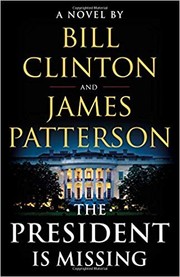
The President Is Missing
2,324-word summary 10 min read
- First published
- 2018
- Publisher
- Little, Brown and Company
- ISBN
- 9780316412698
Reading options
What's inside (9 sections)
I picked up The President Is Missing because I wanted to see what happens when a former president tries to write a thriller with the most commercially successful thriller writer alive. The book came out on June 4, 2018 from Little, Brown and Company, working with Alfred A. Knopf, and it carries both names on the cover: Bill Clinton and James Patterson. I expected either a stiff civics lesson or a standard Patterson chase with a presidential coat of paint. What I got was stranger and more readable than either fear, a story that keeps stopping to explain how the White House actually works and then sprints into shootouts and cyber panic. President Jonathan Lincoln Duncan is the center of it, a former soldier turned president who is facing impeachment when the story opens, and the plot keeps him moving from office to stadium to bunker to safe house without much rest.
The opening is blunt. Duncan is preparing to answer a House committee because someone leaked word that he placed a secret phone call to Suliman Cindoruk. Cindoruk leads a group called the Sons of Jihad, a cyberterror network that wants to wound the United States in a way bombs never could. The call looks like treason on paper. Duncan also stopped an operation that would have killed Cindoruk, which makes the suspicion worse. His opponents smell blood. Talk of impeachment is already on cable news. Duncan insists he had a reason, but he cannot explain it in public without burning sources and methods, so he takes the hit and keeps working the phones. That bind, wanting to tell the truth and not being allowed to, drives the first hundred pages. Clinton clearly knows that feeling, and Patterson knows how to turn it into short chapters that end with a knock on the door.
A daughter in Paris and a warning
Duncan has a daughter named Lilly who is studying in Paris, and she gives the book its first human thread. Lilly meets a young Eastern European woman named Nina in Paris who passes her a coded message and acts frightened in a way that does not fit a casual meeting. Lilly does what any sensible daughter would do and tells her father. Duncan, who is already living with threats every day, reacts fast and brings Lilly home. He wants to know who Nina is and why she chose his daughter as a courier.
When Nina reaches Washington, she asks for a meeting and gets one. She tells Duncan she helped build something terrible and now wants to stop it. She does not give him everything at once. She says her partner can explain the rest, and she sets a meeting at Nationals Park on a Friday when crowds and noise will cover them. Duncan agrees to go, against the judgment of almost everyone around him. He has been a soldier, he trusts his instincts about people who are scared for real, and Nina reads as scared for real. The Secret Service hates the plan. His staff hates the plan. He goes anyway, with a small protective bubble and a story to cover his absence. That decision sets the middle of the book in motion.
I liked this stretch because it shows Duncan as a father first and a president second. He worries about Lilly being used as bait. He worries that Nina will vanish if he sends someone else. He also knows the politics look awful, sneaking out to a ballpark while Congress sharpens knives, but he goes because the threat sounds specific. The writing here leans on small details: the roar of the park, the way agents try to look like fans, the itch of sitting in public when you are the most guarded man in the country.
The shooting at the ballpark
The meeting at Nationals Park goes wrong in the way Patterson meetings always go wrong. Nina's partner shows up. His name is Augie, a wiry tech mind who talks fast and looks like he has not slept in days. He starts to tell Duncan what he and Nina made for Cindoruk, and then an assassin working for Cindoruk opens fire and kills Nina. The scene is short and brutal. One moment she is the only person who can explain the code, the next she is gone on concrete while the crowd panics.
The Secret Service moves Duncan out fast. The convoy heads toward Virginia, trying to reach cover, and then it is ambushed on the road. Two agents die in that fight. Duncan survives because his driver keeps moving and because Augie stays with him and keeps talking through the shock. They break away and reach a safe house, which is where the book finally says the quiet part out loud. Nina and Augie built a computer virus for the Sons of Jihad called Dark Ages. They thought they were doing contract work for money and cover. When they understood what Cindoruk planned to do with it, they ran and tried to warn the Americans. Nina paid for that choice at the stadium. Augie knows he is next.
This is the point where the title starts to make sense. Duncan disappears from public view for a stretch while his staff puts out cover stories. The vice president and the cabinet carry on in front of cameras. Reporters ask where he is. Opponents claim he is hiding from impeachment. In fact he is off the grid with a frightened programmer, trying to learn enough about Dark Ages to stop it before it triggers. The book plays that absence for suspense, cutting between Washington rumors and the cramped rooms where Duncan listens and asks blunt soldier questions.
Dark Ages and a room full of leaders
Augie explains Dark Ages in plain terms once he calms down. It is not a virus that steals passwords or money. It is designed to wipe data on every internet-connected device in the United States, servers, phones, power controls, hospital systems, bank records, military logs, all of it. If it runs, the country would lose the ability to trust or restore its own systems. Planes, water, power, finance, and defense would stagger at once. An outside enemy could then press its advantage while America is blind. Cindoruk does not need to invade. He only needs America to erase itself.
Duncan pulls together a small, deniable meeting to hear Augie out, with the prime minister of Israel, the prime minister of Russia, and the chancellor of Germany listening in. The scene is pure Clinton, full of protocol and careful phrasing and people testing each other while pretending to cooperate. Augie, who has no patience for diplomacy, lays out timelines and infection paths. The Americans admit they have been building a rudimentary backup network with allies, a thin international web meant to keep basic defense communications alive if domestic systems collapse. It is not a fix. It is a crutch. Everyone in the room knows it.
What I found effective here is the scale. Many thrillers threaten Washington with a bomb. This one threatens the idea that records mean anything. Duncan keeps asking practical questions: how long to rebuild, what stays manual, who starves first if the grid lies. The answers are grim. The book does slow down for lectures on cyber defense, and some readers will skim, but the core fear is well chosen. Losing files sounds dull until you picture a hospital that cannot tell which patient needs which drug.
The Pentagon test that goes wrong
With only hours left, Duncan and a tight cyber team try to find a kill switch. They work the code with Augie, looking for a password or a flaw. They think they have a way to neutralize Dark Ages, so they test it on an isolated server at the Pentagon. The test backfires. Instead of staying contained, it trips the virus early across the country. Files start deleting in small numbers before the team manages to freeze the spread. It is a warning shot. The full detonation is still coming, but now everyone knows the clock is real.
At the same time, Cindoruk's people try to kill Augie to cut off the only living guide to the code. Secret Service agents and a Marine helicopter stop that attempt, in one of the more cinematic passages in the book. Duncan then gathers his top aides in person to brainstorm the password. The scene feels rushed on purpose. People shout guesses. Time runs out in minutes. His chief of staff calls out the correct string at the last second and the virus halts. The room exhales. Phones start ringing. Someone cries.
Duncan does not celebrate. He has been watching faces while people guessed, and he already knew the password. He got it earlier from Nina's text messages, which Lilly helped preserve, and he entered it himself through a back channel before the meeting. The whole guessing session was staged. He wanted to see who knew too much and who acted too calmly. It is a clever turn, and it reframes the chief of staff's sudden brilliance as proof rather than rescue. She knew the password because she was the leak.
The traitor inside the White House
The confrontation that follows is quiet compared with the gunfire. Duncan faces his chief of staff with evidence that she passed details of Dark Ages to Cindoruk and tipped him about operations, including the attempt on Cindoruk's life that Duncan had blocked. Her motive is ideological and financial at once, a belief that American power needs cutting down mixed with promises from outside backers. The book ties those backers to Russian sponsorship and a faction in the House of Saud, both happy to see the United States weakened so they can move more freely in their own regions. The chief of staff is arrested without a public scene. Duncan keeps the circle tiny until he can control the story.
With the virus stopped and the leak closed, Duncan steps back into public view and gives the speech he could not give at the start. He explains the call to Cindoruk, the reason he blocked the killing, and the plot he was trying to break up from inside. The impeachment drive collapses. His poll numbers jump. Allies who doubted him line up to praise his steadiness. Cindoruk is exposed and hunted. Augie survives, shaken and alive because Nina dragged him toward the Americans before it was too late. Lilly is safe at home. The last pages lean into restoration, flags and applause and a president who looks tired but upright.
That tidy wrap is part of the book's charm and part of its problem. The personal stakes resolve cleanly. The geopolitical stakes resolve with a speech. Real life rarely grants both at once.
What works and what drags
The best parts of the novel come from the odd partnership on the cover. Clinton brings texture no ghostwriter could fake: how a president moves through a room, how staffers argue over wording, how a call with a foreign leader can be warm and sharp in the same minute, how it feels to sit through a briefing when you already know the worst part. Patterson brings pace, short chapters, cliffhangers, bodies falling at regular intervals to keep you turning pages. When those strengths meet, as in the ballpark sequence and the road ambush, the book moves well.
The weaknesses are just as clear. The middle carries long info dumps about cyber warfare, presidential procedure, and military backup plans that read like briefing papers with dialogue attached. Duncan explains too much to people who should already know it, purely so the reader can catch up. The villains stay thin. Cindoruk is menacing in concept and flat on the page, more logo than person, and his outside sponsors are named rather than shown. The chief of staff's betrayal makes sense in outline but gets little early setup, so the reveal relies on surprise more than rereadable clues. Readers who like police detail may also tire of how easily Duncan slips his own security; the Secret Service alternates between superb and oddly absent depending on what the plot needs.
I still finished it fast and I did not feel cheated. It is a big, earnest thriller that believes in competent public servants, brave agents, and a president willing to take a political beating to prevent a larger disaster. It asks for forgiveness on style and earns a fair amount of it through momentum. If you want elegant prose, look elsewhere. If you want a White House tour that keeps getting interrupted by gunfire and a cyber threat that feels uncomfortably close to real life, this one delivers exactly what the cover promises.
Why the premise still sticks
What stayed with me after the last chapter was not the password trick or the speech. It was the image of a country forced to doubt its own screens. Duncan keeps saying the virus would push America back by decades, not because buildings would fall but because trust would fall. No one would know which record was true. That idea lands harder now than it might have in 2018, after years of arguments about hacked emails and fake posts and broken systems. The novel gets preachy about it, but the worry underneath is solid.
I also kept thinking about Nina and Augie, two contractors who built a weapon without asking what it was for and then tried to undo the sale at great cost. The book does not excuse them. It lets Nina die before she can earn a full pardon and lets Augie live with what he made. That moral is simple and worth hearing: skill without questions becomes someone else's tool. Duncan's answer, duty with questions even when it costs you, is the counterweight the story wants you to carry out.
FAQ
What is Dark Ages in The President Is Missing?
Dark Ages is a virus built by Nina and Augie for the Sons of Jihad. It is designed to wipe data on every internet-connected device in America.
Who is the traitor inside the White House?
The chief of staff leaks details of Dark Ages and tips off Suliman Cindoruk. Duncan traps her with a staged password meeting.
Is The President Is Missing part of a series?
No. The 2018 book from Little, Brown and Company is a standalone thriller, though Clinton and Patterson later wrote The President's Daughter.
Similar books
Absolute Power
A thief watches the president kill, then runs with a lawyer who believes him.
2,401-word summary · 11 min read

Six Years
A professor who promised to forget the woman he loved sees her husband's obituary and discovers that the wedding, the marriage, and the woman herself may never…
2,076-word summary · 9 min read

The Camel Club
Four Washington misfits witness a murder on Roosevelt Island and stumble into a conspiracy that reaches the Oval Office, with a hostage president and a nuclear…
2,354-word summary · 10 min read
Persuader
Reacher goes undercover in a Maine crime family to find a missing DEA agent and the man he once failed to kill, and Lee Child keeps the whole thing tight,…
2,278-word summary · 10 min read

61 Hours
A bus crash strands Jack Reacher in a snowbound South Dakota town where a drug gang, a corrupt police force, and a single witness are on a collision course.
2,227-word summary · 10 min read
The Rooster Bar
Three law students buried in debt discover their for-profit law school is a scam, and decide the only way out is to con their way into practicing law before…
2,837-word summary · 13 min read
American Assassin
Before he became the CIA's most feared counterterrorist, Mitch Rapp was a Syracuse student mourning his girlfriend, killed on Pan Am Flight 103. Then came…
2,114-word summary · 9 min read

The Chemist
A former government interrogator on the run takes one last job, then learns the case she was handed was built to pit her against him.
2,249-word summary · 10 min read

Bad Luck and Trouble
A deposit of $1,030 summons Jack Reacher back to his old army unit, which is being picked off one name at a time.
2,366-word summary · 11 min read

Worth Dying For
Reacher stops for one night in rural Nebraska and finds a family that runs the county, a missing girl and a shipment worth killing for.
2,021-word summary · 9 min read
Tinker, Tailor, Soldier, Spy
Retired spymaster George Smiley is brought back to find a Soviet mole inside British intelligence, and the trail leads through old friends, old betrayals, and…
2,092-word summary · 9 min read

The Broker
A disgraced Washington lobbyist is pardoned and hidden in Bologna, where the CIA uses him as bait to find out who wants a stolen satellite.
2,211-word summary · 10 min read

Echo Burning
Reacher hitches a ride with a Texas woman who wants her abusive husband killed, then has to prove she did not murder him when he comes home.
2,209-word summary · 10 min read
When No One Is Watching
Sydney Green watches her Brooklyn block's Black residents vanish one by one in Cole's Edgar-winning thriller about gentrification as a crime scene.
2,165-word summary · 10 min read

Without Fail
Reacher is asked to test vice presidential security by planning to kill.
2,084-word summary · 9 min read
Gone Tomorrow
Reacher stops a suicide bomber on the subway, then hunts her handlers.
2,308-word summary · 10 min read
Running Blind
Jack Reacher must catch a killer who murders women with no forced entry and no trace.
2,008-word summary · 9 min read

One Shot
Six shots, five dead in Indiana, and James Barr asks for Jack Reacher. Reacher leaves Miami to test the proof in this 2005 Delacorte Press thriller, 376 pages,…
2,972-word summary · 13 min read
Tripwire
In Key West, Jack Reacher follows a murdered detective's trail to New York, an old mentor's files, and a loan shark stealing a dead soldier's name.
2,688-word summary · 12 min read

The Partner
A Biloxi lawyer fakes his death, steals $90 million, and hides in Brazil until hired muscle drags him home to trial.
2,221-word summary · 10 min read
Before the Fall
A private jet falls off Martha's Vineyard. A painter and a small boy survive, then face grief and the news cycle.
2,185-word summary · 10 min read
Tell No One
Harlan Coben's Tell No One fully retold: Beck, his wife's murder eight years back, a tell no one email, and a run from police. A 2001 Delacorte standalone with…
3,579-word summary · 16 min read

Killing Floor
Ex-military policeman Jack Reacher is arrested for murder in Margrave, Georgia, then learns the victim was his brother.
2,872-word summary · 13 min read
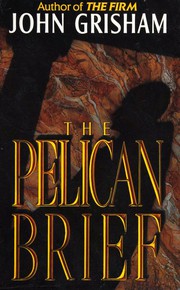
The Pelican Brief
Law student Darby Shaw writes a brief on murdered justices and becomes a target, fleeing with a reporter.
2,994-word summary · 13 min read
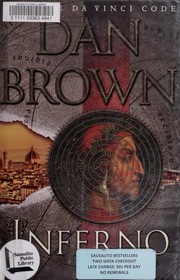
Inferno
Dan Brown's Inferno retold: Robert Langdon wakes in Florence with lost memory, follows Dante's clues with Sienna Brooks from Palazzo Vecchio to Venice and…
2,395-word summary · 11 min read
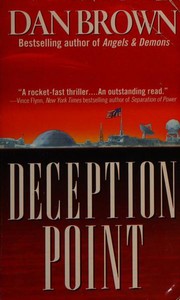
Deception Point
A meteorite in Arctic ice may prove alien life, and analyst Rachel Sexton must verify it as killers close in.
1,923-word summary · 9 min read
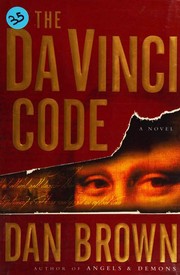
The Da Vinci Code
Dan Brown's The Da Vinci Code retold: a Louvre murder, Sophie Neveu, the Grail cryptex, and the chase to Rosslyn.
2,590-word summary · 12 min read

Angels & Demons
Dan Brown's Angels & Demons explained: a murdered physicist, the Illuminati, four missing cardinals, and Robert Langdon racing through Rome to stop an…
2,548-word summary · 11 min read

What She Knew
Rachel lets her eight-year-old son run ahead in a Bristol park, and the nine-day search turns her into a suspect in the public eye.
2,952-word summary · 13 min read

The Beach House
A young valet is beaten to death at a Hamptons party, and his law-student brother spends a year building a case against the family that covered it up.
2,049-word summary · 9 min read