
Reading options
What's inside (8 sections)
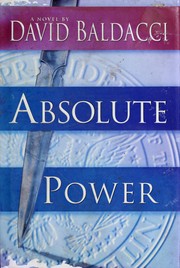
I came to Absolute Power late, after hearing it described as the book where a burglar outsmarts the White House. That pitch sounded too neat to trust. What kept me reading was not clever gadgets but an older man trying to fix one night he cannot undo. This is David Baldacci's debut, published by Warner Books in 1996, 469 pages in the first edition. A career thief named Luther Whitney breaks into a Virginia mansion, hides behind a two-way mirror, and watches the President of the United States with a woman. What starts as rough intimacy turns fatal when Secret Service agents step in. Luther gets out alive, and then spends the rest of the book learning how hard it is to accuse people who control the police, the press, and the story.
I expected a fast airport thriller. Parts are fast. Other parts sit with procedure, stakeouts, lawyer talk, and a father trying to reach a daughter who has good reason to distrust him. That mix worked for me more than pure chase would have. The tension comes less from car chases and more from knowing who did it from the start and watching the cover story harden around them.
Luther Whitney and one last job
Luther is in his sixties, a professional burglar caught three times before, out now and telling himself he is done after one more score. He is careful in the way only long practice teaches. He studies houses, alarms, routines, the kind of wealth that leaves a place empty for a season. The Sullivan mansion in the Virginia countryside fits his criteria. Walter Sullivan is a billionaire, older, connected, away. His place has a private vault, cash, jewels, the sort of haul that would let Luther retire and maybe repair something with his daughter Kate.
Kate is the sore spot in his life. She is an adult now, working as a prosecutor, and she grew up while Luther sat in cells. She views thieves as choices, not victims of luck, and she includes her father in that judgment. They are distant, polite at best, raw when honest. Luther hopes money might buy closeness, which tells you he misunderstands her, and that misunderstanding matters later when the police use her to reach him.
The break-in itself is described with patience. Tools, gloves, timing, listening for the house to settle. Baldacci gives Luther competence without making him superhuman. He sweats. He second guesses a sound. He takes longer than planned on the vault. Then voices arrive where no voices should be, and his plan collapses. He slips into a hidden space behind the bedroom, a closet fronted by a large one-way mirror. From the dark he can see the lit bedroom. From the bedroom they see only mirror. Walter Sullivan, it turns out, used that closet to watch when his young wife Christy brought other men home. Luther becomes an unwilling watcher in a seat built for someone else.
I liked how little glamour there is here. No laser grids. Just a man in a cramped space trying to breathe quietly while his best job turns into a trap.
What happens in the bedroom
Christy Sullivan arrives with Alan Richmond, the President of the United States. Sullivan is Richmond's friend and financial backer, which makes the affair ugly on several levels at once. At first the two are flirty, drunk, loose. Then the mood shifts. Richmond wants roughness. Christy resists, then fights. She grabs a letter opener and cuts him. Blood, shouting, panic. Two Secret Service agents who waited nearby burst in, Bill Burton and Tim Collin. They shoot Christy dead to save the president.
Luther sees all of it through the glass. He cannot move without giving himself away. He watches Burton react with shock and guilt while Collin stays colder. He watches Richmond freeze, hurt and exposed, less a leader than a man caught. Then Gloria Russell, the White House Chief of Staff, takes charge of the mess by phone and in person. Her concern is not truth. It is survival of the presidency. Clean the scene. Shape the story. Find the intruder traces and use them.
The cover story forms fast. Christy was killed by an intruder, a burglar, during a break-in while her husband was away. It uses just enough truth to hold. There was a burglar. Luther was there. His tools left marks. What it leaves out is who brought Christy home, who started the violence, and who fired the shots. Luther escapes with a crucial piece of evidence, the letter opener with prints and blood, though at first he does not know how to use it without getting himself killed. He leaves other signs too, scuffs and disturbed dust that tell Burton someone watched.
This early section is the strongest in the book for me because moral lines blur in a useful way. Luther is a criminal who tells himself he harms no one. Burton is a protector who just killed an unarmed woman. Richmond is charming on television and selfish up close. No one gets to claim clean hands for long.
The cover-up and Seth Frank
After the killing, two hunts run side by side. The official police inquiry is led by homicide detective Seth Frank, a careful man who dislikes easy answers. He works the Sullivan house, notes inconsistencies, wonders why a burglar would murder rather than flee, wonders why the Secret Service cleaned before local police finished. He is polite to federal power and stubborn underneath it. I enjoyed his scenes because he does normal detective work while sensing a wall above him.
The other hunt is political. Russell directs Burton and Collin to find the witness and bury him. Burton struggles. He joined to take bullets, not to frame old thieves. Collin is more willing, viewing the presidency as the country itself, so protecting one protects the other. Russell is direct about costs. She has built her life on Richmond, and she will trade reputations, careers, even lives to keep him standing. Watching her manage phones, favors, leaks, and threats shows how a cover-up runs on routine office moves more than on guns.
Luther goes to ground. He ditches tools, changes cars, avoids his usual bars, sleeps in places that do not ask for cards. He is good at this from years of practice, but age slows him. His knees hurt. He needs sleep. He misses Kate and cannot call her safely. He watches Richmond on television praising Walter Sullivan in grief, and that image steadies his anger. He decides not to run abroad, at least not yet. He starts to taunt a little, to test reactions, to see if guilt will make someone slip.
There is a stretch here where Baldacci slows down for tradecraft and paperwork, and I can see some readers getting restless. Frank interviews staff, checks timelines, requests files that arrive late or redacted. Luther buys supplies with cash, reads papers in libraries, listens to scanners. It is not flashy, but it builds dread. Every day the official story sets harder. Every day Luther looks more like the killer in print.
Kate and Jack
Kate Whitney gives the book its ache. She is a dedicated prosecutor, tough on property crime in a way that clearly traces back to her father. Police approach her about Luther, first as family contact, then as bait. She resents being used and also wants to believe the worst is past. Her feelings shift as facts stop fitting. The intruder story names her father as a murderer, yet the details Frank shares quietly do not sound like Luther. He never carried guns. He never hurt anyone on jobs. She starts to question whether her old judgment still fits.
Jack Graham enters as Kate's fiance in some accounts, in others as a young lawyer close to her, ambitious, connected to powerful firms and to Sullivan money. He is decent but green, used to contracts and boardrooms more than blood. When Luther reaches out through careful channels, Jack becomes the bridge. He meets Luther, hears a version that sounds wild, sees enough proof to stop dismissing it. That proof is the letter opener and Luther's exact knowledge of the bedroom, the mirror, the order of shots, details no paper burglar could guess.
I liked the Jack scenes because he acts like a real lawyer, not a movie hero. He asks about chain of custody. He asks what court would admit. He worries about losing his license, his job, Kate. He also has ties that make helping risky, since his firm does work linked to Sullivan interests. His choice to help anyway costs him comfort and safety, and the book does not pretend otherwise. Meetings happen in parks, in cars with engines running, with notes destroyed after. Trust builds in small steps. Jack brings Kate around slowly. Kate brings Frank slivers that help without exposing Luther fully.
Family talk here avoids easy forgiveness. Luther does not give a speech and win Kate back. She stays angry about lost childhood years while also fearing for his life now. Those two feelings sit together in the same conversations, which felt honest. One scene where they almost meet but abort for safety stayed with me longer than any gun scene.
Pressure, mistakes, and the long middle
The middle of Absolute Power is about pressure applied from both ends. Russell pushes police to close on Luther as killer. Anonymous tips point at his past. His photo circulates. Former associates get visits. Frank keeps finding threads that pull the other way, a cleaned scene, missing minutes in logs, agents too quick to claim no one else was present. Burton starts to crack in quiet ways. He drinks more. He replays Christy's death. He looks at Richmond with less awe. Collin watches Burton as much as he watches Luther, sensing softness as danger.
Luther makes mistakes too, which I appreciated. He lingers too long near Kate's place. He trusts a fence once too often. He writes a letter he should not have written. Age and loneliness erode his discipline. At one point he considers trading the evidence for Kate's safety, then reverses, then reverses again. Indecision reads as human rather than plot filler because the stakes are clear. If he comes forward openly, he faces prison and still may lose to White House lawyers. If he stays hidden, Frank may arrest him as murderer and the real shooters walk.
Baldacci uses Washington well without turning it into postcard. Suburbs, highways, motels, federal buildings with waiting rooms, houses with too many locks. Power shows in small privileges. A call that moves a file. A reporter who drops a line after a hint from Russell. A lab result delayed. None of this needs secret societies. It needs people who owe each other favors, which is more believable and colder.
If there is a drag, it is here. Around the two-thirds mark, stakeouts and legal what-ifs repeat. Jack and Luther debate options that circle. Frank circles the same wall. Russell repeats threats with new wording. I skimmed a few pages of surveillance description. The upside is that when violence returns, it shocks because routine broke. A tail goes wrong. A meeting is watched. Someone who seemed safe proves tracked. The book reminds you that patience was the fuse, not padding, though I still think thirty or forty pages could have been tighter.
How it ends and what it leaves
I will keep the final moves light on specifics, since the pleasure is in seeing how Luther turns skill into pressure without walking into headquarters. He uses what he knows about mirrors and vaults and timing one more time. He forces Burton to face what Burton did. He gives Frank enough to act without handing himself over as sacrifice. Russell and Richmond learn that total control has gaps, especially when guilt eats at your own people.
The ending does not pretend one thief topples a presidency by himself. It shows costs spreading. Careers bend. Marriages strain. Kate sees her father as both criminal and witness, neither label covering him fully. Jack learns that law and justice overlap less than school promised. Frank gets closer to truth while learning how much truth the system will absorb. Luther, who started wanting cash for retirement, ends wanting something less buyable, a daughter who can look at him without flinching and a night that stops replaying behind glass.
What worked for me most was the premise executed with restraint. A witness no one will believe, evidence that implicates its holder, professionals on both sides making rational moves. Burton is the quiet standout, a decent agent who did an awful thing on instinct and then let loyalty keep him quiet too long. Russell is chilling because she is competent rather than raving. Richmond is believable as a charmer who believes rules bend for him, which is scarier than a cartoon villain.
Fair criticism beyond pacing. Some dialogue runs stiff, especially in White House rooms where everyone announces motives a touch too clearly. Christy and Walter get less interior life than the men around them, which makes the central death feel more like a trigger than a loss at times. Tech and lab detail has dated a little since 1996, though the core of phones, favors, and files still rings true. And readers who want courtroom fireworks may find the resolution more about maneuver than trial.
Who should read it. Fans of political thrillers, crime procedure, and underdog pressure will find a lot here. If you liked the Clint Eastwood film from 1997 with Eastwood as Luther and Gene Hackman as Richmond, the book gives more room to Frank, Jack, and Kate, and more time inside the cover-up. Content notes include sexual violence, a fatal shooting, strong language, and abuse of power as theme throughout, not background.
I closed it thinking about mirrors. Luther watched through one. The country watches presidents through another, glass that shows only what staff lights. Baldacci's point, if I read him right, is that character shows when lights fail. Luther, thief, stayed to face it. Richmond, president, hid behind cleaners. That contrast held for me after the last page more than any single twist, and it made an old debut feel current in a way I did not expect.
FAQ
When was Absolute Power published and how long is it?
Warner Books published Absolute Power in 1996. The first edition runs 469 pages with ISBN 9780446519960, and it was Baldacci's debut novel.
Who are the main characters in Absolute Power?
Luther Whitney, career burglar; President Alan Richmond; Christy Sullivan and her husband Walter Sullivan; Chief of Staff Gloria Russell; agents Bill Burton and Tim Collin; detective Seth Frank; lawyer Jack Graham and Luther's daughter Kate Whitney.
Was Absolute Power made into a movie?
Yes, Clint Eastwood directed and starred as Luther Whitney in the 1997 film, with Gene Hackman as President Richmond, Ed Harris as Seth Frank, and Laura Linney as Kate Whitney.
Similar books
The Camel Club
Four Washington misfits witness a murder on Roosevelt Island and stumble into a conspiracy that reaches the Oval Office, with a hostage president and a nuclear…
2,354-word summary · 10 min read

Six Years
A professor who promised to forget the woman he loved sees her husband's obituary and discovers that the wedding, the marriage, and the woman herself may never…
2,076-word summary · 9 min read
Gone Tomorrow
Reacher stops a suicide bomber on the subway, then hunts her handlers.
2,308-word summary · 10 min read
The President Is Missing
President Jonathan Duncan faces impeachment over a secret call while a virus called Dark Ages threatens to erase American data in this 2018 Clinton and…
2,324-word summary · 10 min read

The Partner
A Biloxi lawyer fakes his death, steals $90 million, and hides in Brazil until hired muscle drags him home to trial.
2,221-word summary · 10 min read

The Pelican Brief
Law student Darby Shaw writes a brief on murdered justices and becomes a target, fleeing with a reporter.
2,994-word summary · 13 min read
The Innocent
A government hitman refuses one kill and must protect a teenage girl at the center of a cover-up.
2,403-word summary · 11 min read

What She Knew
Rachel lets her eight-year-old son run ahead in a Bristol park, and the nine-day search turns her into a suspect in the public eye.
2,952-word summary · 13 min read

The Beach House
A young valet is beaten to death at a Hamptons party, and his law-student brother spends a year building a case against the family that covered it up.
2,049-word summary · 9 min read

Rules of Prey
Minneapolis detective Lucas Davenport hunts a killer who leaves a new rule at every scene and treats murder as a game of wits.
1,914-word summary · 9 min read

4th of July
Lindsay Boxer shoots two armed teenagers in self-defense, faces a wrongful-death trial, and spends her leave chasing a string of throat-slashing murders in…
2,192-word summary · 10 min read
Persuader
Reacher goes undercover in a Maine crime family to find a missing DEA agent and the man he once failed to kill, and Lee Child keeps the whole thing tight,…
2,278-word summary · 10 min read

61 Hours
A bus crash strands Jack Reacher in a snowbound South Dakota town where a drug gang, a corrupt police force, and a single witness are on a collision course.
2,227-word summary · 10 min read
The Rooster Bar
Three law students buried in debt discover their for-profit law school is a scam, and decide the only way out is to con their way into practicing law before…
2,837-word summary · 13 min read

Still Missing
A realtor is abducted at a Vancouver Island open house and held for more than a year. Told through therapy sessions, the novel follows her escape and the hunt…
2,466-word summary · 11 min read

Bad Luck and Trouble
A deposit of $1,030 summons Jack Reacher back to his old army unit, which is being picked off one name at a time.
2,366-word summary · 11 min read

3rd Degree
The third Women's Murder Club novel follows a San Francisco terror cell and a three-day killing schedule, and it costs the club a member.
2,685-word summary · 12 min read

Worth Dying For
Reacher stops for one night in rural Nebraska and finds a family that runs the county, a missing girl and a shipment worth killing for.
2,021-word summary · 9 min read

Tinker, Tailor, Soldier, Spy
Retired spymaster George Smiley is brought back to find a Soviet mole inside British intelligence, and the trail leads through old friends, old betrayals, and…
2,092-word summary · 9 min read

The Ex
Cassie thinks her new boyfriend's ex is the woman harassing her, but Freida McFadden's thriller keeps rearranging who the ex actually is.
2,103-word summary · 9 min read

The Broker
A disgraced Washington lobbyist is pardoned and hidden in Bologna, where the CIA uses him as bait to find out who wants a stolen satellite.
2,211-word summary · 10 min read
The Brethren
Three disgraced judges run a blackmail scam from a federal prison and accidentally trap a presidential candidate, pulling the CIA into their scheme.
1,967-word summary · 9 min read

Say You're Sorry
A widowed prosecutor defends the teenager accused of killing her babysitter, uncovering a small town's secrets and a killer hiding in plain sight.
2,116-word summary · 9 min read

Echo Burning
Reacher hitches a ride with a Texas woman who wants her abusive husband killed, then has to prove she did not murder him when he comes home.
2,209-word summary · 10 min read
The Drowning Woman
Living in her car in Seattle, Lee saves a wealthy stranger from drowning. The friendship that follows draws her into abuse, murder, and a plan to disappear.
2,578-word summary · 11 min read

Girl, Forgotten
A rookie US marshal guards a judge with a stalker and ends up reopening the 1982 prom-night murder of the judge's pregnant daughter.
2,111-word summary · 9 min read
When No One Is Watching
Sydney Green watches her Brooklyn block's Black residents vanish one by one in Cole's Edgar-winning thriller about gentrification as a crime scene.
2,165-word summary · 10 min read

The Woods
Twenty years after two teenagers were murdered and two vanished at summer camp, prosecutor Paul Copeland identifies a fresh corpse as one of the missing.
2,490-word summary · 11 min read

The Boy from the Woods
Wilde, found feral in a New Jersey forest in 1986, hunts for a missing teenager while a senator's secrets tear a wealthy town apart.
2,270-word summary · 10 min read

Gray Mountain
A Manhattan associate furloughed after the financial crash takes a year of unpaid legal aid work in Appalachian coal country, and finds the case of her life…
2,026-word summary · 9 min read