
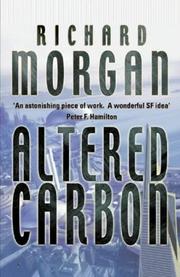
Altered Carbon
2,231-word summary 10 min read 404 pages in the book
- First published
- 2002
- Publisher
- Gollancz
- Pages
- 404
- ISBN
- 9780575073210
- Series
- Takeshi Kovacs (#1)
Reading options
What's inside (8 sections)
I came to Altered Carbon late, after hearing it described as cyberpunk noir with too much violence to film directly, then watching the show soften parts of it anyway. I wanted the harder version. This is Altered Carbon by Richard K. Morgan, published in 2002 by Gollancz. The edition cited here runs 404 pages. It is the first book in the Takeshi Kovacs series, followed by Broken Angels and Woken Furies, and it won the Philip K. Dick Award for its take on identity when bodies are replaceable.
My reading took four days, mostly late at night, which fit the material. Spoilers follow. I will walk through the plot in order and keep the tech talk plain where Morgan piles on slang. Where the show and the book differ, I follow the book. Where I found a stretch cruel or bloated, I will say so.
Waking up in Bay City
The premise lands fast. In the twenty fifth century, human minds are stored in cortical stacks at the base of the skull. If your stack survives, you can be resleeved in a new body, cloned or grown or rented. The rich, called Meths after Methuselah, back up their minds remotely and live for centuries by jumping sleeves. The poor make do with church kept stacks, prison storage, or whatever flesh the state issues.
Takeshi Kovacs wakes in Bay City, once San Francisco, in a new sleeve he did not choose. In his prior life he was an Envoy, part of an elite military corps trained to adapt to new bodies and worlds fast, to read rooms, to survive shock and to break people efficiently. The Envoys were built by the Quellists on Harlan's World, Kovacs home planet, then turned into a tool of empire. Kovacs left that service, drifted into crime with his sister Reileen Kawahara, got killed on another world, and had his stack stored as punishment. Now he is out on parole, sort of, because a Meth wants to hire him.
The sleeve is a problem from the start. It belonged to Elias Ryker, a Bay City police officer with a reputation for brutality and a pile of enemies. Kovacs looks in the mirror and sees a stranger with police muscle and old scars. He tests the reflexes, feels the nicotine cravings that came with the flesh, and hates the fit. His hotel for the stay is the Hendrix, an AI run flophouse themed around Jimi Hendrix, where the management manifests as the guitarist and argues about music while arranging taxis. I loved the Hendrix. It is funny and sad at once, a machine performing soul for guests who mostly want cheap rates and no questions. The Hendrix also shows Morgan's dry humor about copyright and memory, a hotel that chose its personality from old recordings and now defends its taste as if it grew up in Seattle.
The man footing the bill is Laurens Bancroft, three hundred years old, rich enough to own weather. Bancroft was found dead in his home with his stack destroyed and his backup restored from two days earlier. The police call it suicide. Bancroft says he would never kill himself, that he is missing two days, and that he wants Kovacs to find out who murdered him. Kovacs points out that a man hiring an investigator to solve his own murder is absurd. Bancroft answers that Kovacs has no choice, since his parole depends on it. Kovacs spent decades in storage after a failed job with Reileen on Harlan's World, and Bancroft can send him back with one call. The deal is simple and ugly. Solve it or go back on ice. Kovacs takes the case because prison storage is a white room with no time, and even Bay City smog feels better than that.
A Meth, his wife and his missing two days
Bancroft lives above the clouds in every sense. His home sits high over Bay City, all glass and stone and art that costs more than city blocks. His wife Miriam Bancroft is young in her current sleeve, beautiful in the engineered way Meths favor, and openly interested in Kovacs from the first meeting. Kovacs accepts and then regrets the tangle, because in this world sex is also power and recording.
I found these early chapters strong on class anger. Meths in Morgan's Bay City do not only have money. They have law through the UN, religion through Catholic voters who refuse resleeving, and time itself, since they can outwait any scandal. When Bancroft says he wants the truth, everyone below him hears a threat.
Kristin Ortega enters here and steadies the book. She is a police lieutenant, smart, Catholic, furious that her former lover Ryker's body is being worn by a criminal. She believes Bancroft killed himself after some depravity and views Kovacs as pollution. Ortega refuses resleeving on faith grounds, which means death is real for her in a way it is not for Bancroft.
Kovacs starts with the missing two days. He learns Bancroft spent time at Head in the Clouds, a high altitude brothel housed in an airship where Meths pay to do things that would kill ordinary flesh. He also learns someone has been torching clinics that offer cheap resleeving to the poor.
My complaint about this stretch is pace. Morgan loves to explain stack tech and Envoy training through flashbacks that stop the murder hunt cold. Some of it is great. Other passages read like manual pages. A tighter edit would have kept the mystery pressure up.
Ortega, Ryker and the cost of wearing a cop
Living in Ryker's sleeve turns out to be the real investigation for a while. Ortega hates Kovacs on sight, then hates him more when he uses Ryker's keys and habits. Her partner, and later her family dinners, show a different Ryker than the file suggests. A man who tried to be decent in a bought department and took money once and could not wash it off. Kovacs, who has worn many bodies, starts to feel Ryker's guilt as muscle memory. He dreams badly. He reaches for cigarettes he never smoked. One slow evening at Ortega's family table, with her mother pressing food and her grandmother praying for Ryker's soul while glaring at the man wearing him, Kovacs understands that a sleeve carries debts no parole board can clear.
This is where Morgan is best, in my view. He treats the sleeve as more than a suit. It carries addictions, reflexes, shame. Ortega's mother serves food and asks sharp questions about faith. Her grandmother prays for Ryker's soul while glaring at the man wearing him.
The case tightens. Someone tries to kill Kovacs in ways that should destroy the stack itself. That means real death, no backup. He traces the hit to professionals who use double sleeving, illegal copies of the same person in two bodies at once, which tells him Meth money is involved.
There is a lurid streak here that readers should know about going in. Torture scenes are long and physical. Sex scenes are explicit and often tied to power. I thought the point was valid and the length was sometimes indulgent. Bodies are cheap so cruelty scales. I did not need the third variation.
Still, the Ortega material redeems a lot. She is not a sidekick. She has her own case, her own faith crisis, her own anger at a church that tells her to die once while Meths live forever.
Head in the Clouds
The middle peaks at Head in the Clouds, the airship brothel where Bancroft spent his missing nights. Staff memories are wiped after each party so Meth guests can claim privacy. Kovacs goes up with Miriam on his arm, pretending to be buyers. What he finds is worse than decadence. A young woman was killed there in a way that mirrors Bancroft's death, and her stack is gone.
The sequence is tense and gross in equal measure. Kovacs plays drunk rich, Miriam plays bored wife. A fight breaks out that uses zero gravity tricks and sleeve strength in ways I had not seen before. I read this section with my shoulders up. It works as action and as evidence.
Trepp, a fixer with her own code, helps Kovacs here and steals several scenes. She is practical, armed, unimpressed by Meths and Envoys alike. I wished she had more pages.
The criticism I must lodge is about Miriam. She is written as clever and trapped, but the book keeps reducing her to seduction scenes. Morgan tells us Meth wives manage empires. He shows us Miriam managing bedrooms. It felt thin, especially next to Ortega.
Plot wise, though, the airship delivers. Kovacs recovers a fragment pointing to Rawling virus work, illegal code that can attack stacks from inside. The Bancroft suicide starts to look like murder through tech that makes murder look like self harm.
Envoys, Quell and the Rawling solution
To understand the weapon, Kovacs has to remember Quellcrist Falconer, the revolutionary from Harlan's World whose writings shaped the Envoys. Quell taught that stacks made tyranny permanent unless the people learned to break the tech or seize it. The Envoys were meant to be her inheritors. They became shock troops for the very Meths she opposed. Kovacs learned Envoy control in torture rooms and foreign sleeves, how to slow a heartbeat, how to read a lie in a shoulder shift, how to keep thinking while a new body screams. Those lessons save him in Bay City and shame him, because every calm breath reminds him who paid for his schooling.
I liked this history more on second thought than while reading. At the time, the flashbacks annoyed me because they paused Bay City momentum. After finishing, I saw what they built. Kovacs is not only a detective with cool implants. He is a failed believer who knows the Corps taught him control at the cost of belonging.
The Rawling virus is Quell era code able to corrupt a stack during resleeving so the person comes back broken or not at all. Kovacs learns a version was tested on young women at Head in the Clouds, and that Bancroft may have seen something he later could not afford to remember. The tech talk here gets dense. I kept notes. You may need to.
Department brass block Ortega when she pushes. The Bay City police, underfunded and scared, have learned not to stare at Meths. Ortega stares anyway. One dinner scene where she argues with family about whether Kovacs has a soul in a stolen body stayed with me longer than any shootout.
My structural gripe is that the book hides its best idea until late. Sleeves should change how murder works, how grief works, how love works. Morgan shows flashes early, Ryker's cravings, Ortega's prayers, the Hendrix missing Jimi, but he spends too many middle pages on gunfights before returning to those questions.
Reileen and what sleeves cost
The last third names the center. Reileen Kawahara, Kovacs sister, fellow Envoy dropout, now a Meth in all but name, runs much of Bay City's sleeve trade from behind clinics and clubs. She double sleeves, buys cops, sells flesh, and tells herself she protects her brother by owning him.
Their reunion is the emotional core and the hardest part to read. Reileen loves Kovacs in a possessive way that mixes family and crime partnership. She offers him permanent work, fresh sleeves, shared immortality. He refuses because he has seen what her business does to girls whose stacks vanish. She answers by hurting people he cares about to prove that caring is a flaw Envoys train out. The fights that follow run through apartments, clinics, and a waterfront where sleeve tech fails in the rain. Kovacs wins space with cunning rather than force, turning Reileen's own backups and doubles against her. It costs him blood and allies, and Morgan does not pretend victory feels clean.
Kadmin, a lab grown killer sleeve run as a remote, gives the climax its monster. He is huge, fast, built to enjoy pain. Kovacs beats him not through strength but through Envoy perception, reading the lag and accepting damage to buy seconds.
The Bancroft solution follows and satisfies as detective work. Bancroft did not kill himself in the simple sense, yet he is not innocent in any larger sense. The missing two days cover cruelty at Head in the Clouds that he paid to forget. When Kovacs presents the truth, Bancroft chooses reputation over confession, as Meths do.
I closed the book angry in a useful way. Morgan argues that immortality without equality is feudalism with backups. Meths live because others die on schedule. Kovacs, sent back to storage for his trouble, keeps only his memory and his refusal. The Hendrix plays him out with a song.
I recommend Altered Carbon to readers who want noir with weight and can handle graphic sex and violence used as argument rather than garnish, though the line blurs. As pure mystery, it is clever but crowded. As character work, Ortega and the Hendrix carry more heart than the plot sometimes earns. What is a self if flesh is rental. What is murder if memory can be restored. Morgan leaves Kovacs on ice and Ortega praying and Bancroft alive, which in this world is the bleakest ending available.
FAQ
Why does Laurens Bancroft hire Takeshi Kovacs?
Laurens Bancroft is found dead with his stack destroyed, then restored from a two day old backup. He hires Kovacs to find who killed him.
How do stacks and sleeves work in Altered Carbon?
A cortical stack holds the mind, and a new sleeve means a new body. Meths back up remotely and live for centuries, while most people risk real death.
Is Altered Carbon very violent?
Yes. Expect long torture scenes, explicit sex tied to power, and hard language throughout the Bay City investigation.
Similar books
More from Takeshi Kovacs first, then related titles.
Sleeping Giants
A girl falls into a field and lands in a giant metal hand. Years later a secret team assembles the rest of the machine, and it chooses its own pilots.
2,466-word summary · 11 min read
Upgrade
A Gene Protection agent is infected with an upgrade virus that makes him stronger and faster than human, and only he can stop his sister from releasing it on…
2,166-word summary · 10 min read
Stolen in Death
A billionaire is found dead beside a vault of stolen art in his home, and Eve Dallas must trace old thefts to find who killed him.
2,492-word summary · 11 min read
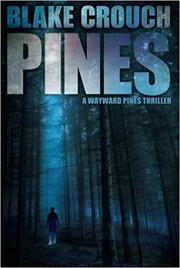
Pines
A Secret Service agent wakes hurt in Wayward Pines, Idaho, hunting two missing agents, and finds a town that will not let him leave.
2,452-word summary · 11 min read
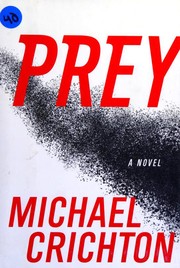
Prey
Jack Forman takes a contract job at a Nevada lab in Michael Crichton's 2002 thriller Prey, where self replicating nanoparticle swarms have started hunting on…
2,959-word summary · 13 min read
Congo
In Crichton's 1980 jungle thriller, Karen Ross leads a Congo expedition to find lost Zinj and its diamonds, bringing Amy, a signing gorilla, into grey gorilla…
3,013-word summary · 13 min read
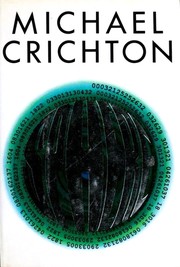
Sphere
A Navy team finds a centuries-old spacecraft on the Pacific floor, and psychologist Norman Johnson faces what its sphere wakes in minds.
2,275-word summary · 10 min read
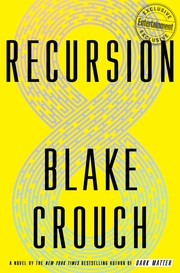
Recursion
False pasts feel truer than true ones as a memory chair lets the grieving rewrite deaths.
1,995-word summary · 9 min read

Leviathan Wakes
A destroyed ice hauler, a missing heiress, and an alien growth pull a crew and a tired detective toward war across the solar system.
3,653-word summary · 16 min read
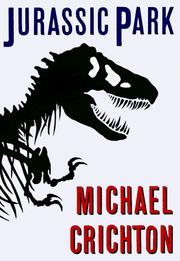
Jurassic Park
Hammond clones dinosaurs on Isla Nublar and invites Grant, Sattler and Malcolm to certify safety before opening.
2,388-word summary · 11 min read

What She Knew
Rachel lets her eight-year-old son run ahead in a Bristol park, and the nine-day search turns her into a suspect in the public eye.
2,952-word summary · 13 min read

The Beach House
A young valet is beaten to death at a Hamptons party, and his law-student brother spends a year building a case against the family that covered it up.
2,049-word summary · 9 min read

Six Years
A professor who promised to forget the woman he loved sees her husband's obituary and discovers that the wedding, the marriage, and the woman herself may never…
2,076-word summary · 9 min read

The Trespasser
A Dublin Murder Squad detective investigates a staged dinner-party killing and finds a cover-up that reaches into her own department.
2,051-word summary · 9 min read

Rules of Prey
Minneapolis detective Lucas Davenport hunts a killer who leaves a new rule at every scene and treats murder as a game of wits.
1,914-word summary · 9 min read
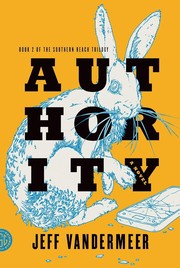
Authority
The new director of the Southern Reach takes over an agency that is hiding the truth about Area X, and the building starts to change around him.
2,029-word summary · 9 min read

Ace of Spades
Two Black seniors at an elite academy are celebrated by day and hunted by an anonymous texter in this YA thriller about institutional racism.
2,066-word summary · 9 min read
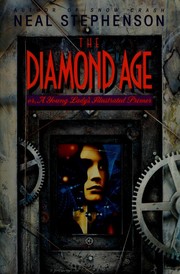
The Diamond Age: Or, A Young Lady's Illustrated Primer
A stolen nanotech primer raises a poor girl in 22nd-century Shanghai, and Neal Stephenson turns her education into an argument about class, freedom, and who…
2,055-word summary · 9 min read

The Late Show
Exiled to the LAPD night shift after accusing her supervisor, Renée Ballard keeps two cases that were meant to be handed off at dawn: a brutal assault and a…
2,563-word summary · 11 min read
The First Fifteen Lives of Harry August
Harry August dies and is born again into the same life, again and again, until a warning from a child tells him the world is ending faster with each pass.
2,189-word summary · 10 min read

Night Film
A disgraced journalist investigates the death of a reclusive horror director's daughter, following a red coat through hospitals, secret clubs, and a family…
2,690-word summary · 12 min read

4th of July
Lindsay Boxer shoots two armed teenagers in self-defense, faces a wrongful-death trial, and spends her leave chasing a string of throat-slashing murders in…
2,192-word summary · 10 min read

The Camel Club
Four Washington misfits witness a murder on Roosevelt Island and stumble into a conspiracy that reaches the Oval Office, with a hostage president and a nuclear…
2,354-word summary · 10 min read

61 Hours
A bus crash strands Jack Reacher in a snowbound South Dakota town where a drug gang, a corrupt police force, and a single witness are on a collision course.
2,227-word summary · 10 min read
The Last Mile
Melvin Mars is hours from execution for his parents' murder when another man confesses, and FBI cold case detective Amos Decker goes looking for the trap.
2,746-word summary · 12 min read

Still Missing
A realtor is abducted at a Vancouver Island open house and held for more than a year. Told through therapy sessions, the novel follows her escape and the hunt…
2,466-word summary · 11 min read

Bad Luck and Trouble
A deposit of $1,030 summons Jack Reacher back to his old army unit, which is being picked off one name at a time.
2,366-word summary · 11 min read

3rd Degree
The third Women's Murder Club novel follows a San Francisco terror cell and a three-day killing schedule, and it costs the club a member.
2,685-word summary · 12 min read

Worth Dying For
Reacher stops for one night in rural Nebraska and finds a family that runs the county, a missing girl and a shipment worth killing for.
2,021-word summary · 9 min read
Tinker, Tailor, Soldier, Spy
Retired spymaster George Smiley is brought back to find a Soviet mole inside British intelligence, and the trail leads through old friends, old betrayals, and…
2,092-word summary · 9 min read