
Reading options
What's inside (7 sections)
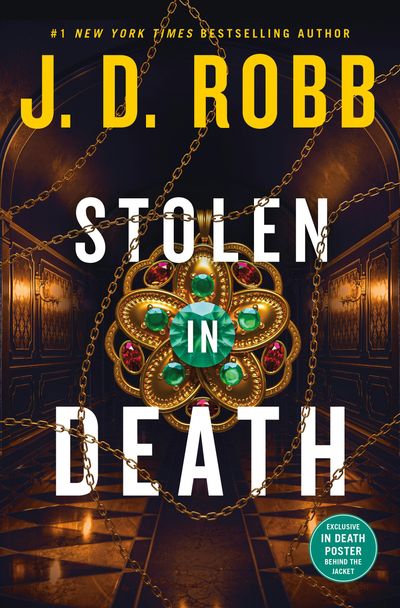
I came to Stolen in Death the way you come to the sixty second book of anything, with loyalty and low expectations fighting it out. The In Death series, J.D. Robb's futuristic police procedurals starring NYPSD homicide lieutenant Eve Dallas, has been running since Naked in Death in 1995, and I have read enough of them to know the rhythm by heart. This one is St. Martin's Press, 2026, 368 pages, In Death number 62, and the hook got me immediately. A multibillionaire found dead from a blow to the head with a block of amethyst, and a hidden vault nearby stuffed with stolen paintings and jewelry that nobody in the house claims they knew about. That is a lot of story in two images, and I cleared a weekend for it.
What I like about this setup is that it gives Eve two cases that share one room. There is the fresh murder, who hit Nathan Barrister and why, and there is the old crime, who filled that vault and how those pieces went missing over the years. The book makes clear from the start that only one item seems to be gone from the hoard, which tilts the scene away from a simple burglary. This reads more like someone came for one thing, or one person, and the vault with its door ajar is either the motive or the backdrop. The rest of the book is Eve proving which one it is.
The Barristers and the room nobody knew
Nathan Barrister, as everyone describes him, was the kind of rich man people in this series usually turn out not to be. By all accounts he was decent. A generous employer. A devoted husband and father. Someone whose staff and family speak of him with grief rather than relief. In a series where wealth often means rot, that matters, because it removes the easy answer. Eve cannot just find the disgruntled heir or the abused assistant and close the file. She has to look harder, at a man with a clean surface and a house with a dirty basement, literally.
The house itself is a character in the early chapters. Elegant, staffed, the kind of place with a remodeling project that exposes something the current generation never knew existed. According to the family, the vault belonged to Nathan's late father. Nobody in the household knew it was there until construction opened it up. Paintings, jewelry, objects with real value and real history, sitting behind a door that had been sealed or forgotten for years. When they found it, the family claims, they wanted to handle it quietly. Protect the name, protect the business, find a way to return the gains anonymously and avoid the police. Then Nathan died and the police came to them instead.
I found this the most interesting moral knot in the book. The Barristers are asking Eve to believe two things at once. One, that they did not know about the vault until recently. Two, that their plan was to do the right thing without being seen doing it. Both things can be true. Rich families in this series often prefer private solutions, and the fear of scandal is real when a company carries a founder's name. But Eve's job is to treat a convenient story as a story until paper backs it. She listens politely, takes names, and starts checking timelines. When was the remodel. Who had access. Which pieces can be traced to actual thefts. Who benefits if the vault stays secret and who benefits if it opens.
The late father hangs over all of it. He is dead and cannot explain himself, which makes him the perfect suspect for the old crime and the perfect screen for the new one. Eve has to separate what the father stole from what got Nathan killed, and the book keeps those threads close without tangling them. Was Nathan killed because of something he knew about the vault. Was he killed for reasons that have nothing to do with it, with the vault just sitting there like a loaded shelf. Or did someone use the vault as cover, staging a theft to hide a personal killing. Those are the questions Eve carries into every interview, and Robb lets them sit in the open rather than hiding them for a late reveal.
Eve and Roarke at book sixty two
By this point in the series Eve and Roarke are married, settled in the way two stubborn people can be settled, which means they fight about work and then work together anyway. Eve is still the same core person from book one. Direct, tired, protective of victims, allergic to excuses, running on coffee and stubbornness. Roarke is still the billionaire with an Irish thief's past, the scrappy youth in Dublin that the books reference whenever stolen goods appear. That past is not decoration here. It is evidence.
The key beat, and the one the publisher description rightly foregrounds, is that Roarke recognizes at least two of the stolen pieces in the vault. He knows the underworld side of art and jewelry in a way cops mostly do not, what gets stolen to order, what gets kept for love, what gets moved through which hands. Eve needs that knowledge and hates needing it, because every time Roarke helps with something from his old life, it reminds both of them how close he came to being the kind of man she arrests. Their scenes around the vault have a good charge. He looks at a painting and sees a job from twenty years ago. She looks at the same painting and sees a victim she has not found yet.
What I liked is how adult their marriage reads here compared to the early books. The fast, soap speed romance of Naked in Death is long gone. In its place is a working partnership with boundaries that get tested. Roarke wants to pull threads through his own contacts, off the books, fast. Eve needs threads that will hold in court, with warrants and chains of custody. They argue about methods, not feelings, and the argument is familiar in a comforting way if you have read the series. He thinks her rules protect killers. She thinks his shortcuts would let this one walk. Both have a point, and the book does not pretend otherwise.
Summerset gets a small, dry appearance, because no mansion visit is complete without Eve resenting a well run household. She reads the room better than any scanner, and the book keeps the future light. The people do the work.
How Eve works a house like this
The investigation follows the series template, and I mean that as description rather than complaint. Eve secures the scene, gets Morris on the body, and starts with time and access. The amethyst block is a crime of opportunity weapon or a message weapon, heavy, distinctive, not something you bring unless you knew it was there. That pushes her toward people who knew the house, not strangers. The vault door ajar pushes the same way. Someone knew enough to open it, or found it open, or wanted it to look that way.
Peabody does a lot of the human lifting, talking to staff, to the widow, to the kids, getting the shape of daily life. McNab and Feeney chase the electronic trail, security feeds, lock logs, remodel records, anything that says who was in that part of the house and when. Eve leans on Mira when the family dynamics need translating, because grief and performance look alike in rich living rooms. The book spends real time on alibis that are almost good, the kind where someone was home but alone, or out but with a gap. Nobody lies well enough to end it early, which keeps the middle moving.
One thread I appreciated is the question of the missing item. If only one piece is gone, identification matters more than value. Eve pushes to catalog the vault fast, with experts she trusts and with Roarke kept at arm's length from the official inventory for obvious conflict reasons. What is missing, when was it last seen, who would know it was there at all. A missing painting points one way. Missing jewelry points another. A missing document points somewhere darker. The book parcels this out steadily rather than dumping it, and each identification opens a small window onto an old theft with its own victims.
There is also the anonymous return plan to check. The family says they were looking for a way to give things back without police. Eve has to ask the plain questions. Which lawyer did you call. Which appraiser. What did you write down. Good intentions leave traces too, and the absence of traces tells her something. I will not spoil where that thread lands, because the book treats it as both a clue and a character test, but I will say it pays off in a way that felt fair. The Barristers get to be complicated without becoming caricatures.
Old thefts, new blood
The middle of the book belongs to provenance, the least flashy and most satisfying part of an art crime story. Eve's team starts matching vault pieces to thefts, some reported, some never filed because the victims had reasons to stay quiet. That is where the series engine hums. A stolen painting is not just an object. It is someone's loss, someone's insurance fight, someone's family story about the night men came through a window. Eve, who has never cared about art for its own sake, cares a great deal about those people. Watching her sit with an elderly victim of a decades old burglary and take the statement seriously is very much the point of these books. The dead man in the mansion gets justice, but so, in a smaller way, do the people his father stole from.
Roarke's recognition of pieces gives this section its tension. He can name methods, fences, eras. He knows which thefts were professional and which were personal. Every identification helps Eve and costs him a little, because he is mapping his old world onto her current case. The book handles this without melodrama. He does not confess anything new exactly. He just keeps knowing things a respectable billionaire should not know, and Eve keeps filing that knowledge under useful rather than under suspicion. Longtime readers will catch echoes of earlier books where his past was fresher and more dangerous. New readers will get enough context to understand why it matters without a lecture.
The question the book keeps returning to is the one stated plainly in the setup. Was this passion or revenge. A blow to the head with what was at hand reads hot, personal, unplanned. A vault with one thing missing reads cool, planned, transactional. Eve has to decide whether she is looking at one crime that looks like two, or two crimes that share an address. I liked that Robb does not force a clever answer. The investigation narrows through elimination, through who had reason to be angry at Nathan specifically rather than at the Barrister name generally. Readers who want a thriller that sprints may find this section deliberate. I found it confident, the work of a writer who trusts that watching competent people be competent is entertaining.
What holds up and what creaks
What holds up, sixty two books in, is Eve's voice and the moral clarity underneath it. Robb still writes a very good interview scene, Eve asking short questions and letting silence do the pushing, and she still writes class well. The Barristers are not monsters, which would have been easy. They are people with a name to protect and a dead man to mourn, and the book lets both things be true while Eve does her job. The amethyst block as a murder weapon is memorably strange without feeling gimmicky, and the vault is a strong visual anchor. A door ajar, light on stolen color, one empty space. You can see it.
The art crime mechanics are solid enough to carry the plot without an info dump. Provenance research, quiet returns, why some thefts never get reported, how a single missing item can matter more than a room full of loot. Roarke's past is used with restraint, as expertise rather than as a secret about to explode. The team gets real work, not cameos. Peabody in particular has a couple of scenes that remind you why she earned the shield, firm with grieving people without going cold.
The criticisms are the usual series ones, and they land a bit harder this late. If you have read a lot of In Death, you will see the shape early. Big house, family with a story, Eve skeptical of the story, Roarke useful and slightly compromised, interviews that circle, forensics that confirm, confrontation that goes tense. Robb varies the furniture but not the floor plan. That is comforting if you read these for comfort, less exciting if you want surprise. The future setting continues to be thin. Apart from tech shorthand and the NYPSD acronym, this could be present day New York with nicer phones. Readers who came for science fiction will not find it here. This is a procedural with chrome trim.
Length is the other question. At 368 pages this is a standard sized entry, not bloated, but the middle still repeats a beat or two. Another Barrister associate with a partial memory. Another expert who needs coaxing. Another reminder that the father had secrets, as if we forgot. The final movement resolves cleanly and fairly, with clues that were visible, but it does not reframe everything before it. It confirms more than it shocks. For some readers that will feel like a letdown after the vault promise. For series regulars it will feel like the job done right.
Who should read it. If you follow Eve and Roarke, this is a strong mid tier entry, better than a filler case because the vault gives it weight and the Barristers give it heart. If you are new, you can start here. Each case resolves on its own, the marriage is explained enough in passing, and the book does not punish you for not knowing fifty prior plots. Start with Naked in Death if you want the full arc, but you will not be lost opening this one. If you want a standalone art heist with deep forgery detail, look elsewhere. This is a murder book where art is the motive and the mirror, not the whole plot.
I closed it satisfied in the way this series satisfies. Not dazzled, not changed, but steadied. Eve stood in a rich man's house full of stolen beauty and asked who was hurt, then kept asking until someone answered. Sixty two times in, that still works. I will be there for sixty three.
FAQ
When was Stolen in Death published?
St. Martin's Press published it on February 3, 2026. The hardcover runs 368 pages with ISBN 9781250414526.
Is Stolen in Death part of a series?
Yes. It is In Death book 62, following the long Eve Dallas series, but each case resolves on its own and new readers can start here.
What is the setup of Stolen in Death?
Multibillionaire Nathan Barrister is killed with a block of amethyst near a hidden vault of stolen paintings and jewelry that his family says belonged to his late father.
Similar books
More from In Death first, then related titles.
Naked in Death
In 2058 New York, Lt. Eve Dallas hunts the killer of a senator's granddaughter and collides with suspect Roarke.
2,470-word summary · 11 min read

What She Knew
Rachel lets her eight-year-old son run ahead in a Bristol park, and the nine-day search turns her into a suspect in the public eye.
2,952-word summary · 13 min read

The Beach House
A young valet is beaten to death at a Hamptons party, and his law-student brother spends a year building a case against the family that covered it up.
2,049-word summary · 9 min read

Six Years
A professor who promised to forget the woman he loved sees her husband's obituary and discovers that the wedding, the marriage, and the woman herself may never…
2,076-word summary · 9 min read

The Trespasser
A Dublin Murder Squad detective investigates a staged dinner-party killing and finds a cover-up that reaches into her own department.
2,051-word summary · 9 min read

Rules of Prey
Minneapolis detective Lucas Davenport hunts a killer who leaves a new rule at every scene and treats murder as a game of wits.
1,914-word summary · 9 min read

The Late Show
Exiled to the LAPD night shift after accusing her supervisor, Renée Ballard keeps two cases that were meant to be handed off at dawn: a brutal assault and a…
2,563-word summary · 11 min read

4th of July
Lindsay Boxer shoots two armed teenagers in self-defense, faces a wrongful-death trial, and spends her leave chasing a string of throat-slashing murders in…
2,192-word summary · 10 min read
The Camel Club
Four Washington misfits witness a murder on Roosevelt Island and stumble into a conspiracy that reaches the Oval Office, with a hostage president and a nuclear…
2,354-word summary · 10 min read

61 Hours
A bus crash strands Jack Reacher in a snowbound South Dakota town where a drug gang, a corrupt police force, and a single witness are on a collision course.
2,227-word summary · 10 min read
The Last Mile
Melvin Mars is hours from execution for his parents' murder when another man confesses, and FBI cold case detective Amos Decker goes looking for the trap.
2,746-word summary · 12 min read

Still Missing
A realtor is abducted at a Vancouver Island open house and held for more than a year. Told through therapy sessions, the novel follows her escape and the hunt…
2,466-word summary · 11 min read

Bad Luck and Trouble
A deposit of $1,030 summons Jack Reacher back to his old army unit, which is being picked off one name at a time.
2,366-word summary · 11 min read

3rd Degree
The third Women's Murder Club novel follows a San Francisco terror cell and a three-day killing schedule, and it costs the club a member.
2,685-word summary · 12 min read

Worth Dying For
Reacher stops for one night in rural Nebraska and finds a family that runs the county, a missing girl and a shipment worth killing for.
2,021-word summary · 9 min read

Say You're Sorry
A widowed prosecutor defends the teenager accused of killing her babysitter, uncovering a small town's secrets and a killer hiding in plain sight.
2,116-word summary · 9 min read
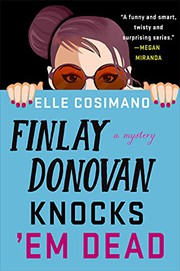
Finlay Donovan Knocks 'Em Dead
Someone has put a contract on Finlay Donovan's ex-husband, and the novelist and her nanny have to find the hitman before the school pickup.
1,990-word summary · 9 min read

Echo Burning
Reacher hitches a ride with a Texas woman who wants her abusive husband killed, then has to prove she did not murder him when he comes home.
2,209-word summary · 10 min read
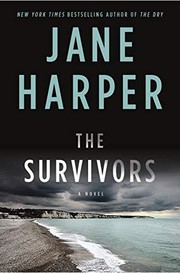
The Survivors
Kieran Elliott returns to Evelyn Bay twelve years after a storm killed his brother, and a young woman's murder forces the town to face what it has concealed.
2,571-word summary · 11 min read

Girl, Forgotten
A rookie US marshal guards a judge with a stalker and ends up reopening the 1982 prom-night murder of the judge's pregnant daughter.
2,111-word summary · 9 min read

The Woods
Twenty years after two teenagers were murdered and two vanished at summer camp, prosecutor Paul Copeland identifies a fresh corpse as one of the missing.
2,490-word summary · 11 min read
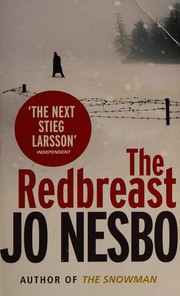
The Redbreast
Harry Hole chases an ageing sniper through modern Oslo while two Norwegian volunteers on the Eastern Front carry a fifty-year-old betrayal toward a royal…
2,453-word summary · 11 min read
The Poet
A crime reporter investigates his twin brother's apparent suicide and uncovers a killer who leaves Edgar Allan Poe quotes behind, in the novel that took…
2,020-word summary · 9 min read

The Boy from the Woods
Wilde, found feral in a New Jersey forest in 1986, hunts for a missing teenager while a senator's secrets tear a wealthy town apart.
2,270-word summary · 10 min read
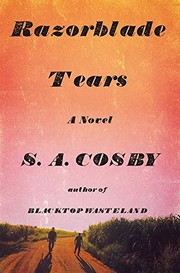
Razorblade Tears
Two ex-con fathers, one Black and one white, hunt their murdered sons' killers in a Richmond that never gave the boys a fair shake.
2,880-word summary · 13 min read
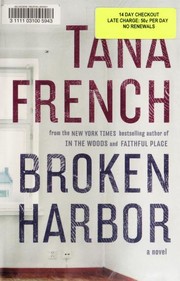
Broken Harbor
A family is found slaughtered in a half-built Dublin estate where no one broke in, and star detective Scorcher Kennedy must explain the holes in the walls.
2,308-word summary · 10 min read
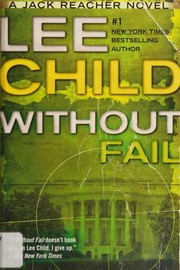
Without Fail
Reacher is asked to test vice presidential security by planning to kill.
2,084-word summary · 9 min read
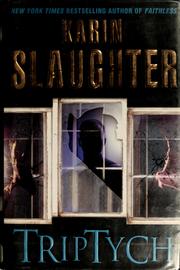
Triptych
A GBI agent with dyslexia hunts a rapist while two Atlanta cops hide pasts.
2,576-word summary · 11 min read
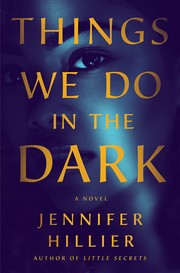
Things We Do in the Dark
A comedian kills her husband, then a podcaster digs up her teen murder past.
2,427-word summary · 11 min read

The Widow
A widow of a suspected criminal faces reporters and police while hiding what her marriage really cost.
2,599-word summary · 12 min read