
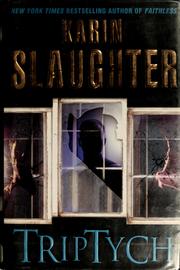
Triptych
2,576-word summary 11 min read 400 pages in the book
- First published
- 2006
- Publisher
- Delacorte Press
- Pages
- 400
- ISBN
- 9780385339469
- Series
- Will Trent (#1)
Reading options
What's inside (8 sections)
I came to Triptych after hearing Will Trent described as the dyslexic investigator who hates being touched and loves his dog, and I expected a standard Atlanta police story with one odd trait pasted on. The book, published in 2006 by Delacorte Press at about 400 pages, turned out stranger and heavier than that description. It is the first book in the Will Trent series, and it reads like Slaughter clearing the table before a long run. Three people carry the story in rotation. Their lives barely touch at first. By the end they are locked together by a rape and murder case with roots twenty years deep.
What surprised me was how little of the book feels like a puzzle to solve. Most thrillers keep you guessing about clues. This one tells you fairly early that something is wrong with the official version of an old crime, and then makes you sit with the human cost while the police catch up. The tension comes less from who did it than from watching decent and damaged people make choices that narrow their options. Some chapters are hard to read because of the violence. Some are hard to read because the marriages and work friendships feel so worn down. I finished it admiring the nerve of the structure even where the pace dragged.
Three separate lives
Slaughter builds the novel the way the title promises. A triptych is a painting in three panels, and for the first half of the book the panels stay apart. Will Trent works for the Georgia Bureau of Investigation. Michael Ormewood works homicide for the Atlanta Police Department. John Shelley works at a small cleaning business and tries to stay out of trouble after twenty years in prison. Each man gets long stretches in his own point of view. Atlanta links them, but they move in different circles.
The case that will pull them together starts with the death of a young woman. Aleesha Monroe, a prostitute working in Atlanta, is found brutally murdered. Her body shows signs of a vicious sexual assault and a methodical attempt to control her before death. Ormewood catches the call as the local detective. Will is assigned from the GBI, partly because the killing looks like it could connect to other crimes, partly because the state agency has a stake in cases that cross jurisdictions. From the first meeting the two cops dislike each other. Ormewood sees Will as a suited outsider who talks strangely and acts strangely. Will sees Ormewood as a territorial local who resents help.
John Shelley enters through a different door. He was convicted as a teenager for a murder tied to a missing girl, served his full time, and now lives under strict conditions with a parole officer checking his hours. He has a boss who gives him a chance, a routine built around work and meetings, and a constant fear that one wrong step sends him back inside. When a new killing happens and details leak, Shelley recognizes the pattern too well. He knows what people will assume about an ex-con with his record. He also knows things about the old case that he never told anyone, partly from shame and partly because no one listened the first time.
The structure works because Slaughter lets each life breathe. You see Will drive around Atlanta listening to case files on tape. You see Ormewood eat dinner with a wife who is drifting away. You see Shelley scrub office floors late at night and count the days clean. These are not short introductions. They run for chapters. Readers who want a fast opening arrest may get impatient. The payoff is that when the lines cross, you understand why each man reads the same evidence differently.
Will Trent and what he hides
Will Trent is the center of the series, and Triptych explains why he behaves the way he does. He grew up in the Atlanta children's home system, passed from house to house, teased and beaten and ignored. He cannot read properly because of severe dyslexia that was never treated when he was a child. As an adult he has built an elaborate system to cover it. He memorizes shapes of words. He gets others to read reports aloud. He uses a tape recorder for notes. He asks questions that sound like thorough police work and are also stalling tactics while he figures out what a document says.
Slaughter handles this with care. Will is not a genius who overcomes his disability in a montage. He is a grown man who is tired and ashamed and very good at hiding. His suits are crisp. His house is spotless. His dog Betty, a small Chihuahua mix he adores, gives him a kind of easy physical affection he cannot accept from people. He hates to be touched on the ears because of childhood abuse. Little details like that recur without being explained to death. You learn Will by watching him deflect.
His work life is political. The GBI and the Atlanta police have a prickly history, and Will walks into the Monroe murder as an outsider with a boss, deputy director Amanda Wagner, who protects him and also uses him. Amanda is sharp, profane, connected, and loyal in her own hard way. She knows about his reading trouble and covers for him when she can. She also pushes him into rooms where that trouble could expose him. Their scenes together have a dry humor that breaks up the grim material.
His private life is messier. Angie Polaski, his girlfriend off and on since childhood, is an Atlanta vice cop with her own history of abuse and addiction. She loves Will in a possessive and corrosive way. She also lies to him and uses what she knows about him as a weapon when she feels cornered. Where Will became controlled and secretive, Angie became blunt and reckless. Their shared memories of group homes inform how Will approaches victims who come from street life. He does not pity them. He recognizes them.
One of the strongest threads is how Will investigates without reading. He leans on pattern, on listening, on revisiting scenes. He notices that a victim bit her tongue in a particular way, that a body was washed, that a detail in an old file does not match the photographs. Colleagues mock his slow paperwork. Readers see the extra work behind it. The book never turns dyslexia into a superpower. If anything, it costs him time and creates risks. That honesty makes him easier to trust as a narrator.
Ormewood and the case on the ground
Michael Ormewood is the kind of detective crime fiction often uses as background, and here he gets equal weight. He is an Atlanta homicide man, married to Ruth, with a small son and a mother in failing health. At home he is distracted and short tempered. At work he is competent but stretched thin. When the Monroe case lands, he treats it at first like many street killings: sad, brutal, likely tied to drugs and sex work, hard to clear. Will's arrival annoys him because it implies his department cannot handle its own cases.
Ormewood's marriage gets a lot of pages. Ruth is depressed and angry. Michael tries to help with the baby, misses cues, and retreats into work where the rules are clearer. Some readers will find these domestic chapters slow. They explain his blind spots with women he meets on the job.
His police work is solid and old school. He knocks on doors, leans on informants, and argues with the medical examiner about wound patterns. He learns that the killer used a particular method to silence victims during assault, a detail that points to experience rather than a single outburst. Their hostility over jurisdiction is petty in places. It is also believable.
What sets Ormewood apart is that he is allowed to be wrong. He misreads Will. He misreads his wife. He misreads how much danger a witness is in. Slaughter lets him sit in those mistakes. He is not the comic relief or the obstacle. He is a man whose confidence at crime scenes does not transfer to the rest of his life. By the middle of the book, when a second attack confirms a pattern, Ormewood stops treating the GBI as the enemy and starts comparing notes for real. The shift feels earned because it costs him pride.
His sections also show Atlanta from street level. Cheap motels off the interstate. Parking lots where sex workers meet clients. The names of roads and neighborhoods give the procedural parts weight. The city shapes who is vulnerable and who is believed.
John Shelley and the old crime
John Shelley's chapters are the quietest and, for me, the most painful. As a teenager he was convicted of killing a girl and served twenty years. He says he did things he is ashamed of, but he also carries doubt about what really happened that night. Now in his late thirties, he works cleaning offices, attends required programs, checks in with his parole officer, and tries to build a small decent life. He lifts weights. He keeps his apartment clean. He avoids old friends. He knows the statistics for men like him and knows how thin his margin is.
Slaughter writes his daily routine with patience. The bus schedules. The check in sheets. The way coworkers treat him with a mix of kindness and caution. Shelley is not presented as innocent in a glowing sense. He made bad choices as a kid, and prison marked him. What makes him sympathetic is his effort to accept responsibility without accepting a false version of his own past.
His link to the present case grows through small recognitions. A news report mentions an injury to a victim. Shelley feels sick because he has heard those details before. He remembers a boy from his youth, the son of a powerful man, and a night involving runaway girls and a house in the woods. He remembers being scared and drunk and eager to belong. He remembers police who wanted a quick clearance and a scared kid who would sign.
The sections where Shelley is followed by police are tense in a low key way. He knows he is being watched. Every phone call sounds like a trap. His lawyer tells him to say nothing. His instincts tell him to run. Slaughter uses his fear to show how the system treats ex-cons as permanent suspects. Even when Shelley tries to help, his help looks suspicious because of his record.
Fair warning: his backstory involves crimes against teenage girls, and Slaughter does not soften it. She describes grooming, coercion, and assault in plain terms. The scenes are not written for shock alone. They establish how a predator picks vulnerable runaways and how wealth and family name can shield a suspect. Still, readers who find material about assaults on minors intolerable should skip this book. The plot requires facing it.
Where the panels meet
Around the midpoint the three lines start to converge, and the book shifts from character study to manhunt. Will finds links between the Monroe murder and older files where victims survived rape but did not report, or reported and were dismissed. The method matches: a man who forces victims to bite their tongues to keep them quiet, who controls them with threats against their families. The medical details point to someone who has done this many times.
Ormewood brings street knowledge. A pimp mentions a client who likes a certain type. A nurse remembers a girl who came in with a split tongue and left before police arrived. Together they form a pattern of a man with money and patience, someone who knows how to talk to runaways and sex workers without scaring them at first. Will adds the archival work. He pulls the Shelley file and sees the gaps: missing photographs, a rushed confession, a second boy in the background whose name was never pursued because of who his father was.
That second boy is the hinge. The novel shows how a rich family used lawyers and influence to steer an investigation toward the poorer kid. Shelley, drunk and terrified, took the weight. The other boy grew up, kept his habits, and refined them. By the time of the present murders he is careful, embedded in respectable life, and confident that police will keep overlooking the kind of victims he picks.
The last hundred pages move quickly through surveillance, a missed chance, and a confrontation that leaves more than one character injured. Will has to act on a situation he cannot fully control. Ormewood has to choose between procedure and stopping a killing in progress. The violence here is explicit. The resolution ties the murders together and reopens the old conviction, but it does not pretend that clearing a name repairs twenty lost years.
What I appreciated is that the ending does not clean up the personal messes. Will and Angie are still toxic. Ormewood and Ruth are still fragile. Shelley is free in a legal sense and still marked in every other sense. Justice here means stopping a predator and admitting an error. It does not mean healing.
What holds up and what sags
Triptych holds up best as an introduction to Will Trent. Slaughter gives him a clear interior life, a job that fits his skills, and relationships that will fuel many later books. Amanda Wagner steals every scene she enters. The three voice structure works because each voice has a distinct job: Will carries the investigation, Ormewood carries the grind and home pressure, Shelley carries the cost of a wrongful conviction.
The fair criticisms matter too. The middle sags where domestic fights repeat. Ormewood and Ruth circle the same argument about attention and money without new information, and after the third round the scenes feel like padding between autopsy reports. Angie, while vivid, sometimes acts to create conflict rather than from clear motive. She shows up, provokes Will, disappears, and returns at the worst moment. The pattern fits her character, but Slaughter leans on it often enough that you can predict the interruption.
The handling of sex workers and runaways is respectful in intent and uneven in effect. Slaughter insists on their humanity and shows how police bias lets a predator hunt them. At the same time, the victims get less interior life than the three men. Aleesha Monroe and the other women appear mainly through injuries, photographs, and witness statements. The men reflect at length. The women are reflected upon.
Pacing is another issue. The first 150 pages are slow by design, and some readers will bounce off before the threads tighten. The assault scenes are graphic enough to require breaks. This is not a cozy mystery to read before sleep. It is a book about rape, class, and institutional failure that uses the thriller form to keep you reading through discomfort.
Even with those caveats, Triptych earns its place as a series start. It sets rules that later books follow: Will hides his dyslexia until it nearly costs a case, Amanda shields him while demanding results, Angie complicates every step toward stability. If you like crime fiction where procedure is shown in full, and where the solution implicates money and influence rather than a lone monster, this is a strong entry.
FAQ
Do I need to read Triptych before the other Will Trent books?
Start here. Triptych introduces Will Trent, his dyslexia, his fights with the Atlanta police, and his relationship with Angie Polaski. Later books build directly on what happens in this one.
Is Triptych very violent?
Yes, in detail. Slaughter writes out assaults and crime scenes without looking away. The violence is central to the plot, but readers sensitive to sexual violence should know it is graphic.
Whose viewpoints does the book follow?
The three viewpoints belong to Will Trent of the Georgia Bureau of Investigation, Atlanta homicide detective Michael Ormewood, and ex-con John Shelley. Their stories run side by side until the case pulls them together.
Similar books
More from Will Trent first, then related titles.

Rules of Prey
Minneapolis detective Lucas Davenport hunts a killer who leaves a new rule at every scene and treats murder as a game of wits.
1,914-word summary · 9 min read
Blindsighted
Sara and Jeffrey hunt a killer staging women in small-town Georgia.
2,400-word summary · 11 min read

The Trespasser
A Dublin Murder Squad detective investigates a staged dinner-party killing and finds a cover-up that reaches into her own department.
2,051-word summary · 9 min read

The Late Show
Exiled to the LAPD night shift after accusing her supervisor, Renée Ballard keeps two cases that were meant to be handed off at dawn: a brutal assault and a…
2,563-word summary · 11 min read
The Last Mile
Melvin Mars is hours from execution for his parents' murder when another man confesses, and FBI cold case detective Amos Decker goes looking for the trap.
2,746-word summary · 12 min read

3rd Degree
The third Women's Murder Club novel follows a San Francisco terror cell and a three-day killing schedule, and it costs the club a member.
2,685-word summary · 12 min read
The Poet
A crime reporter investigates his twin brother's apparent suicide and uncovers a killer who leaves Edgar Allan Poe quotes behind, in the novel that took…
2,020-word summary · 9 min read
The Bat
Oslo detective Harry Hole aids Sydney police after a young Norwegian woman is murdered and finds a wider pattern. Grief, drink, and a lost partner shape the…
2,766-word summary · 12 min read
The Snowman
After the first snow, a mother vanishes and Harry Hole links her pink scarf to eleven missing women.
2,750-word summary · 12 min read
Memory Man
Amos Decker, a detective who cannot forget, hunts the link between his family murder and a school shooting.
2,931-word summary · 13 min read

Girl, Forgotten
A rookie US marshal guards a judge with a stalker and ends up reopening the 1982 prom-night murder of the judge's pregnant daughter.
2,111-word summary · 9 min read
Pieces of Her
After her mother kills a mall shooter with shocking skill, Andy Oliver uncovers a hidden 1980s past of radicals and wealth.
2,791-word summary · 12 min read
The Good Daughter
Twenty eight years after a home invasion shattered her family, a lawyer witnesses a school shooting that reopens old wounds.
2,505-word summary · 11 min read

Pretty Girls
Estranged sisters Claire and Lydia reunite after a murder exposes snuff films, their sister Julia's fate, and a killer near Lydia's daughter.
2,498-word summary · 11 min read

What She Knew
Rachel lets her eight-year-old son run ahead in a Bristol park, and the nine-day search turns her into a suspect in the public eye.
2,952-word summary · 13 min read

The Beach House
A young valet is beaten to death at a Hamptons party, and his law-student brother spends a year building a case against the family that covered it up.
2,049-word summary · 9 min read

Six Years
A professor who promised to forget the woman he loved sees her husband's obituary and discovers that the wedding, the marriage, and the woman herself may never…
2,076-word summary · 9 min read
How the Light Gets In
Gamache investigates the murder of the last Ouellet quintuplet while the Sûreté he served is dismantled from inside by the man who took his protégé.
2,279-word summary · 10 min read

Bury Your Dead
Recovering from a failed raid that killed his officers, Gamache investigates a murder in a Quebec City library while Beauvoir reopens a case in Three Pines.
2,022-word summary · 9 min read

4th of July
Lindsay Boxer shoots two armed teenagers in self-defense, faces a wrongful-death trial, and spends her leave chasing a string of throat-slashing murders in…
2,192-word summary · 10 min read

The Camel Club
Four Washington misfits witness a murder on Roosevelt Island and stumble into a conspiracy that reaches the Oval Office, with a hostage president and a nuclear…
2,354-word summary · 10 min read

61 Hours
A bus crash strands Jack Reacher in a snowbound South Dakota town where a drug gang, a corrupt police force, and a single witness are on a collision course.
2,227-word summary · 10 min read

Still Missing
A realtor is abducted at a Vancouver Island open house and held for more than a year. Told through therapy sessions, the novel follows her escape and the hunt…
2,466-word summary · 11 min read

Bad Luck and Trouble
A deposit of $1,030 summons Jack Reacher back to his old army unit, which is being picked off one name at a time.
2,366-word summary · 11 min read

Worth Dying For
Reacher stops for one night in rural Nebraska and finds a family that runs the county, a missing girl and a shipment worth killing for.
2,021-word summary · 9 min read

Say You're Sorry
A widowed prosecutor defends the teenager accused of killing her babysitter, uncovering a small town's secrets and a killer hiding in plain sight.
2,116-word summary · 9 min read

Finlay Donovan Knocks 'Em Dead
Someone has put a contract on Finlay Donovan's ex-husband, and the novelist and her nanny have to find the hitman before the school pickup.
1,990-word summary · 9 min read

Echo Burning
Reacher hitches a ride with a Texas woman who wants her abusive husband killed, then has to prove she did not murder him when he comes home.
2,209-word summary · 10 min read
A Rule Against Murder
Gamache's anniversary at a remote lodge turns into a closed-circle murder when the family statue kills Julia, and everyone at the Manoir had a reason.
2,201-word summary · 10 min read
The Survivors
Kieran Elliott returns to Evelyn Bay twelve years after a storm killed his brother, and a young woman's murder forces the town to face what it has concealed.
2,571-word summary · 11 min read