
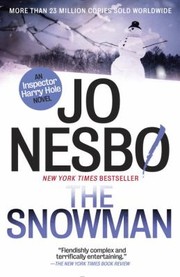
The Snowman
2,750-word summary 12 min read 512 pages in the book
- First published
- 2007
- Publisher
- Vintage Crime/Black Lizard
- Pages
- 512
- ISBN
- 9780307742995
- Original title
- Snømannen
- Series
- Harry Hole (#7)
Reading options
What's inside (8 sections)
I came to this one sideways. I had seen the movie version talked about as a mess, and a friend told me the book was the reason people kept reading Nesbo in the first place. That mismatch stuck with me. I wanted to see what the novel did that the film could not hold onto.
The facts first, so we are on the same page. The Snowman was first published in 2007 in Norwegian as Snømannen by Aschehoug. The English translation by Don Bartlett was published for Vintage Crime/Black Lizard in a 512 page edition, ISBN 9780307742995, by author Jo Nesbo. It is book 7 in the Harry Hole series, set mostly in Oslo in the early 2000s. I read it as the middle of a long run, where Harry is already damaged and already good at the job in a way that worries the people around him.
What surprised me early was how quiet the start feels for a serial killer story. Snow falls. A boy wakes up. His mother is gone. A scarf turns up where it should not be. Then the police do normal police work for a while, and the horror builds out of routine.
The first snow in Oslo
The opening that everyone remembers involves Jonas and his mother Birte Becker. Jonas wakes in the night after the first snowfall of the year and finds the house empty. Outside in the yard stands a snowman that was not there before. Around its neck is Birte's pink scarf, the Christmas gift he gave her.
Nesbo gives you the domestic detail before the police detail. Wet footprints on the stairs. A car gone. A husband, Filip Becker, who seems both worried and guarded. Jonas, who notices more than the adults want him to. I found that part easy to picture, maybe because it is so ordinary. A kid awake too late. Snow light through a window. Something missing.
Harry Hole comes in as the detective who cannot leave it alone. He is Oslo police, mid forties in spirit if not in years, brilliant with patterns, bad with drink, living in the pull between Rakel Fauke and his own habits. Rakel is the woman he loves but cannot quite keep. Her son Oleg treats Harry like a father. Her partner at this point is Mathias Lund-Helgesen, a doctor who seems kind and steady and a little too perfect to trust completely.
At work Harry gets a new colleague. Katrine Bratt has just come down from Bergen. She is sharp, eager, willing to push. She grew up around police work and she knows the Bergen cases. Her arrival shifts the energy. Harry has usually worked with Beate Lonn in forensics and Bjorn Holm and his boss Gunnar Hagen. Katrine is different. She challenges him. She wants the hard cases.
Then Harry gets a letter. No return address. A simple drawing of a snowman and a short taunting note from someone calling himself the Snowman. Around the same time a second woman disappears. The letter stops looking like a prank.
One thing I appreciated here is how Nesbo lets Oslo do work. Apartment blocks, wet roads, cabins outside the city, police corridors with bad coffee. It never feels like a travel brochure. It feels like November. Cold that gets into your shoes. Dark by mid afternoon. People tired and short with each other.
A short paragraph to be honest about my start.
I expected a fast slasher. The first hundred pages are slower than that, more about marriage and parenting and who sleeps where.
Old files and a new partner
Harry's FBI training kicks in. He starts looking for links instead of treating each missing woman as separate. Two things repeat. Each woman is a married mother. A snowman stood near the place she was last seen.
He pulls cold files with Katrine. They find cases going back years, even a decade. Women who vanished on the day of the first snow. Some were declared dead. Some were never found. One older Bergen case involved a detective named Gert Rafto, who chased a similar pattern and died before he could close it. Katrine knows that file. She brings a hunger to it that Harry recognizes in himself.
The count grows as they work. The official synopsis mentions eleven women over the past decade, all gone on first snow days. The book does not lay them out in a neat chart. You learn them in interviews and reports and visits to husbands who have rebuilt their lives or failed to. Philipp Becker says little that helps. Other families say a bit more. A neighbor remembers a car. A coworker remembers a fight.
This middle stretch is procedural in the old sense. Phone records. Timelines of snowfall. Checking who had access to police systems. Trying to get DNA where they can. Nesbo spends time on how hard it is to compare cases across districts when files were kept on paper and memories have softened.
Katrine pushes a theory that gives the book its spine. The victims' children may not be the biological children of the husbands who raised them. If that is true across several cases, paternity could be part of the motive. It is an ugly idea and the book knows it. It turns every interview with a grieving husband into a second interrogation about fidelity and fatherhood.
I had mixed feelings about this section.
On one hand the paternity thread makes the killings feel personal rather than random. It gives Harry something to test. On the other hand it means a lot of scenes where men in living rooms get asked about their wives' affairs while their kids are in the next room. Nesbo does not look away from how cruel that is. He also does not always slow down enough to sit with it.
Harry and Katrine grow close during this work. Not quite an affair. More like recognition. Both drink too much. Both push too hard. Both distrust easy answers. Rakel notices the distance. Mathias notices too, in his polite doctor way. The personal strain matters because Harry makes worse choices when he is lonely. He stays late. He drinks after. He follows hunches without cover.
Fathers and DNA
The DNA work changes the shape of the case without solving it. Some husbands are ruled out as fathers of the children they thought were theirs. Some leads collapse. A suspect who looked solid for a chapter turns out to have an alibi or a test result that clears him.
Nesbo uses this to show how forensic hope can mislead. A lab result feels final. In practice it opens new questions. Who knew about the affairs. Who had access to medical records. Who would care enough to kill over it.
Arve Stop enters here as a loud red herring. He is a wealthy businessman, connected, pushing a bid to bring a big sports event to Oslo, used to getting his way. He knew one of the victims. He has the kind of charm that reads as threat in a police interview. Katrine fixates on him. Harry is less sure but he lets her run because he has no better path.
I should say that Stop annoyed me in a useful way. He is the man who smiles while his lawyer talks. Every crime series needs one. Nesbo writes him well enough that you enjoy disliking him, even when you start to suspect he is there to waste your time.
There are other names that pass through. A doctor who worked in fertility and hormones. A former athlete. Men who wrote letters. Men who owned cabins near where bodies were found. The book keeps adding faces, then knocking them down with a detail. A date that does not fit. A blood type that does not match. A snow record that proves nothing fell that day in that town.
What holds this together is Harry's stubbornness about pattern. He keeps returning to the snowman itself. Why build one. Why leave it. Why place a phone or a scarf or a piece of clothing on it. It is childish and careful at once. Someone who wants to be seen but also wants to laugh at the police from inside the joke.
The snowman image worked on me more than I wanted it to. I grew up thinking of snowmen as friendly and temporary. Nesbo makes them feel like markers. You start dreading the weather report in the book. When the sky turns in Oslo, you know someone may not come home.
Katrine goes off the rails
About two thirds in, Katrine breaks.
Convinced that Stop is guilty and that the system will protect him, she tries to force a confession. She goes after him on her own, outside procedure, and crosses a line that cannot be walked back. Harry chases her across the country to an old murder site and stops something worse from happening, but the damage is done. She is taken in and sent for psychiatric care.
The fallout is bureaucratic and human. The bosses worry about headlines. There is talk of offering Harry up as a scapegoat to the press to protect the department. His superior Gunnar Hagen steps in and takes the heat instead, which tells you what Hagen thinks of Harry even when Harry is a problem.
I did not see this turn coming the first time in the way Nesbo stages it, though looking back the signs are there. Katrine drinks like Harry. She takes risks like Harry. She has a family history with the Rafto case that makes her feel she owes the dead something personal. Harry sees himself in her and misses how far she has gone because he is busy going there himself.
This is also where the book risks losing some readers. The pace dips while the department deals with Katrine. Reports are written. Lawyers talk. Harry sulks and drinks. If you came for a straight hunt, these chapters feel slow. I came to accept them as the price of the series. Nesbo cares about what an investigation costs the people running it, as much as the solution itself.
When another woman is taken after Katrine is locked up, the case cracks open again. The killer is still out there. The arrest was wrong, or at least incomplete. Harry has to start over with fewer allies and less credit. That stretch, where he is tired and embarrassed and still working, felt true to me. He goes back to notes. He replays interviews. He listens for the small thing he dismissed.
A small gripe.
Harry's drinking sometimes reads as shorthand. He drinks when sad. He drinks when close. He drinks when stuck. I understand it is part of the character across seven books. In this one it occasionally replaces a decision instead of leading to one.
The doctor next door
The final movement centers on Mathias Lund-Helgesen.
On the surface Mathias is the safe man. A doctor. Polite with Oleg. Patient with Rakel. He treats Harry with a kind of worried courtesy, as if Harry is a bad habit Rakel has not quit. Harry, jealous and tired, does not like him and does not trust his own dislike. That confusion is the point. Nesbo keeps Mathias close to the family so the reader keeps dismissing him too.
The motive reaches back to 1980, to the prologue where a boy waits in a car while his mother meets a lover. That boy grew up with a wound around mothers and fathers and lies about who belongs to whom. He came to judge certain women as bad mothers who betrayed their families, and he chose to punish them on first snow days and mark the scenes with snowmen. The book ties this to his medical access and his knowledge of paternity and fertility, which let him find and test his ideas about the victims.
I will keep the mechanics light because the pleasure here is watching Harry connect it rather than reading a lab manual. A chance remark sticks in his head. He remembers who was where when Birte vanished. He remembers who knew about the pink scarf and the timing of the snow. He checks a detail about Jonas and about medical files and understands that the kind man in Rakel's kitchen has been inside the case all along.
That realization lands hard because Rakel and Oleg are exposed. Mathias takes them to a remote cabin, the kind of place that is quiet in winter and hard to reach fast. Harry goes after them with little backup. What follows is close and messy, not clever. A struggle in snow and inside a cold building. A chase onto ice. Harry gets hurt. I will not spell out every cut and fall, but the book does not let Harry walk away clean.
What I believed: Harry's panic when the danger touches Rakel and Oleg. He has failed them before by drinking and by leaving. Now the job has followed him home in the worst way.
What I had to work to accept: how long Mathias hid in plain sight. Nesbo plants clues, but he also relies on Harry being distracted by Katrine and by his own jealousy. If you read closely you may spot Mathias early. A reader in 2026 noted guessing the killer on a hunch about what would hurt Harry most, and I had a similar itch halfway through. The reveal still hit because of who was at risk, not because it was impossible to guess.
What works and what wears thin
The strengths are clear when I think back over the 512 pages in the Vintage Crime/Black Lizard edition. The central image is simple and stays scary. The procedural work feels researched without turning into a lecture. Oslo in winter is a character without stealing scenes. Harry and Katrine together give you two versions of the same wound, one older and one newer, and their scenes crackle even when they are just reading files.
Nesbo is good at set pieces that use snow and silence. A yard at night. A farm building with the door ajar. A car on an empty road with the heater broken. He writes action in short bursts, then lets people sit with what happened. That rhythm kept me turning pages late, even when I told myself I would stop at the next heading.
The criticism I would offer a friend is this. The book is long and it shows in the middle. The list of suspects grows wide, and some interviews blur together. Husbands in living rooms. Doctors in offices. Records that need a warrant. If you are not taking notes, you may forget who is who for a stretch. I flipped back a few times to check names.
The violence toward mothers can feel relentless. That is intentional, since the killer's motive is built on judging mothers, but intention does not always make it easier to read. A few murders are described with a closeness that made me put the book down and walk around. Readers who prefer puzzles without gore will struggle in places. Readers who want every forensic step to be airtight will spot stretches where luck and memory do more work than science.
Who is it for. If you like crime where the detective's life is as messy as the case, and you do not mind bleak weather and bleak choices, this is a strong entry. If you need a tidy mystery where all clues line up and no one you like gets hurt, start with an earlier Harry Hole book like The Redbreast or skip to a stand alone. If you hated the film, do not let that stop you. The novel has room for the slow parts the film cut, and the slow parts are where the dread lives.
I closed it thinking about Jonas and that first yard. A boy, snow coming down, a mother missing, a figure with coal eyes looking back at the house. It is a small scene. It stayed with me longer than the chase at the end. That feels right for this series. Harry solves the case, but the cost stays in the rooms where people eat breakfast and try to act normal after.
I am glad I read it in winter. I would not recommend that timing to everyone. If snow already makes you uneasy, wait for spring.
FAQ
When was The Snowman published?
It was first published in 2007 in Norwegian as Snømannen by Aschehoug. The English translation by Don Bartlett was published for Vintage Crime/Black Lizard in a 512 page edition.
Is The Snowman part of a series?
Yes. It is book 7 in the Harry Hole series, preceded by The Redeemer and followed by The Leopard. You can read it alone, but Harry's life with Rakel and Oleg lands harder in order.
Who will enjoy The Snowman most?
Readers who like cold procedural crime with a serial killer pattern will feel at home. Those who prefer cozy mysteries or low violence should skip it, as the murders of mothers are bleak and direct.
Similar books
More from Harry Hole first, then related titles.
The Bat
Oslo detective Harry Hole aids Sydney police after a young Norwegian woman is murdered and finds a wider pattern. Grief, drink, and a lost partner shape the…
2,766-word summary · 12 min read
The Redbreast
Harry Hole chases an ageing sniper through modern Oslo while two Norwegian volunteers on the Eastern Front carry a fifty-year-old betrayal toward a royal…
2,453-word summary · 11 min read

Rules of Prey
Minneapolis detective Lucas Davenport hunts a killer who leaves a new rule at every scene and treats murder as a game of wits.
1,914-word summary · 9 min read

3rd Degree
The third Women's Murder Club novel follows a San Francisco terror cell and a three-day killing schedule, and it costs the club a member.
2,685-word summary · 12 min read
The Poet
A crime reporter investigates his twin brother's apparent suicide and uncovers a killer who leaves Edgar Allan Poe quotes behind, in the novel that took…
2,020-word summary · 9 min read
Triptych
A GBI agent with dyslexia hunts a rapist while two Atlanta cops hide pasts.
2,576-word summary · 11 min read
Blindsighted
Sara and Jeffrey hunt a killer staging women in small-town Georgia.
2,400-word summary · 11 min read
Wolf Hour
In Minneapolis, suspended detective Bob Oz hunts sniper Tomas Gomez in 2016 while a Norwegian writer revisits the case in 2022 with secrets.
2,202-word summary · 10 min read

What She Knew
Rachel lets her eight-year-old son run ahead in a Bristol park, and the nine-day search turns her into a suspect in the public eye.
2,952-word summary · 13 min read

The Beach House
A young valet is beaten to death at a Hamptons party, and his law-student brother spends a year building a case against the family that covered it up.
2,049-word summary · 9 min read

Six Years
A professor who promised to forget the woman he loved sees her husband's obituary and discovers that the wedding, the marriage, and the woman herself may never…
2,076-word summary · 9 min read
The Trespasser
A Dublin Murder Squad detective investigates a staged dinner-party killing and finds a cover-up that reaches into her own department.
2,051-word summary · 9 min read
The Late Show
Exiled to the LAPD night shift after accusing her supervisor, Renée Ballard keeps two cases that were meant to be handed off at dawn: a brutal assault and a…
2,563-word summary · 11 min read

4th of July
Lindsay Boxer shoots two armed teenagers in self-defense, faces a wrongful-death trial, and spends her leave chasing a string of throat-slashing murders in…
2,192-word summary · 10 min read

The Camel Club
Four Washington misfits witness a murder on Roosevelt Island and stumble into a conspiracy that reaches the Oval Office, with a hostage president and a nuclear…
2,354-word summary · 10 min read

61 Hours
A bus crash strands Jack Reacher in a snowbound South Dakota town where a drug gang, a corrupt police force, and a single witness are on a collision course.
2,227-word summary · 10 min read
The Last Mile
Melvin Mars is hours from execution for his parents' murder when another man confesses, and FBI cold case detective Amos Decker goes looking for the trap.
2,746-word summary · 12 min read

Still Missing
A realtor is abducted at a Vancouver Island open house and held for more than a year. Told through therapy sessions, the novel follows her escape and the hunt…
2,466-word summary · 11 min read

Bad Luck and Trouble
A deposit of $1,030 summons Jack Reacher back to his old army unit, which is being picked off one name at a time.
2,366-word summary · 11 min read

Worth Dying For
Reacher stops for one night in rural Nebraska and finds a family that runs the county, a missing girl and a shipment worth killing for.
2,021-word summary · 9 min read

Say You're Sorry
A widowed prosecutor defends the teenager accused of killing her babysitter, uncovering a small town's secrets and a killer hiding in plain sight.
2,116-word summary · 9 min read
Finlay Donovan Knocks 'Em Dead
Someone has put a contract on Finlay Donovan's ex-husband, and the novelist and her nanny have to find the hitman before the school pickup.
1,990-word summary · 9 min read

Echo Burning
Reacher hitches a ride with a Texas woman who wants her abusive husband killed, then has to prove she did not murder him when he comes home.
2,209-word summary · 10 min read
The Survivors
Kieran Elliott returns to Evelyn Bay twelve years after a storm killed his brother, and a young woman's murder forces the town to face what it has concealed.
2,571-word summary · 11 min read

Girl, Forgotten
A rookie US marshal guards a judge with a stalker and ends up reopening the 1982 prom-night murder of the judge's pregnant daughter.
2,111-word summary · 9 min read

The Woods
Twenty years after two teenagers were murdered and two vanished at summer camp, prosecutor Paul Copeland identifies a fresh corpse as one of the missing.
2,490-word summary · 11 min read

The Boy from the Woods
Wilde, found feral in a New Jersey forest in 1986, hunts for a missing teenager while a senator's secrets tear a wealthy town apart.
2,270-word summary · 10 min read
Razorblade Tears
Two ex-con fathers, one Black and one white, hunt their murdered sons' killers in a Richmond that never gave the boys a fair shake.
2,880-word summary · 13 min read
Broken Harbor
A family is found slaughtered in a half-built Dublin estate where no one broke in, and star detective Scorcher Kennedy must explain the holes in the walls.
2,308-word summary · 10 min read
Without Fail
Reacher is asked to test vice presidential security by planning to kill.
2,084-word summary · 9 min read