
Reading options
What's inside (8 sections)
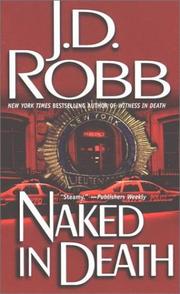
I picked up Naked in Death because a friend made a claim I could not let stand. She said the In Death series was just romance novels wearing a police badge, fifty-some books of a billionaire buying things for a lady cop. I had never read one, which made me exactly qualified to argue. So I started at book one, published by Berkley in 1995, set in the New York of 2058, and I finished it in two sittings with takeout going cold beside me.
My friend was wrong, though not for the reasons I expected. This is a romance the way a stakeout is a picnic. Technically people are sitting close together, but that misses the point. What J.D. Robb, the pen name Nora Roberts used for this series, actually wrote is a police procedural with a love story bolted onto its side, about a damaged homicide lieutenant who solves murders by understanding victims other cops write off. What follows is the full plot, including Eve, Roarke, the DeBlass case, and the memories locked underneath it.
A 1995 guess at the year 2058
First, the setting, because it colors everything. Robb imagined 2058 from 1995, which means the future here is filtered through pagers and dial-up optimism. New York has off-planet colonies people emigrate to, flying traffic lanes, droids that do housework and autopsies, virtual reality and simulated everything, legal licensed companionship, and guns mostly replaced by stunners and lasers. Cops carry communicators, run prints and DNA in minutes, and pull citywide camera and data records with a warrant or a favor.
Some of it lands. The constant surveillance, the data trails, the way the rich buy privacy the poor cannot afford, all of that reads sharper now than it probably did in 1995. Some of it misses in ways that are fun rather than fatal. Computers still feel like furniture. Nobody carries the whole world in a pocket. People say things like "tele-link" with a straight face. I stopped noticing after fifty pages because the book never shows off the gadgets for their own sake. The future is wallpaper. The people are the room.
The person who fills most of the room is Lieutenant Eve Dallas of the New York Police and Security Department, homicide. She is thirty, lean, scarred, and honest the way a hammer is honest. She grew up with no memory of her first eight years, just nightmares about a cold room and a man hurting her, and she built herself into someone who stands between killers and victims because nobody once stood there for her. She works too much, eats badly, sleeps worse, and trusts almost no one. Her clearance rate is the best thing about her and the only thing she will accept praise for.
Her circle is small and well drawn. Captain Feeney, her old partner from Electronics, who taught her the job and worries about her like family. Officer Delia Peabody, young and earnest, assigned as her aide, who worships Eve and slowly earns real partnership. Dr. Charlotte Mira, the department profiler, smart and kind, who sees through Eve defenses without ever making a speech about it. Mavis Freestone, Eve best friend, a small-time grifter and singer with big hair and absolute loyalty. And Commander Whitney, her boss, who gives her room to run because she closes cases.
The DeBlass girl
The case starts with a body that matters too much. Sharon DeBlass, twenty-four, granddaughter of a powerful senator, is found dead in her apartment. She was killed by gunshot, which in 2058 already reads as deliberate and strange, like a message sent in an obsolete language. She was also, by all accounts, working outside the law in the oldest profession, and she had secrets she kept from her famous family.
Eve catches the case because she is good and because she is nobody. That is the quiet engine of the early chapters. A senator granddaughter dead means politics from the first hour. The department wants it solved fast and clean. The family wants it solved quietly. The press wants it solved loudly. Eve wants it solved right, and those four wants do not overlap.
She works the scene the way the book wants you to learn her. She notices what the room says about the girl. The expensive apartment paid for how. The clothes chosen for whom. The locked files, the nervous friends, the clients who will pay anything to stay unnamed. Sharon was not a sad cliché. She was a sharp young woman operating in a dangerous trade, careful about most things, careless about one thing too many. Eve, who has her own buried reasons for flinching at crimes against women, refuses to let the victim become an embarrassment the family sweeps aside. There is a scene early on where Eve faces down the senator impulse to manage her, polite and immovable, and it sets the template for the whole book. Rank bends around her or breaks.
The autopsy and the lab work give her the shape of it. One shooter, close range, planned. No robbery. No frenzy. The killer knew Sharon, or knew enough about her habits to get inside her door. Eve starts pulling the thread of Sharon clients and contacts, and the thread leads upward, toward money and office and people used to being untouchable.
Roarke walks into the case
And then there is Roarke. No first name given, none needed in this book. Irish billionaire, owner of an absurd share of the planet and the orbital stations above it. Charming, controlled, dangerous the way old money with a criminal past is dangerous. He knew Sharon DeBlass slightly. He has no solid alibi for the night she died. He shows up in Eve investigation the way a storm shows up on radar, and everything tilts.
Eve does the correct thing first, which I respected. She treats him as a suspect. She interviews him hard, checks his story, and keeps him at arm length, because the one thing she knows about herself is that attraction makes her stupid and she cannot afford stupid on this case. Roarke, who is used to people wanting something from him, finds himself studied by a woman who wants only the truth and clearly wishes he would stop being interesting.
He does not stop being interesting. He inserts himself with resources Eve cannot match. Data she would need three warrants to touch appears on her desk. Doors that would stay shut for a cop swing open for an owner. He asks for nothing except her company, which is obviously a lie and obviously the truth at the same time. Their early scenes have a sparring rhythm that carries the middle of the book. She insults his pretty-boy suits. He mocks her dead coffee and worse diet. Underneath, two people who survived ugly childhoods are recognizing each other without saying so.
Is it fast? Yes. Ridiculously fast by real-world standards. They go from suspect and cop to lovers in days, while bodies are still warm. The book knows this and does not apologize. Robb writes attraction as weather, something that happens to people, and both characters keep working the case through it. If you need your romance slow and sensible, this will annoy you. If you accept the genre contract, that two lonely competent people can fall hard under pressure, it works, because Robb never lets the romance pause the murder investigation. Every love scene is followed by somebody finding another body or another lie.
Bold truth about Roarke: he is a fantasy figure, rich beyond sense, skilled at everything, oddly available. The book gets away with it because Eve never acts impressed. She treats his fortune the way she treats a suspect fancy car, as a fact to work around. That balance keeps the power dynamic watchable instead of queasy.
The murders multiply
The case widens the way the worst cases do. More women die, killed the same way, and the pattern sharpens. The victims connect to the expensive end of the sex trade and to the social world Sharon moved in. The killer is choosing women he sees as disposable and staging their deaths to say something about it. Eve reads the staging the way Mira teaches her to, as a window into contempt. Someone with money, privacy, and a grievance is hunting.
Eve and Peabody grind through the unglamorous middle that the book renders better than most procedurals of its era. Canvassing. Client lists. Financial trails. Leaning on building security, on companionship agencies, on rich men lawyers. Commander Whitney runs interference upstairs while the senator office applies pressure that is never quite a threat and never quite not one. Feeney digs through electronics and finds the deleted things people always think are deleted. Mira builds a profile that points at respectability, at a man the system is designed to protect.
What I liked here is how the book handles class. The victims did work polite society pays for and condemns, and every institution Eve touches, the family, the department brass, the press, would prefer the women stay footnotes. Eve refusal is personal and professional at once. She identifies with women nobody protected, because she was one. She tells Mira something close to that exactly once, then buries it in work, which is Eve entire emotional strategy in one gesture.
Roarke help keeps arriving, and Eve keeps hating that she needs it. There is a good fight between them about methods. He will bribe, hack, and buy his way to answers. She needs answers that stand up in front of a judge. He thinks her rules protect killers. She thinks his shortcuts would let this one walk. Both of them are right enough to sting. It is the most honest scene in their romance, because it is about something other than desire. It is about two people whose survival strategies contradict each other trying to share a case and a bed.
Eve locked room
Underneath the investigation runs the second plot, the one that explains Eve. Since childhood she has had the same nightmare. A cold room. Pain. A man face she cannot see. Drink on his breath. Her own small hands doing something terrible. She has always assumed the locked part of her memory holds what was done to her. The book suggests, slowly, that it also holds what she did back.
Mira helps her approach it sideways, through dreams and flashes triggered by the case. A detail at a crime scene brings the smell of the room back. A suspect tone of voice brings the fear. Robb handles this carefully for 1995 and mostly well now. The memories surface in fragments, never as a convenient full confession, and Eve functions through them the way working people function through old wounds, badly and continuously.
I will not spell out every recovered detail, because the book treats them as the climax of Eve arc and they deserve their weight. The shape of it is this. Eve father was a monster who hurt her in every way a child can be hurt. Eve mother was gone, dead or fled, no help coming. And eight-year-old Eve, cornered and small, did the one thing that stopped him, with a weapon a child should never have held. She has carried that guilt under the fear ever since, certain it makes her as bad as him.
The scene where she finally tells Roarke is the best written passage in the book. He does not flinch, does not comfort her with cheap lines, and does not pretend it is simple. He tells her what she cannot tell herself, that a child fighting off a monster is not a monster. Then, because this is Eve, she goes back to work. Healing in this series is not a breakthrough followed by peace. It is a door opened an inch, with the rest of the house still dark.
Some readers will find the trauma plot heavy for a book that also contains billionaire banter and droid jokes. That tonal clash is real and never fully resolves. One chapter has Eve shaking from a flashback, the next has Mavis modeling a silver jumpsuit. Robb wants both the dark and the light, and sometimes they sit awkwardly at the same table. But I came to feel the awkwardness is honest to the character. Eve herself lives exactly that way, horror and humor alternating by the hour.
How it ends, and why it worked
The investigation closes in on the DeBlass circle, on money used as armor and connections used as walls. Eve builds a case the hard way, linking the victims through the killer habits and his access, until she can put herself in a room with him and force the mistake. The final confrontation happens on the killer ground, where he feels safest, and it goes bad in the way confrontations with protected men go. He counts on status to save him. He counts on Eve hesitation, one more woman he has decided is disposable.
He counts wrong. Eve takes him down, with Roarke arriving as backup she did not ask for and exactly needed, and the arrest lands with the weight the book earned. There is no speech about justice. There is paperwork, and a victim family that will never be whole, and Eve going home to nightmares that have new shapes now. The romance ends the book steadier than it began, not with promises but with two guarded people deciding to keep showing up.
So does book one hold up thirty years later? As prediction, barely, and that is part of the charm. As a procedural, better than its reputation. Eve Dallas is a genuinely original creation for 1995, a female lead whose toughness is not a costume but scar tissue, allowed to be bad at feelings without being bad at her job. The mystery is fair, the clues are there, the killer logic holds, and the class anger underneath it still bites.
The criticisms are real too. Roarke fortune solves too many problems. The romance moves at soap speed. Some tech reads as quaint, and one or two procedures get steamrolled for pace. Nobody will mistake this for a manual on police work.
But here is what my friend missed, and what I told her over the cold takeout. The badge is not a costume on a romance. The romance is the subplot. The main story is Eve standing over dead women the world priced cheaply and saying, out loud, that they counted. Fifty-some books later, that is still the series engine, and it starts here, fully formed, in 320 pages. Start at the beginning. The water is bloody and fine.
FAQ
Is Naked in Death a romance or a mystery?
Both, but the mystery leads. The DeBlass murder investigation drives every chapter while Eve and Roarke's relationship grows alongside it. Readers wanting only one genre should know that going in.
Do I need to read the In Death books in order?
It helps, starting here. This book establishes Eve's trauma, her team, and Roarke, and later books build on them. Each case still resolves on its own.
How is J.D. Robb connected to Nora Roberts?
J.D. Robb is the pen name Nora Roberts used for the In Death series, beginning with this 1995 Berkley book.
Similar books
More from In Death first, then related titles.
Stolen in Death
A billionaire is found dead beside a vault of stolen art in his home, and Eve Dallas must trace old thefts to find who killed him.
2,492-word summary · 11 min read

How the Light Gets In
Gamache investigates the murder of the last Ouellet quintuplet while the Sûreté he served is dismantled from inside by the man who took his protégé.
2,279-word summary · 10 min read

Bury Your Dead
Recovering from a failed raid that killed his officers, Gamache investigates a murder in a Quebec City library while Beauvoir reopens a case in Three Pines.
2,022-word summary · 9 min read

The Trespasser
A Dublin Murder Squad detective investigates a staged dinner-party killing and finds a cover-up that reaches into her own department.
2,051-word summary · 9 min read

Rules of Prey
Minneapolis detective Lucas Davenport hunts a killer who leaves a new rule at every scene and treats murder as a game of wits.
1,914-word summary · 9 min read

The Late Show
Exiled to the LAPD night shift after accusing her supervisor, Renée Ballard keeps two cases that were meant to be handed off at dawn: a brutal assault and a…
2,563-word summary · 11 min read
The Last Mile
Melvin Mars is hours from execution for his parents' murder when another man confesses, and FBI cold case detective Amos Decker goes looking for the trap.
2,746-word summary · 12 min read
Fearless Fourteen
Bounty hunter Stephanie Plum babysits a teenager, guards a fading singer, and hunts nine stolen million dollars under her boyfriend's basement.
2,466-word summary · 11 min read

Say You're Sorry
A widowed prosecutor defends the teenager accused of killing her babysitter, uncovering a small town's secrets and a killer hiding in plain sight.
2,116-word summary · 9 min read
Lean Mean Thirteen
Stephanie Plum's ex-husband disappears after she attacks him, leaving her suspected of murder and chasing a forty-million-dollar secret through Trenton.
2,100-word summary · 9 min read
A Rule Against Murder
Gamache's anniversary at a remote lodge turns into a closed-circle murder when the family statue kills Julia, and everyone at the Manoir had a reason.
2,201-word summary · 10 min read
Twelve Sharp
Stephanie Plum is stalked by a woman claiming to be Ranger's wife, and when Ranger's daughter is kidnapped, Stephanie becomes both bait and target.
2,064-word summary · 9 min read

Ten Big Ones
Stephanie witnesses a gang robbery dressed as a devil, and the Comstock Street Slayers put her on a list of people to kill.
2,062-word summary · 9 min read
Men at Arms
The City Watch gets new recruits and a murder case when the Disc's only handgun turns up in Ankh-Morpork, in the fifteenth Discworld novel.
2,216-word summary · 10 min read
Triptych
A GBI agent with dyslexia hunts a rapist while two Atlanta cops hide pasts.
2,576-word summary · 11 min read
The Bat
Oslo detective Harry Hole aids Sydney police after a young Norwegian woman is murdered and finds a wider pattern. Grief, drink, and a lost partner shape the…
2,766-word summary · 12 min read

Across the Universe
Frozen teen Amy wakes early on ship Godspeed and joins heir Elder to stop cryo murders and expose Eldest's drugged rule in this January 2011 Razorbill series…
2,430-word summary · 11 min read
Seven Up
Stephanie hunts old mobster Eddie DeChooch, finds a body, a missing heart, and trouble from Morelli to Ranger.
2,798-word summary · 12 min read
Hard Eight
Janet Evanovich's Hard Eight fully retold: a missing mother and child, Abruzzi's medal hunt, Valerie's rescue, and Ranger crossing a line.
2,961-word summary · 13 min read
Memory Man
Amos Decker, a detective who cannot forget, hunts the link between his family murder and a school shooting.
2,931-word summary · 13 min read
Four to Score
Stephanie hunts waitress Maxine Nowicki through coded clues, firebombs, and counterfeit cash while living with Morelli in Trenton.
2,870-word summary · 13 min read
Three to Get Deadly
Stephanie hunts a beloved candy man holding army money everyone wants.
1,981-word summary · 9 min read
Finlay Donovan Is Killing It
A broke single mom novelist is mistaken for a hitwoman over lunch and takes the job. Funny crime caper, first in the series.
2,538-word summary · 11 min read
One for the Money
Janet Evanovich's One for the Money fully retold: Stephanie Plum's first bounty hunt, Morelli on a murder charge, Ranger, Lula, Ramirez, and why Trenton still…
2,339-word summary · 10 min read

What She Knew
Rachel lets her eight-year-old son run ahead in a Bristol park, and the nine-day search turns her into a suspect in the public eye.
2,952-word summary · 13 min read

The Beach House
A young valet is beaten to death at a Hamptons party, and his law-student brother spends a year building a case against the family that covered it up.
2,049-word summary · 9 min read
The Art Forger
A disgraced Boston painter agrees to copy a Degas stolen from the Gardner Museum, then begins to suspect the original she is copying is itself a forgery.
2,117-word summary · 9 min read
Size 12 Is Not Fat
Former teen pop star Heather Wells investigates two dorm elevator deaths while juggling her ex, her crush, and a size-12 wardrobe.
2,805-word summary · 12 min read

Six Years
A professor who promised to forget the woman he loved sees her husband's obituary and discovers that the wedding, the marriage, and the woman herself may never…
2,076-word summary · 9 min read
First Grave on the Right
Charley Davidson is a private investigator in Albuquerque and the grim reaper. When three murdered lawyers come back as ghosts, her two jobs collide.
2,770-word summary · 12 min read