
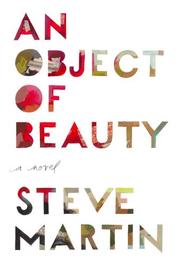
An Object of Beauty
2,629-word summary 12 min read 304 pages in the book
- First published
- 2010
- Publisher
- Grand Central Publishing
- Pages
- 304
- ISBN
- 9780446573641
Reading options
What's inside (9 sections)
I came to this novel expecting jokes and found something colder and more patient. Steve Martin, known for comedy and for collecting art in real life, tells the rise and fall of Lacey Yeager, a young woman who storms the New York art world in the 1990s and 2000s. First published in 2010 by Grand Central Publishing, at 304 pages in the edition cited here, it is a standalone novel with no series. The narrator is her college friend Daniel, an art writer who loves her, judges her, and never quite reaches her.
Lacey starts as an intern in the basement at Sotheby's, smart, funny, magnetic, willing to work long hours around crates and catalogues. Daniel meets her through school connections and watches her learn fast. She studies how paintings are described, how estimates are set, how rich buyers are coaxed. She charms men and women, old and young, with attention that feels personal even when it serves a plan. Early chapters show her doing real work, fetching coffee, checking condition reports, memorizing artist names, while building a mental map of who has money and wants status.
Her climb runs alongside the market itself. The late 1990s bring money, parties, loft openings, talk of new stars. Then the early 2000s bring shock and pause, then a roaring market again, then the 2008 collapse. Martin times Lacey's steps to that rhythm without turning her into a symbol. She moves from Sotheby's to a Madison Avenue gallery job, then to a partnership and finally her own downtown space. Each move brings better clothes, better rooms, more dangerous friends. Daniel records prices, reviews, and gossip the way a friend would, half proud, half worried.
What hooked me was tone. Daniel writes with dry amusement, pausing to explain a painting or a sales tactic, then admitting what he does not know. He wants to write about art with clear sentences. He idolizes Lacey and resents needing her. That push and pull colors every scene. We see Lacey through someone who would forgive her almost anything, which means we have to do our own math about her choices.
Sotheby's basement
Lacey begins below ground, literally. The basement holds stored works, frames, paperwork, the unglamorous side of auctions. She learns to handle panels, read provenance, spot a cleaned surface or a relined canvas. Martin, a collector himself, writes these details with ease. How a catalogue entry is worded. How a lot is placed to catch bidding heat. How staff talk about reserves in hallways. For readers new to art, these passages teach without lecturing. For those who know the rooms, they ring true.
Daniel visits and falls into her orbit. He is not rich, not connected, trying to make it as a writer. Lacey likes him because he looks at pictures closely and laughs at her jokes. She tells him she wants more than a desk job. She wants to be near beautiful things and the people who can buy them. Ambition in her sounds frank rather than cruel at first.
A few early relationships set pattern. Lacey dates a photographer, charms an older collector, befriends a senior specialist who teaches her how to speak to clients. She trades on looks and youth, yes, but also on recall. She remembers which collector missed out on which lot and which young artist needs a wall.
The basement teaches her a hard lesson that shapes the book. Objects of beauty become objects of value the moment a price is fixed. A painting can move you in storage and freeze you at auction because numbers change how people stand before it. Lacey feels both pulls. She loves pictures, truly, and she loves what pictures can buy. That split never heals. It widens with each promotion.
Her departure from Sotheby's feels inevitable. Salaried work rewards patience. Lacey has little. A gallery offers commission, access, nights out with artists and money. She jumps, and Daniel follows her new life as a reporter of sorts, collecting anecdotes he will later shape into this account.
Patrice and the education
The middle stretch belongs to work under dealers who school her. The most important is an older woman dealer with a sharp eye and a client list built over decades. From her Lacey learns placement, how to hang a show so a weak picture looks stronger, how to pace a sale, when to push and when to wait. She learns to write letters that flatter without lying too much, to host dinners where rivals sit far apart, to remember a client's child and dog.
Lacey proves gifted. She spots a neglected painter before others, places works with buyers who will lend them to museums, builds buzz piece by piece. Daniel quotes reviews and sales figures, and Martin includes small reproductions in print editions to let readers see what characters see. That device helps. When Daniel describes color or scale, you can check him. It also shows how much talk surrounds images. The same canvas sounds different in a press release, a catalogue note, and a bar after closing.
Her personal life tangles with business. She sleeps with useful men and sometimes with men who are simply kind. She keeps Daniel close but not too close, calling when she needs a smart eye, vanishing when a richer invitation lands. He accepts this because hope lasts.
Money changes manners. Lacey moves uptown in stages, better apartment, better coat, better table. She learns when to wear black and when to speak and when to let silence raise a bid. Martin knows these rooms and writes them with affection mixed with bite.
The criticism I felt here concerns pace. Chapters sometimes read as linked sketches rather than a tight plot, a dinner, a sale, a trip to look at a collection. If you enjoy watching a character collect skills and contacts like chips, it holds. I stayed interested because Lacey's eye stayed sharp.
The gallery and the game
By the mid 2000s Lacey runs her own space downtown. The opening shows draw crowds. She mixes young artists with safe secondary-market pieces that pay rent. She learns to balance risk and cash, a hot photographer who may fade against a solid drawing that will hold. Daniel writes catalogue essays for her at times, proud to be inside the tent. He sees the books, or parts of them, and senses strain beneath shine. Rent climbs. Expectations climb faster.
This is where the book turns from social climb to moral test. The art market runs on trust and paper. Provenance can be thin. Attributions shift. A work said to be by one hand may be by another, or by many hands, or by none worth naming. Prices reward certainty, so certainty gets manufactured. Lacey, pressed to keep her gallery alive and her name bright as the market peaks, starts to manufacture it.
I will stay general to avoid spoiling mechanics, but the shape is plain. She arranges sales where capital seems to move in circles, talks up pictures she knows are doubtful, borrows against works she does not fully own. Daniel hears rumors and asks soft questions. She answers with charm and delay. Charm works until money tightens.
Martin handles fraud not as a heist but as habit. Small lies make big lies easier. A misdated letter here, a missing disclosure there, a signature taken on faith because the seller smiles. Lacey tells herself the pictures are still beautiful, the buyers still happy, the market still hungry. For a while she is right. Parties continue. Reviews praise her eye. Then the wider economy cracks in 2008, buyers vanish, loans come due, and paper promises meet hard desks. What looked clever in a boom looks stark in a bust.
Daniel's role sharpens here. He is not a detective. He is a friend who writes down what he sees and fills gaps with research. He interviews dealers, checks auction records, visits studios. He admits when memory fails. That modesty helps in a book about lying. When he finally understands parts of Lacey's scheme, his hurt reads as personal rather than moralizing. He wanted her to be better than the game. She wanted to win it.
Men, rooms, and 9/11
Lacey's love life threads through business without ever becoming simple romance. She collects admirers the way galleries collect mailing lists. An older collector offers security and lessons. A peer offers fun and understanding. A rich outsider offers escape. She gives warmth freely and keeps plans private. Daniel loves her from early on and never fully stops, though he dates others and tries to build a separate life. His longing sometimes clouds judgment. He excuses absences, forgives debts, carries messages he should refuse.
The book's New York passages carry weight because Martin lived them. Gallery streets, auction rooms, museum benches, apartments with good light and bad plumbing. Food matters, who pays, where tables sit. Clothes matter, not as labels but as signals of belonging. Lacey masters signals fast. She learns when to wear black and when to wear color, when to speak and when to let silence raise a bid. Daniel, always a half step behind in funds, notices these codes because he cannot afford to ignore them.
September 2001 enters the story without hijacking it. Characters lose friends, shows close, the city goes quiet, then hums again with changed pitch. For Lacey the pause forces reflection that does not last. She mourns, then returns to hunger because hunger is what she knows.
A fair question the book raises is whether Lacey loves art or loves winning. Evidence points both ways. She stands long before certain paintings when no buyer watches. She remembers details of brushwork years later. She fights for an artist she believes in when no profit follows. Yet she also sells doubt as certainty, treats friends as bridges, and spends trust like credit. Martin refuses to settle this.
Crash and flight
The last third moves faster as the market falls. Buyers who promised to pay in weeks ask for months. A consigned work sells but proceeds stick. A backer asks for proof Lacey cannot produce. Daniel pieces together a chain of transactions that do not square. He confronts her in a scene with little shouting and much evasion. She smiles, touches his arm, says the market will turn and everyone will be whole. For a moment he almost believes her because belief has always been easier.
Details accumulate. A painting with questioned authorship. A bill of sale with a soft date. A loan secured by the same work promised elsewhere. None of this is staged as a courtroom reveal. It arrives as gossip, over coffee, in asides from dealers who have seen booms end before. Martin knows how reputations die in this world, not with sirens but with phones unanswered and invitations withdrawn. Lacey's calendar empties. Staff leave. Landlord letters sharpen.
She runs. Facing suits, claims, perhaps criminal inquiry, she leaves New York and later the country, shedding gallery and apartment. Daniel hears from her rarely, a postcard, a brief call, a rumor of a small town where she looks at local work and keeps quiet. The ending refuses neat punishment or return.
I admired the restraint. A lesser satire would jail her on the last page or redeem her with tears. Martin lets her vanish into a smaller life, still looking, still wanting, but cut off from the stage that fed hunger. Daniel is left to write the book we hold, sorting notes, checking dates, admitting where imagination stood in for access. His final pages are tender and angry at once. He loved a person who treated love as useful. He still misses her.
Market context helps this land. 2008 did not create Lacey's habits. It exposed them. Easy credit and rising prices let dealers roll obligations forward. When credit stopped, gravity returned. Martin shows this without lectures about finance.
What sings and what drags
The best passages concern looking. Martin writes about pictures with plain words that open them up. How a portrait holds a gaze, how a landscape keeps distance, how a modern canvas can feel both empty and full. He pauses the plot to let Daniel stand before a work and think. Those pauses give the novel its title weight. Beauty stops time even as money tries to price it. Readers who visit museums will feel at home. Those who do not may start wanting to go.
Humor helps too, dry and brief. Daniel's full name jokes at old American art. Auction chatter gets quoted with perfect pitch. A collector's excuses for buying another picture when walls are full made me laugh aloud. Martin never turns Lacey into a joke, which matters. Satire aims at the system, vanity, jargon, status panic, while leaving the woman at center human enough to ache for.
Criticism is due as well. Daniel can feel thin as a narrator. He tells more than he shows, summarizing Lacey's charm rather than letting scenes prove it. Because Lacey stays partly hidden by design, some chapters circle her without touching her. Readers who prefer close interior life may tire of hearing how captivating she is without feeling it on every page. I felt it in flashes, a late-night talk, a sharp look at a frame, more than as a steady glow.
Pacing sags in the middle gallery years. Openings blur, names pile, sales figures repeat. Martin's research sometimes surfaces as explanation that pauses story. Most of these asides interested me, but two or three slowed momentum right when Lacey's risk should tighten.
As a standalone at 304 pages, the book asks for a week of evenings and repays with a New York you can hear. It works as satire of the art world, as a character study of ambition, and as a quiet story about a man writing the woman he could not save. If you want a thriller with handcuffs, look elsewhere. If you want wit, pictures, rooms full of money and talk, and a heroine who trades beauty for value until value eats beauty, step in. The doors are open and the lights are bright.
Money, beauty, value
A useful way to read the novel is to track three words. Beauty names what stops Daniel in a gallery. Money names what lets a buyer take it home. Value names the story told to connect the two, made of provenance, fashion, criticism, rumor. Lacey starts by serving beauty, learns to serve money, ends by faking value. Each shift pays better and costs more.
Provenance chapters show this best. A clean history lifts price. A gap invites doubt. Lacey learns to polish gaps with words, a likely exhibition, a probable collection, a confident attribution. Buyers want to believe because belief lifts their own status. Daniel shows how rarely anyone checks hard when everyone profits from trust. When checks finally come, after the crash, the same papers read as warnings.
Gender shapes the path without becoming a speech. A young woman in rooms run by older men must charm, deflect, endure condescension, then use the same charm as a tool. Lacey plays this game well and pays for it in being underestimated and overdesired at once.
Hold the title in mind at the close. An object of beauty should hold still and let you look. Lacey could not hold still. Neither could the market around her. Pictures remain after people flee, hanging in storage or on new walls, waiting for fresh eyes. Daniel keeps writing about them because writing is how he stays near what moved him. That steady attention feels like the book's moral core. Look longer than price asks. Ask who benefits from praise. Love pictures enough to let them stay unsold in your mind.
FAQ
When was An Object of Beauty published?
Grand Central Publishing published An Object of Beauty in 2010. The cited edition runs 304 pages as a standalone novel.
Who narrates An Object of Beauty?
Daniel Franks, Lacey’s college friend and art writer, tells her story with admiration, doubt, and admitted gaps in knowledge.
Similar books
Infinite Jest
A film that kills its viewers, a tennis academy, a halfway house for addicts, and a future America where corporations name the years, all tangled together.
2,084-word summary · 9 min read
Let the Great World Spin
A wire walker crosses the towers as Bronx lives collide below.
2,338-word summary · 10 min read
The Corrections
An aging Midwestern couple tries to gather three troubled adult children for one last Christmas at home.
2,094-word summary · 9 min read
The Nanny Diaries
NYU student Nan nannies four-year-old Grayer X on Park Avenue, caught between a demanding Mrs. X, an absent Mr. X, and a lonely child who needs her more than…
2,233-word summary · 10 min read

My Year of Rest and Relaxation
A young art graduate tries to sleep for a year with pills and Reva while the city drifts toward 2001.
3,146-word summary · 14 min read
The Catcher in the Rye
J. D. Salinger's The Catcher in the Rye explained: Holden's weekend in New York, the phony adults, Phoebe's carousel, and why readers keep coming back to him.
2,477-word summary · 11 min read

The Crying of Lot 49
A California woman named executor of her ex-lover's estate follows a muted post horn into a possible centuries-old postal conspiracy, and Pynchon refuses to…
2,003-word summary · 9 min read

James
Percival Everett retells Huckleberry Finn from Jim's side, giving him a library, a hidden school, and a voice the novel lets loose.
2,211-word summary · 10 min read
Naked Lunch
Burroughs's banned 1959 collage novel follows Bill Lee through addiction, Tangier, and the nightmare bureaucracy of the Interzone.
2,082-word summary · 9 min read

The Chosen
A shattered pair of glasses in a 1944 Brooklyn softball game starts a friendship between a Hasidic boy and his Orthodox neighbor, and their fathers pull them…
2,443-word summary · 11 min read

The Sisters Brothers
Two hired killers ride from Oregon to Gold Rush California to murder a prospector, and find their trade, their brotherhood, and the frontier myth coming apart.
2,095-word summary · 9 min read

The Birth of Venus
A Florentine merchant's daughter trains as an artist, marries a man who hides a secret, and survives Savonarola's bonfire of the vanities.
2,404-word summary · 11 min read
The Orphan Master's Son
Adam Johnson's Pulitzer-winning novel follows Pak Jun Do from a North Korean orphanage to a deadly identity swap, under a state whose loudspeakers never stop…
2,219-word summary · 10 min read

Olive, Again
Elizabeth Strout returns to Crosby, Maine, as Olive Kitteridge marries Jack Kennison, confronts her son, and faces old age, grief, and small-town judgment.
2,333-word summary · 10 min read

If on a Winter's Night a Traveler
You, the Reader, chase a defective novel through bookshops and translators while ten other novels keep interrupting. Calvino's famous puzzle about the act of…
2,173-word summary · 10 min read
The Most Fun We Ever Had
Four Sorenson sisters orbit perfect parents hiding old cracks.
2,590-word summary · 12 min read

The Accidental Tourist
Grieving Macon writes travel guides for haters of travel, then Muriel intrudes.
2,252-word summary · 10 min read

Severance
Candace keeps office routine as fever empties New York, then joins survivors.
2,340-word summary · 10 min read
Men Without Women
Seven stories about men living after women leave, die, or stay distant.
2,673-word summary · 12 min read

Kitchen
Orphan Mikage finds home in a kitchen with Yuichi and Eriko after loss.
2,597-word summary · 12 min read
Haunted
Writers lock in for three months and trade worse stories as food runs out.
2,576-word summary · 11 min read
Ham on Rye
Henry Chinaski grows up rough in Depression Los Angeles and finds writing.
2,244-word summary · 10 min read

Disgrace
A professor falls after an affair, then faces violence at his daughter farm.
2,533-word summary · 11 min read

The Fall
A fallen Paris lawyer confesses in an Amsterdam bar, tracing guilt from Paris success to a bridge he failed to face.
2,220-word summary · 10 min read
The Art of Fielding
A flawless college shortstop loses his throw at Westish College, and five tangled lives must face failure and change.
2,519-word summary · 11 min read
White Noise
Jack Gladney teaches Hitler studies, flees a chemical cloud with his family, and chases a drug for dread in DeLillo's funny and bleak 1985 novel of…
2,768-word summary · 12 min read
The Interestings
Meg Wolitzer follows Jules Jacobson from 1974 arts camp into middle age, as friendship with Ethan and Ash turns into envy, money gaps, marriage strain, and…
2,990-word summary · 13 min read

Survivor
Tender Branson, last Creedish survivor, confesses into a flight recorder as his plane dives, from servant to agent-made celebrity messiah in Palahniuk's 1999…
2,683-word summary · 12 min read