
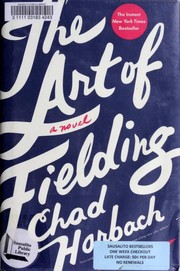
The Art of Fielding
2,519-word summary 11 min read 512 pages in the book
- First published
- 2011
- Publisher
- Little, Brown and Company
- Pages
- 512
- ISBN
- 9780316126694
Reading options
What's inside (8 sections)
I came to The Art of Fielding sideways. Chad Harbach published it with Little, Brown and Company in 2011 as a 512 page debut, and for a while it was everywhere. Ballplayers were reading it in dugouts. Literary prizes were circling it. Friends who never watch baseball kept pressing it on me. I finally picked it up on a rainy weekend because I wanted a campus novel that felt lived in, and because I kept hearing that the baseball parts were unusually true. I am not a former shortstop. I played enough bad high school ball to know the fear of a routine grounder, and that was enough to pull me straight into Henry Skrimshander.
What surprised me is how little of the book is really about winning. Yes, there are box scores and road trips and a Division III playoff chase. But most of the pages are about five people at a small college trying to grow up without wrecking each other. Henry, the perfect young fielder. Mike Schwartz, the bruising catcher who found him. Owen Dunne, Henry's gay roommate and teammate. Guert Affenlight, the college president in his sixties. Pella, Affenlight's daughter, newly back from a failed marriage. Harbach moves between them chapter by chapter. The baseball gives them a shared clock, spring practice to June, but the pressure comes from love and work and aging as much as from the standings.
Henry Skrimshander, Shortstop From South Dakota
Henry Skrimshander grows up in Lankton, South Dakota, a town small enough that everyone knows his fielding percentage by Monday morning. He is not big. He is listed around five foot ten and light, and he knows he will never hit for power. What he can do is play shortstop cleaner than anyone his age. As a kid he studies a slim manual on fielding attributed to a fictional old Cardinals shortstop named Aparicio Rodriguez, and he copies its drills until they become habit. Feet set. Glove down. Funnel the ball. Throw through the first baseman's chest.
Harbach makes Henry believable by making him narrow. Henry does not party. He does not date. He keeps his dorm room spare and his cleats clean. He talks little and listens a lot. When he arrives at Westish College in Wisconsin, he carries two duffel bags and his glove, and he seems younger than eighteen. His gift is repetition. He takes hundreds of grounders after practice. He likes the order of it. I liked this portrait because it avoids the usual phenom cliché. Henry is not cocky. He is anxious and exact, a boy who found one thing he can control and holds it tight.
Early in his junior season Henry is playing nearly flawless ball. He goes weeks without an error. Scouts start showing up with radar guns and notebooks, though Westish is Division III and far from the usual circuit. The pros whisper about his hands and his release, and wonder if his bat will play at the next level. Henry tries not to think about the draft. He thinks about the next hop. That focus is his strength until it becomes his trap. When you need everything to be perfect, one bad throw can feel like proof you were faking it all along.
A fair note here. If you want nonstop action, the first hundred pages will test you. Harbach loves practice scenes. He will spend six pages on batting cage rotation and infield footwork. I found it calming, almost like watching warmups, but a friend who borrowed my copy told me she skimmed until Pella showed up. That is a reasonable response. The payoff is that when Henry finally breaks, you understand exactly what he lost, because you watched him build it rep by rep.
Westish College and the Harpooners
Westish College is fictional, a small liberal arts school on the shore of Lake Michigan, with ivy, cold wind, and a baseball team called the Harpooners. The name comes from the school's link to Herman Melville. Moby Dick is part of the campus lore, quoted in speeches and carved into benches. The team is good for its level but not a powerhouse. They bus to places like Grinnell and Carthage, play doubleheaders in gray weather, tape their own ankles, and do homework on the bus.
Harbach spent years on this setting and it shows in small ways. The dining hall food. The radiators that clank in March. The field sits near the lake, so wind knocks down fly balls in April and lets them carry in May. Coach Cox is decent and tired. His assistant, Coach Nichols, they call Skip, handles arms and lineups with a practical edge.
I loved how Westish feels separate from big time sports. There are no television trucks. The stands hold parents, girlfriends, a few professors, and students cutting across the outfield to get to the dorms. That smallness raises the stakes. When Henry boots a ball, everyone sees it. When the team starts winning, the whole campus feels it. It reminded me of my own small college, where a soccer win could change the mood in the dining hall for a week.
The Melville thread could have felt forced, and at times it does lean hard. Affenlight lectures on Melville while Henry's manual talks about fielding as a kind of faith. Sometimes the parallel sings. Sometimes you want him to let baseball just be baseball. Still, Westish is one of the best realized fictional colleges I have read in years.
Mike Schwartz Takes Him On
Mike Schwartz is the engine of the first half. He is a senior catcher from Chicago, big and loud, the kind of player who blocks the plate and dares you to run him over. He discovered Henry at sixteen during a summer Legion showcase, saw the quick feet and the calm eyes, and decided this kid could play for Westish and maybe beyond. He badgered Coach Cox to recruit him. He became Henry's self appointed big brother, roommate guide, weight room partner, and conscience.
Schwartz is more than muscle. He is pre law or at least law school bound, smart in a grinding way, taking heavy loads while catching every day. He pops painkillers for a bad back and shoulder. He drinks too much cheap beer. He keeps lists. He tells Henry when to eat, when to sleep, when to shut up and field. Their early scenes together are wonderful. Schwartz teaches Henry how to lift without hurting his throwing shoulder. Henry teaches Schwartz how to stay quiet inside a slump. They eat omelets at odd hours. They run sprints in snow.
What makes Schwartz moving is that he knows his own ceiling. He will not play pro ball. His body is already breaking down at twenty one. His hope is to get Henry drafted high enough to prove his eye for talent, and to get himself into a good law school to prove he is more than a catcher. He studies for the LSAT on buses. He writes personal statements between games. He plays through pain because quitting feels like letting Henry down.
I found myself rooting for Schwartz harder than for Henry. He is generous and controlling at once. He pushes people because he loves them, then wonders why they pull away. If the book has a heart, it is Schwartz in the training room at midnight with ice on his knees, reading flashcards while Henry sleeps on the table beside him.
Guert Affenlight and Pella Arrive
The campus half of the novel centers on Guert Affenlight, president of Westish, around sixty, widowed or long separated, a respected scholar of Melville who has spent his adult life being proper. He lives in a big house by the lake. He gives speeches about liberal education. He is tired and a little lonely, and he knows his tenure will be defined by a fundraising campaign, not by ideas.
Then two people unsettle him. The first is Owen Dunne, Henry's roommate, a handsome, openly gay outfielder from California who is bright, funny, and at ease in his skin in a way Affenlight never was at that age. Affenlight finds himself looking forward to bumping into Owen at games and receptions. He invites him to tea. He lends him books. What starts as mentorship turns into a late life affair that frightens Affenlight and thrills him. Harbach handles this with care. He does not make it sordid. He makes it awkward and tender and ethically messy, because Affenlight is Owen's college president.
The second is Pella Affenlight, his thirtyish daughter, who arrives midyear after leaving her husband David in San Francisco. Pella was a high school star in things, quick and sharp, who married young and quit college to chase a life that did not fit. Now she enrolls at Westish to finish her degree, moves into a dorm as an older student, and starts washing dishes in the dining hall. She is direct where her father is careful. She swims to clear her head. She watches baseball because there is nothing else to do, then keeps watching because she likes the order of it.
Pella connects with both Schwartz and Henry. With Schwartz it becomes a real, prickly romance. They spar about books and ambition. She sees past his tough guy act. He sees that she is not fragile. With Henry it is kinder and stranger, almost sibling like. She cooks for him. She sits with him when he cannot sleep. Some readers find the age gaps and overlaps uncomfortable, and I get that. A president dating a student is a problem no matter how consensually Harbach frames it. A thirty year old circling a nineteen year old, even platonically, raises questions. Harbach does not dodge the discomfort entirely, but he is more interested in how love makes competent people act foolish than in punishing them for it.
My criticism here is pacing. The Affenlight chapters slow the baseball momentum. There are long dinners and walks by the lake. I liked them on second reading more than first. On first reading I kept flipping ahead to check the score.
The Yips and the Collapse
The turn everyone remembers comes on a routine play. Henry fields a grounder he has fielded ten thousand times, sets his feet, and throws. The ball sails. It rises high and wild and strikes Owen in the face in the dugout area, or clips him badly enough to cause real injury and shock. Owen goes down bleeding. Play stops. Henry stands on the infield with his arm still up, confused about what his body just did.
Harbach does not rush past it. Owen needs stitches and time. Henry apologizes until Owen tells him to stop. The team tries to laugh it off. Then it happens again. A throw to first pulls the first baseman off the bag. Another sails into the stands. Henry, who went weeks without a miscue, suddenly cannot make the easiest throw in the game. Sportswriters call it the yips. Players call it Steve Blass disease after the Pirates pitcher who lost the strike zone. Whatever the name, it is panic lodged in muscle memory.
This stretch is painful and excellent. Harbach shows how quickly confidence drains. Henry starts aiming the ball instead of throwing it. He thinks about his elbow angle mid motion, which guarantees failure. He stays late to take extra throws and gets worse. He stops sleeping. He stops eating with the team. Schwartz tries to fix him with drills, then with shouting, then with silence. Coach Cox benches him for a game to clear his head, then brings him back too soon because they need his bat and range.
I have seen criticism that Harbach overexplains the psychology, and there is some truth to that. Henry reads his fielding manual like scripture. He repeats Aparicio Rodriguez maxims about staying low and trusting hands. The repetition can feel heavy. But as someone who has choked at ordinary things, free throws, presentations, I found it true. The yips are not mysterious in the book. They are what happens when a kid who built his identity on never failing fails in public and cannot forgive himself.
Owen's injury adds guilt to fear. Henry cannot look at his roommate without seeing the cut. Owen tries to be generous and jokes about it. But generosity can feel like pressure too. Their dorm room, once easy, turns quiet. Henry moves out for a while. The team keeps winning without him at short, then starts losing.
One Last Season at Westish
The last third follows a team trying to hold together while its best player falls apart and its leaders age out. Schwartz plays hurt and fades. His back locks. His average dips. Pella steadies him without saving him, which is the right choice. She has her own classes, her own divorce papers, her own decision about whether to stay at Westish or return west.
Affenlight, meanwhile, risks his presidency for Owen. Trustees notice. Rumors move through faculty meetings. His fundraising campaign wobbles. Owen, younger and clearer, has to decide how much of his college life he will trade for an older man's late awakening.
Henry bottoms out before he climbs. He sees a sports psychologist. He takes grounders with a screen in front of him so he cannot hurt anyone. Slowly, with Schwartz and Pella and Owen around him in different ways, he learns to throw again in practice, short tosses first, then across the diamond. Harbach withholds a clean fix, which I appreciated. Recovery is not linear.
Without giving away the final score, the Harpooners make a run that matters. They reach the Division III playoffs and play meaningful June baseball, which for Westish is like reaching the World Series. Henry contributes, though not in the storybook way early chapters seemed to promise. The draft still looms. Some scouts stay interested. Others cross him off. Schwartz graduates into an uncertain future with bad knees and good test scores. Pella chooses work over rescue. Affenlight chooses honesty at a cost.
If you want a tidy sports ending, you may feel shortchanged. Harbach gives you something closer to real college endings, partial, tender, unresolved. My main complaint is length. At 512 pages the book repeats some beats. An editor could have cut forty pages from the middle and lost nothing. But I forgave it because the sentences are clean and the characters stayed with me after I closed it.
I finished The Art of Fielding thinking less about errors and more about care. Schwartz caring for Henry too hard. Affenlight caring for Owen too late. Pella learning to care for herself first. Henry learning that fielding, like most crafts, asks for attention without worship. You cannot field perfectly if you need perfection to feel worthy. You have to throw the ball and live with where it lands, then walk after it. For a debut written over many years, that is a wise and generous place to land, even if the road there meanders more than it should.
FAQ
When was The Art of Fielding published and how long is it?
Little, Brown and Company published it in 2011. The first edition runs 512 pages.
Do I need to like baseball to enjoy The Art of Fielding?
No. The baseball at fictional Westish College is detailed and true, but the core is Henry, Schwartz, Owen, Pella, and Affenlight working through pressure, love, and failure.
What causes Henry Skrimshander's collapse?
One routine throw sails and injures his roommate Owen Dunne. After that Henry cannot make simple throws to first, a bout of the yips fed by guilt and his need to be perfect.
Similar books
The Orphan Master's Son
Adam Johnson's Pulitzer-winning novel follows Pak Jun Do from a North Korean orphanage to a deadly identity swap, under a state whose loudspeakers never stop…
2,219-word summary · 10 min read
Olive, Again
Elizabeth Strout returns to Crosby, Maine, as Olive Kitteridge marries Jack Kennison, confronts her son, and faces old age, grief, and small-town judgment.
2,333-word summary · 10 min read
The Most Fun We Ever Had
Four Sorenson sisters orbit perfect parents hiding old cracks.
2,590-word summary · 12 min read
The Accidental Tourist
Grieving Macon writes travel guides for haters of travel, then Muriel intrudes.
2,252-word summary · 10 min read
Men Without Women
Seven stories about men living after women leave, die, or stay distant.
2,673-word summary · 12 min read
Let the Great World Spin
A wire walker crosses the towers as Bronx lives collide below.
2,338-word summary · 10 min read

Kitchen
Orphan Mikage finds home in a kitchen with Yuichi and Eriko after loss.
2,597-word summary · 12 min read
Ham on Rye
Henry Chinaski grows up rough in Depression Los Angeles and finds writing.
2,244-word summary · 10 min read

Disgrace
A professor falls after an affair, then faces violence at his daughter farm.
2,533-word summary · 11 min read
An Object of Beauty
Lacey climbs the art world from Sotheby to fraud and fall.
2,629-word summary · 12 min read

The Fall
A fallen Paris lawyer confesses in an Amsterdam bar, tracing guilt from Paris success to a bridge he failed to face.
2,220-word summary · 10 min read
House of Sand and Fog
A foreclosed California house pits recovering addict Kathy against Iranian immigrant Behrani, with a deputy whose obsession turns fatal.
2,008-word summary · 9 min read
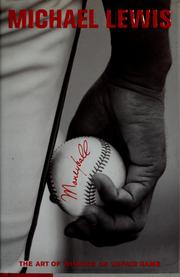
Moneyball
Oakland buys walks and patience to win 103 games on a small payroll in Lewis's 2003 baseball story.
2,955-word summary · 13 min read
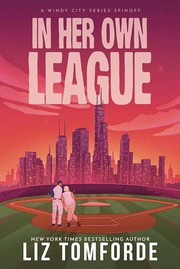
In Her Own League
Baseball's first female owner clashes with her manager until banter turns to heat.
2,076-word summary · 9 min read
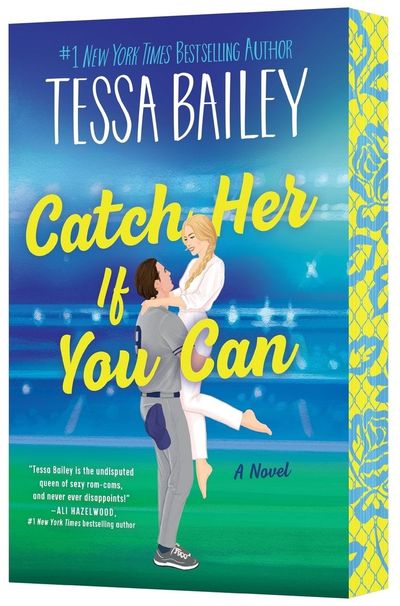
Catch Her If You Can
Yankees catcher Madden proposes a secret marriage of convenience to burlesque club owner Eve when two kids land on her doorstep.
2,187-word summary · 10 min read
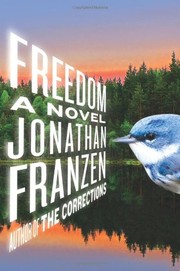
Freedom
A St. Paul couple and their grown children strain marriage, loyalty, and ideals in 2000s America.
2,678-word summary · 12 min read
The Corrections
An aging Midwestern couple tries to gather three troubled adult children for one last Christmas at home.
2,094-word summary · 9 min read
Eleanor Oliphant Is Completely Fine
Eleanor keeps a rigid Glasgow routine until she and Raymond from IT help an old man who collapses in the street, and slowly remembers why.
2,277-word summary · 10 min read
The Catcher in the Rye
J. D. Salinger's The Catcher in the Rye explained: Holden's weekend in New York, the phony adults, Phoebe's carousel, and why readers keep coming back to him.
2,477-word summary · 11 min read

Violeta
A woman born in 1920 writes her life story to her grandson, from one pandemic to another, through wealth, ruin, passion, and dictatorship in South America.
2,555-word summary · 11 min read
The Only Good Indians
Four Blackfeet men who killed a pregnant elk are hunted by her spirit a decade later, and the only person who can end the cycle is a teenage girl who was not…
2,010-word summary · 9 min read
The Idiot
A Turkish-American freshman at Harvard falls in love through email with a Hungarian math student and spends a summer in Hungary trying to turn correspondence…
2,019-word summary · 9 min read

The Guest
Cast out of her wealthy boyfriend's Hamptons house, twenty-two-year-old Alex spends five days talking her way through other people's homes and accounts.
2,165-word summary · 10 min read
The Crying of Lot 49
A California woman named executor of her ex-lover's estate follows a muted post horn into a possible centuries-old postal conspiracy, and Pynchon refuses to…
2,003-word summary · 9 min read

Take My Hand
In 1973 Montgomery, a young nurse discovers that two sisters were sterilized without consent, and spends the rest of her life living with what she could not…
2,126-word summary · 9 min read
Silas Marner
A falsely accused weaver hoards gold in Raveloe until a stolen hoard and an abandoned child remake his narrow life.
2,699-word summary · 12 min read

Revolutionary Road
A Connecticut couple who believe they are too good for the suburbs plan to move to Paris, and the plan slowly exposes everything they cannot say to each other.
2,085-word summary · 9 min read
Lisey's Story
Two years after her novelist husband dies, Lisey Landon follows a trail of clues into his childhood and the other world that made him a writer.
1,998-word summary · 9 min read