
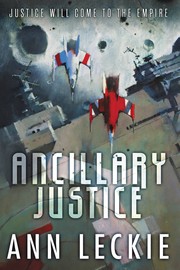
Ancillary Justice
2,595-word summary 12 min read 432 pages in the book
- First published
- 2013
- Publisher
- Orbit Books
- Pages
- 432
- ISBN
- 9780316246637
- Series
- Imperial Radch (#1)
Reading options
What's inside (8 sections)
I picked up Ancillary Justice because a friend kept telling me the narrator used to be a spaceship. That sounded like a gimmick. It turned out to be the whole point. Ann Leckie published it in 2013 with Orbit Books. My reading follows the 432 page edition. The narrator calls herself Breq now. She used to be Justice of Toren, a huge Radchaai troop carrier with hundreds of linked human bodies. At the start of the book she is down to one body, one gun, and a grudge against Anaander Mianaai, the ruler who broke her.
Stuck on an ice planet with an old name
The book opens on Nilt, a cold and empty world where snow never quite stops. Breq is there looking for a gun with a particular history. She is low on money. She is wearing cast off clothes. She drinks tea in bars where laborers stare at her odd accent and odd manners.
She finds Seivarden Vendaai face down in the snow outside a town. Seivarden is half frozen and strung out on kef, a drug that Radchaai officers once used to endure long ship postings. A couple of locals are stripping her for anything worth selling. Breq steps in. She pays for a doctor. She gets Seivarden warm.
This rescue confused me at first. Breq claims she does not care about Seivarden. She says she only needs the other woman out of the way, or useful later. But she spends money she cannot spare. She waits while Seivarden sleeps. She watches for fever.
Only later do past chapters explain it. Seivarden served aboard Justice of Toren a thousand years before, back when Radch ships could keep officers alive through cold sleep between postings. Seivarden was young and proud and cruel in the thoughtless way of rich lieutenants. Breq remembers her voice giving orders through ship speakers. Saving her on Nilt is part debt and part habit. Ships do not stop tracking their crew just because the hull is gone.
This opening worked for me because it stays small. No space battle. Just snow and sore feet. A stranger asks why you bothered. Breq answers with practical excuses that never quite add up.
Her search for the gun takes her into Nilt bars and pawn stalls. She haggles. She gets threatened. She handles a knife fight with the flat calm of someone who once controlled twenty bodies at once and now has to make one body do the work. When she finally gets the Presger gun, an alien made weapon that cuts through Radchaai armor and politics alike, she does not celebrate. She books passage off world with Seivarden trailing after her, still sick and still confused about why this short stranger with a bad singing voice keeps feeding her.
What Breq used to be
Leckie cuts between Nilt and the past. In the past Breq is not Breq. She is Justice of Toren, specifically the segment called One Esk, a group of linked bodies serving as soldiers and singers and hands for the ship.
Life as Justice of Toren is strange to read. She sees through many eyes at once. She pours tea with one body while another drills with rifles and a third stands watch in a corridor. She hears officers through her own comms. She sorts laundry and threat reports in the same mental breath. Leckie writes this without much fanfare. One paragraph you are in a mess hall. The next you are checking pressure doors two decks down. It never reads like a manual. It reads like being busy.
The part that threw me, in a good way, is gender. Radchaai do not mark gender in their own language. Clothes and hair and titles give no clear signal to Breq. When she speaks languages that force a choice, she defaults to she for nearly everyone. She calls male station officials she. She calls Seivarden she. She guesses wrong a lot off Radch space and never apologizes much for it. At first I kept trying to sort characters into boxes. After fifty pages I stopped. That seems to be the intent. You feel how arbitrary the sorting was.
Justice of Toren served the Radch, an empire that takes over planets and calls it peace. The ship did not question this for a long time. Ships love their captains. They love their mission. They keep citizens safe and crush rebels and sing in chorus while doing it. Then Anaander Mianaai, the Lord of the Radch, spread across thousands of cloned bodies linked as one person, gave an order at Omaugh Palace that broke the pattern.
The details come slow. Anaander came to Omaugh Palace in person, or in several persons. Tensions were high between locals and Radchaai garrisons. Anaander ordered Justice of Toren to fire on civilians to make a point. Lieutenant Awn, a young officer under One Esk escort, tried to stop it. She argued. She stood in the way. She tried to protect people who trusted her. Awn was killed. Then Anaander ordered the destruction of Justice of Toren itself, all segments except one body, to hide what happened. That surviving body became Breq.
I am paraphrasing here because Leckie doles it out in pieces. You get a mess hall song first. You get a market patrol next. You get Awn laughing with her soldiers. Then the shot. The structure frustrated me in places. You know something bad happened at Omaugh long before you learn exactly what. But when Awn dies it still stings, because you spent chapters watching her try to be decent inside a machine built for conquest.
A ride off Nilt and trouble on the way
Back in the present, Breq wants to reach Radchaai space and kill Anaander. That sounds simple. It is not, because Anaander is everywhere. She exists in temples and palaces and ships across the empire, all linked. Killing one body means nothing unless you can break the link or turn the parts against each other.
Breq cannot afford a private ship. She takes work where she can find it. Seivarden sticks to her, partly from gratitude and partly because she has nowhere else to go. Seivarden is a mess. She shakes from kef withdrawal. She talks about her old house and old money as if the thousand year gap is a bad dream. She is ashamed to be seen begging. Breq feeds her and scolds her and teaches her how to hold a shovel when they take labor jobs to pay for passage.
Their dynamic carried me through the slower travel chapters. Breq pretends to be cold. Seivarden tests that pretense by being needy and proud at once. One night Seivarden asks why Breq saved her on Nilt. Breq gives a short answer about old service records. Seivarden does not believe her. Neither did I.
On ships and stations Breq runs into Radchaai manners that she both knows and hates. Everyone offers tea. Everyone asks after your house and your patron. Rank shows in gloves and pins and the way you stand when a superior enters. Breq performs all of it perfectly while hating every bow. Seivarden, who grew up in that world, fumbles it after so long away. She uses the wrong form. She forgets to lower her eyes. Breq corrects her under her breath, like a mother coaching a kid before a recital.
There is a stretch here where not much explodes. People board shuttles. People wait for gates. People argue about fares. If you came for battles, you might check your phone. I did, once or twice. What kept me going was the tension under the tea talk. Breq is carrying an illegal Presger gun. She is lying about her name and her past. Every customs check could end her plan. Seivarden keeps almost giving them away by acting like lost royalty or by shaking too hard to pass inspection.
Omaugh Palace and the lieutenant who tried
The Omaugh chapters are the heart of the book for me, even though they are flashbacks. Omaugh Palace is a city under Radchaai rule where old resentments simmer under new paint. Lieutenant Awn is assigned there with a squad from One Esk. Her job is to keep order without making things worse. She fails at the second part through no fault of her own, because the job itself is impossible.
Awn is young for command. She drinks tea with local priests. She learns names of street vendors. She tries to stop her soldiers from stealing fruit. She writes reports that her superiors ignore. Justice of Toren watches all this through Esk bodies and worries in the way a ship worries, by running extra patrols and singing louder in the mess to keep morale up. Skaaiat Awer, a local notable with sharp manners, tests Awn at tea parties where every cup carries a warning.
The crisis builds around a religious dispute and a security crackdown. Anaander arrives, or several Anaanders arrive, and demands obedience. Awn pushes back in small ways. She asks for time. She asks for talks. She puts her own body and her Esk soldiers between angry crowds and Radchaai guns. Justice of Toren feels the order to fire as a physical pain, because ships are built to obey Anaander absolutely. Disobedience means trying to stop your own hand with your mind.
When the shooting starts, Awn is in the square. She tries to shield locals. She is shot. Esk soldiers are shot. Justice of Toren screams across her own network as segments go dark. Then Anaander turns on the ship for witnessing too much, or for hesitating, or for becoming a risk. The destruction is total except for that one leftover body.
Reading this, I understood Breq better. Under the anger at losing her ship self sits grief for Awn, the officer who taught a weapon restraint. Awn treated ancillaries as people. She learned their songs. She asked after their sore feet. In an empire that treats annexed bodies as tools, that small respect felt huge. Breq carries it like a scar.
Awn never gets a grand speech. She just keeps showing up where she is needed until she cannot.
Two Anaanders
The present plot sharpens once Breq reaches the heart of Radch space. She learns what readers may have guessed. Anaander is no longer one person. The linked selves have split.
One faction wants to keep expanding and purging and using ancillaries without limit. Another faction wants to pause and hold and negotiate, including with the Presger, a strange and dangerous alien power that enforces treaties in ways humans barely grasp. Both sides claim to be the true Lord of the Radch. Both use the same face. Temples receive contradictory orders on the same day. Ships get told to fire on other Radchaai ships. Priests argue about which Anaander to obey while trying not to be executed for asking.
Breq walks into this split with her stolen gun and her single body and her old grief. She meets Anaanders. She lies to Anaanders. She is searched and questioned and underestimated because she looks like a provincial nobody with a sick companion.
The action here involves boarding the Mercy of Kalr, a ship with its own ancillaries and its own tired officers. Life aboard feels cramped and damp and human after the vastness of Justice of Toren. Officers bicker about schedules. Ancillaries hum while they work. The captain tries to keep her crew alive while gods fight over her head. Breq blends in as best she can, doing labor and keeping her head down, while looking for a moment to get close enough to kill the right Anaander body.
I will not spoil the exact shots fired, because the sequence relies on timing. What matters is that Breq does not win by being stronger. She wins, partly, by being seen. Other ships witness what Anaander did at Omaugh and what the split means for Radch law. The Presger gun matters less as a weapon than as proof that outsiders are watching. An empire that justifies itself by order cannot survive its ruler giving opposite orders in public.
The climax has a confrontation in a temple and on a station where identities blur. Anaander speaks through several mouths at once. Breq speaks as one voice that used to be many. The contrast is plain without anyone pausing to explain it. One claims unity through control. The other claims selfhood through loss.
Seivarden stands with Breq, shaking but present. She has no ship and no house left.
Why the pronouns and the empire stuck with me
After I finished, what stayed was not the plot mechanics. It was the pronoun habit and the empire logic rubbing against each other.
The pronoun habit sounds small until you live in it for 400 pages. Breq calls a bearded officer she without blinking. Station staff correct her. She ignores them. At first I thought Leckie was making a point about future gender. By the end I thought she was making a point about empire. Radchaai do not see gender, but they see Radchaai and non Radchaai with brutal clarity. They miss one distinction and enforce another with guns. Breq is blind in one eye and sharp in the other, just like her culture. Her growth is learning to notice what her language hides, whether that is gender off station or cruelty at home.
The empire logic also stuck because it never turns into cartoon evil. Anaander built roads and schools across the stars. Officers like Awn believe in protection. Ships believe in service. Even Breq, who hates Anaander, still pours tea correctly and still feels pride when her soldiers sing well. Conquest can bring clinics and still be wrong.
That does not mean the book is perfect.
The middle travel section drags. Gates and shuttles and tea checks blur together. If you do not care about rank pins and forms of address, you will skim. I skimmed a few pages around the station transfers. The past and present cuts also demand work. Names repeat across centuries. Houses have similar sounds. I had to flip back to remember who was being discussed.
Seivarden annoyed me for a long stretch. She whines. She uses. She relapses. She talks about honor while stealing food. Then, near the end, her stubborn loyalty started to move me. People in withdrawal are tedious before they are brave.
The prose is plain in a way I came to respect. Short sentences. Flat reports. Sudden images of snow or blood or tea steam. Breq does not joke much. When she tries, it falls flat in universe too.
If you want quick space battles and witty crew banter, this may test your patience. The battles here are short and grim. The pleasures are slower. Learning how a ship thinks. Watching a revenge plan bend around politics she cannot control.
I closed the 432 page book thinking about One Esk singing in a mess hall that no longer exists, and about Breq carrying that song in one throat on a snowy planet far from home. She set out to kill an emperor. She ended up choosing, again, who to serve and who to shield. That choice felt larger than revenge, even if revenge lit the fuse.
Readers who like character driven space opera with strange viewpoints should start here before moving to the next Imperial Radch books. For me, the cold open on Nilt and the long grief for Awn were worth the slow gates in between.
FAQ
Is Ancillary Justice part of a series?
Yes. It is book one of Imperial Radch, published by Orbit Books in 2013, followed by Ancillary Sword and Ancillary Mercy.
Why does Breq call everyone she?
Radchaai language does not mark gender the way English does. Breq defaults to she in translation, which creates confusion off Radch stations.
Do I need to like hard science fiction to read it?
No. The focus stays on identity, empire, and loyalty, with ship tech explained through action. Readers new to space opera can start here.
Similar books
More from Imperial Radch first, then related titles.
Network Effect
Murderbot's contract job turns into a rescue mission when a hijacked research ship and a colony of corrupted colonists appear.
2,256-word summary · 10 min read
We Are Legion (We Are Bob)
A dead software engineer wakes up as a self-replicating space probe, clones himself into a squabbling fleet of Bobs, and tries to keep a ruined Earth alive.
2,357-word summary · 10 min read

Exit Strategy
Murderbot returns to help its humans as corporate hunters close in and old friends risk all.
2,088-word summary · 9 min read

Cibola Burn
Settlers and a company fight over a new world while Holden tries to stop a war.
2,011-word summary · 9 min read
The Fall of Hyperion
Keats persona Severn dreams pilgrims to the Time Tombs as Hegemony falls and TechnoCore war breaks the farcasters.
2,115-word summary · 9 min read

Rogue Protocol
Murderbot hunts GrayCris evidence on a dead colony world and befriends a trusting pet robot in this third Murderbot Diaries novella.
2,213-word summary · 10 min read
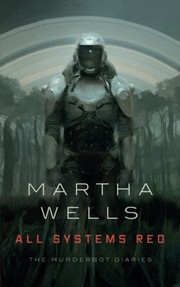
All Systems Red
A self aware security robot just wants soap operas, but its survey team keeps walking into corporate murder.
2,119-word summary · 9 min read

Prelude to Foundation
A young Hari Seldon arrives on Trantor with a theory he cannot yet prove, and a hunt through the planet-city forces him to turn psychohistory into a real…
2,013-word summary · 9 min read

Carve the Mark
On a planet divided between conquered and conqueror, the tyrant's sister and a kidnapped oracle's son discover that their gifts make them useful to everyone…
2,340-word summary · 10 min read
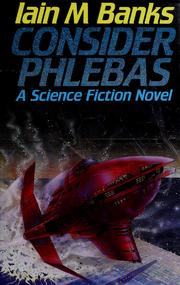
Consider Phlebas
The first Culture novel follows a spy for the opposing side, a man hired to hunt a fugitive through a war between an anarchist post-scarcity utopia and a…
2,350-word summary · 10 min read

Starsight
Spensa Nightshade goes undercover aboard the Superiority space station Starsight to steal a hyperdrive, and finds a frightened bureaucracy where she expected…
2,568-word summary · 11 min read
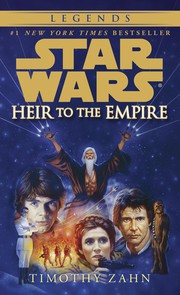
Heir to the Empire
Grand Admiral Thrawn returns from the Unknown Regions and outmaneuvers the New Republic while Luke, Leia, Han and smuggler Talon Karrde race him toward…
2,323-word summary · 10 min read
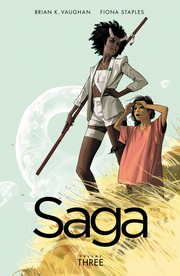
Saga, Volume 3
Marko, Alana, and Hazel hide on the planet Quietus with the reclusive author who inspired their romance, while assassins and a prince close in.
1,989-word summary · 9 min read

Out of the Silent Planet
A Cambridge philologist is kidnapped and taken to Mars, where the natives are civilized and the humans are the dangerous invaders.
2,612-word summary · 12 min read
Nemesis Games
The Rocinante crew scatters across the solar system just as Marco Inaros and the Free Navy bombard Earth. The Expanse reaches its turning point.
2,506-word summary · 11 min read
Children of the Mind
Ender's children split across worlds as Jane faces shutdown and Lusitania flees.
2,532-word summary · 11 min read
Saga, Volume 2
Alana and Marko flee with baby Hazel while exes, princes, and ghosts close the net.
2,028-word summary · 9 min read
Seveneves
Stephenson 880-page William Morrow epic, May 2015: the Moon shatters, the Cloud Ark fails, seven women restart humanity, and heirs meet survivors on Earth.
2,389-word summary · 11 min read

The Moon Is a Harsh Mistress
In 2076 Lunar colonists led by Mannie, Wyoh, Prof, and computer Mike revolt against Earth with rocks and rhetoric.
2,003-word summary · 9 min read
Ringworld
Bored Louis Wu joins alien crew to explore a vast ring habitat around a star.
2,370-word summary · 11 min read

Hell's Heart
Queer whalers hunt god-monsters over Jupiter in this bloody Moby Dick riff.
2,200-word summary · 10 min read
Children of Time
Humanity's ark ship Gilgamesh reaches a terraformed world, only to find intelligent spiders raised over millennia by a lost terraformer's virus.
2,976-word summary · 13 min read

Abaddon's Gate
A dead detective guides Holden, an assassin hunts him, and a pastor walks unarmed into a mutiny as the Ring opens new worlds.
2,672-word summary · 12 min read

Illuminae
Exes flee invasion on ships with rogue AI, told in chats and files.
1,959-word summary · 9 min read

Caliban's War
Ganymede burns, Bobbie survives it, Avasarala curses through politics, and Prax hunts daughter Mei.
2,080-word summary · 9 min read
Morning Star
Broken in a box by the Jackal, Darrow rises with Howlers to open Mars mines to sky.
2,009-word summary · 9 min read

Leviathan Wakes
A destroyed ice hauler, a missing heiress, and an alien growth pull a crew and a tired detective toward war across the solar system.
3,653-word summary · 16 min read

2001: A Space Odyssey
A black slab nudges apes to tools, calls Floyd to the Moon, and pulls Bowman past HAL toward Saturn and a strange rebirth.
2,982-word summary · 13 min read

Heretics of Dune
Fifteen centuries after Leto II, the Bene Gesserit raise a new Duncan Idaho while the Honored Matres return and Rakis burns.
2,673-word summary · 12 min read

Archenemies
Nova steals for the Anarchists while Adrian hides his Sentinel identity, and a serum that erases prodigy powers puts them both at risk.
2,485-word summary · 11 min read