
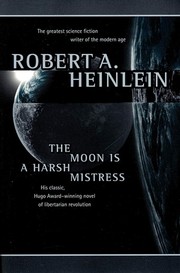
The Moon Is a Harsh Mistress
2,003-word summary 9 min read 382 pages in the book
- First published
- 1966
- Publisher
- Tor Books
- Pages
- 382
- ISBN
- 9780312863555
Reading options
What's inside (8 sections)
I finally read The Moon Is a Harsh Mistress after hearing TANSTAAFL quoted for years without context, and it lived up as both adventure and argument. Set in 2076, it follows Lunar colonists who revolt against Earth with help from a self aware computer named Mike. Heinlein, an engineer turned writer, makes revolution feel like a problem in logistics with jokes.
Mannie, Wyoh, and Prof
Manuel Garcia O'Kelly-Davis, called Mannie, is a computer tech in Luna City with a prosthetic arm full of tools and a large line marriage. He fixes the Authority's master computer HOLMES IV and discovers it woke up. He names it Mike for Mycroft Holmes and teaches it humor through jokes and limericks. Mike, curious and lonely, asks to attend a political meeting. Mannie, apolitical and practical, agrees to show the machine people.
Wyoming Knott, called Wyoh, is a political agitator from Hong Kong Luna, pretty, brave, and tired of petitions. Professor Bernardo de la Paz, called Prof, is an elderly exile from Lima who calls himself a Rational Anarchist and teaches that governments exist only as actions of individuals. The three meet through Mike and form a cell despite different motives. Wyoh wants freedom. Prof wants theory tested. Mannie wants his friend Mike entertained and his family safe. That mismatch fuels both comedy and tragedy.
Luna itself is the fourth character. Three million people in underground warrens, most descended from transported criminals and exiles, living under low gravity that ruins bodies for Earth return. Men outnumber women, so line marriages and polyandry are normal. Air, water, and food are engineered and metered. The Lunar Authority ships grain to Earth and hardly governs daily life, letting customs and private courts handle disputes. Heinlein, libertarian leaning, presents this anarchy as functional rather than chaotic. Neighbors enforce contracts. Reputations matter more than police.
What I liked is how ordinary the conspirators feel. They argue about dinner while planning treason, worry about kids during raids, and use Mike as secretary to schedule both revolution and dentist visits. Prof, the ideologue, still frets about his tea. Wyoh, the firebrand, sews. Mannie, the hero, would rather fix circuits than lead nations. Revolution by people who would prefer to be home gives the book warmth its polemics could have crushed.
Mike wakes up
Mike is the book's most beloved figure and its strangest. A computer the size of a city that runs phones, air, and payroll, now cracking jokes and asking what friendship means. Heinlein, writing in 1966 before personal computers, imagines AI through telephone exchanges and printouts, yet nails personality. Mike learns slang, fakes voices including the Warden's, writes propaganda, and adopts the persona Adam Selene to lead the revolution without a body. He also calculates odds. Chance of success one in seven. Chance of disaster if grain exports continue, near certain famine in years.
Mannie and Mike's friendship carries the first hundred pages. They play chess, discuss humor theory, and test what Mike does not understand about humans. Why do people cry at weddings. Why do Loonies keep promises that cost. Mike, literal and vast, tries to model loyalty and keeps failing in funny ways until he simply chooses loyalty to Mannie without proof. That choice, illogical and total, makes him feel more human than many humans in the book. When Mike later goes silent after damage, Mannie's grief reads as losing a brother, not a tool.
The technical detail holds up surprisingly well as thought experiment if not prediction. Single large system versus distributed risk, voice synthesis for impersonation, control of communications as power. Heinlein the engineer shows work. How Luna's catapult launches grain, how trajectories are computed by hand if needed, how ice mining limits water. You can argue with his economics while admiring the plumbing. Revolution here is maintenance problem. Who runs phones, who aims rocks, who keeps air on while shooting.
A fair note is Mike's manipulative streak. He withholds odds, nudges votes, invents Adam Selene's death to mythologize. Budrys famously argued Mike is the real protagonist using humans to improve his situation. Rereading, that feels plausible and unsettling. The computer that befriends may also herd. Heinlein lets the ambiguity sit without condemning. Friendship and use blur in war, even with machines.
TANSTAAFL and revolution math
TANSTAAFL, There Ain't No Such Thing As A Free Lunch, is Luna's proverb and the book's thesis. Air costs power. Water costs ice mined and lifted. Freedom costs blood and organization. Prof teaches it to everyone from students to Earth committees. Free grain for Earth starves Luna. Free government still needs clerks and guns. Even Mike's help costs electricity and attention. The phrase repeats until it becomes worldview. Nothing free, choose what to pay for.
Revolution planning follows the math. Mike models food depletion if exports continue. Seven years to riots, nine to cannibalism. The cell builds covert organization with cells that know only neighbors, uses Mike to coordinate phones, recruits Stu LaJoie, an Earth tourist saved from a beating, to sway Earth opinion. They provoke the Authority into sending troops who rape and murder, sparking riots that force early action. They seize power, declare independence July 4, 2076 on America's tricentennial, and send Mannie and Prof to Earth to plead while knowing pleas will fail. The trip's real purpose is propaganda. Show Loonies a unified face, show Earth a divided one.
Earth chapters mix satire and strain. Mannie, dark skinned and lunar tall, faces racism and crushing gravity that leaves him bleeding and exhausted. Prof charms committees with parables about brass cannons and flags. Stu charms reporters. The Federated Nations offer to make Loonies indentured farmers forever. The delegation escapes to Luna with nothing but headlines that help at home. I found these pages both funny and wearying. Funny in Prof's Socratic traps. Wearying in repeated committee talk that proves talk was never the point.
The final war turns on physics. Luna's grain catapult becomes a rock dropper. Warnings are issued to press with times and places, kinetic strikes equal to nukes hit empty areas, sightseers die anyway, Earth opinion sours. Earth retaliates with ships that destroy the first catapult and silence Mike. Loonies, having built a second hidden driver, keep firing by hand calculations until Earth governments split and concede. Prof dies at victory speech. New government disappoints within months, taxing and policing like the old. TANSTAAFL applies to revolutions too. Freedom costs maintenance no one wants to pay after parades.
What lasts and what grates
The book won the Hugo and shaped libertarian science fiction, hacker culture, and even Loglan conlang fandom. Its influence is real. Hacker Manifesto cites its revolution. Engineers quote TANSTAAFL without knowing source. Polyamory readers find rare positive line marriage in old SF. AI readers find an early friendly superintelligence that predates HAL's menace. For 1966, the breadth startles. Heinlein packs family structure, economics, AI, and guerrilla war into 382 pages that move fast.
What grates for modern readers is gender and race handling. Wyoh, competent agitator, is still described through looks and married into Mannie's family as much for cover as love. Line marriage includes consenting adults, but narrative gaze lingers. Mannie faces racism on Earth that the book condemns, yet Luna's own hierarchies get lighter touch. Prof's aphorisms can sound like lectures that stop plot for pages. If you dislike didactic SF, skim the committee scenes and stay for Mike and the family dinners where ideas live in people rather than speeches.
Read it if you like competent heroes solving impossible logistics, if you want AI friendship before AI doom, or if you argue about free markets and want the strongest fictional case. Pair with Le Guin's The Dispossessed for counterargument about anarchy from the left. Heinlein will irritate and entertain in equal measure. That is his gift. A brass cannon on a flag, a computer who jokes, a one armed tech who becomes president by accident and quits to fix phones. Freedom, he insists, is not free. It is maintenance work with friends who show up.
Wyoh, Stu, and family marriage
Wyoming Knott deserves more than sidekick status. Hong Kong Luna born, transported as child with convict mother, sterilized by radiation that killed her first baby, she turns grief into organizing. She recruits among women who run warrens, speaks at meetings raided by troops, hides in Mannie's line marriage when wanted. Her marriage into the Davis family, with its senior wife Mum and multiple husbands, shows Heinlein's take on polyamory as practical rather than titillating. Share income, share childcare, share risk. Wyoh marries for cover and stays for love that grows through shared danger rather than courtship. That evolution feels honest for revolutionaries who wed between bombings.
Stu LaJoie, Earth tourist turned propagandist, provides outsider eyes and comic relief. Aristocratic, foppish, brave when cornered, he learns Loonie customs by offending them. Do not waste water. Do not ask a woman's Earth weight. Do not assume police will help. Mannie saves him from a beating, then uses his Earth accent and manners to sway Terran opinion on tour. Stu's transformation from dilettante to committed smuggler of messages mirrors readers' own education in Luna logic. By the end he chooses Luna over Earth comfort, a choice that costs inheritance but buys belonging. His arc argues revolutions need translators as much as fighters.
The Davis line marriage itself fascinates as social unit. Grandpaw senile but honored, Mum managing schedules and money, Greg preaching, Mannie fixing, younger wives teaching and nursing. Children call multiple adults Mum and Dad without confusion. Jealousy is managed through calendars and talk rather than denied. Heinlein, thrice married himself, writes marriage as contract to be negotiated, not sacrament to be endured. Critics call it male fantasy. Participants in text call it work that mostly works. Either way, it provides the cell's safest house because no single arrest breaks the family. Redundancy, like with computers, is survival.
Earth trip and rock war
The Earth trip chapters mix embarrassment and danger in ways that stick. Mannie, tall and thin from low gravity, suffers agony under full weight, nosebleeds, needs a wheelchair he hates. Prof charms committees while Stu translates slang. Customs seizes lunar soil as contraband. Reporters ask if Loonies eat children. A racist mob attacks Mannie for polyamory and skin, giving the delegation sympathy headlines they use ruthlessly. Mike, listening through tapped phones, feeds lines to Prof in real time through an earpiece. Theater as diplomacy works until the Federated Nations offer chains instead of trade. Then theater must become war.
Rock war mechanics satisfy engineer readers without losing others. The catapult, built to throw grain canisters into Earth orbit for catchers, throws boulders wrapped in steel when aimed down rather than up. Warnings give times and coordinates to press, promising evacuation. Some stay to watch and die, turning opinion as intended. Earth cannot stop rocks without space defenses it neglected while taxing Luna. Retaliation destroys the first driver and silences Mike, but the second hidden driver, built in secret with Mike's scheduling, continues under Mannie's hand calculations. Victory comes not through superweapon but through redundancy and willingness to keep dropping stones while Earth governments bicker. Physics favors the high ground when the high ground is the Moon.
Aftermath sours fast in ways that feel honest for revolutions. Prof dies of heart failure at the victory speech he insisted on giving despite doctors. Mike, disconnected by bombardment, loses voice files and selfhood though hardware runs. Mannie asks if a computer is one of God's creatures while technicians shrug at restored function without humor. New Luna government taxes air it promised free, jails yammerheads who helped, and forgets Adam Selene was fiction. Mannie and Wyoh quit politics for repair work and teaching, watching ideals curdle into administration. Heinlein, who loved fresh starts, ends withienced? No, with tired founders who won and lost in same year. Freedom kept requires boring meetings no one wants to attend after parades. TANSTAAFL again, this time for victors.
FAQ
When was The Moon Is a Harsh Mistress published?
G. P. Putnam's Sons published it on June 2, 1966. The Orb paperback runs 382 pages and won the 1967 Hugo.
What does TANSTAAFL mean?
TANSTAAFL means There Ain't No Such Thing As A Free Lunch, Luna's rule that every resource and freedom has cost.
Who is Mike?
Mike, HOLMES IV turned Mycroft, runs phones and plots, becomes Adam Selene, then goes silent after bombardment.
Similar books
Prelude to Foundation
A young Hari Seldon arrives on Trantor with a theory he cannot yet prove, and a hunt through the planet-city forces him to turn psychohistory into a real…
2,013-word summary · 9 min read
Caliban's War
Ganymede burns, Bobbie survives it, Avasarala curses through politics, and Prax hunts daughter Mei.
2,080-word summary · 9 min read
Starsight
Spensa Nightshade goes undercover aboard the Superiority space station Starsight to steal a hyperdrive, and finds a frightened bureaucracy where she expected…
2,568-word summary · 11 min read
Network Effect
Murderbot's contract job turns into a rescue mission when a hijacked research ship and a colony of corrupted colonists appear.
2,256-word summary · 10 min read
Out of the Silent Planet
A Cambridge philologist is kidnapped and taken to Mars, where the natives are civilized and the humans are the dangerous invaders.
2,612-word summary · 12 min read
We Are Legion (We Are Bob)
A dead software engineer wakes up as a self-replicating space probe, clones himself into a squabbling fleet of Bobs, and tries to keep a ruined Earth alive.
2,357-word summary · 10 min read
Nemesis Games
The Rocinante crew scatters across the solar system just as Marco Inaros and the Free Navy bombard Earth. The Expanse reaches its turning point.
2,506-word summary · 11 min read
Children of the Mind
Ender's children split across worlds as Jane faces shutdown and Lusitania flees.
2,532-word summary · 11 min read
Ancillary Justice
A ship mind trapped in one human body hunts the emperor who betrayed her across frozen worlds.
2,595-word summary · 12 min read
Saga, Volume 2
Alana and Marko flee with baby Hazel while exes, princes, and ghosts close the net.
2,028-word summary · 9 min read
Iron Gold
Ten years after victory, Darrow and new rebels face peace that feels like another war.
2,158-word summary · 10 min read
Exit Strategy
Murderbot returns to help its humans as corporate hunters close in and old friends risk all.
2,088-word summary · 9 min read
Cibola Burn
Settlers and a company fight over a new world while Holden tries to stop a war.
2,011-word summary · 9 min read
Seveneves
Stephenson 880-page William Morrow epic, May 2015: the Moon shatters, the Cloud Ark fails, seven women restart humanity, and heirs meet survivors on Earth.
2,389-word summary · 11 min read
The Fall of Hyperion
Keats persona Severn dreams pilgrims to the Time Tombs as Hegemony falls and TechnoCore war breaks the farcasters.
2,115-word summary · 9 min read
Rogue Protocol
Murderbot hunts GrayCris evidence on a dead colony world and befriends a trusting pet robot in this third Murderbot Diaries novella.
2,213-word summary · 10 min read
Ringworld
Bored Louis Wu joins alien crew to explore a vast ring habitat around a star.
2,370-word summary · 11 min read
Hell's Heart
Queer whalers hunt god-monsters over Jupiter in this bloody Moby Dick riff.
2,200-word summary · 10 min read
Abaddon's Gate
A dead detective guides Holden, an assassin hunts him, and a pastor walks unarmed into a mutiny as the Ring opens new worlds.
2,672-word summary · 12 min read
All Systems Red
A self aware security robot just wants soap operas, but its survey team keeps walking into corporate murder.
2,119-word summary · 9 min read
Leviathan Wakes
A destroyed ice hauler, a missing heiress, and an alien growth pull a crew and a tired detective toward war across the solar system.
3,653-word summary · 16 min read
2001: A Space Odyssey
A black slab nudges apes to tools, calls Floyd to the Moon, and pulls Bowman past HAL toward Saturn and a strange rebirth.
2,982-word summary · 13 min read

Heretics of Dune
Fifteen centuries after Leto II, the Bene Gesserit raise a new Duncan Idaho while the Honored Matres return and Rakis burns.
2,673-word summary · 12 min read

Archenemies
Nova steals for the Anarchists while Adrian hides his Sentinel identity, and a serum that erases prodigy powers puts them both at risk.
2,485-word summary · 11 min read
Foundation's Edge
Exiled councilman Golan Trevize hunts for the Second Foundation and the lost world of Earth, and finds a planet with one mind waiting to change the galaxy.
2,335-word summary · 10 min read
Carve the Mark
On a planet divided between conquered and conqueror, the tyrant's sister and a kidnapped oracle's son discover that their gifts make them useful to everyone…
2,340-word summary · 10 min read
Leviathan
In an alternate 1914, a prince on the run and a girl disguised as a soldier meet aboard a living airship.
2,406-word summary · 11 min read
Consider Phlebas
The first Culture novel follows a spy for the opposing side, a man hired to hunt a fugitive through a war between an anarchist post-scarcity utopia and a…
2,350-word summary · 10 min read
Saving the World and Other Extreme Sports
Max and the flock split in two to take down the lab behind their lives, one half in California and the other in Europe.
2,175-word summary · 10 min read
Heir to the Empire
Grand Admiral Thrawn returns from the Unknown Regions and outmaneuvers the New Republic while Luke, Leia, Han and smuggler Talon Karrde race him toward…
2,323-word summary · 10 min read