
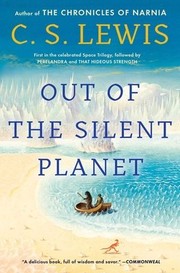
Out of the Silent Planet
2,612-word summary 12 min read 160 pages in the book
- First published
- 1938
- Publisher
- The Bodley Head
- Pages
- 160
- ISBN
- 9780743234900
- Series
- The Space Trilogy (#1)
Reading options
What's inside (9 sections)
I came to Out of the Silent Planet late, after years of hearing it described as C. S. Lewis's lesser science fiction, the warm-up for Perelandra. The surprise is how much of it still works. It is a short book, barely 160 pages in the Scribner paperback, and it moves like a thriller for long stretches. A man is drugged, kidnapped, and taken to another planet. He escapes into an alien landscape, learns a language, nearly suffocates crossing a mountain, and ends up arguing for the human race in front of a being that speaks with the authority of a god. The fact that the book also contains a lecture on the moral failures of colonialism is not a flaw in the thriller. The lecture is the point, and Lewis makes it feel like a natural part of the story.
The novel was published in 1938 by John Lane at The Bodley Head in London, after Allen and Unwin rejected it. Its origin is well known. Lewis and J. R. R. Tolkien were complaining that the fiction they liked had gone out of fashion, and they agreed to write the kinds of books they wanted to read. Tolkien started a time travel story that became The Lost Road and never finished it. Lewis wrote a space travel story in 1937. Tolkien read the manuscript and liked it, though he thought it was too short. The first edition ran 264 pages, the Scribner edition I used is 160, and the book is the first volume of what is now called the Space Trilogy, followed by Perelandra in 1943 and That Hideous Strength in 1945.
A walk that turns into a kidnapping
The opening is deliberately ordinary. Dr. Elwin Ransom, a Cambridge philologist, is on a walking holiday in the English countryside. Rain catches him near the village of Nadderby, and there is no room at the inn. A cottager sends him toward a house called The Rise, where her son Harry works. When Ransom arrives, the gate is locked, so he climbs through the hedge. In the garden he finds two men struggling with Harry. One of them is Dick Devine, a former schoolmate Ransom disliked. The other is a famous physicist named Weston, whom Ransom knows by reputation. Ransom intervenes, and Harry is released.
Devine is friendly in a way that feels false. He invites Ransom inside for a drink. The drink is drugged. Ransom wakes up inside a small spacecraft, already far from Earth, with no idea where he is going. Devine and Weston tell him they are bound for a planet called Malacandra. They do not tell him that Malacandra is Mars. They also do not tell him why he is there. Ransom overhears enough to understand that he is meant to be handed over to the planet's inhabitants, and he assumes he is a sacrifice. He pockets a knife and considers killing himself before the ship lands.
This first section is efficient and slightly pulpish, which is part of the pleasure. Lewis wants the reader to enter expecting H. G. Wells, a cold void and a dying planet, and then to have those expectations overturned. Ransom spends the voyage expecting blackness and finds instead a luminous, fertile space, so bright that the word "space" feels wrong. The ship takes about a month to reach Malacandra. By the time it lands, the novel has already changed genre under the reader's feet.
The journey out
The voyage is where Lewis begins his argument about fear. Ransom is afraid of the wrong things. He fears the emptiness of space and finds a kind of heaven. He fears the inhabitants of Malacandra and finds, almost immediately, that his fears were borrowed from fiction. He is also afraid of death, and the novel treats that fear as the root of the human problem. Weston and Devine are not brave men. They are men who have decided that the universe is a place to be conquered because they cannot bear the thought of being small inside it.
The landing gives Ransom his first sight of the planet. Malacandra is not a desert. It has pink vegetation, warm rivers, thin air, and enormous mountains. The gravity is lighter than Earth's, and the landscape is divided between deep, warm valleys called handramits and a high, cold plateau called the harandra. Ransom sees three tall, ghostly figures crossing the water and panics. He runs away from Weston and Devine into the forest, which is the first decision he makes for himself. It is also a bad one, since he has no food, no water, and no idea where he is.
The night in the forest is a test. He wakes thirsty and finds a pond. At the pond he meets a large, seal-like creature covered in black hair. The creature speaks. Ransom's professional instinct takes over before his fear can stop it. He is a philologist, and a new language is more interesting to him than a monster. The creature offers him a shell of water mixed with drops from a skin bottle. It slaps its chest and says "hross." The hross is Hyoi, and he takes Ransom back to his village.
Malacandra and the hrossa
The hrossa are the heart of the book. They are not primitive savages. They are farmers, fishers, boatmen, poets, and dancers. They have an oral literature, a strong sense of courtesy, and an easy acceptance of death. Ransom lives with them for several weeks and learns their language, Hressa Hlab, from an older hross named Hnohra. Hyoi becomes his closest friend. The village scenes are the warmest writing in the novel: the hrossa laughing at Ransom's accent, the poetry contests, the way they treat a stranger as a guest rather than a specimen.
The hrossa also teach Ransom the planet's geography and theology. Malacandra is dying, as all worlds are dying, and the hrossa do not consider this a tragedy. They live in the handramits, the sorns live in the high caves, and the pfifltriggi live in their own forested lowlands. All three species are hnau: rational, speaking, moral beings. No species rules the others. The hrossa make poetry, the sorns make science, the pfifltriggi make things, and the arrangement works because none of them believes it is the purpose of the universe.
This is the novel's first big idea, and it is delivered without a sermon. Ransom keeps looking for the hierarchy he expects, the ruler and the ruled, the civilized and the primitive. The hrossa keep failing to provide it. They are generous, funny, and mortal. They have no interest in conquering the sorns or in owning the planet. When Ransom asks who rules Malacandra, the answer is Oyarsa, and Oyarsa is not a king in the human sense. He is the planet's guardian, an eldil, a being of a different order entirely.
The hrossa also explain gold. It is common on Malacandra, and they call it sun's blood. This detail matters because it explains Devine. Devine has not come to Malacandra for science or for the future of humanity. He has come to get rich. Weston has come to secure the survival of the human species. The two men are partners, but their motives do not overlap, and the novel is careful to show that evil does not require agreement.
The hnakra hunt and the cost of fear
The hrossa prepare for a hunt. A hnakra is a dangerous aquatic predator, and killing one is a test of courage. Ransom joins Hyoi and another hross named Whin in Hyoi's boat. Before the hunt, an eldil speaks to Ransom. The voice is almost invisible, a presence rather than a body, and it orders him to go to Oyarsa at Meldilorn. Ransom is eager to prove himself, so he delays. He wants to kill the hnakra first. It is a small vanity, and it costs Hyoi his life.
Ransom and Hyoi kill the hnakra. They are celebrating on the shore when Weston shoots Hyoi dead. Weston and Devine have been tracking Ransom, and they treat the hrossa as animals. Ransom is devastated. He has disobeyed the eldil, and now his friend is dead because of a human being who cannot see a person when he looks at an alien. The scene is the moral hinge of the novel. Everything before it is discovery; everything after it is judgment.
Ransom buries Hyoi and begins the climb out of the handramit. The thin air of the harandra nearly kills him. He is rescued by a sorn named Augray, who lives in a mountain cave. Augray gives him oxygen and, the next day, carries him across the frozen plateau. The sorn is not a monster. He is a gentle scholar who studies the stars and speaks with the patience of a professor. Ransom's fear of the sorns was a fear of a shape, and the shape turns out to belong to a scientist.
Augray brings Ransom down into the valley of Meldilorn, a sacred island of megaliths and carved stones in a lake. There Ransom meets a pfifltrigg named Kanakaberaka, who is carving his portrait. The pfifltriggi are tapir-headed, frog-like artisans and miners. They build the machines the sorns design. The island's carved history stones teach Ransom the truth about Earth. Malacandra is Mars. The solar system, which the inhabitants call the Field of Arbol, is ruled by Maleldil the Young, son of the Old One. Each planet has an Oyarsa, a great eldil or planetary angel. Earth's Oyarsa became bent, or evil, after a great war in heaven. He was confined to Earth, and Earth was cut off from the other worlds. That is why Earth is called Thulcandra, the silent planet.
Oyarsa and the trial of Earth
Ransom is brought before Oyarsa. The experience is not a throne room scene. Oyarsa manifests as a voice and a presence, and Ransom is ashamed at how little he can say about Earth. The hrossa bring in Weston and Devine, who have killed three hrossa, including Hyoi. Weston is defiant. He does not believe Oyarsa is real. He thinks the Malacandrians are ignorant natives and that humanity has a right to colonize the planet. His speech is the novel's most famous passage. He argues that life is greater than any system of morality, that the human race must expand or die, and that the higher must supersede the lower.
Ransom translates the speech into simple Malacandrian, stripping away the rhetoric. The translation exposes Weston's argument as a proposal to kill all the Malacandrians, take their world, and move on to other worlds. It is a brilliant scene because it does not refute Weston with a counterargument. It simply removes the euphemism. Oyarsa sees that Weston is bent, still capable of believing in a law but twisted, while Devine is broken, driven only by appetite. Weston says he would rather serve the Bent One than submit to death. Oyarsa judges him incurable.
The judgment is expulsion, not execution. Oyarsa spares them but sends them away immediately, despite unfavorable orbits. He supplies ninety days of air and food and arranges that the ship will vanish after ninety days so humans can never return. Ransom is offered a place on Malacandra but chooses Earth. He belongs there, and he has a mission. The return is a race against suffocation. Weston takes the ship close to the sun, and the heat is almost unbearable. On the eighty-seventh day the moon forces a detour, leaving only two days of air. Ransom falls asleep expecting to die and wakes to rain on the roof. They have landed. Weston and Devine desert him. He walks away, sees the ship vanish in a flash, and orders a pint in an ordinary pub.
The frame and the argument
The final chapter is a frame. Lewis enters the story as Ransom's former student and asks about the word "oyarses" in an ancient Latin text. Ransom tells him the story, and they agree to publish it as fiction. The frame is a joke, but it also does the book's theological work. Ransom hopes the story will accustom readers to space as a place of life rather than a dead void, and prepare them for the struggle against Weston. The postscript says what is needed is not a new creed but people accustomed to certain ideas.
The novel's argument is easier to state than to dismiss. Colonialism is wrong because the universe belongs to Maleldil, not to the strongest species. Fear is the engine of conquest. The human desire to escape death by expanding forever is a symptom of a broken relationship with creation, not a sign of courage. The Malacandrians are not noble savages. They are rational beings with their own arts, sciences, and theology, and their willingness to die is not passivity. It is trust.
Lewis is often accused of preaching, and there are moments when the book stops to explain itself. The trial scene is long, and Oyarsa's voice has the patience of a lecturer. But the preaching is embedded in a story that has already earned it. We have seen Hyoi killed. We have seen Weston sneer at a creature he cannot recognize as a person. We have seen Ransom nearly die crossing a mountain because he wanted to prove himself. The theology arrives as a verdict on events we have already witnessed, not as a substitute for them.
What has aged and what has not
The science has aged badly. Lewis's Mars has breathable valleys, canals, and native life. This was defensible in 1938 and is now obsolete. The book is not hard science fiction and does not want to be. The social world has aged too. The human cast is almost entirely male, and the frame is a Cambridge don's world of sherry and Latin. Some modern readers will find the "noble alien" contrast uncomfortable, even though the novel is explicitly anti-colonial. The hrossa are lovable, wise, and doomed, and that combination can slide into sentimentality.
The characterization is thin. Ransom is often a passive observer. Weston and Devine are satirical types rather than rounded people. The aliens are more vivid than the humans, which is a problem if you want a psychological novel and less of a problem if you accept that Lewis is writing a mythic romance. The hrossa idyll is slow for some readers, and the return journey is compressed. The trial is talky. These are real criticisms, and they explain why the book is less read than Perelandra.
What has not aged is the central reversal. The humans are the invaders. The aliens are the civilized hosts. The planet is not a resource. The villain is not a monster but a brilliant man who has convinced himself that survival justifies anything. That figure is still recognizable. So is Ransom's fear, and so is the moment when he realizes that the creature he was afraid of has been waiting to offer him water.
I finished the book in two sittings and then went back to the hunt scene. Hyoi's death is not an action beat. It is the moment the novel's theology becomes personal. Ransom has been talking about fear and obedience for a hundred pages. Then his friend is shot, and he has to decide whether the universe he has been describing is real. Out of the Silent Planet is a short, uneven, sometimes preachy book. It is also a book that knows exactly what it is doing with the figure of the colonist, and that is why it still has teeth.
FAQ
Is Out of the Silent Planet the first book in a series?
Yes. It is the first volume of C. S. Lewis's Space Trilogy, followed by Perelandra and That Hideous Strength.
What is the silent planet in the title?
It is Earth, called Thulcandra by the people of Malacandra because its Oyarsa turned evil and the planet was cut off from the rest of the solar system.
Did C. S. Lewis write the book for children?
No. It was written for adults as a space-travel story with theological and moral arguments, though many younger readers enjoy it.
Similar books
More from The Space Trilogy first, then related titles.
Children of the Mind
Ender's children split across worlds as Jane faces shutdown and Lusitania flees.
2,532-word summary · 11 min read
Solaris
Kelvin reaches a silent station above Solaris and finds grief made solid when the ocean returns his dead wife Rheya, testing memory, science, and the limits of…
2,548-word summary · 11 min read

The Island of Doctor Moreau
Shipwrecked Prendick finds Doctor Moreau shaping beasts into men by pain on lost island.
2,137-word summary · 9 min read
Childhood's End
Silver ships end war and want while Overlords midwife humanity's children into something beyond human.
2,054-word summary · 9 min read
Prelude to Foundation
A young Hari Seldon arrives on Trantor with a theory he cannot yet prove, and a hunt through the planet-city forces him to turn psychohistory into a real…
2,013-word summary · 9 min read
Starsight
Spensa Nightshade goes undercover aboard the Superiority space station Starsight to steal a hyperdrive, and finds a frightened bureaucracy where she expected…
2,568-word summary · 11 min read
Network Effect
Murderbot's contract job turns into a rescue mission when a hijacked research ship and a colony of corrupted colonists appear.
2,256-word summary · 10 min read
We Are Legion (We Are Bob)
A dead software engineer wakes up as a self-replicating space probe, clones himself into a squabbling fleet of Bobs, and tries to keep a ruined Earth alive.
2,357-word summary · 10 min read
The Illustrated Man
A tattooed drifter's moving pictures retell eighteen Bradbury stories of children, rockets, Mars and the last night of the world.
2,791-word summary · 12 min read
A Connecticut Yankee in King Arthur's Court
Hank Morgan, a Connecticut factory man, wakes in King Arthur's England, rises to chief adviser, and rebuilds the kingdom until his own inventions turn on him.
2,193-word summary · 10 min read
Ancillary Justice
A ship mind trapped in one human body hunts the emperor who betrayed her across frozen worlds.
2,595-word summary · 12 min read
A Canticle for Leibowitz
After nuclear war, monks save books across centuries while the world rebuilds and falls again.
2,381-word summary · 11 min read
Saga, Volume 2
Alana and Marko flee with baby Hazel while exes, princes, and ghosts close the net.
2,028-word summary · 9 min read
Exit Strategy
Murderbot returns to help its humans as corporate hunters close in and old friends risk all.
2,088-word summary · 9 min read
Cibola Burn
Settlers and a company fight over a new world while Holden tries to stop a war.
2,011-word summary · 9 min read
Seveneves
Stephenson 880-page William Morrow epic, May 2015: the Moon shatters, the Cloud Ark fails, seven women restart humanity, and heirs meet survivors on Earth.
2,389-word summary · 11 min read
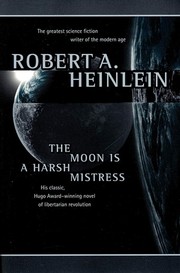
The Moon Is a Harsh Mistress
In 2076 Lunar colonists led by Mannie, Wyoh, Prof, and computer Mike revolt against Earth with rocks and rhetoric.
2,003-word summary · 9 min read
The Fall of Hyperion
Keats persona Severn dreams pilgrims to the Time Tombs as Hegemony falls and TechnoCore war breaks the farcasters.
2,115-word summary · 9 min read
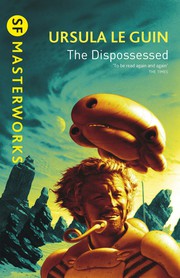
The Dispossessed: An Ambiguous Utopia
Physicist Shevek leaves anarchist Anarres for capitalist Urras to share time theory, finding walls both places.
2,288-word summary · 10 min read
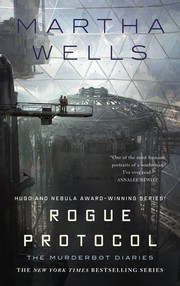
Rogue Protocol
Murderbot hunts GrayCris evidence on a dead colony world and befriends a trusting pet robot in this third Murderbot Diaries novella.
2,213-word summary · 10 min read
Ringworld
Bored Louis Wu joins alien crew to explore a vast ring habitat around a star.
2,370-word summary · 11 min read
A Psalm for the Wild-Built
Tea monk Sibling Dex leaves city for wilds with robot Mosscap asking what people need to be well.
2,007-word summary · 9 min read
The Pilgrim's Progress
Christian flees the City of Destruction for the Celestial City through sloughs, fairs, and giants in Bunyan's plain and sturdy allegory.
2,988-word summary · 13 min read
Hell's Heart
Queer whalers hunt god-monsters over Jupiter in this bloody Moby Dick riff.
2,200-word summary · 10 min read
Contact
A radio astronomer catches prime numbers from Vega, helps build a strange machine, and returns with no proof but static.
2,763-word summary · 12 min read
Xenocide
Lusitania faces a fleet with planet death while Ender, Jane, and families debate virus, souls, and law.
2,647-word summary · 12 min read
Caliban's War
Ganymede burns, Bobbie survives it, Avasarala curses through politics, and Prax hunts daughter Mei.
2,080-word summary · 9 min read
Rendezvous with Rama
In 2131 a silent cylinder enters the solar system, and Commander Norton's crew explores its seas and empty cities before Rama seals itself and sails on.
3,108-word summary · 14 min read
Mrs. Frisby and the Rats of NIMH
A widowed mouse races the spring plow to save her sick son Timothy, and finds help from the intelligent rats of NIMH hiding under the rosebush.
3,159-word summary · 14 min read
The Man in the High Castle
In a 1962 America split between Japan and Germany, an antiques dealer, a craftsman, and a judo teacher cross paths over a banned novel claiming the Allies won,…
2,317-word summary · 10 min read