
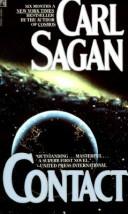
Contact
2,763-word summary 12 min read 432 pages in the book
- First published
- 1985
- Publisher
- Simon & Schuster
- Pages
- 432
- ISBN
- 9781501172311
Reading options
What's inside (8 sections)
Why I finally picked up Sagan's only novel
I had seen the film years ago and I thought I knew the story. Jodie Foster listens, finds a signal, rides a pod, meets her dad on a beach. Simple. Then a friend who works at a planetarium told me the book is stranger and slower and better, and that Sagan put his whole working life into it. That sold me.
The copy I read follows the first publication in 1985 by Simon & Schuster, 432 pages in the cited shape, ISBN 9781501172311 for the modern printing I checked against. It is Sagan's only full novel. He started it as a screenplay with Ann Druyan in 1979, set it aside when the film stalled, and turned it into a book.
I read it over nine days, mostly late at night. That fit. This is a night book about listening.
The hook is plain. A radio astronomer hears something from Vega that cannot be stars or satellites. What follows is part detection story, part construction race, part trip out, part courtroom fight about belief. Sagan wants you to ask what counts as proof when no one will accept your tapes.
Fair warning. He talks a lot. He loves explaining. If you want sleek action, parts will test you. If you like watching smart people argue about evidence while the world watches, you will stay up too.
Ellie Arroway and the dishes in the desert
Eleanor Arroway, called Ellie through the whole book, carries the story. Sagan gives her a childhood that explains her without freezing her into it. She grows up with a father who builds radios with her and answers her questions straight. Ted Arroway dies while she is still young. Her mother remarries. Ellie resents the new husband, a man named Staughton, and pulls closer to books and sets and sky. She is good at math early. She stays good by working.
She goes to Harvard, then earns a doctorate at Caltech under David Drumlin. Drumlin matters a lot here. He is a famous radio astronomer, smooth with committees, quick on television, careful with careers. He sees SETI as a waste of dishes that could do proper science. Ellie sees it as the proper science. They clash in seminars and later in budgets, and Sagan lets you see both sides for a page before he picks his side. Drumlin is not stupid. He is a manager of attention. Ellie is a hunter.
After school she becomes director of Project Argus in New Mexico. Picture long rows of small dishes tied together, sweeping the sky for patterns that nature does not make. Money is thin. Time is borrowed. Her crew is loyal but tired. Kent Clark, who reads signals the way musicians read scores, spots things others miss. Sagan writes these work scenes well. Cable runs. A truck kicking dust past the array.
Then there is Palmer Joss. He is a writer about religion with a past as a preacher, handsome in the way television likes, sincere in a way that annoys Ellie at first. They meet at a conference, argue about proof, keep meeting. He believes without lab data. She believes little without it. Sagan uses him as more than a love interest, though the love part is there and a bit stiff. Joss asks the question the book keeps returning to. If you cannot show it to a panel, did it happen.
There is also S. R. Hadden, a rich inventor who lives apart from normal rules. He funds strange work, watches everything, says little in public. Ellie distrusts him on sight. She takes his money anyway when Drumlin helps cut her federal support. That deal stains her later, and she knows it at the time. Pride loses to dishes. She needs the sky more than she needs clean hands.
What I liked in this stretch is how female Ellie feels without Sagan pausing to announce it. Men talk over her in meetings. A panel asks about her clothes. She answers dryly and moves on. The sexism fits the early 1980s setting and Sagan does not excuse it.
One short scene stayed with me. Ellie stands at a marked spot before a Foucault pendulum to show she trusts the math more than her nerves. It is a small dare. It tells you who she is faster than a speech could. She will put her body where her numbers point.
A prime number from Vega
The signal arrives the way real finds arrive. Not with alarms, but with a tired person noticing a printout looks wrong.
Argus picks up pulses from the direction of Vega, about 26 light years out. At first it looks like interference. Then the pulses resolve into prime numbers. Two. Three. Five. Seven. Onward through larger primes. No star does that. No satellite does that. Kent flags it. Ellie checks. They check again on other dishes. They call colleagues abroad to confirm before telling the press, because they know what happens if they shout early.
Sagan slows down here and I mean that as praise. He walks you through verification step by step. Point another array. Rule out planes. Compare clocks. Ask a Soviet team and others to listen at the same time. When they all hear the same primes, the room goes quiet in the way labs go quiet when something true shows up.
Then the signal gets stranger.
Buried under the primes is television. The first strong broadcast leaking from Earth powerful enough to reach Vega and bounce back would be the 1936 Berlin Olympics opening, with Hitler speaking. The aliens send it back to us. Imagine that moment in the control room. A room full of people who hoped for Bach gets a dictator instead. Sagan does not play it for cheap shock. He uses it to show light speed as history. Anyone 26 light years out sees our past, not our present. First contact starts with our worst home movie.
Under that carrier is the real payload. Pages and pages of technical drawings, repeated over and over. Sagan describes the decoding work with care. Teams in different countries take slices. Mathematicians argue. Engineers sketch. A primer teaches number and shape and physics from scratch, the way you might teach a child with blocks. Billionaire Hadden, of all people, suggests looking at phase modulation, a trick of shifting the wave itself, and that cracks the last lock. Inside is a set of plans.
Not a greeting. Plans for a Machine.
I loved this middle section even when it ran long. Sagan makes teamwork feel tense. Faxes at midnight. Arguments about units. A French meeting where experts agree the passenger section is a dodecahedron with five seats. Why five. Who picks. Reporters camp outside. Drumlin, who mocked the search, now wants to lead the reading of it.
Small detail that kept me reading. The Message repeats. It does not explain itself. It assumes we can learn. That patience feels alien in a good way. Whoever sent it has done this before.
Building the Machine that should not work
Once the plans are clear, the book turns into a race to build something no one understands.
The Machine, always capitalized, is huge and odd. A vast structure with a central dodecahedron pod where five people sit. No controls worth the name. The drawings call for materials that push factories to their limit, including a rare earth metal that sets off a scramble to mine enough in time. A Wyoming site is picked for space and quiet. A Soviet effort runs parallel until flaws in their parts leave the American build as the working option.
Money and faith collide fast. Some Christians call the Machine a tower of pride. Others argue about whether answering is holy or foolish. A figure named Rankin leads street anger against it. Joss refuses the easy damnation. He says a gift can be tested without worshiping the giver.
The selection fight is brutal. Ellie applies to ride. She knows the signal better than anyone alive. A panel picks Drumlin instead. The reasons given are polish and trust. Drumlin plays well on camera. Ellie does not hide her scorn for posturing. She loses the seat she earned.
Then violence breaks the plan. Extremists plant a bomb at the Wyoming Machine. It goes off during a test. Drumlin dies inside. Others die with him. The project stalls. Ellie's mother suffers a stroke around the same time and is left paralyzed, and Staughton blames Ellie for choosing dishes over family. Grief piles on grief. Sagan does not rush these pages. He lets Ellie sit in a hospital chair and in an empty lab and wonder if listening cost too much.
Hadden saves the story from stopping, in his weird way. He has moved to a private station in orbit, sick and hiding and still scheming. He tells Ellie his company built a second Machine in Hokkaido in Japan, in secret, paid for off the books. It is ready to go on December 31, 1999. The date gives the last third a countdown feel that the book needed.
The final crew forms under pressure. Ellie for the United States. Vaygay Lunacharsky, a Soviet physicist she respects and spars with. Devi Sukhavati, an Indian doctor, steady and kind under stress. Abonnema Eda, a Nigerian physicist with deep calm. Xi Qiaomu, a Chinese archaeologist who thinks about deep time. Before they board, Joss gives Ellie his medallion. She takes it with her.
The ride out past Vega
This is the part people remember, and Sagan earns it by keeping the physics strange and the feelings plain.
They strap in. The Machine turns. Instead of rockets they get tunnels, passages that connect far places, with the pod dropping from one to the next like beads on a string. Sagan describes black holes used as transit points, huge structures left by someone long gone. Vega is not home to the senders. It is just a relay. The real hub sits near the center of the galaxy.
Time bends. What feels like hours to them will read differently back home, though Sagan keeps the numbers simple enough to follow. Weight comes and goes. Food will not stay down. They vomit and laugh and check each other's pulses. Eda prays quietly. Xi takes notes with shaking hands. Vaygay watches with hunger and fear at once. Devi holds Ellie's hand when it gets rough. These small touches work better than the big light show talk. Five minds trying to stay useful while reality tilts.
Then the beach.
Each traveler meets someone. Ellie steps out onto sand that looks like a cove from her childhood summers, warm and bright, with waves she remembers too well to trust. A figure walks toward her. It is her father, Ted, young and easy, in clothes she knows. He talks like him. He smiles like him. He is not him.
Sagan handles this with restraint that surprised me. The being wearing Ted explains, gently, that taking a familiar shape is kinder than showing a true form that would scare or confuse. His people are old. They did not build the transit network. An even older vanished culture built it, and many species now tend it. They sent the plans to worlds that show they can listen.
Ellie asks the questions you would ask. Why us now. Why hide. The answers are honest and thin at once. We are young. We fight. Contact is not rescue. It is a chance to join a larger conversation if we stop shouting at each other. He speaks of work on a scale so large it sounds like gardening, using mass near a quasar called Cygnus A. Ellie wants numbers. He gives her images instead.
The return is abrupt. The pod is back. The crew is soaked and sick and changed. Their cameras hold nothing but snow. Their recorders, when played, show about eighteen hours of static. Eighteen hours that match the time they say they were gone, though watchers saw the pod drop in seconds. Static is all they brought back. No rock. No photo. No alien coin. Only five matching stories and Joss medallion, which Ellie carried aboard and which is now strangely altered by the trip in a way labs cannot explain but also cannot prove.
I finished these chapters in one sitting and sat quiet after. Sagan gives you wonder without letting you keep it. That choice drives the rest of the book.
Coming home to hearings and doubt
Back on Earth, wonder meets paperwork.
No one in power wants to say five people left the universe and came back on static. The American and Soviet machines are wrecked or silent. Hadden is reported dead, though Sagan hints he faked the end and slipped away to cold sleep or orbit. The transmission from Vega has stopped. Without hardware or signal, officials call the trip a story or a breakdown or a trick. A congressional style inquiry grills the crew for days.
Sagan writes these hearing scenes with dry anger. Lawyers ask about drug use. Pundits ask about group hypnosis. A clip of Ellie vomiting in zero gravity plays on loop. Drumlin is dead and safe to praise. Ellie is alive and easy to doubt. She refuses to claim more than she saw. She will not say it was God. She will not say it was dream. She says they went, they met, they returned, and the tapes do not show it. That honesty hurts her case and saves her soul, if you will allow that word for a skeptic.
Joss stands by her in public when it costs him followers. He says faith means trusting a witness you know, not only trusting data. Vaygay and Devi and the others hold firm on the core story even as questioners try to split them on details. Memory wobbles on edges but holds in the middle.
Two threads keep Ellie from sinking. One is the medallion. Labs find its structure changed in ways heat and force should not allow, though skeptics say Hadden faked it with money and tech. The other is pi. Late in the book Ellie turns to the digits of pi in base eleven, chasing an idea Hadden left her, and finds a strange pattern buried deep, a circle drawn in math itself. Sagan does not oversell it. He presents it as a hint that mind may sit under nature, not over it. Ellie stares at the printout the way she once stared at primes. The hunter hears something again.
Criticism belongs here, because the book is long and not every part earns its pages. At 432 pages it sags near the middle of the build, where meetings stack on meetings and Sagan pauses to lecture on arms control and budgets and television. The points are sound. The pace is not. His romance between Ellie and Joss feels thought out rather than felt, with talk that serves themes more than people. Drumlin reads a touch too neat as a villain of vanity. Some bit players from many nations blur together, named and lost in two pages. Readers who want tight plotting will skim. I skimmed two stretches and missed little.
Still, the core holds. Sagan is fair to religion in a way few science writers of his time managed. He lets Joss be smart. He lets Ellie be moved without converting her. He shows scientists as jealous and brave by turns. The science, from prime numbers to phase tricks to time effects, is explained in plain steps that respect you.
Who should read it now. If you liked Cosmos and want his ideas in story form, start here. If you saw the film and want the fuller trip with five riders instead of one, and with the Soviet crew and the Japan Machine restored, read this. If you want current SETI status, pair it with a recent article, since dishes and computing moved on after 1985. The heart question has not aged. What would you accept as a message, and what would you risk to answer it.
I closed it thinking about dishes in cold fields, still turning. Somewhere a printer chatters. Someone tired leans closer. The universe is loud with noise. Once, in this book, it spoke back in numbers. Ellie answered with her life. Even with only static to show, I believed her. That belief felt like the point Sagan wanted, not to convert me, but to make me sit with what proof asks of us.
FAQ
Is Contact based on real SETI science?
Yes. Sagan worked on SETI and on Viking and Voyager, and the book uses real ideas like prime numbers, radio arrays, and phase modulation to show how a signal could be checked.
When was Contact published and how long is it?
It was first published in 1985 by Simon & Schuster. The cited edition runs 432 pages with ISBN 9781501172311, and the story points to a flight on December 31, 1999.
Do I need physics to follow the Machine chapters?
No. Sagan explains the dodecahedron, the tunnels, and the time effects in plain steps, and the human fight over seats matters more than math.
Similar books

Out of the Silent Planet
A Cambridge philologist is kidnapped and taken to Mars, where the natives are civilized and the humans are the dangerous invaders.
2,612-word summary · 12 min read
Children of the Mind
Ender's children split across worlds as Jane faces shutdown and Lusitania flees.
2,532-word summary · 11 min read

A Canticle for Leibowitz
After nuclear war, monks save books across centuries while the world rebuilds and falls again.
2,381-word summary · 11 min read

Solaris
Kelvin reaches a silent station above Solaris and finds grief made solid when the ocean returns his dead wife Rheya, testing memory, science, and the limits of…
2,548-word summary · 11 min read

God Emperor of Dune
Worm god Leto II rules 3500 years to force humanity free through his Golden Path.
2,006-word summary · 9 min read
Abaddon's Gate
A dead detective guides Holden, an assassin hunts him, and a pastor walks unarmed into a mutiny as the Ring opens new worlds.
2,672-word summary · 12 min read
Xenocide
Lusitania faces a fleet with planet death while Ender, Jane, and families debate virus, souls, and law.
2,647-word summary · 12 min read

Childhood's End
Silver ships end war and want while Overlords midwife humanity's children into something beyond human.
2,054-word summary · 9 min read
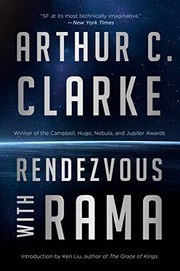
Rendezvous with Rama
In 2131 a silent cylinder enters the solar system, and Commander Norton's crew explores its seas and empty cities before Rama seals itself and sails on.
3,108-word summary · 14 min read
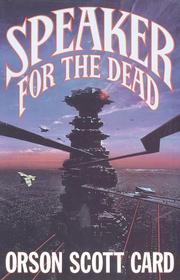
Speaker for the Dead
Ender speaks whole truths for alien deaths on a fenced colony where biology confuses murder.
1,992-word summary · 9 min read

Stranger in a Strange Land
A Mars-raised man lands on Earth, learns religion and love, and founds a church that shocks everyone.
2,725-word summary · 12 min read
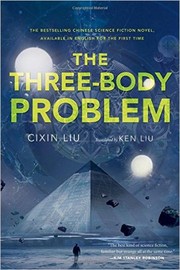
The Three-Body Problem
A physicist meets a secret from the Cultural Revolution and a game that models a dying alien sky.
2,465-word summary · 11 min read
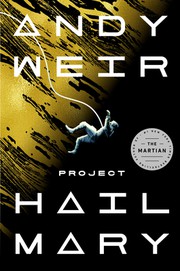
Project Hail Mary
A teacher wakes alone on a ship with dead crewmates and must solve why the sun is dimming to save Earth.
2,293-word summary · 10 min read

Heretics of Dune
Fifteen centuries after Leto II, the Bene Gesserit raise a new Duncan Idaho while the Honored Matres return and Rakis burns.
2,673-word summary · 12 min read

Prelude to Foundation
A young Hari Seldon arrives on Trantor with a theory he cannot yet prove, and a hunt through the planet-city forces him to turn psychohistory into a real…
2,013-word summary · 9 min read
Foundation's Edge
Exiled councilman Golan Trevize hunts for the Second Foundation and the lost world of Earth, and finds a planet with one mind waiting to change the galaxy.
2,335-word summary · 10 min read

Starsight
Spensa Nightshade goes undercover aboard the Superiority space station Starsight to steal a hyperdrive, and finds a frightened bureaucracy where she expected…
2,568-word summary · 11 min read
Network Effect
Murderbot's contract job turns into a rescue mission when a hijacked research ship and a colony of corrupted colonists appear.
2,256-word summary · 10 min read
Exhalation
Ted Chiang's second collection contains nine stories about time, memory, free will, and artificial minds, told with clarity and moral seriousness.
2,075-word summary · 9 min read
We Are Legion (We Are Bob)
A dead software engineer wakes up as a self-replicating space probe, clones himself into a squabbling fleet of Bobs, and tries to keep a ruined Earth alive.
2,357-word summary · 10 min read
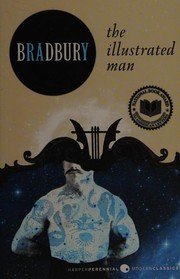
The Illustrated Man
A tattooed drifter's moving pictures retell eighteen Bradbury stories of children, rockets, Mars and the last night of the world.
2,791-word summary · 12 min read

By the River Piedra I Sat Down and Wept
Pilar, 29, meets her childhood friend again in Madrid and finds a rumored miracle worker. One winter week through the Pyrenees to the river Piedra, and the…
2,845-word summary · 13 min read

Ubik
A psychic agency crew dies in a blast and reality decays unless a spray called Ubik saves them.
2,674-word summary · 12 min read

Stories of Your Life and Others
Eight stories about language, time and choice, including the tale behind Arrival.
2,402-word summary · 11 min read

Redshirts
Ensigns realize they die to serve a bad TV show's narrative.
2,152-word summary · 10 min read

God Is Not Great
Hitchens argues religion poisons life across history and texts.
2,545-word summary · 11 min read

Ancillary Justice
A ship mind trapped in one human body hunts the emperor who betrayed her across frozen worlds.
2,595-word summary · 12 min read
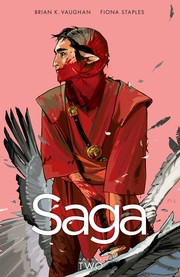
Saga, Volume 2
Alana and Marko flee with baby Hazel while exes, princes, and ghosts close the net.
2,028-word summary · 9 min read
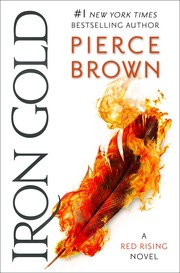
Iron Gold
Ten years after victory, Darrow and new rebels face peace that feels like another war.
2,158-word summary · 10 min read
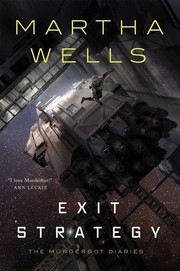
Exit Strategy
Murderbot returns to help its humans as corporate hunters close in and old friends risk all.
2,088-word summary · 9 min read