
The Three-Body Problem
2,465-word summary 11 min read 399 pages in the book
- First published
- 2008
- Publisher
- Chongqing Press
- Pages
- 399
- ISBN
- 9780765377067
- Original title
- 三体
- Series
- Remembrance of Earth's Past (#1)
Reading options
What's inside (7 sections)
I picked up The Three-Body Problem after a friend told me the first forty pages feel like a different novel from the rest. He was right. It opens in Beijing in the late 1960s, with struggle sessions and a young woman watching her father beaten for teaching physics. Then it jumps to the present, to nanomaterials and a detective who jokes through everything. I kept waiting for the two halves to meet. When they do, the book turns cold in a way I did not expect.
The edition I read follows the Tor Books text, 399 pages in hardcover, translated by Ken Liu. The original Chinese book came out in 2008 from Chongqing Press. That split matters. The science in the modern chapters feels close to our world of labs and funding reviews. The historical chapters feel sealed off, damp and afraid. Liu keeps both tones going for a long time before he lets them touch.
Ye Wenjie is the bridge. Her father Ye Zhetai taught at Tsinghua and refused to bend his lectures on relativity and quantum ideas. Red Guards killed him in front of a crowd. Her mother sided with the accusers. Her sister died in the same chaos. Ye herself was sent to labor, then pulled into a secret military project after she solved a technical problem with an antenna. The project was called Red Coast. From a mountain site in Sichuan, it listened to space and sent signals outward. Officially it searched for aliens. In practice it gave disgraced scientists a place to work where no one asked about their families.
Ye worked there for years. She married a local engineer, had a daughter, kept quiet. What changed her was a message. Red Coast received a reply from a being on a distant planet who warned her not to answer. The being said its world was harsh and its rulers would come if they learned where Earth was. Ye answered anyway. She pointed the transmitter at the sun to boost the signal and sent an invitation. In her mind, humanity had already failed. Her father dead, her mother broken, her friends informing on each other. A cleaner force from outside seemed better than slow rot inside.
That choice sits at the center of the whole trilogy. Liu does not present it as madness. He presents it as grief calcified into theory. Ye later says people cannot fix themselves. I found those passages hard to read because they are calm. She is not ranting. She is doing math with human cruelty and getting a negative result.
A countdown in photographs
The present day thread follows Wang Miao, a researcher working on nanomaterials. His lab makes a strong fiber that could lift elevators into space. Soldiers and police ask him to join an inquiry. Scientists are killing themselves and leaving odd notes. The police liaison is Shi Qiang, a rumpled detective who smokes, jokes, and notices everything. Shi calls the group of dead researchers the frontier of physics. They studied the smallest particles. They stopped believing the universe made sense.
Wang starts seeing a countdown. Numbers float in his photographs, then in his own vision, ticking down. No one else sees them at first. Physicists tell him it could be a trick. Shi tells him to play along and watch who reacts. At an observatory, Wang sees the cosmic background radiation flicker. The whole sky blinks in a pattern that spells out the countdown. That scene still bothers me. It takes something distant and abstract, the afterglow of the Big Bang, and turns it into a screen someone else can write on.
Someone tells Wang to stop his research or the countdown will reach zero. He stops for a while. He is scared in a plain, believable way. He has a wife and a child. He does not want to be brave. Shi pushes him back in, not with speeches but with errands. Go to this meeting. Talk to that widow. Try this game.
The game is called Three Body. Players wear suits and enter a virtual world with a harsh sun cycle. Sometimes the sun rises normally and the world has a Stable Era. People build and farm. Sometimes two or three suns appear and the world burns or freezes. Civilizations rise and fall in days. Wang plays through versions with historical figures. One run has Confucius and Mozi arguing about calendars. Another has Newton and von Neumann building a human computer out of soldiers with flags. Each run ends the same way. The planet tumbles into fire or ice.
Other players treat the game as church. They say the world inside is real. They say it shows a planet called Trisolaris, stuck around three suns that pull it in wild paths. Life there dies and returns. The followers split into groups. Some want the aliens to come and fix Earth. Some want to help them conquer. Some just want to watch everything burn. Wang does not know who funds the servers. He only knows the graphics are too good and the physics too consistent for a hobby project.
Who invited them
Midway through, the book answers the funding question. Mike Evans, son of an oil tycoon, built a floating commune after reading about ecological ruin. He met Ye Wenjie when she left Red Coast. She told him what she had done. He believed her. With his money and her knowledge, they built the Earth Trisolaris Organization, the ETO. They recruited scientists, hackers, soldiers, and rich idealists. They placed people in companies and labs. They ran the game as a test. If you solved the three body simulation and stayed loyal, you got invited further in.
Liu handles Evans with some distance. We see him as a boy shooting birds, then as a rich young man reading Silent Spring on a ship, then as an older man talking to Ye about dead forests and poisoned rivers. He decides humans are locusts. Ye gives him a target for that anger. Their talks are long. Some readers will find them slow. I found them useful because they show how two smart people can agree on facts about pollution and still jump to a cruel plan. Evans funds a giant ship called Judgement Day. From it, the ETO talks to Trisolaris and waits.
Trisolaris answers through text and through physics. The planet really does circle three suns. Its people dehydrate to survive bad eras, lying flat like skins until water returns. They evolved under chaos, so they think differently about lying and planning. A message from them explains they already sent probes. Not ships. Something smaller.
That something is the sophon. A proton unfolded from eleven dimensions, etched with circuits, then folded back and shot toward Earth at near light speed. Four of them arrive. Two watch everything and send images home instantly through entanglement. Two more tangle with particle accelerators and scramble results. That is why physicists killed themselves. Every test gave noise. The universe seemed to have no laws. In truth, someone was smudging the lens.
I admired this idea and also felt cheated by it, in a good way. It solves the mystery fairly. The countdown, the flicker, the failed tests all come from one tool. But the tool is so strong that Earth science stalls. Wang realizes his nanomaterial work might still matter because it is engineering, not theory. You can build a sharp wire even if you cannot explain every particle. That small hope keeps the last third moving.
The ship and the base
Shi Qiang proposes a rough plan. The ETO leaders will gather. Judgement Day will pass through the Panama Canal. Wang's nanofiber can be strung across the canal in thin lines. The ship will slice through them. The lines will cut steel and flesh and hard drives alike. Liu describes the setup with care. Tugs, angles, tides, the width of the canal. He does not linger on gore, but he does not look away either. What the soldiers find on the broken ship are files, including messages between Earth members and Trisolaris.
The raid works. Evans dies. The files show splits inside the ETO. One faction, the Adventists, hates humanity and wants it replaced. Another, the Redemptionists, hopes aliens and humans can talk. They argue in emails while waiting for a fleet that will take 450 years to arrive. Some members kill themselves when they learn Trisolaris sees them as bugs. Others keep faith.
Wang and Shi fly to the old Red Coast site with Ye. She walks through rusted dishes and empty halls. She tells them the full story of the first reply and her answer. She does not ask for pity. Shi arrests her. On the way back, they stop by a field where locusts swarm. Shi points at them and asks Wang what the bugs would think of human pesticides. The bugs would see magic, then death, then more bugs. Wang laughs for the first time in chapters. It is a grim joke, but it holds.
The last pages widen. Trisolarans realize humans lie and plan in ways they cannot easily read. They decide to send something faster than the fleet. They also realize fear might make humans advance sooner. Wang goes home, picks up his child, looks at the sky. The countdown is gone. The stars are still there.
What works here is scale. Liu moves from a struggle session in 1967 to a proton the size of a planet to a fleet four centuries away, and each step follows. The game chapters teach orbital mechanics without lectures. The police work grounds the wonder. Shi stealing cigarettes and teasing professors kept me reading through the long theory talks.
What drags is character depth. Wang is mostly eyes. He worries, he works, he watches. Ye is stronger but still distant. We learn what she did, less how she lived with it day to day. Her marriage and her daughter get short shrift. Evans gets a sketch rather than a life. Women in the modern thread are thin. Wang's wife waits at home. Female players in the game speak in riddles. I wanted more of Ye's daughter Yang Dong, whose suicide starts the inquiry, but she stays a photograph and a note.
The translation reads clean. Technical terms are plain. Some dialogue is stiff, especially in ETO messages. A few info dumps run for pages. Readers who want fast action should know the first half is slow. Readers who want hard science should know the science bends. Unfolded protons and instant messages break rules on purpose. Liu knows it. He is testing what happens when one side cheats.
Why it still pulls
I finished the book uneasy rather than thrilled. The villains have a point about damage to rivers and air. The heroes have no clean answer except to keep working. Ye's crime came from despair, not greed. Evans paid for it with money, then with his ship. Wang lives, but his field is frozen. The aliens are not gods. They are refugees with better tools.
If you read on, the next book follows a plan to face the fleet. If you stop here, the image that stays is Red Coast at dusk. A young woman alone in a cold room, headphones on, hearing a voice from another sun warn her to stay silent. She lifts the key and answers. Everything after, the game and the countdown and the cut ship, comes from that one press of a finger.
For me, that is the point Liu wants. Big histories turn on small rooms. A father refusing to lie about physics. A daughter refusing to forgive the world that killed him. A scientist refusing to stop asking why tests fail. The universe in this book is not kind. It is watchful. What we do while it watches is still ours.
The science underneath
A short note on the physics helped me enjoy the middle. The real three body problem has no simple closed solution. Two bodies orbiting each other can be predicted with neat math. Add a third pull and the paths turn chaotic. You can simulate them step by step on a computer, but tiny errors grow fast. Long range forecasts fail.
Liu uses that fact as plot and as theme. Trisolaris cannot predict sunrise. Its people build calendars that fail. Their history is a string of false starts. When Wang plays the game, he lives that failure. He tries calendars based on sun color, on shadows, on math. Each works for a while, then breaks. The game lets a nonspecialist feel chaos theory instead of reading a definition.
The sophon idea riffs on higher dimensions and quantum entanglement. Real entanglement does not send messages faster than light in a useful way. Liu stretches it. He admits the stretch by making the engineering absurdly hard even for Trisolarans. They must unfold a proton, carve it, refold it, harden it against bombs. The cost shows. It is not magic from nowhere. It is industry pointed at one particle.
Some critics say the Cultural Revolution chapters are braver than the space chapters. I agree halfway. The opening struggle session is blunt and specific. Names, slogans, the physics lecture that gets Ye's father killed. Later political talk is simpler. ETO emails sound like position papers. Still, putting that history at the start of a space opera was a choice. It says contact stories are also history stories. Who we were when we called out decides what we deserve to hear back.
Readers new to Chinese science fiction sometimes ask if they need background. You do not. Names are few. Places are clear. The game replays Western history on purpose, with Newton and Einstein as characters, so Western readers get anchors. The Chinese names that matter repeat often. Ye, Wang, Shi, Chang. Keep those four and you will follow.
One warning. This book contains suicide, state violence, and animal harm in the Evans backstory. None of it is graphic for long, but the Ye chapters are intense. The canal operation at the end kills many people quickly. Liu does not celebrate it. Shi and Wang look sick after. If you prefer cozy mysteries, this is not that shelf.
I closed the Tor hardcover thinking about antennas. Red Coast used the sun as a loudspeaker. Today we use dishes and lasers and quiet probes. The tools change. The question stays. Should we shout? Ye thought silence was complicity. Her listeners thought silence was safety. Liu lets both views stand and shows the price of one shout across four light years. That price fills the next two books, and it starts here with static, a reply, and a woman who decides to speak.
FAQ
When was The Three-Body Problem first published?
It was first published in Chinese in 2008 by Chongqing Press. Ken Liu translated it into English, published by Tor Books in 2014.
What is the basic setup of the story?
Ye Wenjie sends a message from Red Coast Base during the Cultural Revolution. Decades later Wang Miao and Shi Qiang trace suicides, a strange game, and a group awaiting alien arrival.
Is The Three-Body Problem part of a series?
It is book one of Remembrance of Earth's Past. The next books are The Dark Forest and Death's End, which widen the scale and answer questions left open here.
Similar books
More like The Three-Body Problem →More from Remembrance of Earth's Past first, then related titles.
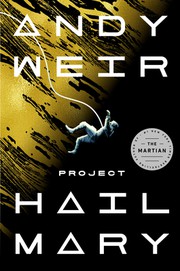
Project Hail Mary
A teacher wakes alone on a ship with dead crewmates and must solve why the sun is dimming to save Earth.
2,293-word summary · 10 min read

Scythe
Citra and Rowan become apprentice scythes who must glean one another.
2,574-word summary · 11 min read

Do Androids Dream of Electric Sheep?
Bounty hunter Rick Deckard retires escaped androids in ruined San Francisco while doubting what empathy still means.
2,841-word summary · 13 min read

Brave New World
Huxley's Brave New World retold: hatcheries, soma, Bernard and Lenina, John the Savage, and the lighthouse.
2,513-word summary · 11 min read

War and Peace
Pierre, Natasha, and Andrei search for meaning amid the Napoleonic wars.
2,536-word summary · 11 min read
The Trial
Josef K. is arrested one morning on an unknown charge and pulled into an endless court he can never leave.
2,318-word summary · 10 min read