
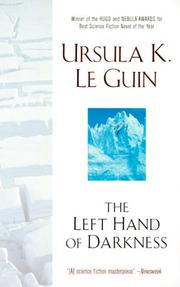
The Left Hand of Darkness
2,268-word summary 10 min read 304 pages in the book
- First published
- 1969
- Publisher
- Ace Books
- Pages
- 304
- ISBN
- 9780441007318
Reading options
What's inside (7 sections)
I first picked this up because everyone told me it was the cold book, the one where two people walk across a glacier for a hundred pages and somehow it grips you. That sounded like homework. I read it in winter, which helped, and the cold stopped being scenery after the first fifty pages. It becomes the argument of the whole novel. The Left Hand of Darkness was published in 1969 by Ace Books, and the Ace edition most readers find now runs 304 pages. It won the Hugo and the Nebula, and it turned Le Guin from a respected science fiction writer into one of the central voices in the field. It still reads like a book with something to prove.
The setup is simple for how strange it gets. Genly Ai is an envoy from the Ekumen, a loose group of settled worlds that sends representatives to invite new planets to join. His assignment is Gethen, a world so cold its visitors call it Winter. No one on Gethen asked him to come. He has no army, no trade goods that matter, and no tool beyond talk. His job is to persuade the rulers of two rival nations to consider membership in something they did not know existed. He lands in Karhide, the smaller and older of the two powers, and presents himself at court with his peculiar body, his strange ideas about gender, and his story about ships that cross the dark between stars.
Gethen itself is the second main character. The planet sits in an ice age that never lifted. Snow falls in every month. The seas freeze. Roads close. Hunger is a season, not an accident. People live in stone houses built around a central hearth, wear furs, eat cached food, and measure wealth in heat and company. Le Guin piles on concrete detail. The food. The clothing. The way doors seal. The codes of hospitality. You feel the weight of the cold in your hands while reading, and that physical pressure never lets up. It shapes politics, travel, and even religion, because no government on Winter can afford to waste warmth.
A man who cannot read the room, on a world with different rooms
Genly Ai is a difficult narrator and that is deliberate. He comes from a world with fixed genders, and he cannot stop sorting the Gethenians into men and women in his head. On Gethen, people are androgynous most of the time. Once a month they enter kemmer, a fertile period in which they can become male or female depending on circumstance and partner. The same person can father children one year and bear them another. Family terms still exist. There are mothers and fathers, kings and lords, but they do not map onto our assumptions. Genly keeps trying to map them anyway, and he gets people wrong for half the book.
His blindness is the point. Heprides himself on being open minded, then describes a powerful politician as soft or shifty because his voice is high or his manner does not match Genly's idea of masculine authority. He trusts bluff men who remind him of men back home. He distrusts subtle ones. Le Guin lets him hang himself this way for chapters without correcting him, and the reader starts to see the gap between what Genly reports and what is happening. It is an uncomfortable trick and a brilliant one. You realize the envoy sent to understand an alien culture can barely understand his own reactions.
Karhide gives him plenty to misunderstand. The kingdom runs on custom, feud, and ceremony under King Argaven XV, a ruler who is canny, paranoid, and often pregnant in the way Gethenian kings can be. Court life is loud and formal, full of protocols Genly half learns. He makes a friend and ally in Therem Harth rem ir Estraven, the king's prime minister, and then misreads him almost completely. Estraven is guarded, indirect, and patient in a culture that values indirect speech. Genly wants plain yes or no answers about alliance and support. Estraven speaks in hints, warnings, and delays. Genly decides this means treachery. He is wrong in ways that cost them both.
I found the early Karhide chapters slow on a first read and better on reflection. Le Guin withholds explanation. She drops Gethenian words, titles, and customs without a glossary. You learn by context or not at all. Some readers will bounce off this. I nearly did. But the confusion mirrors Genly's position, and once the political lines sharpen, the groundwork pays off. Karhide is not a backdrop. Its honor codes, its hospitality laws, its suspicion of prophecy, all of it returns later when lives depend on it.
Estraven, and the myths between chapters
If Genly is the eye of the book, Estraven is its heart. A Karhide lord fallen from favor, accused of treason for advising caution, exiled and then working quietly across the border in Orgoreyn, Estraven believes Genly's mission matters even when Genly doubts him. Estraven spends influence, safety, and finally everything to keep the envoy alive. Le Guin builds this loyalty without sentiment. Estraven does not explain himself. He acts, withdraws, and lets Genly catch up months later. When Genly finally understands what Estraven risked for him, the reveal lands hard because it was never announced.
Between the main chapters, Le Guin inserts Gethenian myths and tales. A story about a brother and sister who mate and break taboo. A tale of a prophet who answers questions with riddles. A history of a place where the rules of kemmer went wrong. These interludes annoyed me at first. They break momentum just as the politics heat up. On a second pass I saw their function. They show how Gethenians think about loyalty, shame, and truth. They also slow the reader the way the cold slows travel. You cannot rush Winter. You listen to stories by the hearth or you miss what matters.
The religion of the book splits along similar lines. Karhide follows the Handdara, a shadowy faith built around darkness, silence, and prophecy that refuses straight answers. Orgoreyn follows Yomesh, a brighter and more organized faith centered on light and certainty. Genly, practical and secular, dismisses both until he needs them. A session with Handdara Foretellers, who answer questions in a communal trance, gives him a true answer he cannot use. A later encounter with Yomesh comfort leaves him colder than the ice outside. Le Guin does not mock belief here. She shows two systems for living with the cold and the dark, and neither saves anyone by itself.
Fair criticism belongs here. The myth chapters will test some readers, and Le Guin's handling of gender language has dated. She uses male pronouns for androgynous characters throughout, calling everyone he by default, and she admitted later this was a failure of craft. It undercuts the very point she was making. A modern reader will notice it on every page. The book still asks radical questions about what gender does to politics, war, and friendship, but it asks them in language that leans male. Go in knowing that. It does not ruin the novel, yet it keeps parts of it at arm's length.
Orgoreyn, prison, and the turn toward ice
The middle of the novel shifts to Orgoreyn, the larger rival state, and the tone curdles. Orgoreyn looks modern next to Karhide. It has committees, bureaus, roads that work, and officials who speak Genly's language of progress. He goes there hoping for a fair hearing after Karhide expels him. What he finds is a state learning to lie in new ways. Orgoreyn's openness is managed. Its hospitality has paperwork. Its interest in the Ekumen is tangled with its rivalry against Karhide and with factions that see Genly as a pawn.
Estraven is there too, working under another name, trying to steer events from inside a system that is hardening into something cruel. Le Guin, writing in 1969, draws Orgoreyn's drift with a steady hand. Voluntary farms become labor camps. Surveillance grows. People disappear into places with bland names. Genly walks into this with envoy confidence and gets arrested, interrogated, and shipped to a camp in the far north. The prison chapters are bleak and spare. Cold, hunger, forced marches, casual brutality. Le Guin does not linger on gore. She lingers on temperature, on the way frost takes fingers and hope together.
Estraven gets him out. I will not detail the mechanics, since the escape is one of the book's best sustained sequences, but the shape is this. A forged move, a bribed guard, a sprint into nowhere with the whole state behind them. And nowhere on Gethen means the Gobrin Ice Sheet, hundreds of miles of glacier between Orgoreyn and Karhide. No one crosses it in winter. They cross it in winter. What follows is the famous long march, and it earns its fame. Day after day of hauling a sledge, melting snow for water, rationing food, navigating by wind and guess, sleeping in a tent that barely holds heat. Le Guin makes logistics dramatic. A broken runner matters. A lost cache matters. A shift in wind matters.
This is also where Genly and Estraven finally learn each other. Alone on the ice, stripped of courts and committees, they talk. They argue. They tell stories. Genly teaches Estraven about his own world. Estraven teaches Genly how little he understood about kemmer, about loyalty, about the person pulling the sledge beside him. There is a scene where Genly truly sees Estraven for the first time, and it reframes everything before it. I will leave the specifics for the reader. The book builds to this recognition across three hundred pages, and it lands because Le Guin waited.
Some readers find the ice march too long. I counted that as a feature with one flaw. The repetition is the meaning. Survival is boring until it is not, and Le Guin refuses to montage through it. The flaw is that Genly narrates it all, and his voice stays analytical when awe might serve better. He catalogs frostbite and rations with envoy precision. The effect is chilling in both senses, though a few chapters blur into white. Push through. The last third of the crossing tightens into some of the finest adventure writing in science fiction.
What the cold proves
The final movement returns to settled lands, but nothing settles easily. Genly reaches Karhide again with proof of his claims and a debt he can never repay. Politics resume. Kings calculate. Borders shift. The Ekumen sends a ship, which changes every bargain overnight. Le Guin handles this without triumphalism. First contact does not fix Gethen. It complicates it. The nations that wanted the envoy as a prize now fear what his people represent. The friend who saved him pays a price the envoy cannot stop. The ending is just in the way the best tragedies are just, and it leaves Genly wiser and lonelier than he began.
The ideas that last have little to do with gadgets. There are almost none. Ships exist offstage. Radios fail in the cold. The ansible, Le Guin's instant communicator, matters less than a shared tent. What matters is the thought experiment she runs with gender removed as a permanent category. Without fixed sexes, there is no fixed hierarchy built on sex. War looks different when anyone can bear children and no one can be reduced to a single role. Politics looks different when reputation cannot rest on manhood. Genly arrives expecting patriarchy with strange customs. He finds something else, something slower, less spectacular, and in some ways crueler, yet free of one poison his own world takes for granted. The book never claims Gethen is a paradise. It claims our arrangements are not the only ones, and that recognition alone is worth the frostbite.
Its influence is hard to overstate. The Hugo and Nebula wins in 1970 announced that science fiction could do anthropology, interior life, and moral weight without losing story. Writers from Kim Stanley Robinson onward cite it as a doorway book. The Ekumen became a frame Le Guin returned to for decades. And the image of two people pulling a sledge across white nothing, talking their way toward trust, has outlived every prediction about the genre. That is the scene people remember, and correctly.
Who should read it now
New readers should know what they are getting. This is thoughtful science fiction with politics, myths, and a long survival trek, not a fast adventure with chases every chapter. It rewards patience and punishes skimming. Readers who love worldbuilding, moral questions, and friendship stories will find plenty. Readers who want romance, humor, or constant action may struggle. The prose is clear and often beautiful, but it is also cold by design. Warmth arrives in small doses, which makes it count.
My reservations are real but limited. The pronoun problem dates the experiment. The myth interludes break flow. Genly's obtuseness frustrates for long stretches before it pays off. And Orgoreyn's villainy sharpens a little too neatly in the prison chapters, after such careful ambiguity earlier. Against that, set the strengths. Gethen is one of the most complete invented worlds in the genre. Estraven is one of its great characters. The ice crossing is unforgettable. And the central question about gender and power still bites. I finished it understanding why it endures, and I thought about it for weeks after, which is more than I can say for most classics I was assigned rather than chose.
FAQ
Did The Left Hand of Darkness win any awards?
Yes. It won the 1969 Nebula Award for Best Novel and the 1970 Hugo Award for Best Novel, and it appeared in 1969 from Ace Books.
Is it part of a series?
It is set on Gethen within Le Guin's Hainish Cycle, but it reads fully standalone with its own plot and ending. This site lists it without a series.
Does the book feel dated on gender?
Yes, though the 1969 framing uses male pronouns throughout, which Le Guin later said was a failure. The questions it asks about gender and power still hold.
Similar books
Nemesis Games
The Rocinante crew scatters across the solar system just as Marco Inaros and the Free Navy bombard Earth. The Expanse reaches its turning point.
2,506-word summary · 11 min read
Death's End
A hibernating engineer inherits a star, holds the trigger of a cosmic truce, and watches humanity face the dark forest.
2,980-word summary · 13 min read

Abaddon's Gate
A dead detective guides Holden, an assassin hunts him, and a pastor walks unarmed into a mutiny as the Ring opens new worlds.
2,672-word summary · 12 min read
Project Hail Mary
A teacher wakes alone on a ship with dead crewmates and must solve why the sun is dimming to save Earth.
2,293-word summary · 10 min read
The Dispossessed: An Ambiguous Utopia
Physicist Shevek leaves anarchist Anarres for capitalist Urras to share time theory, finding walls both places.
2,288-word summary · 10 min read

Heretics of Dune
Fifteen centuries after Leto II, the Bene Gesserit raise a new Duncan Idaho while the Honored Matres return and Rakis burns.
2,673-word summary · 12 min read
Prelude to Foundation
A young Hari Seldon arrives on Trantor with a theory he cannot yet prove, and a hunt through the planet-city forces him to turn psychohistory into a real…
2,013-word summary · 9 min read

In Order to Live: A North Korean Girl's Journey to Freedom
A young North Korean girl crosses the Yalu, survives trafficking in China, and rebuilds her life in Seoul in this unsparing memoir.
2,027-word summary · 9 min read

Wilder Girls
At a quarantined boarding school off Maine, three girls with strange mutations search for a missing friend and learn what the adults have hidden.
2,594-word summary · 12 min read
Foundation's Edge
Exiled councilman Golan Trevize hunts for the Second Foundation and the lost world of Earth, and finds a planet with one mind waiting to change the galaxy.
2,335-word summary · 10 min read

The House of the Scorpion
A clone raised in a drug lord's poppy fields learns what he was made for and chooses what to do with the life he was given.
2,527-word summary · 11 min read

The Girl with Seven Names: A North Korean Defector's Story
Hyeonseo Lee crossed the frozen Yalu River at seventeen, spent years hidden in China, escaped to South Korea, and later returned to rescue her family.
2,404-word summary · 11 min read
I Who Have Never Known Men
Forty women in a cage, one child who remembers nothing, and a nearly empty world above the bunker. Harpman's quiet, unexplained dystopia.
2,025-word summary · 9 min read

Wither
In a future where women die at twenty, sixteen-year-old Rhine is sold as a bride to a wealthy stranger and plots an escape from a beautiful prison.
2,395-word summary · 11 min read

Never Fade
Ruby, now a leader in the Children's League, must track down the boy whose memories she erased, because he holds the only proof of what caused the disease that…
2,188-word summary · 10 min read
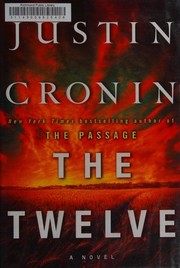
The Twelve
The middle volume of the Passage trilogy braids the year America died, a picnic massacre decades earlier, and the survivors' war against the twelve master…
2,089-word summary · 9 min read
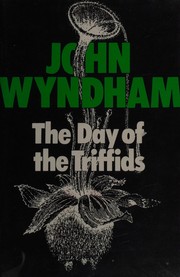
The Day of the Triffids
Blinded survivors flee carnivorous plants after a meteor shower.
2,171-word summary · 10 min read
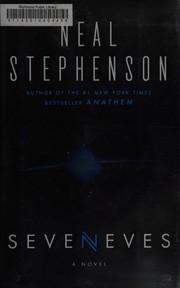
Seveneves
Stephenson 880-page William Morrow epic, May 2015: the Moon shatters, the Cloud Ark fails, seven women restart humanity, and heirs meet survivors on Earth.
2,389-word summary · 11 min read
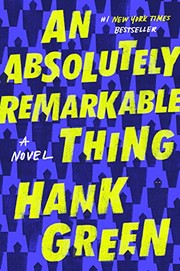
An Absolutely Remarkable Thing
Hank Green's An Absolutely Remarkable Thing follows artist April May after she and Andy film a giant Carl robot in New York that appears in cities worldwide…
2,699-word summary · 12 min read

The Year of the Flood
Toby and Ren live through the plague apart, guided by God's Gardeners, then join to find Amanda.
2,422-word summary · 11 min read
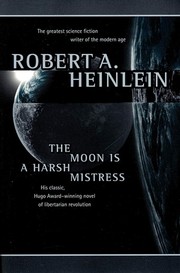
The Moon Is a Harsh Mistress
In 2076 Lunar colonists led by Mannie, Wyoh, Prof, and computer Mike revolt against Earth with rocks and rhetoric.
2,003-word summary · 9 min read

Life As We Knew It
Sixteen-year-old Miranda keeps a diary while an asteroid strike on the moon brings tsunamis, blackouts, and a frozen year of hunger to her Pennsylvania town.
2,485-word summary · 11 min read
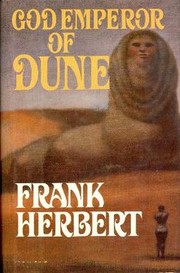
God Emperor of Dune
Worm god Leto II rules 3500 years to force humanity free through his Golden Path.
2,006-word summary · 9 min read
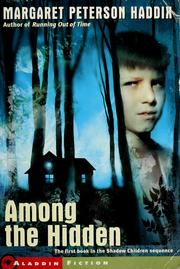
Among the Hidden
Twelve-year-old Luke, an illegal third child, befriends Jen and faces the cost of stepping out of hiding.
2,923-word summary · 13 min read
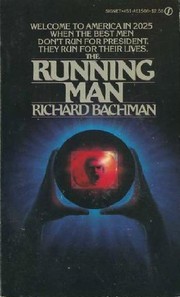
The Running Man
Out of work in a broken 2025, Ben Richards enters a televised manhunt where each hour alive pays cash.
2,922-word summary · 13 min read
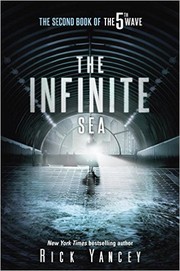
The Infinite Sea
Cassie and Squad 53 wait out winter in a hotel while Ringer is retaken and learns the truth behind the 5th Wave.
2,985-word summary · 13 min read
Contact
A radio astronomer catches prime numbers from Vega, helps build a strange machine, and returns with no proof but static.
2,763-word summary · 12 min read
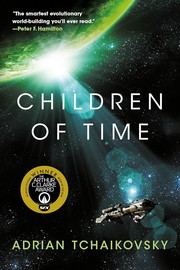
Children of Time
Humanity's ark ship Gilgamesh reaches a terraformed world, only to find intelligent spiders raised over millennia by a lost terraformer's virus.
2,976-word summary · 13 min read

The Lost World
Malcolm lives after all and returns to Site B where engineered herds eat themselves and Dodgson steals eggs.
2,075-word summary · 9 min read