

The Girl with Seven Names: A North Korean Defector's Story
2,404-word summary 11 min read 304 pages in the book
- First published
- 2015
- Publisher
- William Collins
- Pages
- 304
- ISBN
- 9780007554836
Reading options
What's inside (10 sections)
The river is the first thing I think about when I remember this book. Hyeonseo Lee was seventeen years old, living in Hyesan, a town in the far north of North Korea, when she walked across the frozen Yalu River into China. She did not cross because she was fleeing for her life. She crossed because she was curious. She wanted to see the other side. She thought she could look around and come back before anyone noticed.
She could not come back. Within hours she was stranded in a country where she did not speak the language, had no papers, and could be arrested and sent home at any moment. That decision, made by a teenager on a winter night, shaped the next decade of her life. The Girl with Seven Names, published by William Collins in 2015, is her account of what happened after that step, and of the family she left behind.
A childhood inside the story
Lee was born in 1980 in Hyesan, close to the Chinese border. Her family was not poor by North Korean standards. Her father had a military position, and the household had enough food, a television, and a certain amount of standing in the community. She describes a childhood organized around propaganda: school rituals, portraits of the leaders, songs, slogans, and the constant repetition of a story about the country that did not match what she could see.
The gap between the story and the reality is the book's central subject. Lee is careful to show how the system worked on children. She believed, or wanted to believe, that North Korea was a paradise surrounded by enemies. She was taught that South Korea was a puppet state, that Americans were monsters, and that the outside world was waiting to destroy her country. The book does not mock that belief. It shows how it was built, day by day, in classrooms and courtyards and family conversations.
Then the famine came. In the 1990s, the North Korean economy collapsed, and the state distribution system stopped working. People began to starve. Lee describes neighbours disappearing, bodies in the street, and the strange silence that settled over a town where everyone was hungry. Her family survived because her mother sold goods at the market and because they had connections. Other families did not. The famine is the moment when the official story stops being believable for many North Koreans, and Lee captures that loss of faith without turning it into a lecture.
She also captures the small details that make the book vivid: the way people traded in the market, the black market videos of South Korean dramas, the rumours that travelled faster than the state could control. By the time she was a teenager, she knew that the world outside was not the way she had been taught. That knowledge is what sent her to the river.
The crossing
In December 1997, Lee crossed the frozen Yalu River into China. She went alone, at night, after telling her mother she was going to a friend's house. A young border guard named Ri Chang-ho, a friend of the family, told her at first that crossing was impossible, then flagged down a Chinese smuggler and asked him to take her to the other side. The crossing itself is almost anticlimactic. The river is narrow, about eleven yards wide, and shallow enough to wade. The border is guarded, but not every guard is paying attention. She walked into China and found a country that was poor, but not the nightmare she had been promised. She also found that she could not go home.
The Chinese authorities treated North Korean defectors as illegal migrants. If she was caught, she would be repatriated, and repatriation meant prison, interrogation, and often death. She could not call her family. She could not use her real name. She could not ask for help from the authorities. She was seventeen, alone, and invisible.
What follows is the strongest section of the book. Lee learns Mandarin. She takes a Chinese name. She works in restaurants, shops, and factories. She moves from place to place, always afraid that someone will ask for her papers. She is taken in by a Chinese family at one point, and she becomes close to them, but she never stops being afraid. The book is very good at showing how fear becomes a daily habit. She checks the exits. She avoids crowds. She learns to lie about where she is from.
She also learns that being a North Korean woman in China is a particular kind of vulnerable. Trafficking, exploitation, and abuse are constant threats. Lee does not dwell on the worst of it, but she does not hide it either. She shows how easily a person without documents can be treated as property. The book is not a thriller, but it has the tension of one, because every stranger is a potential danger and every official is a potential disaster.
The long road to Seoul
Lee's escape from China is less a journey than a bureaucratic gamble. By 2008 she had a Chinese identity card and, with it, a Chinese passport, both bought from the family of a mentally ill woman whose documents were for sale. That passport was her way out. She flew from Shanghai to Incheon International Airport, walked up to the immigration desk, and told the officer she was a North Korean asylum seeker. The officer checked her papers, asked whether she was really Chinese, warned her what would happen if she was lying, and then, at her request, called the National Intelligence Service. Three hours later she was in Seoul.
That scene is the quiet center of the book. There is no border to run across, no boat, no broker waiting on a riverbank. There is a woman with a forged passport and a decision to stop pretending. The danger is not a gunshot. It is the possibility that the wrong official will send her back.
She makes it to South Korea in 2008. The arrival is not the happy ending she expected. Seoul is rich, fast, and alien. She has spent years dreaming of the South as a place of freedom, and she finds a society that is competitive, status-conscious, and not especially interested in her. She has to learn how to be a South Korean: the language, the customs, the job market, the way people talk about the North. She is free, but she is also lonely.
The book is honest about that loneliness. Lee does not pretend that defection is a simple liberation. She has lost her family, her language, and her sense of self. She has gained a passport and a future, but she has also gained a new set of anxieties. The chapters about her early life in Seoul are some of the most affecting in the book, because they show how freedom can be exhausting when you have no one to share it with.
Going back for her family
The second half of the book is driven by guilt. Lee's mother and brother are still in North Korea. She knows what happens to families of defectors. She knows that her escape may have put them in danger. She cannot enjoy her new life while they are trapped. So she decides to go back.
This is the part of the story that made Lee famous. She returns to China, meets her mother and brother in Changbai after Min-ho brings their mother across the river, and then guides them on a two-thousand-mile journey across China toward Laos. The journey is even more dangerous than her own. Her mother is older. Her brother is a young man who has never left the country. Neither of them speaks Chinese. At one checkpoint, when police stop them, Lee tells the officer that her family are deaf and mute people she is chaperoning, and he lets them pass.
The rescue is not a single dramatic moment. It is a long, grinding process of waiting and bribing and hoping. At the Lao border she pays a broker to take her mother and brother across to the South Korean embassy in Vientiane, and then learns that they have been arrested. She travels to Luang Namtha, pays a fine and a bribe, and after a month they are released. In Vientiane they are arrested again, a short distance from the embassy, and held for almost fifty days while Lee moves between the immigration office and the national police, running out of money and hope.
That is where Dick Stolp enters the book. An Australian stranger sees her in distress, asks what is wrong, and, after she explains with a dictionary, goes to an ATM and pays the rest of the money needed to free her family and two other North Koreans. When she asks why, he says he is not helping her but the North Korean people. Lee treats the encounter as the moment her view of the world changed. It is also the moment the book's argument becomes explicit: survival depends on strangers.
The family is eventually reunited in South Korea in 2010. That reunion is the emotional peak of the book, and Lee writes it with restraint. There is no grand speech. There is a mother who has aged, a brother who is disoriented, and a daughter who has become a stranger to them in some ways. They have to learn how to be a family again, in a country none of them understands.
The seven names
The title refers to the many identities Lee has used: her North Korean name, her Chinese name, the names on false documents, the name she uses in South Korea, and the public name she uses as a speaker. Each name is a survival strategy. Each one is also a small loss of self. The book is about what happens to a person who has to become someone else in order to stay alive.
That theme gives the memoir its shape. Lee is not just telling the story of a defection. She is telling the story of a woman who has been remade by borders. She is North Korean, Chinese, South Korean, and none of those things fully. She belongs to a family that is scattered. She belongs to a country that no longer exists in the form she remembers. The seven names are not a gimmick. They are a way of describing a life that cannot be reduced to a single passport.
The names also raise a question the book never fully answers: which one is the real Hyeonseo? The memoir suggests that the answer is all of them and none of them. Identity, in her account, is not a core self that survives unchanged. It is a set of performances that keep you alive until you find a place where you can stop performing. That is a more complicated idea than the title's neat list suggests, and the book is strongest when it lets the complication show.
What the book does well
The strongest passages are the ones about daily life under the regime. Lee has a novelistic eye for detail, and she is good at showing how propaganda works on children without making them sound stupid. She is also good at describing the texture of fear: the way a person learns to read a room, the way a lie becomes automatic, the way a knock at the door can stop your heart.
The escape narrative is gripping. The book is paced like a thriller, even though it is a memoir, and the sections in China and Laos are hard to put down. Lee is not a professional writer, and the prose is plain, but the plainness suits the story. She does not need metaphors. The facts are enough.
The rescue of her mother and brother gives the book a second act that many memoirs lack. It turns a story of personal survival into a story about obligation. Lee could have stayed in Seoul and built a quiet life. She chose to go back. That choice is the moral center of the book, and it is what makes the title meaningful.
Where it falls short
The book is less successful when it tries to explain North Korean politics. Lee is not a historian, and the sections on the regime's nuclear program and its international relations feel thin compared with the personal material. She is at her best when she is describing a market, a schoolroom, or a border crossing. She is less convincing when she is summarizing the larger geopolitical picture.
The later chapters about her work as a public speaker are also thinner than the escape story. They feel like an epilogue that was expanded to fill space. The book could have ended with the family reunion and been stronger for it. The final sections are inspiring, but they lack the tension and specificity of the earlier chapters.
There is also the question of what Lee leaves out. She is candid about many things, but she is careful about others, especially the people who helped her and the details that might put them at risk. That caution is understandable, but it means the book is not a complete record. It is a carefully shaped story, and readers should treat it as such.
Who should read it
The Girl with Seven Names is for readers who want to understand North Korea through a single life rather than a policy briefing. It is also for readers who love survival stories, family stories, and stories about what it takes to leave home. It is not a political treatise, and it is not a literary memoir. It is a fast, clear, deeply felt account of a woman who crossed a river and spent years trying to get back to the people she left behind.
I finished it with a better sense of how ordinary people survive extraordinary systems. Lee does not present herself as a hero. She presents herself as a person who made a reckless decision and then had to live with the consequences. That honesty is what makes the book worth reading. The river is still there. The border is still there. The story is one person's way of crossing them again, on the page.
FAQ
Why did Hyeonseo Lee cross into China?
She crossed the frozen Yalu River in 1997 at seventeen out of curiosity, expecting to return, but found herself stranded without papers.
How did Hyeonseo Lee get to South Korea?
She flew from Shanghai to Incheon International Airport in January 2008 on a Chinese passport and declared herself a North Korean asylum seeker at immigration. She was resettled in South Korea.
Did Hyeonseo Lee rescue her family?
Yes. She later returned to China and arranged for her mother and brother to travel through Laos to South Korea.
Similar books

Long Walk to Freedom
Mandela's account of a Thembu childhood, a law practice, a banned movement, twenty-seven years in prison, and the negotiation that ended apartheid.
2,454-word summary · 11 min read

In Order to Live: A North Korean Girl's Journey to Freedom
A young North Korean girl crosses the Yalu, survives trafficking in China, and rebuilds her life in Seoul in this unsparing memoir.
2,027-word summary · 9 min read

Infidel
Ayaan Hirsi Ali's memoir of a Somali childhood, a forced marriage, a Dutch asylum claim, and the political fight that followed the murder of Theo van Gogh.
2,041-word summary · 9 min read

Too Much and Never Enough: How My Family Created the World's Most Dangerous Man
Mary L. Trump's 2020 memoir traces how a cold, zero-sum Queens household shaped her uncle, and uses family tax documents to challenge his self-made story.
2,059-word summary · 9 min read

Down and Out in Paris and London
Orwell's account of washing dishes in Paris hotels and tramping through London does not ask for pity, only for a clear look at how poverty actually works.
2,282-word summary · 10 min read

Lone Survivor: The Eyewitness Account of Operation Redwing and the Lost Heroes of SEAL Team 10
Marcus Luttrell's account of the 2005 SEAL mission in Afghanistan that killed three of his team and left him alone.
2,144-word summary · 10 min read

Life
The Rolling Stones guitarist tells his own story: a Dartford childhood, the band's first gigs, the drug raids, the tax years and Patti Hansen.
2,761-word summary · 12 min read
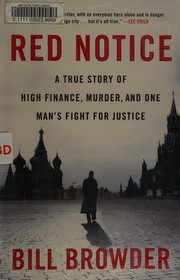
Red Notice
An American financier in Moscow exposes a $230 million tax fraud, watches his lawyer die in prison, and turns the case into an international human rights law.
2,008-word summary · 9 min read

The Letters of Vincent van Gogh
Vincent van Gogh's letters to his brother Theo, in a Penguin Classics selection edited by Ronald de Leeuw, trace a decade of work, faith, and obsession.
2,611-word summary · 12 min read

The Stranger Beside Me
Ann Rule's classic memoir of her friendship with Ted Bundy, written by the true-crime author who knew him long before the world learned what he had done.
2,481-word summary · 11 min read
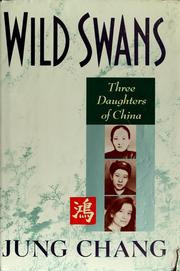
Wild Swans
Three generations of women survive warlords, revolution, and the Cultural Revolution in Jung Chang's family memoir.
2,356-word summary · 10 min read

Cleopatra: A Life
Pulitzer winner Schiff restores Cleopatra as a capable ruler, from Ptolemy debts and Caesar to Antony, Actium, and her death in 30 BC, built from coins and…
3,586-word summary · 16 min read
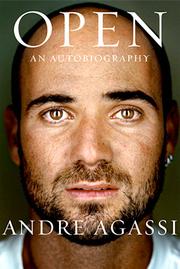
Open
Tennis star Andre Agassi recalls hating tennis, falling to No. 141, and rebuilding his life on his own terms.
2,352-word summary · 10 min read
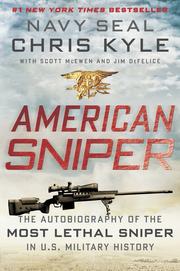
American Sniper: The Autobiography of the Most Lethal Sniper in U.S. Military History
Navy SEAL sniper Chris Kyle recounts Texas roots, SEAL training, four Iraq tours, and the strain combat placed on his marriage and health.
2,011-word summary · 9 min read
A Stolen Life
Kidnapped at eleven in 1991, Jaycee Dugard survived eighteen years in an Antioch backyard and tells her own story of endurance and motherhood.
2,807-word summary · 12 min read
Nickel and Dimed: On (Not) Getting By in America
A journalist works waitress, cleaning, retail, and care jobs undercover to test whether full-time work keeps a person housed and fed.
2,328-word summary · 10 min read
Alexander Hamilton
Orphaned Caribbean immigrant becomes Washington's aide and America's first Treasury secretary, then falls in a duel.
2,004-word summary · 9 min read
A Long Way Gone: Memoirs of a Boy Soldier
A Sierra Leone boy flees rebels, becomes a child soldier at thirteen, and fights his way back through rehab.
2,434-word summary · 11 min read
A Promised Land
First-volume memoir from Iowa 2008 through the 2011 bin Laden raid, crisis management and doubt.
2,243-word summary · 10 min read

The Autobiography of Malcolm X
Malcolm X traces his life from Michigan childhood through Harlem, prison, and the Nation of Islam to Mecca in this 1965 memoir told to Alex Haley.
2,816-word summary · 13 min read

Spare
Prince Harry recalls Diana's death in 1997, two tours in Afghanistan, and stepping back from royal life with Meghan in this frank 2023 memoir of grief, love…
2,586-word summary · 11 min read
Between the World and Me
Coates writes to his son about the Black body in America, from Howard to the loss of Prince Jones.
2,234-word summary · 10 min read
A Child Called It
Dave survives his mother games of hunger and cold in Daly City until teachers and foster care step in.
2,326-word summary · 10 min read
I Am Malala: The Story of the Girl Who Stood Up for Education and Was Shot by the Taliban
Malala grows up in Swat, blogged for school under ban, and survives a bus shooting.
2,015-word summary · 9 min read
Unbroken
Louis Zamperini survives a Pacific crash, sharks and POW camps after running in the Berlin Olympics.
3,263-word summary · 15 min read

Becoming
Michelle Obama traces her path from South Side Chicago through Princeton, Harvard law and the White House years in this warm, candid memoir of family, work and…
2,143-word summary · 10 min read

Sybil
A 1973 case study of a woman treated for multiple personalities, and the book that made dissociative identity disorder a household phrase.
2,054-word summary · 9 min read
Nudge: Improving Decisions About Health, Wealth, and Happiness
Thaler and Sunstein show how defaults, framing, and social cues steer choices, and argue for choice architecture with an opt-out.
3,146-word summary · 14 min read
Nothing to Envy
Barbara Demick follows six defectors from Chongjin through the North Korean famine, showing how ordinary people lived, believed, and finally left.
2,068-word summary · 9 min read
Same Kind of Different as Me
An art dealer and a formerly homeless sharecropper tell the story of the friendship that began at a Fort Worth mission and the woman who insisted on it.
2,023-word summary · 9 min read