
Reading options
What's inside (10 sections)
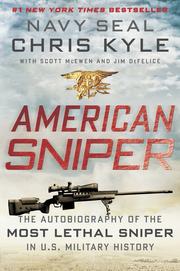
I picked up American Sniper because I wanted to understand what the Iraq War felt like from the scope, not from a briefing slide. What I found was a blunt, plainspoken memoir that moves between Texas childhood, brutal SEAL training, four combat tours, and a home life that keeps fraying at the edges. It reads fast, talks plain, and leaves you thinking about cost long after the action scenes fade.
A Texas kid who loved to hunt
Chris Kyle grows up in Odessa, Texas, the son of a church deacon and a schoolteacher. His dad gives him his first rifle at eight and teaches him to deer hunt. School is fine but not the point. Horses, rodeo, ranch work, and weekends with a .30-06 matter more.
After high school he works as a ranch hand and rides broncs on the small rodeo circuit. A bad arm injury ends that path. He tries to join the Marines, gets turned away because of pins in his arm, and a Navy recruiter points him toward the SEALs. Kyle signs up in 1999 at twenty-five, older than most candidates.
He is honest about his motives. He wants action, he believes in service after watching American power projected abroad, and he likes shooting. There is no grand theory here. He wants to be where the work is hardest.
BUD/S and becoming a SEAL
The training chapters are some of the strongest in the book because Kyle describes them without romance. Basic Underwater Demolition/SEAL training in Coronado breaks men through cold water, endless runs in soft sand, surf torture, and Hell Week with almost no sleep.
Kyle rings the bell? No, he makes it through, though he describes classmates quitting in the night and instructors finding new ways to make simple tasks miserable. He gets assigned to SEAL Team 3, Charlie Platoon, and learns sniping almost by accident. He qualifies, practices constantly, and finds he has a gift for reading wind and distance.
He also meets Taya at a bar during this period. Their courtship is fast and rocky. She worries about the life, he promises it will be manageable, and neither of them really knows what the next decade will demand. They marry in 2002, just as the wars are about to pull him away for years at a time.
Early tours and learning the trade
Kyle first deploys to the Persian Gulf and then Iraq after the 2003 invasion. His platoon works around Nasiriya and later Fallujah. The early missions are a mix of overwatch, building searches, and protecting Marines who kick in doors.
He explains sniper craft in plain terms. How to build a hide in a second story room, how to shoot through a small hole in a wall, how to judge a moving target, how to work with a spotter, how to stay still for hours while sweat pools under body armor. He favors the .300 Winchester Magnum for most city work and later the .338 Lapua, with the big .50 for vehicles and long shots.
The famous long shot comes later in Sadr City, around 2,100 yards, which earned him a reputation among other snipers. Kyle does not dwell on the math. He says the shot needed luck as well as skill, and he moves on.
What sticks with me is how much of the job is waiting and watching civilians. He spends hours studying a street through glass, trying to tell a farmer with a shovel from a fighter burying a roadside bomb. The rules are strict on paper and messy on the ground.
Ramadi and the hardest fighting
The heart of the book is Ramadi in 2006, the capital of Anbar province and at that time one of the most dangerous cities in Iraq. Kyle returns as a chief and team leader. Al Qaeda in Iraq holds whole neighborhoods. Marines take casualties almost daily.
Kyle and his men provide overwatch for Army and Marine units clearing houses block by block. He describes rooftop positions with pigeons and laundry lines, kids playing soccer one minute and gunfire the next, and insurgents who use mosques and hospitals as cover because they know Americans hesitate to fire there.
He writes about kills directly. The official count credited to him by the Navy is 160 confirmed, with more claimed but not confirmed. He says he does not keep a personal tally for pride. Each shot is tied to someone else living, usually a Marine or soldier about to walk into an ambush.
Two figures haunt these chapters. One is an enemy sniper the Americans call Mustafa, said to work for insurgents and to have killed several Americans. The other is a brutal enforcer nicknamed the Butcher. Kyle never claims a neat showdown. Mustafa remains more rumor than confirmed kill in his account, which I appreciated. He refuses to turn war into a duel story when the facts do not support it.
He is also wounded twice. Grenade fragments, a gunshot, and later a back injury from an IED blast that follows him home. He keeps going back because he believes his presence saves lives, and because survivor guilt pulls at him when friends die while he is stateside.
Home, Taya, and the cost
Between tours Kyle tries to be a husband and then a father to two small children. The contrast is stark. In Iraq he has clear purpose and total focus. At home in Texas he drinks too much, picks fights, sleeps with a gun, and struggles to talk about what he saw.
Taya gets some of the most honest pages. She describes managing the house alone, watching the news for casualty reports from his area, and begging him not to volunteer for a fourth tour. He goes anyway. He admits that was selfish and that he told himself the men needed him, which was true but not the whole truth.
The marriage nearly breaks. Counseling helps a little, but what really shifts things is Kyle deciding to leave active duty in 2009. He wants to be present, and his body is wearing out. The transition is rough. Office work bores him, the VA process frustrates him, and he misses the platoon intensely.
Fallujah, Sadr City, and the grind of city fighting
One chapter I kept returning to covers the Second Battle of Fallujah in late 2004. Kyle works from rooftops while Marines push street by street through a city laced with booby traps. He describes dust so thick it coats his scope, stray dogs barking through firefights, and the strange quiet after a block is cleared, broken only by a radio crackling with the next grid.
In Sadr City the fighting changes shape. Wide avenues, concrete high rises, and long sight lines favor a sniper but also expose him. Kyle sets up with his spotter on upper floors, sandbags pulled back from the window, a blanket to catch brass so it does not roll and give them away. He watches funerals that turn into weapons drops, taxis that circle twice before stopping, men on rooftops with phones who may be spotters for mortar teams.
He is careful to say he did not fire at shadows. He waited for a weapon, a clear hostile act, or a direct call from troops in contact. At the same time he admits the call is sometimes made in seconds. A man digs by a road at dawn. Is he fixing a water pipe or planting a bomb? Kyle leans on pattern, on what the Marines on the ground report, and on gut built from months in the same area. He gets it right far more often than wrong in his telling, but he does not pretend the system is perfect.
What makes these pages work is the fatigue. He writes about headaches from constant blasts, about losing hearing for a day after a close RPG, about falling asleep standing up during a lull and jerking awake sure he missed movement. War here is not a series of heroic shots. It is heat, thirst, bad food, and the slow math of who is where.
Brothers, humor, and what he leaves out
For all its harshness, the book is funny in a barracks way. Kyle loves pranks, nicknames, and arguments about trucks, football, and the best caliber for hogs. He teases fellow SEALs about their snoring, their cooking, and their taste in music. That humor matters because it shows how men bleed off pressure. After a day where friends almost died, they clean rifles, eat, and joke until the shaking stops.
He idolizes his younger brother Jeff, who serves too, and writes warmly about officers who listened and coldly about those who chased medals from air conditioned offices. Marc Lee, the first SEAL killed in Iraq, gets a moving tribute. Ryan Job, blinded by a sniper round and later dead from complications after he left the hospital, haunts Kyle. He keeps asking if he could have covered a different angle that day.
A fair criticism is that Kyle gives short shrift to Iraqi civilians as full people. Families appear mainly as background or as potential threats, with a few exceptions like interpreters he clearly respects. He does not speak Arabic, he moves base to base, and his job keeps him at distance. The result is honest about his viewpoint but narrow. If you want Iraqi voices from the same period, you will need to read alongside this book.
He also glosses over intelligence failures and the larger strategy debate. He notes that disbanding the Iraqi army flooded the streets with armed unemployed men, and he complains about restrictive rules that changed with each commander. He does not dig into why Ramadi fell apart or what might have worked instead. That is not his project. His project is to say what it looked like through glass at 400 yards.
Coming home for good and helping other vets
The last part of the book covers Kyle leaving the Navy and trying to build a civilian life. He starts a security company, does some charity work, and spends a lot of time with other veterans who struggle with drinking, anger, and nightmares.
He finds that taking vets to the shooting range or out hunting sometimes helps more than talk. Activity gives them focus and company without forcing confession. That idea later grew into work with groups that support wounded service members.
Kyle is direct about his views. He loves America, distrusts politicians who micromanage wars, and has little patience for critics who have never served. Readers who disagree with the war will still find value here, but they should know the book does not debate policy at length. It argues from the ground: my friends were in danger, I protected them, I would do it again.
The memoir ends before his death in 2013. He was shot at a Texas gun range by a fellow veteran he was trying to help. The book itself does not cover that, and later editions add a short remembrance by Taya. I mention it only because most readers come to the book knowing how it ends in real life, and that knowledge makes the homecoming chapters heavier.
If you read it, read it for the detail on small unit combat and for the frank account of what repeated deployments do to a family. It is not subtle, and Kyle can be crude and absolute in ways that will bother some readers. It is still one of the clearest recent accounts of what a sniper actually did day to day in Iraq, told without polish.
I finished it with mixed feelings. I admired the loyalty to the men beside him and the refusal to dress up killing in pretty language. I wished for more curiosity about the country where he fought and more patience with doubt. Both reactions can be true at once, and that tension is why the book stays with you after the last page.
FAQ
When was American Sniper published?
William Morrow and Company published it on January 2, 2012. The hardcover runs 400 pages and covers Kyle's service with SEAL Team 3 in Iraq.
How many kills is Chris Kyle credited with?
The Navy credits him with 160 confirmed kills. Kyle writes that each shot was to protect Marines and soldiers, not for personal score.
Is American Sniper a policy book about the Iraq War?
No. It is a memoir of his training and four tours in Iraq, focused on small unit fighting, sniping craft, and family strain rather than policy debate.
Similar books

Long Walk to Freedom
Mandela's account of a Thembu childhood, a law practice, a banned movement, twenty-seven years in prison, and the negotiation that ended apartheid.
2,454-word summary · 11 min read

Lone Survivor: The Eyewitness Account of Operation Redwing and the Lost Heroes of SEAL Team 10
Marcus Luttrell's account of the 2005 SEAL mission in Afghanistan that killed three of his team and left him alone.
2,144-word summary · 10 min read

The Letters of Vincent van Gogh
Vincent van Gogh's letters to his brother Theo, in a Penguin Classics selection edited by Ronald de Leeuw, trace a decade of work, faith, and obsession.
2,611-word summary · 12 min read
Killing Lincoln
Booth plots as Lincoln pushes war end and reunion in 1865.
2,486-word summary · 11 min read

Wild Swans
Three generations of women survive warlords, revolution, and the Cultural Revolution in Jung Chang's family memoir.
2,356-word summary · 10 min read
Cleopatra: A Life
Pulitzer winner Schiff restores Cleopatra as a capable ruler, from Ptolemy debts and Caesar to Antony, Actium, and her death in 30 BC, built from coins and…
3,586-word summary · 16 min read
The Splendid and the Vile
Larson follows Churchill circle through Blitz year with diaries and bombing nights.
2,038-word summary · 9 min read
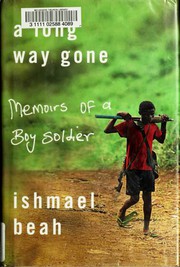
A Long Way Gone: Memoirs of a Boy Soldier
A Sierra Leone boy flees rebels, becomes a child soldier at thirteen, and fights his way back through rehab.
2,434-word summary · 11 min read
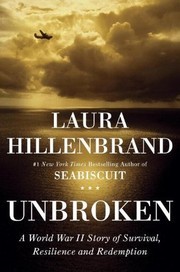
Unbroken
Louis Zamperini survives a Pacific crash, sharks and POW camps after running in the Berlin Olympics.
3,263-word summary · 15 min read

The Zookeeper's Wife: A War Story
The directors of the Warsaw Zoo hid roughly three hundred Jews in empty cages and outbuildings after the German invasion, while Jan worked for the resistance.
2,065-word summary · 9 min read

Infidel
Ayaan Hirsi Ali's memoir of a Somali childhood, a forced marriage, a Dutch asylum claim, and the political fight that followed the murder of Theo van Gogh.
2,041-word summary · 9 min read

Down and Out in Paris and London
Orwell's account of washing dishes in Paris hotels and tramping through London does not ask for pity, only for a clear look at how poverty actually works.
2,282-word summary · 10 min read

The Girl with Seven Names: A North Korean Defector's Story
Hyeonseo Lee crossed the frozen Yalu River at seventeen, spent years hidden in China, escaped to South Korea, and later returned to rescue her family.
2,404-word summary · 11 min read
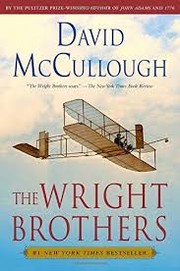
The Wright Brothers
David McCullough tells the story of two self-taught Ohio brothers, working largely alone and out of a bicycle shop, who solved the problem of flight before…
2,027-word summary · 9 min read
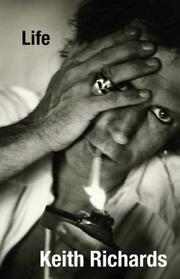
Life
The Rolling Stones guitarist tells his own story: a Dartford childhood, the band's first gigs, the drug raids, the tax years and Patti Hansen.
2,761-word summary · 12 min read

Bury My Heart at Wounded Knee: An Indian History of the American West
Dee Brown's 1970 retelling of the American West from the point of view of the people it destroyed.
2,233-word summary · 10 min read
The Stranger Beside Me
Ann Rule's classic memoir of her friendship with Ted Bundy, written by the true-crime author who knew him long before the world learned what he had done.
2,481-word summary · 11 min read
Catherine the Great: Portrait of a Woman
A German princess survives a miserable marriage and a coup to rule Russia for thirty-four years, torn between Enlightenment ideas and absolute power.
2,065-word summary · 9 min read
The Warmth of Other Suns
Three migrants ride north out of Jim Crow toward Chicago and LA.
2,561-word summary · 11 min read

The Emperor of All Maladies
A biography of cancer from Galen to chemo through one doctor cases.
2,255-word summary · 10 min read
Hidden Figures
Black women computers at Langley launch rockets past Jim Crow.
2,385-word summary · 11 min read

Twelve Years a Slave
Free violinist Solomon Northup tells how Brown and Hamilton lured him south into twelve years of Louisiana bondage until Bass letters brought rescue in January…
2,931-word summary · 13 min read
The Surgeon of Crowthorne
James Murray built the Oxford dictionary with Broadmoor inmate William Minor, whose thousands of slips shaped this 1998 HarperCollins story of murder, madness…
2,775-word summary · 12 min read
Open
Tennis star Andre Agassi recalls hating tennis, falling to No. 141, and rebuilding his life on his own terms.
2,352-word summary · 10 min read
Band of Brothers
Easy Company, 506th Airborne, from Toccoa training through D-Day, Holland, Bastogne, and Hitler's Eagle's Nest.
2,685-word summary · 12 min read
A Beautiful Mind
Mathematician John Nash's brilliant game theory rise, schizophrenia collapse, and Nobel return, with wife Alicia's care.
2,142-word summary · 10 min read
Dead Wake
Larson tracks Lusitania, U-20, and Room 40 toward May 1915 sinking.
2,471-word summary · 11 min read
Days of Love and Rage
Six Syrians build a short democracy in Manbij, then watch inequality and ISIS undo it.
2,022-word summary · 9 min read

Cosmic Music
The first full biography of Alice Coltrane, from Detroit church piano to ashram guru.
2,048-word summary · 9 min read
Autobiography of Cotton
A Pulitzer winner traces her cotton-worker grandparents and a 1934 border strike through archives, memory, and damaged land.
2,213-word summary · 10 min read