
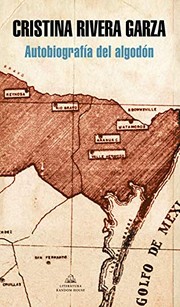
Autobiography of Cotton
2,213-word summary 10 min read 288 pages in the book
- First published
- 2020
- Publisher
- Graywolf Press
- Pages
- 288
- ISBN
- 9781644453698
- Original title
- Autobiografía del algodón
Reading options
What's inside (8 sections)
I picked up Autobiography of Cotton because Liliana's Invincible Summer had left me trusting Cristina Rivera Garza with hard stories, and I wanted to see what she would do with her own family. What I got was stranger and better than a standard memoir. The book first appeared in Spanish in 2020 as Autobiografía del algodón, and Christina MacSweeney's English translation came from Graywolf Press on February 3, 2026, a 288 page paperback with ISBN 9781644453698. It follows two threads that cross in the cotton fields of Tamaulipas: her grandparents, who left mining towns to pick cotton on the Mexico and United States border, and the young writer José Revueltas, who rode out in 1934 to support a cotton workers strike at a place called Estación Camarón. Around those threads she braids archive trips, literary criticism, and passages about land worked to ruin. Call it a novel if you like, since the cover does, but read it as a family history that admits what it cannot prove.
Her grandparents anchor everything. José María Rivera Doñez and Petra Peña Martínez labored in the cotton rows near the border, and their son Antonio Rivera Peña, the author's father, grew up in the shadow of that work. I kept picturing them because Rivera Garza returns to small facts the way you turn a photo over to read the back. A name on a list. A town that no longer answers to its old name. A wage that sounds too low until you learn the deductions. She does not dress them up as symbols. They stay tired people making choices inside an economy built to pay them little and forget them fast. That plain attention moved me more than any big speech about labor could, and it sets the tone for the whole book. Nobody here gets rescued by a plot twist. They endure, they move, they plant again.
One warning early, because it shapes whether you will enjoy this. The book refuses to pick one genre and march. Some chapters read like memoir, some like history, some like an essay on Revueltas, some like travel notes from towns cotton passed through and emptied. If you came for a straight story with rising action, you may fidget. I fidgeted twice myself, both times in the middle, and then felt rewarded when the threads pulled tight near the end. Stay with it past the slow patches. The payoff is a fuller picture of the border than most novels attempt.
The strike at Estación Camarón
The historical spine is the 1934 cotton workers strike at Estación Camarón, and the figure who carries it is José Revueltas. In 1934 the Mexican Communist Party sent the young Revueltas to Tamaulipas to back cotton laborers who had stopped work, and the trip marked him for years. He later poured what he saw into his 1943 novel Human Mourning, a harsh book about exploitation and misery among rural workers. Rivera Garza reads that novel the way a detective reads a witness statement, checking its scenes against documents and asking where memory bends facts.
What hooked me is how she treats Revueltas as both source and problem. He was really there, and his anger was real, but he was also a young militant shaping events into argument. She quotes his severe faces of strikers and then asks the question that drives her book: were her own grandfather or grandmother among those faces he remembered years later. She cannot answer it. The records do not say. Instead of faking certainty, she leaves the gap visible and keeps digging around its edges. That honesty about limits felt rare. Most historical fiction would stage the meeting and cash the emotion. She refuses the easy scene.
The strike itself comes through in fragments. Demands, threats, organizers arriving on horseback, company men leaning on workers, families caught between hunger now and promises later. Rivera Garza reconstructs what she can from papers and from Revueltas, and she tells you plainly when she is guessing. I found those flagged guesses more convincing than confident reenactments in other books. You feel the shape of something large and violent pressing through small surviving traces, and your imagination does the rest without being told what to feel.
From mines to cotton rows
Her grandparents did not start in cotton. They came from mining country, part of streams of Mexican workers moving between mines, fields, and border towns as jobs opened and closed. Rivera Garza traces her paternal grandfather from an Indigenous community in San Luis Potosí through repeated moves that cost the family dearly, including the deaths of wives and children along the way. Her maternal side arrived at the cotton colonies from the other direction, pushed out of Texas back into Mexico. Both lines met in Colonia Anáhuac in Tamaulipas, one of the settlements tied to the government's irrigation projects, where officials promised modern farms and delivered a harder bargain.
Colonia Anáhuac matters because it shows the plan behind the suffering. The state divided land, dug canals, and recruited families with talk of progress, essentially running a social and agricultural experiment on poor people. Rivera Garza walks these places in the present and reports scrub plants, white rocks, dry heat, and a border that shimmers like a trick of the eye. The colonies were supposed to make the desert bloom with cotton. For a while they did. Then prices, pests, debt, and tired soil closed in, and the same families who had been celebrated as pioneers were left to manage decline.
I appreciated that she never turns her grandparents into exhibits. She wonders about permission, about whether writing their lives uses them without consent, and she lets that worry sit on the page instead of solving it with a dedication. The passages where she addresses them directly are quiet and careful. She wants to honor work that history counted only in bales, and she knows honor from a granddaughter with a book contract is a complicated gift. That self doubt slows the narrative in places, but I came to trust it. A writer who worries about using people is less likely to lie about them.
How cotton remade the border
Cotton is the true central character, and Rivera Garza gives it a full biography. The crop arrived with promises: cash income, gins, rail links, and towns that would service the trade. It demanded stoop labor in brutal heat, huge amounts of water in dry country, and credit systems that kept growers and pickers owing the company store and the bank at once. For a stretch the borderlands boomed. Then the familiar pattern set in. Monoculture drained the ground, pests followed the fields, wages stayed low while owners mechanized or moved on, and workers carried the losses in their bodies and their debts.
She connects this to migration in ways that reframed the border for me. Mexican families with deep cotton skill, some expelled from the United States in earlier crackdowns, became the experienced hands the new colonies needed. They crossed and recrossed following seasons and rumors of pay, building lives in towns that treated them as temporary even after generations. Reading these chapters during current arguments about immigration gave them extra weight. The border did not simply receive migrants. It manufactured movement through labor demand, then punished people for moving.
The Revueltas thread returns here with force. His novel Human Mourning had already argued that the cotton economy ran on human grinding, and Rivera Garza shows the receipts: company pressure during the strike, government officials siding with growers, organizers watched and harassed. She does not claim the strike won lasting gains. Its value in her telling is different. It proved workers could act together despite fear, and it left a paper trail that lets a granddaughter find her family inside a larger fight. Defeat with documentation beats silence, she suggests, because silence lets the same theft repeat under new names.
Searching towns that no longer exist
Some of my favorite pages describe her research trips, because they capture how family history actually feels. She drives to places named in old papers and finds them renamed, merged, or gone. She quotes her own line about Estación Camarón, that you cannot go there because it does not exist, and then goes anyhow. Archives give her lists with holes. Relatives remember stories that clash. Officials kept records of bales and almost nothing of hands. She photographs fields, copies letters, and stands in heat trying to square Revueltas with a grandparent he may have passed without noticing.
This is where the book's method becomes clearest. Scholars of slavery and colonial archives call this kind of work critical fabulation: building careful, labeled scenes where records thin out, without pretending invention equals proof. Rivera Garza presses at the case file, pictures what might have been said in dark bedrooms, and tells you she is picturing it. I found that practice moving rather than frustrating, though readers who want every scene sourced will need patience. The gaps are the point. Erasure was part of how the cotton economy worked, and a book that smoothed over missing papers would repeat the crime in literary form.
She also writes about fear on these trips, which complicates any romance of the road. Northern Tamaulipas in recent years has been dangerous, with checkpoints, armed men, and stories travelers trade. She goes anyway, quickly sometimes, and admits the dread. Those passages link past and present without forcing it. The same corridors that moved cotton now move other cargo, and ordinary people still calculate risk before visiting relatives. Insecurity is not background color here. It is the current form of an old pattern where profit decides who travels safely.
Terricide and the cost of the crop
The book's hardest word is terricide, which Rivera Garza defines as the damage struck against the living surfaces of the earth in the name of profit. She uses it for what cotton did to border land: water mined, soil dosed and exhausted, scrub cleared for rows that fed distant mills while local towns drank dust. She walks fields and sees the bill come due across generations. Deprivation did not end when the gins closed. It changed shape into joblessness, migration pressure, and the armed economies that filled the vacuum.
I valued how she ties ecology to labor without reducing either. Environmental writing sometimes treats workers as an afterthought, and labor writing sometimes treats land as scenery. Here they bite each other. Pesticides and dust enter lungs. Low pay keeps families from leaving or from staying well. Irrigation canals that were monuments of progress become evidence in her argument, concrete channels carrying water away from common use toward cash crops. When she calls this ecocide continuing across generations, she means you can date the poison and still be drinking it.
The criticism I would offer is that these chapters lean on assertion at times. She is a novelist and memoirist making an ecological and economic case, not a scientist presenting data tables, and readers who want numbers may wish for more citations per claim. I did not mind much, since the moral logic is plain and the archival stories carry weight, but pair this book with a straight history of Mexican agriculture if you teach it. Her strength is connecting a bale of cotton to a cough, a debt, and a grave. For acreage totals, look elsewhere and bring them to the discussion.
Who should read it, and what to know
Read this if border history, labor history, or family research already pulls at you, and if you liked books that mix memoir with archive work. Readers of Valeria Luiselli or of Saidiya Hartman will recognize the method and feel at home. The translation by Christina MacSweeney reads clean and rhythmic, keeping Rivera Garza's shifts between lyric and documentary without showing seams. At 288 pages it is dense but not long, and the short chapters invite slow reading with a pencil.
Know its limits going in. The hybrid form means no single plotline sustains tension throughout, and the middle sags when literary analysis of Revueltas runs long. A few passages circle the same worry about permission and erasure until I wanted to underline once and move on. And because Graywolf markets it as a novel, some readers will feel misled when memoir and essay take over. Adjust the shelf label in your head to hybrid history and the irritation fades.
Still, I closed it convinced it matters. Rivera Garza recovers two ordinary workers, José María Rivera Doñez and Petra Peña Martínez, from an economy that preferred them nameless, and she sets their cotton rows beside a famous strike without forcing a meeting the papers cannot support. She names the land's wound with terricide and asks what we owe places profit used up. The facts to keep: first published in Spanish in 2020 as Autobiografía del algodón; English edition from Graywolf Press in 2026, 288 pages, ISBN 9781644453698; author Cristina Rivera Garza, Pulitzer winner and MacArthur Fellow, translated by Christina MacSweeney. Tags that fit are nonfiction, history, border, labor, memoir. Bring patience and you will leave with a changed map of the border in your head, one where cotton fields explain more than any wall.
FAQ
When was Autobiography of Cotton published?
The Spanish original, Autobiografía del algodón, appeared in 2020. Christina MacSweeney's English translation came from Graywolf Press on February 3, 2026.
Is it a conventional novel?
No. It blends memoir, history, and fiction around her family and the 1934 Estación Camarón strike, so expect a hybrid rather than a straight novel.
Who will like this book most?
Readers interested in border history, labor struggles, and family research will get the most from it. Those wanting a fast plot may find it slow.
Similar books

Long Walk to Freedom
Mandela's account of a Thembu childhood, a law practice, a banned movement, twenty-seven years in prison, and the negotiation that ended apartheid.
2,454-word summary · 11 min read
Down and Out in Paris and London
Orwell's account of washing dishes in Paris hotels and tramping through London does not ask for pity, only for a clear look at how poverty actually works.
2,282-word summary · 10 min read
Lone Survivor: The Eyewitness Account of Operation Redwing and the Lost Heroes of SEAL Team 10
Marcus Luttrell's account of the 2005 SEAL mission in Afghanistan that killed three of his team and left him alone.
2,144-word summary · 10 min read

The Letters of Vincent van Gogh
Vincent van Gogh's letters to his brother Theo, in a Penguin Classics selection edited by Ronald de Leeuw, trace a decade of work, faith, and obsession.
2,611-word summary · 12 min read
Wild Swans
Three generations of women survive warlords, revolution, and the Cultural Revolution in Jung Chang's family memoir.
2,356-word summary · 10 min read
Twelve Years a Slave
Free violinist Solomon Northup tells how Brown and Hamilton lured him south into twelve years of Louisiana bondage until Bass letters brought rescue in January…
2,931-word summary · 13 min read
American Sniper: The Autobiography of the Most Lethal Sniper in U.S. Military History
Navy SEAL sniper Chris Kyle recounts Texas roots, SEAL training, four Iraq tours, and the strain combat placed on his marriage and health.
2,011-word summary · 9 min read
A Long Way Gone: Memoirs of a Boy Soldier
A Sierra Leone boy flees rebels, becomes a child soldier at thirteen, and fights his way back through rehab.
2,434-word summary · 11 min read
A Promised Land
First-volume memoir from Iowa 2008 through the 2011 bin Laden raid, crisis management and doubt.
2,243-word summary · 10 min read
Between the World and Me
Coates writes to his son about the Black body in America, from Howard to the loss of Prince Jones.
2,234-word summary · 10 min read
Night
Elie Wiesel's account of Sighet, the cattle cars, Auschwitz and Buchenwald, told in short flat sections by a boy about fifteen. Why the book carries the year…
2,594-word summary · 12 min read
The Diary of a Young Girl
Anne Frank's diary explained: two years in the Secret Annex, the entries on fear and boredom, what Otto Frank cut, and why the book still reads like a…
1,913-word summary · 9 min read
The Zookeeper's Wife: A War Story
The directors of the Warsaw Zoo hid roughly three hundred Jews in empty cages and outbuildings after the German invasion, while Jan worked for the resistance.
2,065-word summary · 9 min read
1491: New Revelations of the Americas Before Columbus
Charles C. Mann gathers archaeology, ecology, and demography to argue that the Americas before Columbus were older, fuller, and more deliberately shaped than…
2,712-word summary · 12 min read
The DaVinci Code: A Quest for Answers
A short 2006 dialogue in which three friends test Dan Brown's claims about Jesus, Mary Magdalene, Nicaea, and the canon.
2,088-word summary · 9 min read
Nothing to Envy
Barbara Demick follows six defectors from Chongjin through the North Korean famine, showing how ordinary people lived, believed, and finally left.
2,068-word summary · 9 min read

In Order to Live: A North Korean Girl's Journey to Freedom
A young North Korean girl crosses the Yalu, survives trafficking in China, and rebuilds her life in Seoul in this unsparing memoir.
2,027-word summary · 9 min read

Too Much and Never Enough: How My Family Created the World's Most Dangerous Man
Mary L. Trump's 2020 memoir traces how a cold, zero-sum Queens household shaped her uncle, and uses family tax documents to challenge his self-made story.
2,059-word summary · 9 min read
Same Kind of Different as Me
An art dealer and a formerly homeless sharecropper tell the story of the friendship that began at a Fort Worth mission and the woman who insisted on it.
2,023-word summary · 9 min read

Infidel
Ayaan Hirsi Ali's memoir of a Somali childhood, a forced marriage, a Dutch asylum claim, and the political fight that followed the murder of Theo van Gogh.
2,041-word summary · 9 min read
Year of Yes: How to Dance It Out, Stand in the Sun and Be Your Own Person
Shonda Rhimes takes her sister’s accusation seriously and spends a year saying yes to the things that frighten her, from live television to her own reflection.
2,585-word summary · 11 min read

The Girl with Seven Names: A North Korean Defector's Story
Hyeonseo Lee crossed the frozen Yalu River at seventeen, spent years hidden in China, escaped to South Korea, and later returned to rescue her family.
2,404-word summary · 11 min read

Love Does
A lawyer and activist tells stories of saying yes, showing up, and loving people through ordinary, often ridiculous actions.
2,411-word summary · 11 min read
The Wright Brothers
David McCullough tells the story of two self-taught Ohio brothers, working largely alone and out of a bicycle shop, who solved the problem of flight before…
2,027-word summary · 9 min read
Beautiful Boy: A Father's Journey Through His Son's Addiction
David Sheff recounts watching his son Nic slide into meth addiction, and his own desperate, humbling search for how to help without destroying them both.
2,076-word summary · 9 min read
The Magnolia Story
How Chip and Joanna Gaines met, closed their first shop, nearly lost everything in a housing development, and built Fixer Upper.
2,994-word summary · 13 min read
Life
The Rolling Stones guitarist tells his own story: a Dartford childhood, the band's first gigs, the drug raids, the tax years and Patti Hansen.
2,761-word summary · 12 min read
Dry
A memoir of drinking, rehab and relapse, and the strange business of getting sober one morning at a time.
2,643-word summary · 12 min read

Dear Girls: Intimate Tales, Untold Secrets & Advice for Living Your Best Life
Ali Wong's debut collects fourteen letters to her daughters, covering sex, money, work, marriage, Vietnam, and being a working Asian American mother.
2,266-word summary · 10 min read
Bury My Heart at Wounded Knee: An Indian History of the American West
Dee Brown's 1970 retelling of the American West from the point of view of the people it destroyed.
2,233-word summary · 10 min read