

Dear Girls: Intimate Tales, Untold Secrets & Advice for Living Your Best Life
2,266-word summary 10 min read 240 pages in the book
- First published
- 2019
- Publisher
- Random House
- Pages
- 240
- ISBN
- 9780525508830
Reading options
What's inside (9 sections)
I went into Dear Girls expecting a comedian's book to be a bag of jokes with a memoir hidden inside, and that is roughly what I got, except that the jokes are load-bearing and the memoir is the part that surprised me. Ali Wong has never been the sort of writer who underplays her own sharpness, so the tone is going to feel familiar within about a page, and for some readers that is exactly the complaint. For me the appeal was the other thing: a woman explaining, with the receipts, how a kid from a Chinatown family with a Vietnamese mother and a Chinese American father ended up doing stand-up in New York and then making a lot of money telling jokes to people who did not look like her.
Random House published the book on 15 October 2019. The edition runs 240 pages and carries the ISBN 9780525508830. A paperback followed on 6 October 2020 from Random House Trade Paperbacks, with the ISBN 9780525508854. It is a standalone book with no series. Wong described it as a life guide for her daughters to read when they are adults, and that is literally the setup: her daughters were toddlers, both under four, when she was writing it.
Why a comedian wrote letters
The idea came from her father. Wong told NPR that her dad wrote her a letter before he died that began with dear Alexandra, and that it is one of the few things she would grab if her house were on fire, along with her passport and her kids. She had knocks on her door to write a book for a while before she had a shape for it, and the shape was letters to her daughters.
That explains the strangeness of the thing. A letter to a two-year-old cannot assume the reader knows anything, so the book has to introduce its own author before it can advise anyone. Which is how you end up with chapters on choosing an Asian restaurant and on how to have sex, sitting next to chapters about what it is like to be twenty-three and bombing in a New York basement.
Wong's own background gives the material its weight. She was born in 1982 in Pacific Heights, San Francisco, and was the youngest of four. Her mother, Tam Wong, came to the United States from Hue in South Vietnam in 1960 to work as a social worker. Her father, Adolphus Wong, was born in San Francisco and spent thirty years as an anesthesiologist for Kaiser Permanente. He grew up in Chinatown in a one-bedroom apartment with no running water, Wong told NPR, sharing a twin bed with his mother and his two sisters. She went to San Francisco University High School, where she was class president, then to UCLA to major in Asian American studies, spending her junior year in Hanoi and later going back to Vietnam on a Fulbright. She started doing stand-up at twenty-three, moved to New York, and at one point performed nine sets in a single night. Baby Cobra came out in 2016, filmed when she was seven months pregnant with her first child. Hard Knock Wife followed in 2018, filmed seven months pregnant with the second. In 2019 she co-wrote, produced and starred in Always Be My Maybe. She married Justin Hakuta in 2014, and they have two daughters.
How the book is built
There is a preface, fourteen letters, and an afterword. The fourteen letter titles are: How I trapped your father, The miracle of life, Tips on giving birth, Why I went back to work, Hustle and Pho, Snake heart, The DJ, Mr. Wong, A guide to Asian restaurants, Bringing up babies, Uncle Andrew, My least favorite question, Bridin' dirty and Wild child. The afterword is by Justin Hakuta, and it is also a letter, to the same two girls.
The subjects run from sex to money, from dating to marriage, from how to pick a restaurant to how to be a working mother in a male-dominated profession. Several letters are structured as lists, which is where the title of the advice sections gets its best jokes. The wedding tips go something like buy your dress on eBay and get your hair done at a blow-out bar. The restaurant test is blunter: ninety-nine percent of the clientele should be Asian. A guide to Asian restaurants opens with Wong telling her daughters that in case she dies suddenly, this is very important information, more crucial than money or love.
The tone is a child's-eye view of a parent's recklessness, and Wong is at her most relaxed here. She tells her daughters not to date a deejay, and then, when the interviewer brings up the chapter, refuses to explain. She tells them there are not more women in comedy because of safety issues, even small ones, that men have never had to think about. She tells them that the most important part of a relationship is simply being there for the other person, which lands differently in a book full of jokes about her own marriage.
The letters to her daughters
The middle of the book is the part the press mostly ignored. How I trapped your father is the story of meeting Hakuta at a wedding in 2010, when he was a Fulbright scholar and a student at Harvard Business School, and then the joke version of courting him, which includes a pre-nuptial agreement his family required before the wedding. The DJ is a warning about the kind of man who is fun once and a hostage situation twice. Bridin' dirty covers sex, and the advice is practical rather than romantic, which is the point.
My least favorite question is the one Wong gets asked constantly: what is it like being Asian American in Hollywood. She finds it a question with a reductive answer, and she is more interested in why people who look like her ask it, because they have not seen past the one identity she has. That is the closest the book comes to stating its own thesis, and it is also the part of the book that is not really about comedy.
The motherhood letters are the least polished. The miracle of life, Tips on giving birth, Why I went back to work and Bringing up babies cover being a new mother, the physical indignity of it, and the specific logistics of going back to a job while your children are small. Wong is frank about the resentment and the love arriving at the same time, and about the way work and motherhood pull in opposite directions.
The parents, Chinatown and Vietnam
About two thirds of the way through, the book turns toward the family, and this is where reviewers tend to change their minds.
Mr. Wong is about her father. She describes a man born in San Francisco, raised in Chinatown in a one-bedroom apartment with no running water, who put himself through medical school, and whose love was expressed in work rather than words. Her account of her mother is more complicated and more affecting. Tam Wong emigrated from Hue in 1960, a social worker who gave her daughter a childhood built around obligations. Wong writes about how little she understood her mother's unsentimental love until she went to Vietnam herself and saw it, and about what it costs a mother to be the one who leaves.
Snake heart is about the opposite direction of travel: studying abroad in Vietnam, reconnecting with roots she had been told about rather than shown, and drinking snake blood. The Harvard Crimson called it far and away the best of the letters. Hustle and Pho, Uncle Andrew and Wild child fill in the family history and the San Francisco childhood, including the immigrant parents who took their kids to the Asian American Film Festival. Wong told NPR that this is why she saw herself on screen all the time, years before anyone else thought to put her there.
The Crimson review also noticed what the book gives up in the process. Because the collection is aimed at the daughters, there is less about how Wong made it in comedy than there is about Vietnam and about the family. Kirkus made the related point about the trade: much of what is on the page repeats the highlights of Wong's act.
The afterword
The last pages belong to Hakuta, and they change the temperature of the book. He is a man who appears in a lot of his wife's material as a punchline, and here he gets a turn of his own. The Crimson review described him as a shaman and a ramen expert, and noted that Wong says the afterword takes up space in the book so that she can write less.
He writes about what it is like to be married to a working comedian: what it does to a marriage to be someone's material, how much of your life becomes an act, and what it is like to watch your own kids become the audience. Kirkus called it a look at what it is like to fuel someone else's jokes, which is a good description of the whole arrangement and not an entirely flattering one. It is also the only part of the book with a different voice in it, and that is precisely why it works. You feel the household from the outside for a moment.
What works and what does not
It is funny. That is not a hedge. It is funny at a level most memoir collections never reach, and the specific skill on display is the ability to pivot from a joke into something true without announcing that she is about to be sincere.
It is also an argument with her own family, and that is the engine of the book. Wong is not writing about her parents from a grateful distance. She is writing to her daughters about the terms she was raised on, and she frequently disagrees with those terms. The section on her mother is the clearest example: the letters say her mother did her best to make her tough, and they say it will always be there for her, and the reader can feel the argument happening underneath, between a daughter and a woman who is not alive to answer it.
The honest criticism is that the jokes sometimes crowd out the honesty. Kirkus noted that much of what is on the page repeats the highlights of Wong's act, and readers have voted with their feet: the book has a 3.8 average on Goodreads across more than a hundred thousand ratings, which is a good deal cooler than the reviews in print. The Washington Post's Rachel Rosenblit described it as crude and flippant and LOL-dense and breezy, and then conceded that it is sneakily thoughtful about the public roles Wong occupies, Asian American, working mom, woman on comedy stages, and about the grind behind them. Salon made a similar point, that what emerges is a far more complete picture of Wong than her stand-up gives, and compared the book to a stand-up act that went to prom, got blackout drunk, pooped its pants, and still landed the prom king.
Some of the advice is dated. That is what happens with a book about how to date, how to have sex, and how to find money, written in 2019, and readers in 2026 notice it. The dating advice in particular assumes a world of bars and phone calls, and some of the money advice assumes an economy that has moved on. Whether that dates the book or grounds it in a specific moment is a question of what you want from a life manual.
And the other side of that coin: a fair number of readers think the letters about her parents, her father in particular, and the Vietnam material, are the best thing in the book. They are also the part that is hardest to summarize in a blurb, which is probably why the blurb did not lead with them.
Who it is for
This is a book for people who have seen Ali Wong's specials and want to know what the jokes are attached to. It is also for readers who like advice that comes with its reasoning attached, because Wong is rarely telling you what to do without explaining what she got wrong first.
It is not a book for readers who want a calm book. Wong is loud on the page the way she is loud on stage, and the letters to her daughters contain material about sex and bodily functions that some parents will want to know about before handing it over. It is also not a memoir in the sense of a careful history of a life; it is a comic book about inheritance, which is a different and less tidy thing.
She and Hakuta separated in 2022 and their divorce was finalized in 2024, which means the afterword is read now as a document from the middle of a marriage rather than the end of one. That does not spoil anything. It just adds a layer: a book about what to tell your daughters, written by a mother whose own account of marriage includes a door closing. She would probably say that is exactly why the advice is worth reading.
FAQ
Is Dear Girls a memoir or a self-help book?
Both. Ali Wong calls it a life guide for her daughters to read as adults, and it is built as fourteen letters that mix memoir, comedy and advice in roughly equal measure.
Who writes the afterword, and does it change the book?
It is written by Justin Hakuta, her husband at the time, and it is also a letter to the daughters. It shows what it is like to be married to a working comedian and gives the collection a second voice.
Does Dear Girls cover Vietnam and her parents?
Yes. One of the strongest letters, Snake heart, is about studying abroad in Vietnam, and the book treats her mother's unsentimental love at length.
Similar books
How to Be a Woman
Moran mixes girlhood and work stories into plain feminist advice.
2,600-word summary · 12 min read
Not That Kind of Girl: A Young Woman Tells You What She's Learned
Girls creator Lena Dunham's essays on work, bodies, love, and family, frank and funny with uneven edges.
2,156-word summary · 10 min read
Scrappy Little Nobody
Anna Kendrick's essays trace her path from a Portland childhood and Broadway to Hollywood, with jokes, anxiety, and a refusal to pretend fame fixed her.
2,092-word summary · 9 min read
My Horizontal Life: A Collection of One-Night Stands
Handler turns dating disasters and family chaos into brash comic essays about single life in Los Angeles.
2,304-word summary · 10 min read
Bad Feminist
Gay mixes memoir and pop culture criticism to argue for imperfect feminism, from Sweet Valley to Django to Fifty Shades.
2,493-word summary · 11 min read
Tiny Beautiful Things: Advice on Love and Life from Dear Sugar
Dear Sugar answers letters on love, grief, and work with tough empathy drawn from her own losses.
2,253-word summary · 10 min read
The Girl with the Lower Back Tattoo
Amy Schumer mixes raunchy jokes with frank essays on family, dating, body image, and the shooting that pushed her into gun control advocacy.
2,259-word summary · 10 min read
Calypso
Sedaris buys a Carolina beach house, grieves his sister Tiffany, tends his aging father, and turns illness and marriage into dry family comedy.
2,835-word summary · 13 min read
Are You There, Vodka? It's Me, Chelsea
Handler mines family, jail, dating, and travel for brash essays where oversharing is both joke and shield.
2,186-word summary · 10 min read
Naked
Growing up odd in Carolina, working bad jobs, and learning to watch people closely and kindly.
2,020-word summary · 9 min read
Dress Your Family in Corduroy and Denim
Sedaris on snow days, rental houses, Dutch Christmas, and the family that made him funny.
3,098-word summary · 14 min read
Bossypants
Tina Fey moves from Pennsylvania childhood through improv and SNL to 30 Rock in this funny 2011 memoir. Expect backstage stories, jokes about work and…
2,301-word summary · 10 min read

Infidel
Ayaan Hirsi Ali's memoir of a Somali childhood, a forced marriage, a Dutch asylum claim, and the political fight that followed the murder of Theo van Gogh.
2,041-word summary · 9 min read
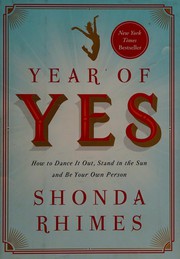
Year of Yes: How to Dance It Out, Stand in the Sun and Be Your Own Person
Shonda Rhimes takes her sister’s accusation seriously and spends a year saying yes to the things that frighten her, from live television to her own reflection.
2,585-word summary · 11 min read
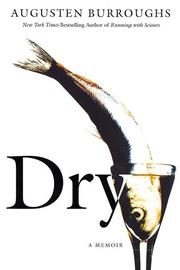
Dry
A memoir of drinking, rehab and relapse, and the strange business of getting sober one morning at a time.
2,643-word summary · 12 min read
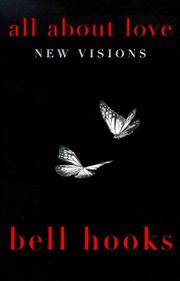
All About Love: New Visions
bell hooks borrows a definition of love as an action rather than a feeling, then spends thirteen chapters showing how hard it is to practice.
2,385-word summary · 11 min read
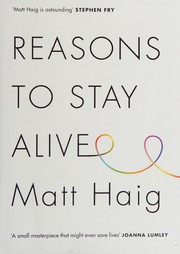
Reasons to Stay Alive
Matt Haig's memoir of the breakdown that nearly killed him at twenty four and the three years of unglamorous recovery that followed.
2,065-word summary · 9 min read
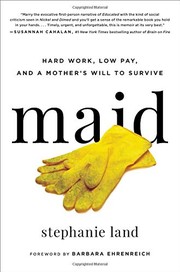
Maid: Hard Work, Low Pay, and a Mother's Will to Survive
Stephanie Land's memoir of cleaning houses as a single mother on the poverty line, and of the paperwork that made every step forward cost something else.
2,039-word summary · 9 min read
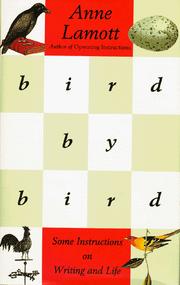
Bird by Bird
Anne Lamott's 1994 book on writing and life: shitty first drafts, the one-inch picture frame, and quieting the inner critic so you can take it bird by bird.
2,592-word summary · 12 min read
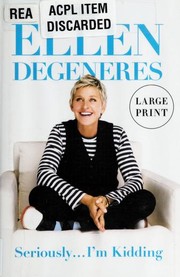
Seriously...I'm Kidding
DeGeneres strings show stories and home jokes into light life advice.
2,292-word summary · 10 min read
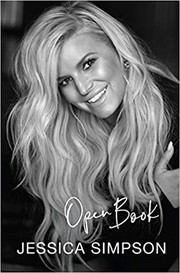
Open Book
Simpson replays pop fame, love and drink through recovery work.
2,552-word summary · 11 min read
Eats, Shoots & Leaves
Truss defends commas with jokes about pandas and posters.
2,423-word summary · 11 min read
10% Happier
An ABC newsman panics on air, then finds meditation without losing his edge.
2,590-word summary · 12 min read
Notes from a Small Island
Bill Bryson's 1995 farewell tour of Britain, funny and fond, from Dover to London, the north, Scotland and Wales.
2,301-word summary · 10 min read
In a Sunburned Country
Bryson revisits Australia by city walks and long trains, with reef trips, critter comedy, and explorer history.
2,387-word summary · 11 min read
Hunger
Roxane Gay traces how assault at twelve shaped her body, appetite, and daily life as a fat Black woman refusing shame.
2,583-word summary · 11 min read
Holidays on Ice
Six Christmas pieces, from a Macy's elf stint to a feral family newsletter. Sedaris at his sharpest and most sentimental.
2,410-word summary · 11 min read
The Anthropocene Reviewed: Essays on a Human-Centered Planet
John Green reviews ordinary parts of human life on a five-star scale, turning geese, keyboards, and sunsets into a warm memoir about attention.
2,982-word summary · 13 min read
Talking as Fast as I Can: From Gilmore Girls to Gilmore Girls
Lauren Graham looks back on broke actress years, Parenthood, and playing Lorelai Gilmore twice in this funny 2016 memoir.
2,701-word summary · 12 min read
Reading Lolita in Tehran: A Memoir in Books
Seven women meet in secret in Tehran to read Lolita, Gatsby, and Austen while revolution presses in.
2,916-word summary · 13 min read