
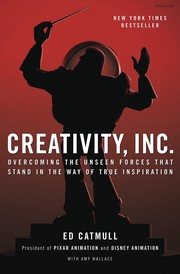
Creativity, Inc.: Overcoming the Unseen Forces That Stand in the Way of True Inspiration
2,179-word summary 10 min read 368 pages in the book
- First published
- 2014
- Publisher
- Random House
- Pages
- 368
- ISBN
- 9780812993011
Reading options
What's inside (9 sections)
I picked this up expecting a book about making Toy Story. What I got was a book about what happens to a company right after it succeeds, which is the harder problem and the more useful one. Ed Catmull co-founded Pixar, steered it through the broke years and the hit years, and wrote the book with Amy Wallace, who did much of the reporting. Random House published it in 2014. The edition I read runs 368 pages with ISBN 9780812993011. A Bantam Press edition appeared in the UK the same year, and Random House put out an expanded hardcover in 2023.
The subtitle promises a fight with unseen forces. The forces turn out to be ordinary and specific: a studio that got comfortable, a director who will not let go of a bad cut, a boss who says yes because the calendar says yes, and a group of people who quietly decide that being polite matters more than being right. None of that is glamorous, which is why I kept reading.
Utah and the first computer graphics
Catmull opens in West Monroe, Louisiana, in a house where Walt Disney was close to a religion. His father taught school, the family moved to Utah, and Ed grew up making drawings while wondering why nobody was drawing on a screen the way the movies did.
The University of Utah gave him what he wanted without meaning to. Ivan Sutherland ran a lab that treated students as colleagues rather than journeymen, and Catmull says plainly that Sutherland was the closest thing to a father he had in those years. The lab had hardware few universities owned, and it needed software to drive it, so students wrote software. That combination, cheap machines plus ambitious students, is where Catmull learned the thing that would shape his whole career: that the person who writes the tool decides what gets made with it.
The teapot is the famous example. A Utah colleague built a simple model of a teapot as a test object, and the lab's software rendered it with smooth shading, and the picture of that pot became the field's calling card. Other groups had supercomputers. Utah had students with time. That imbalance is the first version of the lesson Catmull keeps teaching.
He moved east after the PhD, to the computer graphics lab at the New York Institute of Technology, then to Lucasfilm's computer division in California as a vice president. The division was small and underfunded and mostly made television commercials. When Steve Jobs bought it in 1986 for roughly five million dollars, the group needed a name and picked one meant to sound like pixel. Catmull had just learned the hard way that a division full of capable people could still fail: the work was good, the market was not there, and the owner who mattered had no patience.
The software Jobs bought had been written to be flexible, which in a company with no customers is a luxury. Catmull's first management lessons came out of that mess: begin with what you have rather than what you wish you had, keep the work where everybody can see it, and make sure everyone participates rather than waiting for permission.
The lean years and a holiday deadline
The early Pixar was not a studio in any comfortable sense. It was a company making technology nobody had asked to buy, and the story Catmull tells about the period before Toy Story is mostly about how close the end came. A short film made on a hard holiday deadline became the thing that proved the group could finish something on time, and the studio survived on that kind of near miss for years.
What comes out of those years is a work ethic that is easy to admire in principle and hard to copy. Catmull describes how the team studied what other studios were making and asked why Pixar could not do it better, and the answer was usually that Pixar had better tools and less money. He also describes how the team guarded its own hiring. Getting the right people into the building mattered more to him than any single film, and he had to fight for it, because a studio that hired fast to solve a crisis hires people who will still be there after the crisis.
Catmull is careful about Disney here. Disney was the customer that paid for the group to exist, and he describes watching the place from the outside with the mixture of longing and contempt that a hungry company has toward a comfortable one. The park was the dream he had grown up with. By the time Pixar was hiring and shipping, the studio that owned the dream was run by someone Catmull plainly could not stand. He never pretends the book is neutral about that.
Toy Story and the trap of success
Toy Story arrived in 1995 and made everything else possible. Pixar had money, a reputation, and a new arrangement with Disney that let the studio share in the profits instead of taking only a fee. Catmull is direct about how frightening that was. A studio built to make one good picture at a time now had a franchise, a deadline, and a business model that rewarded volume.
His argument is the most useful thing in the book. The danger was never that the people got worse. The danger was that success taught the company to protect itself. A culture that has just been praised for its honesty learns quickly that honesty is expensive, because every honest note is a moment where somebody's work gets criticized and somebody senior has to be told the truth. Catmull says that most creative problems at Pixar were not craft problems. They were fear problems wearing craft problems as a disguise.
He also writes about the calendar. The schedule is where good intentions go to die, and he describes a habit of leaving slack in the plan, of treating an estimate as a guess that can be wrong, and of preferring to change the date rather than the standard. That sounds like ordinary project management until you see what it does to a team that is used to being rushed: people begin to tell the truth earlier, because the truth has time to be acted on.
The Braintrust and the daily work of candor
The Braintrust is the machine at the center of the book, and the name is Catmull's. It is an informal group, part review session and part peer group, made up of the directors and the people whose judgment the studio trusts. It watches a rough cut of a film and tells the director what is wrong with it.
The rules matter more than the idea, and Catmull lists them: no solutions, no judgments, no general praise, and the director keeps the decision. The Braintrust does not tell a director what to do. It tells a director what the audience is not going to feel. That distinction is why the practice survives contact with ego. A director who hates your note can still use it, because you never asked for a solution and never said the film was bad.
Catmull insists that early cuts are supposed to be bad, and that the whole ritual depends on everybody understanding that. If a first version is meant to be good, then every note is an attack on somebody's worth, and the only safe response is defensiveness. If the first version is a problem to be solved, then notes are simply information. He recalls the sharpest version of the idea from his own childhood, when his son Ewan drew a picture of a car that Catmull did not recognize. He asked what the drawing was, and the answer came back that it was a baby carriage with legs. Catmull's point is not that the child was right. His point is that he asked the wrong question, and that the habit of asking what you see instead of what it is has to be trained into adults who spend their lives judging work.
The other half of the practice is the postmortem. Pixar reviews films that worked as carefully as films that failed, and the review is not about blame. Catmull's argument is that a success hides its problems, because everyone is busy celebrating and nobody wants to be the one who says the thing everybody felt. Finding the flaw in a hit is the only way to avoid repeating it.
The retreat of 1998 and the lesson about Jobs
The best material in the book is the part about failure, and its centerpiece is the 1998 retreat. A member of the creative team came up with a sequel idea, and the team heard it and said it was not ready, that the story needed another year and a better shape. Jobs, who was sitting in the room, said the idea was great and that they should make it now.
They made it now. Toy Story 2 came out in 1999 and it is the weakest film of the studio's early run. Catmull writes that the creative team was right and that Jobs was wrong, and he does not soften it, which is the best thing in the book. He also admits what the team gained from being wrong in public: the instinct was right, the leader overruled it, and the studio learned something that no amount of good management could have taught it. He points out, fairly, that Jobs was right far more often than he was wrong, and that a studio with one great decision-maker who is occasionally wrong is not the same as a studio that is occasionally wrong by itself.
Later Jobs returns to Pixar after years away, and Catmull describes him pushing the studio to narrow its focus, to concentrate on what only Pixar could do, and to stop chasing projects that belonged to other studios. The 2006 push is one of the book's best portraits of a difficult leader doing real work: cuts, arguments, a company that had spread itself thin, and a man willing to be disliked in order to make the argument.
Catmull writes plainly about Jobs' death in 2011 and about what the studio lost with him. He is unsentimental about the criticism, which lands differently after the man is gone.
What the memoir leaves out
This is a business memoir written from inside the winning side, and it shows. Every company Pixar talks about is a company that found its footing. The failures are all near misses with good outcomes attached, and the people who left are mostly mentioned in passing. The book never dwells on the human cost of the schedule, the crunch, the people who worked for years without the visibility that the projects received, or the families that absorbed the hours. If you want to know what it was like to be in the building in the hard years, this is not the book.
The Pixar stories are also self reported, and Catmull is not a neutral witness to Disney. He is generous to the people he loves and hard on the people he does not, and Michael Eisner gets a chapter's worth of contempt that other Disney figures never receive. Amy Wallace's name is on the cover for a reason, and the book reads like a collaboration where the reporting was done by somebody else. The overall impression is of a careful, affectionate, slightly self-justifying account of one very unusual company, and it is more useful when read that way.
Who should read it
Read it if you manage people who make things and you suspect your problems are not technical. Read it if you have watched Toy Story and wondered how a studio that good keeps making films. Read it with a pencil, because the Braintrust rules transfer to any team that makes something people will react to, and the rules are short enough to write on a wall.
I would not read it for the Pixar lore. Much of the studio history here is told from memory by a man who was there, and the balance between history and legend is not always visible. I also found the Jobs material the least useful part in the present tense, not because it is wrong but because it is a portrait of a man who has been gone for more than a decade, and the book is better as a lesson about candor than as an argument about one man's judgment.
What stayed with me was the smaller claim underneath all of it: that creativity is not a rare gift that lands on a few people but a set of daily conditions that any group can either protect or destroy, and that the conditions are made of ordinary things like slack in the schedule, honesty in the room, and the willingness to hear bad news about your own work. None of that is glamorous. It is the whole book, though.
FAQ
When was Creativity, Inc. published?
Random House published it in 2014, and the edition I checked runs 368 pages with ISBN 9780812993011. Catmull wrote the book with Amy Wallace, who did the reporting and much of the drafting.
Is the advice in Creativity, Inc. realistic for a small team?
Not in the form Pixar had it. The Braintrust needs slack in the schedule, money, and a leader with the authority to act on bad news, so small teams often copy the ritual without the resources behind it.
Does the book oversell Pixar?
Some readers think so. Every story here comes from the winning side, the Pixar history is told by its own president, and Michael Eisner gets rougher treatment than anyone else in the book.
Similar books
The Hard Thing About Hard Things
A founder and CEO writes about the parts of running a company that no framework can fix, from layoffs and demotions to the loneliness of the job.
2,161-word summary · 10 min read
The Five Dysfunctions of a Team
New CEO Kathryn unites warring execs through trust, conflict, and care.
2,029-word summary · 9 min read
Good to Great: Why Some Companies Make the Leap... and Others Don't
A five-year study of 11 companies that leapt ahead shows Level 5 leaders, right people, hedgehog focus and flywheel momentum explain lasting gains.
2,374-word summary · 11 min read
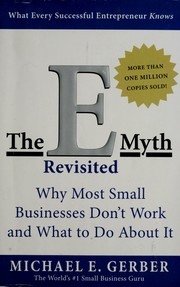
The E-Myth Revisited
Gerber argues that most small businesses are run by technicians who own a job rather than a business, and that the fix is a system that runs without them.
2,169-word summary · 10 min read
Art & Fear: Observations on the Perils (and Rewards) of Artmaking
Two working photographers write a short, blunt book about why people stop making art, and how to keep going when the work is going badly.
1,994-word summary · 9 min read
The Magic of Thinking Big
Schwartz's 1959 self-help classic argues that success follows from the size of your thinking, supported by sales anecdotes, vocabulary drills and goal setting.
2,579-word summary · 11 min read

The Letters of Vincent van Gogh
Vincent van Gogh's letters to his brother Theo, in a Penguin Classics selection edited by Ronald de Leeuw, trace a decade of work, faith, and obsession.
2,611-word summary · 12 min read

Letters to a Young Poet
Rilke's ten letters to a young officer cadet refuse easy criticism and ask whether he must write, offering patience and solitude as a way of life.
2,530-word summary · 11 min read
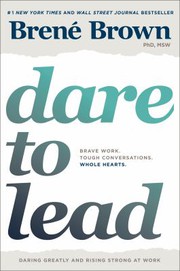
Dare to Lead
Research on courage shows how leaders build trust through vulnerability and clear values.
2,442-word summary · 11 min read
Think Again
Adam Grant argues for holding views loosely and testing them like a scientist, moving past preacher, prosecutor, and politician habits at work and in debate.
3,204-word summary · 14 min read
The One Minute Manager
A young seeker learns three one minute habits from a plainspoken boss: clear goals, quick praise, and fast fair correction.
2,997-word summary · 13 min read
Lean In
Sit at the table, negotiate, share home load, and change offices while knowing advice skews elite.
2,005-word summary · 9 min read
Steal Like an Artist
Kleon's 2012 illustrated guide gives ten principles for creative work, from borrowing openly and starting early to sharing, staying kind, and cutting the…
2,999-word summary · 13 min read
The Lean Startup
Ries lays out Build-Measure-Learn, MVPs, pivots and validated learning for building companies under extreme uncertainty.
2,581-word summary · 11 min read
Drawing on the Right Side of the Brain
Edwards teaches seeing edges spaces to draw via right brain exercises.
2,229-word summary · 10 min read

The Total Money Makeover: A Proven Plan for Financial Fitness
Dave Ramsey lays out seven Baby Steps, from a $1,000 starter fund to a paid-off house, with the debt snowball at the center.
2,663-word summary · 12 min read

Made to Stick: Why Some Ideas Survive and Others Die
The Heath brothers break down why some ideas vanish on contact while others lodge in memory, tracing six traits that make a message stick.
2,527-word summary · 11 min read

The Magnolia Story
How Chip and Joanna Gaines met, closed their first shop, nearly lost everything in a housing development, and built Fixer Upper.
2,994-word summary · 13 min read

The World Is Flat: A Brief History of the Twenty-first Century
Thomas L. Friedman's 2005 bestseller argues that technology, trade, and open borders leveled the global playing field, and it names the ten forces that did it.
2,369-word summary · 11 min read
Bird by Bird
Anne Lamott's 1994 book on writing and life: shitty first drafts, the one-inch picture frame, and quieting the inner critic so you can take it bird by bird.
2,592-word summary · 12 min read
The War of Art
Pressfield names Resistance and urges daily professional work.
2,565-word summary · 11 min read
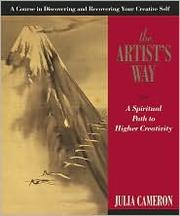
The Artist's Way: A Spiritual Path to Higher Creativity
A twelve week course with morning pages and artist dates to recover creativity.
2,345-word summary · 10 min read
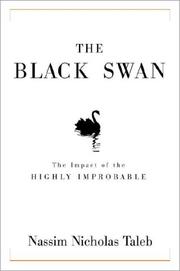
The Black Swan
Taleb argues rare shocks shape history more than models admit, and urges safer exposure over prediction.
2,588-word summary · 12 min read
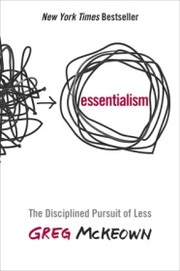
Essentialism
McKeown argues for less but better: discern the vital few, refuse the trivial many, and use buffers, small wins, and steady routines so key work gets done well…
2,421-word summary · 11 min read
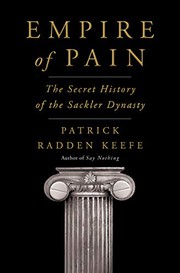
Empire of Pain: The Secret History of the Sackler Dynasty
How the Sackler family sold OxyContin and shaped an overdose crisis while giving to museums.
2,048-word summary · 9 min read
Braving the Wilderness: The quest for true belonging and the courage to stand alone
Belonging to yourself first lets you stand alone and still stay close to others.
2,004-word summary · 9 min read
The Millionaire Next Door
Stanley and Danko survey wealthy Americans and find frugal savers living next door, not big spenders, in this 1996 money study.
2,466-word summary · 11 min read
Drive: The Surprising Truth About What Motivates Us
Pink argues fair pay plus autonomy, mastery, and purpose at work beat carrots and sticks, using FedEx days, ROWE, flow, and clear Goldilocks tasks to explain…
2,339-word summary · 10 min read
Understanding Comics
McCloud explains comics in comics form, from icons to closure between panels.
2,091-word summary · 9 min read
SuperFreakonomics: Global Cooling, Patriotic Prostitutes And Why Suicide Bombers Should Buy Life Insurance
Levitt and Dubner apply incentives to prostitutes, suicide bombers, doctors, and climate fixes with cheeky data.
2,007-word summary · 9 min read