
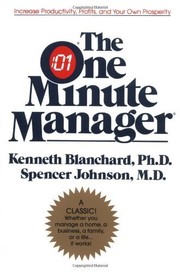
The One Minute Manager
2,997-word summary 13 min read 112 pages in the book
- First published
- 1982
- Publisher
- William Morrow
- Pages
- 112
- ISBN
- 9780688014292
Reading options
What's inside (7 sections)
I picked up this book because someone at work kept quoting it in meetings. Catch people doing things right, he would say, and move on like he had given us ancient wisdom. I finally asked what he was talking about and he slid a thin hardcover across the table. It was barely over a hundred pages. I read it in one sitting that night, which is exactly the point. The original came out in 1982 from William Morrow, runs 112 pages, and was written by Kenneth H. Blanchard with Spencer Johnson. Yes, the same Spencer Johnson who later wrote Who Moved My Cheese. The list credit here stays with Blanchard alone, but the cover of the early editions carries both names, and the voice inside feels like two practical men trying to keep things short.
What surprised me was how little it reads like a normal business book. There are no charts. It is a fable. A young man goes looking for an effective manager, finds one, and writes down what he learns. That is almost the whole plot. And yet this little story became a New York Times bestseller, sold about 15 million copies, got translated into dozens of languages, and landed on Time magazine's list of influential management books.
The young man who wanted answers
The story opens with a young fellow who is hungry to learn how organizations really work. He has talked to all kinds of bosses. Some are strict and get results but nobody likes working for them. Others are beloved and everyone feels warm around them, but not much gets done. He starts to wonder if there is a third type, someone who is both liked and effective, someone whose people produce good work and feel good about themselves at the same time.
A friend tips him off about a manager in a nearby town. People call this man the One Minute Manager, partly as a joke, because he claims his most important management work takes only a minute at a time. The young man calls for an appointment, half expecting a secretary to laugh him off. Instead he gets in quickly, which already tells him something. The manager is available. He is not hiding behind layers of assistants.
Their first talk sets the tone for the book. The manager laughs about his nickname and says his secret is simple. He makes it clear he is not perfect and his people are not robots. What he has is a small set of habits he repeats every day. The young man asks to learn them, and the manager agrees on one condition. The young man has to talk to the people on the team and hear how the methods feel from the other side. That detail stuck with me. The book does not want you to take the boss at his word. It sends you to ask the staff.
So the middle of the book is a series of interviews. The young man sits with a handful of employees, hears the same three ideas from different angles, and pieces together a way of managing that is firm and kind at once. It is corny in places. It is also easy to remember, which is why managers keep handing it to new supervisors.
If you go in expecting a novel, you will be disappointed. The young man has no real backstory. The dialogue is plain to the point of stiffness. But that plainness is doing work. You are meant to see yourself in the visitor while the three secrets stand out.
One Minute Goals, or agreeing on what good looks like
The first secret is One Minute Goals. It starts from a complaint most of us recognize. In many workplaces nobody is quite sure what they are supposed to do. The job description is vague. Priorities shift every week. Then review season arrives and the manager pulls out a checklist the employee never saw before. The book treats that as a failure of leadership, not a failure of the worker. Its fix is to agree on goals up front, in plain language, and to keep each goal short enough to read in about a minute.
In practice it looks like this. Manager and employee sit down and settle on three to five main areas of responsibility. For each one they define what good performance looks like, in specific terms. Then they write it down so it fits on a single page, using 250 words or fewer per goal. The one page stays visible. The employee can reread it daily in a minute or two and check, am I spending my time on what we agreed matters most.
The 80/20 idea comes up here. Most results come from a small number of activities, so clarity about those few activities matters more than long memos. The best goals are observable. Not do your best on customer service. More like answer client calls within one business day and log the outcome. Something you can see and count.
What I liked about this part is the emphasis on agreement. The manager does not simply hand down targets. He talks them through until both sides understand what is expected. That back and forth is the real work. Writing it down is just proof that the talk happened. And because the goals are short, they get reread. A five page plan goes in a drawer. A single page taped near the phone gets used.
There is a quiet second point tucked inside. Once goals are clear, the employee is expected to take ownership. The manager says, in effect, you know what success looks like, now go do it, and bring me problems only after you have tried to solve them. Some readers will find that bracing. Others will find it lonely, especially if they are new and need more coaching. The book assumes a baseline of skill. It does not spend much time on training someone from zero, which is one of its blind spots.
Still, as a corrective to fuzzy management, this chapter earns its place. I have worked places where goals lived in slide decks nobody opened. The discipline of one page, plain words, reread often, would have helped. When I tried it after reading, I rewrote my own weekly priorities on an index card. Three lines. It felt almost too small. It also made Monday morning decisions faster, because the card answered the question of what could wait.
One Minute Praisings, or catching people doing things right
The second secret is One Minute Praisings, and it is the heart of the book.
Most managers spend their attention on mistakes. They walk the floor looking for what is wrong. The One Minute Manager reverses the search. He trains himself to notice when someone does something right, or approximately right, and to praise it right away. The praise itself takes about a minute. It has a shape. Say what the person did, in specific terms. Tell them how good you feel about it and how it helps the team. Pause for a beat so the words land. Then encourage them to keep it up, sometimes with a handshake or a hand on the shoulder.
That pause matters more than it sounds. The book insists you stop talking for a few seconds and let the other person feel the approval. No rushing to the next topic. Just a short silence where the praise can settle. Then contact, human and brief, to close the moment.
The staff members the young man interviews explain why this works. Early praise builds confidence. A new hire who gets noticed for getting the first steps right will try harder on the next steps. A veteran who hears specific thanks for handling a tough call will repeat the behavior that earned it. Vague praise like good job does little. Specific praise teaches. It says, do more of exactly this.
There is also a line the book returns to in different forms, that people who feel good about themselves tend to produce good results. You can argue about the psychology. Feeling good does not automatically create skill. But the direction is right for most workplaces. Fear makes people hide errors. Noticed effort makes people share problems earlier.
The hard part is sincerity. The book warns against flattery. If you praise everything, praise means nothing. The trick is to look for real moments, especially small ones at the start, and to be exact about what you saw. I tried this with a coworker who had written a clear status update during a messy week. I told him which paragraph helped me and why, instead of my usual thanks. He looked surprised, then pleased. It took less than a minute. I do not think it changed his life. I do think he wrote the next update with the same care.
A fair question is whether grown adults need this much affirmation. The book says yes, plainly. Work can be thankless, and attention is a form of respect. You do not have to be effusive. You do have to be prompt and concrete. Tell the truth about good work while the memory is fresh, and people learn what good looks like without a training manual.
One Minute Reprimands, and why the book later changed the name
The third secret is the one that causes the most argument. In the 1982 edition it is called the One Minute Reprimand.
Here is how it is supposed to work. When someone makes a clear mistake, you address it soon, in person, and keep it to about a minute. First half: name the error precisely and say how you feel about it. Frustrated, concerned, surprised. No insults. No piling on old history. Just this action, these consequences, stated plainly. Then a pause, uncomfortable but brief, so the weight of it registers. Second half: remind the person that you think well of them, that you value them, that this slip is not typical of who they are. End with confidence that they will do better, and do not bring it up again once it is settled.
The book draws a sharp line between behavior and worth. Attack the performance, not the person. That distinction sounds easy and is hard in practice. Many of us, under stress, slide from you missed the deadline into you are unreliable. The one minute structure forces a reset. Say what happened. Say why it matters. Reaffirm the person. Stop. The time limit keeps anger from taking over the meeting.
The employees in the story stress that reprimands only land if praisings came first. If the only time your boss talks to you is to scold, you hear every correction as proof you are failing. If praise has been regular and specific, a sharp correction reads as information, not rejection. That pairing is the whole system. Goals tell people where to aim. Praise tells them when they are on target. Reprimands tell them quickly when they drift, before the drift becomes habit.
So why did later editions change the name. In The New One Minute Manager, published in 2015, the third secret became the One Minute Re-Direct. The steps are close to the original, but the language is softer and the emphasis shifts from punishment to course correction. You confirm the goal together, restate your trust, describe the miss, and agree on a new approach. Readers can guess the reason. Reprimand sounds harsh to modern ears, and plenty of managers used the old label as cover for venting. The update tries to keep the speed and candor while dropping the sting of the word.
I have mixed feelings here. Fast honest feedback beats a vague warning months later. Everyone has lived through the annual review ambush, where a manager reveals a complaint from March in November. But a minute is not always enough. Some errors come from unclear instructions, missing tools, or overload. A good manager needs to know when to stay in the minute and when to sit down longer and ask what got in the way.
The book also assumes the goal was truly agreed upon. If it was dictated, the reprimand feels unjust no matter how well phrased. That is worth remembering before you try any of this word for word. The method works best when the first secret was honored. Clear shared goals make quick corrections feel fair. Without them, quick corrections feel like gotchas.
What holds up, and what feels thin
It helps to remember how small this book is. At 112 pages, with wide margins and lots of dialogue, you can finish it in an evening. That brevity is a feature. Blanchard and Johnson distrusted long manuals, and they wanted a new supervisor to grasp the system on a flight or a weekend. Judged on those terms, the book succeeds. Three ideas, each explained through story and example, each usable on Monday morning.
The praise habit holds up best. Timely, specific recognition beats generic bonuses for day to day motivation, especially from a direct supervisor. The book got there early and said it simply. Catch people doing things right has entered the water supply of management talk.
The goals habit holds up if you adapt it. One page and plain words remain good advice in an age of dashboards and alerts. I would add what the book skips. Revisit the page together when priorities change, or it goes stale. Write down what you will stop doing, not only what you will do. And if someone is learning a role, pair the card with examples of good work, instead of descriptions alone. The book gestures at this but moves on fast.
The reprimand habit is the most dated and the most useful to argue with. Fast feedback is still wise. Public shaming never was, and the book never asks for that, to its credit. Everything stays private and brief. But the tone of the original can read as paternal, and the promise that a minute fixes most misses is too neat. Real teams have repeated problems, unclear ownership, and tired people. Sometimes you need a longer talk, a change in workload, or an apology from the manager for setting a fuzzy target. The 2015 revision recognized some of this by reframing the third minute as a redirect. If you buy the book today, you will likely get that newer language. The core stays the same. Be quick, be specific, separate the act from the person, reaffirm trust.
Then there is the criticism that followed the book from the start. Reviewers called it a fad, a repackaging of management by objectives. There is truth in that. The goal chapter owes a lot to older planning literature. One critic in Business Week dismissed it as the executive equivalent of paper training a dog, which captures the worry. People are not pets. Praise can feel manipulative if it is used as a lever rather than offered as honest thanks.
A sharper controversy came in 2001, when the Wall Street Journal noted similarities between the book and an article by Blanchard's former colleague Arthur Elliot Carlisle. I am not in a position to settle who owed what to whom. The book does not cite much. It tells a story and moves on. Readers who want sources will be frustrated. Readers who want tools may not care.
There is also the question of who this is for. New managers with willing teams will get the most from it. They need permission to be direct and a script for doing it kindly. Experienced leads in complex orgs may find it thin. It says little about hiring, firing, pay, or remote work. A minute of praise means different things in different places. The book, very American and very early eighties in tone, does not explore that variation.
And yet I keep thinking about the young man at the center. His search is the real subject. He meets bosses who are hard but lonely in their results, and bosses who are warm but vague, and he senses both are incomplete. The One Minute Manager offers a middle path. Set clear targets so kindness is not confusion. Give thanks so firmness is not coldness. Correct fast so small slips do not become resentments. You can call that obvious. Much of it is obvious after someone says it well. The value is in doing all three together, repeatedly, until the team trusts the pattern.
Would I hand it to a friend starting their first team. I would, with a few warnings. Read it for the habits, not the prose. Do not copy the dialogue out loud. Translate the reprimand into your own words and lean toward the newer redirect framing. Praise in specifics, and mean it, or skip it. Johnson brought the storyteller instinct that makes the lesson stick. Blanchard brought the manager training behind it.
I finished the book feeling two things at once. Relief, because managing can be described this plainly. And suspicion, because work is rarely this tidy. When praise fits, give it fast and name exactly what worked. When a goal is foggy, stop and rewrite it until a new hire could understand it. When someone slips, speak soon, speak to the act, and close by saying you still count on them. For a book you can read in an hour, that is a decent return.
A last practical note for collectors and library holds. The first edition is the 1982 William Morrow hardcover, the one with both Blanchard and Johnson on the title page and the 112 page count that keeps showing up in catalogs. Later printings moved to other imprints, including Berkley paperbacks. If you want the original three secrets with the original wording, look for the eighties or nineties Morrow or Berkley copies. If the word reprimand bothers you, pick up the 2015 New edition and read redirect instead.
FAQ
Who wrote The One Minute Manager and when was it published?
Kenneth H. Blanchard wrote it with Spencer Johnson. William Morrow published the original in 1982, a 112 page hardcover with ISBN 9780688014292.
What are the three secrets?
One Minute Goals, One Minute Praisings, and One Minute Reprimands. The 2015 update, The New One Minute Manager, renames the third secret the One Minute Re-Direct.
Is it worth reading for a new manager?
Yes, especially new supervisors. It reads in an evening and gives usable defaults, but pair it with longer coaching when goals are foggy or workload is the real problem.
Similar books

The 7 Habits of Highly Effective People
Covey's famous framework for living by principle: seven habits that move from private victory to working well with others.
2,259-word summary · 10 min read
The E-Myth Revisited
Gerber argues that most small businesses are run by technicians who own a job rather than a business, and that the fix is a system that runs without them.
2,169-word summary · 10 min read
The Magic of Thinking Big
Schwartz's 1959 self-help classic argues that success follows from the size of your thinking, supported by sales anecdotes, vocabulary drills and goal setting.
2,579-word summary · 11 min read
Creativity, Inc.: Overcoming the Unseen Forces That Stand in the Way of True Inspiration
Pixar's president on why the studio that made Toy Story nearly broke itself, and the daily habits that kept the creativity coming.
2,179-word summary · 10 min read
The Hard Thing About Hard Things
A founder and CEO writes about the parts of running a company that no framework can fix, from layoffs and demotions to the loneliness of the job.
2,161-word summary · 10 min read
Dare to Lead
Research on courage shows how leaders build trust through vulnerability and clear values.
2,442-word summary · 11 min read
Essentialism
McKeown argues for less but better: discern the vital few, refuse the trivial many, and use buffers, small wins, and steady routines so key work gets done well…
2,421-word summary · 11 min read
The Five Dysfunctions of a Team
New CEO Kathryn unites warring execs through trust, conflict, and care.
2,029-word summary · 9 min read
Getting Things Done: The Art of Stress-Free Productivity
Capture all, clarify next moves, sort by context, review weekly, and engage calmly like water.
2,030-word summary · 9 min read
Rework
Two Basecamp founders argue for smaller, faster business: skip big plans, cut meetings, ship half a product.
2,948-word summary · 13 min read
Good to Great: Why Some Companies Make the Leap... and Others Don't
A five-year study of 11 companies that leapt ahead shows Level 5 leaders, right people, hedgehog focus and flywheel momentum explain lasting gains.
2,374-word summary · 11 min read
The 4-Hour Workweek
Ferriss's 2007 manual for escaping the nine to five: define the dream, cut fake work, automate a small income, and travel now.
2,986-word summary · 13 min read
The Total Money Makeover: A Proven Plan for Financial Fitness
Dave Ramsey lays out seven Baby Steps, from a $1,000 starter fund to a paid-off house, with the debt snowball at the center.
2,663-word summary · 12 min read
Made to Stick: Why Some Ideas Survive and Others Die
The Heath brothers break down why some ideas vanish on contact while others lodge in memory, tracing six traits that make a message stick.
2,527-word summary · 11 min read
The 5 AM Club
A struggling entrepreneur and artist are mentored by a billionaire who teaches them to reclaim the first hour of the day.
2,205-word summary · 10 min read
How to Stop Worrying and Start Living
Carnegie offers day-tight routines for worry built from interviews and worker stories.
2,505-word summary · 11 min read
Think Again
Adam Grant argues for holding views loosely and testing them like a scientist, moving past preacher, prosecutor, and politician habits at work and in debate.
3,204-word summary · 14 min read
Braving the Wilderness: The quest for true belonging and the courage to stand alone
Belonging to yourself first lets you stand alone and still stay close to others.
2,004-word summary · 9 min read
The Millionaire Next Door
Stanley and Danko survey wealthy Americans and find frugal savers living next door, not big spenders, in this 1996 money study.
2,466-word summary · 11 min read
Emotional Intelligence
Goleman argues self awareness and empathy shape success more than IQ alone.
2,026-word summary · 9 min read
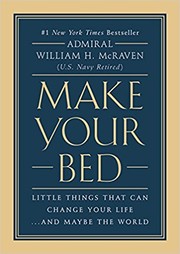
Make Your Bed: Little Things That Can Change Your Life...And Maybe the World
SEAL lessons from bed making to never ringing the bell, from McRaven's 2014 Texas speech and 144 page book.
2,974-word summary · 13 min read
Influence: The Psychology of Persuasion
Six levers plus unity explain why people say yes, learned undercover in salesrooms and labs.
2,030-word summary · 9 min read
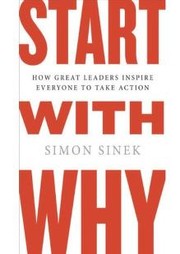
Start with Why
Great leaders start with Why before How and What, from Apple to King.
2,206-word summary · 10 min read
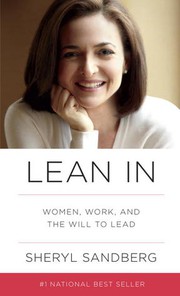
Lean In
Sit at the table, negotiate, share home load, and change offices while knowing advice skews elite.
2,005-word summary · 9 min read
Steal Like an Artist
Kleon's 2012 illustrated guide gives ten principles for creative work, from borrowing openly and starting early to sharing, staying kind, and cutting the…
2,999-word summary · 13 min read
Think and Grow Rich
Hill teaches desire, faith and autosuggestion, distilling lessons from Carnegie interviews into thirteen principles for success.
2,458-word summary · 11 min read
The Lean Startup
Ries lays out Build-Measure-Learn, MVPs, pivots and validated learning for building companies under extreme uncertainty.
2,581-word summary · 11 min read
The Power of Habit
Why we do what we do: the cue routine reward loop, keystone habits, and how companies and movements use the same science, from toothpaste to the bus boycott.
2,207-word summary · 10 min read
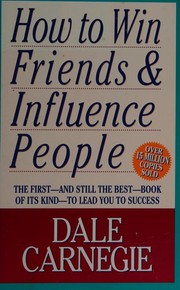
How to Win Friends and Influence People
Carnegie's 1936 guide to getting along offers plain habits for listening, praise, and persuasion. This summary walks through its parts, stories, limits, and…
2,360-word summary · 10 min read
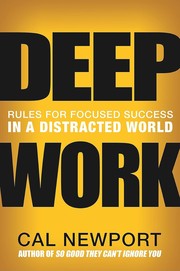
Deep Work: Rules for Focused Success in a Distracted World
Cal Newport's Deep Work in full: what focused work actually is, why shallow busyness wins by default, and the four philosophies he recommends for protecting…
2,138-word summary · 10 min read