
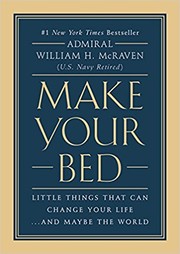
Make Your Bed: Little Things That Can Change Your Life...And Maybe the World
2,974-word summary 13 min read 144 pages in the book
- First published
- 2017
- Publisher
- Grand Central Publishing
- Pages
- 144
- ISBN
- 9781455570249
Reading options
What's inside (8 sections)
A friend sent me the video of McRaven's 2014 University of Texas speech years ago, the one with millions of views, and I watched it at my kitchen table and thought, well, that was solid. Then I kept seeing this slim book quoted everywhere, on office walls and in graduation cards. I finally picked it up because I wanted the stories behind the slogans. William H. McRaven published it with Grand Central Publishing in 2017, a 144 page book with ISBN 9781455570249. It grew out of his May 17, 2014 commencement address in Austin, built around the school slogan about what starts in Texas changing the world. Ten short chapters, each one a lesson from Navy SEAL training. I read it in two sittings. It is plainspoken, a little repetitive in places, and more moving than I expected.
The setup matters. McRaven spent thirty seven years as a Navy SEAL and ended up commanding all United States Special Operations Forces. Basic SEAL training, the six months at Coronado, California that breaks most people who try it, gave him his material. Cold surf. No sleep. Instructors who were Vietnam veterans and did not accept sloppy work. He does not present himself as a genius. He presents himself as a regular guy from Texas who learned how ordinary habits hold up under pressure. That tone carries the book.
If you want to change the world, start off by making your bed.
That line opens the book and it sounds like a poster until he explains what it cost to get wrong.
A made bed and a boat crew
Every morning in SEAL training, the first inspection was the bed. Steel frame, mattress, two sheets, a grey wool blanket, pillow centered at the head. Corners had to be square. The blanket had to be pulled tight enough to bounce a coin. If your bed failed, you ran extra. Ten miles sometimes, in boots, before breakfast. McRaven says the point was never the blanket. The point was proof that you could do a small thing right.
I laughed at first. Coin bounce as philosophy. Then I tried it for a week. Up, coffee, bed made before phone. It did change the mornings a little. You start with one finished task instead of a blur of half started ones. And on a bad day, and we all get them, you come home to something orderly that you made. McRaven leans on that image. A made bed tells you tomorrow can be better because you have already made one thing better today.
He later tore his body up badly in a parachute jump, ripped muscles in his stomach and pelvis, and spent months learning to walk normally again. During that recovery, making his own bed without help became a marker. A tiny win that said the larger recovery was possible. I found that passage more honest than the graduation speech version. Pain makes small tasks feel large. Finishing one anyway steadies you.
The second lesson follows fast. Find someone to help you paddle.
SEAL crews train in small inflatable boats. Seven men, paddling in rhythm through heavy surf off Coronado. One weak paddler and the boat flips or stalls. One strong paddler showing off and the rhythm breaks anyway. You learn to match strokes, to call out, to trust the guy in front of you. McRaven's crew struggled early. They were mismatched and argumentative. Over weeks they learned to move as one unit and started placing well in races against crews that looked stronger on paper.
McRaven extends this beyond the beach. Nobody gets through SEAL training alone, and nobody gets through a career or a family crisis alone either. He talks about swim buddies checking each other during long cold swims, about instructors watching for the lone wolf who refuses help. That person usually quits. I thought about my own work projects while reading this. The times I tried to carry everything myself went worse than the times I asked a colleague to paddle with me, even when asking felt awkward.
Small hearts and sugar cookies
The third lesson is my favorite. Measure a person by the size of their heart, and forget the size of their flippers.
SEAL training draws big athletes. Football players. Water polo guys. Tall men with long reaches. Then there are the smaller trainees who look out of place on the grinder, the concrete yard where they do endless pushups and runs. McRaven remembers one small, wiry student in particular, not the fastest at the start, not the loudest, who simply refused to fall out. On runs he stayed in the pack. On swims he kept steady. On the obstacle course he scrambled with a kind of stubborn energy. By the end, the big men respected him because grit had closed the gap that size opened.
McRaven uses this to talk about talent worship. Height, grades, family money, perfect test scores. Those help, sure. They do not predict who keeps going at 2 a.m. in cold water. Heart here means persistence plus care for the team. Do you keep moving. Do you encourage the person next to you. I have seen this at ordinary jobs. The new hire with the fancy resume fades when the work gets boring. The quiet one who shows up, asks questions, and finishes tasks becomes the person everyone wants nearby.
Then comes the sugar cookie, the strangest phrase in the book, and the one every SEAL graduate remembers.
Fail a uniform inspection and you ran into the Pacific fully clothed, then rolled on the beach until sand stuck to every wet inch of you. Uniform, hair, even your teeth gritty. You stayed that way all day. Cold, damp, chafing. They called it becoming a sugar cookie. Sometimes the inspection felt rigged. Your shirt was fine but the instructor found a loose thread. Your boots were shined but a spot of sand from yesterday counted against you. Effort did not always protect you.
McRaven's lesson is blunt. Get over being a sugar cookie and keep moving forward. Life hands out unfair punishments. Good preparation still ends in bad outcomes. A denied promotion. A illness. A layoff after a strong year. Complaining all day does not dry the uniform. Moving forward does.
He adds a harder story here. One of his instructors, a tough man who dished out sugar cookies without sympathy, later suffered a severe accident that left him facing permanent limits. McRaven watched him refuse long self pity and build a new version of his life. The man who once punished cadets for whining now lived his own advice. That turn gives weight to what could have been a bumper sticker. Anyone can preach fairness from a podium. Living without bitterness after a real loss is different.
I sat with that chapter longer than the others. It does not promise justice. It promises choice inside injustice.
Circuses and going headfirst
If sugar cookies were unfair, the circus was earned and dreaded.
Fail to meet the daily standard in a swim or run or obstacle time and your name went on a list. At day's end, everyone on the list did two extra hours of punishment exercise. Pushups, flutter kicks, running with boats on heads, swimming extra laps while tired. They called it the circus, and nobody wanted an invitation. Worse, the extra work left you exhausted for the next day, which made another failure likely, which meant another circus. A spiral.
McRaven and his swim partner lived on that list for a stretch. Their two mile timed swims kept falling short. Night after night they dragged through the circus, woke sore, swam poorly again. He admits they wanted to quit the water and dreaded seeing their names posted. Then something shifted. The extra hours in the water built stamina and technique. Their times dropped. They moved from the back of the pack toward the front. The punishment that was supposed to break them trained them.
Do not fear the circus, he writes. Failure can strengthen you if you stay in it and learn.
I have mixed feelings here, and the book earns some criticism on this point. In real life, repeated failure does not always build skill. Sometimes it signals a wrong method or a stacked deck or exhaustion that needs rest. McRaven knows training is a controlled setting where instructors calibrate the pain. A bad boss or a bad market is not calibrating anything. Still, the core habit is useful. Ask what the failed rep teaches. Fix one thing. Show up again.
Lesson six pairs with this. Sometimes you have to slide down the obstacle headfirst.
The SEAL obstacle course at Coronado includes a tall tower with a long rope slide, about thirty feet up, known as the Slide for Life. Most students go down feet first, slow and safe. The record holders go headfirst, which is faster and frightening. You have to commit fully, grip right, keep your body straight, accept speed. Hesitate halfway and you stall or fall badly.
McRaven was a careful student on obstacles. He did things correctly but cautiously. A senior instructor challenged him to try the slide headfirst. He resisted, then watched faster men pull ahead in timed runs because of that one event. Finally he practiced the grip, took a breath, launched himself head down, and flew. He beat his old time by a wide margin and, for a brief period, held one of the faster marks. The physical risk was real, and he does not pretend otherwise. The point is about calculated daring. At some point safe methods cap your growth.
This chapter made me think about job changes and speaking up in a meeting. Low stakes compared to a rope burn from thirty feet, but the same hitch in the chest. McRaven does not tell you to be reckless. He tells you to prepare, check the rope, then commit.
Still, the image stuck with me. Headfirst on purpose.
Sharks and the darkest hours
Lesson seven starts in the water at night.
To pass training, crews must complete a long open ocean swim, about four miles from San Clemente Island, in darkness. Beforehand instructors list the local sharks with cheerful detail. Leopards. Makos. Hammerheads. Great whites. They add that no student has been eaten recently, which gets a nervous laugh. Then they teach the drill. If a shark circles, hold position. Do not swim away in panic. Do not show fear in your strokes. If it darts at you, punch it hard in the snout. Show strength and it will often turn.
McRaven was genuinely afraid of sharks. He admits it without polish. The water was black, his mask fogged, every bump of kelp felt like a fin. Becoming a SEAL mattered more than staying comfortable, so he swam anyway. Courage, in his telling, is not absence of fear. It is swimming straight through fear toward something that matters.
He stretches the shark into a picture of bullies. Schoolyard bullies. Office bullies. Political tyrants. People who sense hesitation and circle. His advice is to plant and face them. Speak plainly. Refuse to be moved by intimidation. Use the strength you already have. He draws on his later career here, dealing with powerful and threatening figures while leading special operations, though he keeps details light for security and brevity. The message stays practical. Bullies count on you swimming away. When you hold ground, their power shrinks.
Does this oversimplify real danger. Yes, in places. Punching every shark is bad advice in life. Some fights need lawyers, allies, exits, records, patience. Take the spirit, add judgment. Stand firm where it counts. Get backup where you need it.
Lesson eight goes darker. Be your very best in the darkest moment.
Everyone hits a point where they are cold, tired, failing, and tempted to go through motions. In training that might be Hell Week, five days with little sleep and constant cold. In service it might be a mission going wrong or a hospital waiting room. McRaven argues that this is exactly when others watch you most closely. Your calm steadies them. Your panic spreads.
He tells stories of leaders who stayed composed under fire, who checked gear, spoke quietly, gave clear orders, shared risk. He also returns to his own injury period, when pain and painkillers made him short tempered at home. His wife and kids needed steadiness, not a hero story. Learning to be present and kind while hurting was harder than any swim. I respected that admission. It keeps the chapter from turning into pure war glory.
There is a useful distinction here between performance and presence. Best does not always mean fastest or toughest. Sometimes it means clearest. Making the next right call. Saying what is true without extra drama.
These two chapters form the heart of the book for me. Fear and darkness. Everyone meets both. The tools are unglamorous. Breathe. Hold ground. Do good work when no one would blame you for coasting.
Singing in the mud
Lesson nine has the scene people quote most after the bed.
The mud flats at Coronado are a pit of thick, cold muck. On command, trainees wade in up to their necks and stay there for hours. Wind cuts across. Muscles cramp. Instructors patrol the edge and offer a deal. Quit now and you can get warm. Hot shower. Dry clothes. Just ring out. A few always take it. Most stay, shivering, trying not to think about how long is left.
On one miserable afternoon, with the whole class sunk and silent, one trainee started to sing. Off key, loud, a little crazy. Then another joined. Then the whole pit. McRaven does not present it as beautiful. He presents it as defiant warmth. The singing did not change the temperature, but it changed the mood enough to endure. The instructors, who had seen many classes, let it play out. The class that sang together stayed together.
Start singing when you are up to your neck in mud, he writes. Give people hope.
He connects this to larger service. Wounded troops in hospitals. Families waiting through deployments. Civilians after disasters. One person choosing hope can shift a room. He tells of medics joking gently with injured soldiers, of officers writing honest but encouraging notes, of small acts that said you are not forgotten. Hope here is not pep talk. It is concrete. A song. A shared joke. A promise kept.
I thought about a winter when our street lost power for two days. Neighbors gathered in one living room with blankets and a gas stove, charging phones in shifts, making soup from thawing freezers. Someone brought a guitar and played badly. Kids laughed. Nobody felt less cold, but everyone felt less alone. That is the mud flats in miniature, without the military stakes. One voice starting is often enough.
McRaven is careful to say hope must be paired with work. Singing did not excuse anyone from the next evolution. It fueled it. I like that balance. Cheer without effort is empty. Effort without cheer is brittle. Put them together and people last longer than they thought possible.
If the book has a warm center, this is it.
The bell you do not ring
The final lesson is the simplest and the hardest. Do not ever, ever ring the bell.
In the middle of the training compound hangs a brass bell. Anyone can quit at any time. Walk over, ring it three times, drop your helmet, and you are out. No more dawn runs. No more cold surf. No more shouting. On hard days the bell seems to shine. Instructors remind you it is there. Quitting is always an option, which is what makes staying meaningful.
McRaven has watched hundreds ring it. Some rang in the first week. Some rang during Hell Week with only hours left. Some rang after injury or failure convinced them they did not belong. He does not mock them. He says quitting whispers that life will get easier immediately, and it will, for a day. Then you carry the knowledge that you stopped.
His counter is to refuse the bell in small things first so you can refuse it in large ones. Finish the swim. Finish the school term. Finish the rehab set. Keep promises to yourself when breaking them would be easy and invisible. Those private wins build the identity of someone who does not quit.
He closes by returning to Texas. If you make your bed, paddle with others, judge by heart, move past unfairness, grow from failure, dare wisely, face bullies, shine in dark hours, give hope, and refuse to quit, then your life will matter and you may shift the lives around you. One person can nudge ten, ten can nudge hundreds. Change spreads outward.
Is that too neat. A little. One hundred forty four pages cannot cover luck or the many ways effort goes unrewarded. McRaven writes from inside an elite institution that selects for health and support. The prose also repeats. Each chapter follows a similar arc of cold water, struggle, moral.
And yet I closed the book feeling steadier. The advice is decent, the stories are specific, the demands are clear. Make the bed. Help paddle. Respect heart. Keep moving after unfair hits. Use failure. Risk the slide. Face the shark. Show up well when it is dark. Sing in the mud. Leave the bell alone. I can remember all ten without notes, which is rare for this kind of book.
I would hand it to a graduate, a new manager, anyone starting something hard. Read it fast, argue with parts, keep what helps. Start tomorrow with a tight blanket and a made bed.
FAQ
When was Make Your Bed published?
Grand Central Publishing published it on April 4, 2017. The hardcover runs 144 pages with ISBN 9781455570249.
What are the ten lessons in Make Your Bed?
Make the bed, find help paddling, judge by heart, move past sugar cookies, learn from circuses, slide headfirst, face sharks, shine in dark hours, sing in the mud, and never ring the bell.
Is Make Your Bed only for military readers?
No. McRaven wrote it from SEAL training but aimed it at graduates, managers, and anyone starting something hard. Civilians can use the habits while adding judgment about risks and asking for help.
Similar books

The Magic of Thinking Big
Schwartz's 1959 self-help classic argues that success follows from the size of your thinking, supported by sales anecdotes, vocabulary drills and goal setting.
2,579-word summary · 11 min read
Don't Sweat the Small Stuff ... and It's All Small Stuff: Simple Ways to Keep the Little Things from Taking Over Your Life
Richard Carlson’s 1997 bestseller offers one hundred short chapters on lowering the volume on daily irritations, and it is more pragmatic than its title…
2,502-word summary · 11 min read

The War of Art
Pressfield names Resistance and urges daily professional work.
2,565-word summary · 11 min read
How to Stop Worrying and Start Living
Carnegie offers day-tight routines for worry built from interviews and worker stories.
2,505-word summary · 11 min read
Dare to Lead
Research on courage shows how leaders build trust through vulnerability and clear values.
2,442-word summary · 11 min read
Braving the Wilderness: The quest for true belonging and the courage to stand alone
Belonging to yourself first lets you stand alone and still stay close to others.
2,004-word summary · 9 min read

The Power of Positive Thinking
Peale's 1952 guide to faith, affirmations, picturing success, prayer, and worry control, retold chapter by chapter with stories, limits, and small daily habits…
2,742-word summary · 12 min read

12 Rules for Life
Twelve essays on responsibility from posture to truth to petting cats.
2,045-word summary · 9 min read
Can't Hurt Me
Abused kid to SEAL to ultrarunner shares mirror, counting, and crew with warnings to adapt.
2,065-word summary · 9 min read

What Happened to You?
Oprah Winfrey and psychiatrist Bruce Perry explain how early experience shapes the brain, and why asking what happened to someone works better than asking what…
2,238-word summary · 10 min read

The Courage to Be Disliked: The Japanese Phenomenon That Shows You How to Change Your Life and Achieve Real Happiness
A philosopher and an angry young man argue over five nights about Adlerian psychology, trauma, approval, and the freedom to be disliked.
2,054-word summary · 9 min read

Moonwalking with Einstein: The Art and Science of Remembering Everything
A journalist spends a year training for the U.S. Memory Championship and discovers that extraordinary memory is mostly technique, attention, and a lot of…
2,027-word summary · 9 min read

The Total Money Makeover: A Proven Plan for Financial Fitness
Dave Ramsey lays out seven Baby Steps, from a $1,000 starter fund to a paid-off house, with the debt snowball at the center.
2,663-word summary · 12 min read
Year of Yes: How to Dance It Out, Stand in the Sun and Be Your Own Person
Shonda Rhimes takes her sister’s accusation seriously and spends a year saying yes to the things that frighten her, from live television to her own reflection.
2,585-word summary · 11 min read

Made to Stick: Why Some Ideas Survive and Others Die
The Heath brothers break down why some ideas vanish on contact while others lodge in memory, tracing six traits that make a message stick.
2,527-word summary · 11 min read
Four Thousand Weeks: Time Management for Mortals
Oliver Burkeman turns the whole productivity project on its head, arguing that a human lifespan of roughly four thousand weeks is not a problem to optimize…
2,447-word summary · 11 min read

Breath: The New Science of a Lost Art
Journalist James Nestor investigates how modern humans learned to breathe badly, and what researchers, athletes, and breathwork practitioners have found about…
2,011-word summary · 9 min read
Lone Survivor: The Eyewitness Account of Operation Redwing and the Lost Heroes of SEAL Team 10
Marcus Luttrell's account of the 2005 SEAL mission in Afghanistan that killed three of his team and left him alone.
2,144-word summary · 10 min read

Dear Girls: Intimate Tales, Untold Secrets & Advice for Living Your Best Life
Ali Wong's debut collects fourteen letters to her daughters, covering sex, money, work, marriage, Vietnam, and being a working Asian American mother.
2,266-word summary · 10 min read
Creativity, Inc.: Overcoming the Unseen Forces That Stand in the Way of True Inspiration
Pixar's president on why the studio that made Toy Story nearly broke itself, and the daily habits that kept the creativity coming.
2,179-word summary · 10 min read

The Road Less Traveled: A New Psychology of Love, Traditional Values and Spiritual Growth
M. Scott Peck argues that maturity begins with accepting difficulty, then builds discipline, love, and spiritual growth through honest, often painful work.
2,200-word summary · 10 min read
The Hard Thing About Hard Things
A founder and CEO writes about the parts of running a company that no framework can fix, from layoffs and demotions to the loneliness of the job.
2,161-word summary · 10 min read
The 5 AM Club
A struggling entrepreneur and artist are mentored by a billionaire who teaches them to reclaim the first hour of the day.
2,205-word summary · 10 min read

Attached
A psychiatrist and a psychologist explain adult attachment styles and show how anxious, avoidant, and secure patterns shape dating, conflict, and the search…
2,157-word summary · 10 min read

All About Love: New Visions
bell hooks borrows a definition of love as an action rather than a feeling, then spends thirteen chapters showing how hard it is to practice.
2,385-word summary · 11 min read
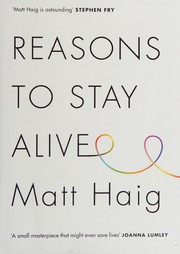
Reasons to Stay Alive
Matt Haig's memoir of the breakdown that nearly killed him at twenty four and the three years of unglamorous recovery that followed.
2,065-word summary · 9 min read

Bird by Bird
Anne Lamott's 1994 book on writing and life: shitty first drafts, the one-inch picture frame, and quieting the inner critic so you can take it bird by bird.
2,592-word summary · 12 min read

The Little Book of Hygge
Denmark happiness researcher tours candles, cake and cozy winter light.
2,582-word summary · 11 min read

The Artist's Way: A Spiritual Path to Higher Creativity
A twelve week course with morning pages and artist dates to recover creativity.
2,345-word summary · 10 min read
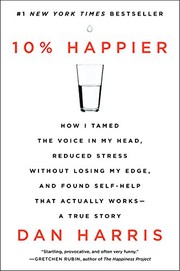
10% Happier
An ABC newsman panics on air, then finds meditation without losing his edge.
2,590-word summary · 12 min read