
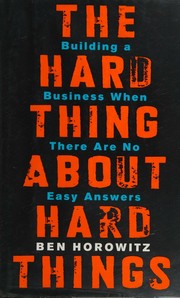
The Hard Thing About Hard Things
2,161-word summary 10 min read 304 pages in the book
- First published
- 2014
- Publisher
- HarperBusiness
- Pages
- 304
- ISBN
- 9780062273208
Reading options
What's inside (9 sections)
Most business books are written by people who want you to believe that running a company is a matter of following a framework. Ben Horowitz wrote a book about the moments when the framework does not exist. The title is not a marketing line. It is the thesis. The hard thing about hard things is that there is no formula for them. You have to make a decision with incomplete information, live with the consequences, and keep going. Horowitz is a venture capitalist now, but he made his name as the co-founder and CEO of LoudCloud and later Opsware, companies that nearly died several times. The book is built out of those near-deaths.
HarperBusiness published The Hard Thing About Hard Things in 2014. The first edition runs 304 pages and carries the ISBN 9780062273208. It became a New York Times bestseller and has become one of the standard recommendations for founders and CEOs. It is not a memoir, although it is full of stories. It is not a how-to book, although it has advice. It is a book about the emotional and practical reality of leadership, and it is unusually honest about how much of that reality is fear, exhaustion, and loneliness.
The book that tells you it will be hard
Horowitz begins with the problem of advice. Most management books are written by consultants who study successful companies after the fact. They see the decisions that worked and assume those decisions caused the success. They do not see the failed companies that made the same decisions. They also do not see the moments when the successful CEOs had no idea what to do. Horowitz wants to write about those moments. He wants to describe the job as it actually feels, not as it looks in a case study.
The book is organized around problems rather than principles. What do you do when you have to lay off people you hired? How do you fire an executive who is failing? How do you demote a friend? How do you tell the company that the money is running out? How do you keep going when you are pretty sure you are going to fail? Horowitz does not pretend to have a universal answer. He describes what he did, what it cost, and what he learned. The reader is left to decide what applies.
The tone is blunt and often funny. Horowitz likes rap lyrics, military metaphors, and stories about people behaving badly. He is not a polished corporate writer, and the book is better for it. The prose is direct. The anecdotes are specific. The advice is grounded in consequences. When he says that a decision was wrong, he usually explains what happened next.
LoudCloud and the struggle
The central story of the book is LoudCloud, the cloud computing company Horowitz co-founded with Marc Andreessen in 1999. The company raised a lot of money, went public at the worst possible time, and nearly went bankrupt. Horowitz describes the period as the Struggle, a term he uses for the psychological state that comes when a company is in serious trouble and the CEO cannot see a way out.
The Struggle is not a metaphor. It is a description of sleepless nights, self-doubt, and the feeling that everyone else knows what they are doing. Horowitz says every CEO goes through it, and that the ones who survive are the ones who keep looking for the next move. He rejects the idea that a leader should never show fear. He also rejects the idea that a leader should wallow in it. The job is to acknowledge the reality, share it with the team, and keep working.
One of the most useful passages in the book is about the difference between a silver bullet and a lead bullet. A silver bullet is a single fix that solves everything. A lead bullet is the boring, expensive, incremental work that actually solves the problem. Horowitz says that when a company is in trouble, everyone looks for a silver bullet. The CEO's job is to insist on lead bullets. In LoudCloud's case, the lead bullet was building a better product and selling it more effectively. There was no shortcut.
The book also describes the sale of LoudCloud's hosting business to EDS and the transformation of the remaining company into Opsware. The details are complicated, but the lesson is simple. A company can survive a near-death experience by making a series of difficult, unglamorous decisions. Horowitz is honest about how much luck was involved. He is also honest about how much of the outcome depended on people who stayed when they could have left.
Layoffs and firing executives
The chapter on layoffs is the most practical part of the book. Horowitz says that layoffs are inevitable in a company that is fighting for its life, and that most CEOs handle them badly. The mistakes are predictable. CEOs delay the decision, hoping things will improve. They delegate the conversations to human resources or to a hired consultant. They give vague explanations. They try to protect themselves from the emotional cost. All of these choices make the situation worse.
Horowitz argues that the CEO should make the decision quickly, explain the reason honestly, and deliver the news in person. Managers should be trained to have the conversations with their own people. The company should be told what is happening before the individual conversations begin, so that the rumor mill does not fill the vacuum. The people who are leaving should be treated with respect, and the people who are staying should be told the truth about what comes next.
The chapter on firing executives is equally direct. Horowitz says that firing an executive is usually a failure of the hiring process, not a failure of the person. The CEO should ask why the person was hired, what was missed, and what the company needs now. The board should be informed individually, not ambushed in a meeting. The conversation with the executive should be clear and brief. The severance should be ready. The public announcement should protect the person's reputation. None of this makes the process pleasant, but it makes it fair.
The section on demoting a friend is the most emotionally charged. Horowitz describes a situation in which he had to take a job away from someone he liked and trusted. He says the friend will feel two things: embarrassment and betrayal. The CEO should not try to talk him out of those feelings. The goal is not to make the conversation painless. The goal is to be honest, clear, and effective. The organization's needs come first. If you cannot afford to lose the person, you cannot make the change.
Peacetime CEO, wartime CEO
One of the book's best-known ideas is the distinction between a peacetime CEO and a wartime CEO. A peacetime CEO runs a company that has a large advantage over its competitors and a growing market. The job is to expand the market, reinforce strengths, and encourage creativity. A wartime CEO runs a company that is facing an existential threat. The job is to focus the organization, make fast decisions, and do whatever it takes to survive.
Horowitz argues that the two roles require different skills. Peacetime leadership is about nurturing talent, building culture, and thinking long term. Wartime leadership is about making hard calls, ignoring distractions, and accepting that some people will be upset. Most management books describe peacetime leadership, because peacetime is easier to study. Horowitz wants to describe wartime, because that is where companies either survive or die.
The distinction is useful, but it can be overused. Not every company is at war, and not every difficult decision requires a wartime mindset. Horowitz knows this, and he says that the best CEOs can move between the two modes. The problem is that the metaphor encourages a certain kind of leader to treat every situation as a war. The book does not always guard against that misreading.
Taking care of people, products, and profits
The book's ethical center is the idea that a company should take care of its people, then its products, then its profits, in that order. Horowitz does not mean that profits do not matter. He means that profits are a lagging indicator. If you take care of the people and build good products, profits follow. If you put profits first, you eventually destroy the people and the products that made the profits possible.
A good place to work, in Horowitz's definition, is a place where people can focus on their work and trust that good work will be rewarded. It is not a place with free snacks and beanbag chairs. It is a place where the rules are clear, the feedback is honest, and the mission is worth caring about. Horowitz says that being a good company matters most when things go wrong. Anyone can be a good company when things are going well.
The hiring advice is consistent with this. Hire for strength, not for lack of weakness. Look for people who are exceptional at the thing you need, even if they are difficult in other ways. Hire for the job you have now, not the job you imagine in three years. Integrate new executives carefully. Give them clear goals and honest feedback. Do not leave a failing leader in place, because the damage spreads to the whole department.
The psychology of the CEO
The most memorable parts of the book are about the inner life of the CEO. Horowitz describes the loneliness of the job, the pressure to appear confident, and the difficulty of making decisions that affect people's lives. He says that the CEO's psychology is the most important variable in a company's survival, and that most CEOs do not get help until it is too late.
He tells a story about a conversation with Bill Campbell, the coach and mentor who worked with many Silicon Valley leaders. Horowitz was complaining about a problem, and Campbell said, "Nobody cares, just coach your team." The line sounds harsh, but the point is liberating. The world is not waiting to hear your excuses. The past cannot be changed. The only thing you can do is focus on what you can do next.
Horowitz also writes about the right kind of ambition. The wrong kind of ambition is about being important, being liked, or winning. The right kind is about building something that matters. He says that great leaders create an environment where employees feel that the CEO cares more about them than about himself. That is not a technique. It is a disposition, and it is hard to fake.
The book's honesty about failure is its greatest strength. Horowitz admits that he made mistakes, that he was often afraid, and that he did not always know what to do. He does not present himself as a genius. He presents himself as a person who kept showing up. That is a more useful model than the heroic CEO narrative, and it is why so many founders recommend the book.
What works and what does not
The Hard Thing About Hard Things is not a systematic guide. It is a collection of stories and lessons, and the lessons do not always fit together. The book is repetitive in places, and some of the anecdotes are more entertaining than instructive. The Silicon Valley setting limits its applicability. Not every company can raise venture capital, go public, and sell to a larger company. Not every CEO has a Marc Andreessen or a Bill Campbell.
The book also has a blind spot about power. Horowitz writes about layoffs, demotions, and firings from the perspective of the person making the decision. He is thoughtful about how to treat people fairly, but he does not spend much time on the structural conditions that make those decisions necessary. The book is about how to survive inside the system, not how to change it.
None of that makes it a bad book. It makes it a specific book. It is a book for people who are running something and feel alone. It is a book for people who have read the frameworks and found them useless when the money ran out. It is a book for people who need to hear that the job is hard, that everyone struggles, and that the only way through is to keep making decisions.
I read it after a difficult year, and the chapter on the Struggle was the part that stayed with me. Horowitz does not promise that things will work out. He promises that the struggle is normal, and that the people who survive are the ones who keep looking for the next move. That is not a formula. It is a permission slip to keep going. Sometimes that is what a business book needs to be.
FAQ
Is The Hard Thing About Hard Things a memoir?
It is part memoir and part management book, built around Horowitz's experience running LoudCloud and Opsware.
Who should read The Hard Thing About Hard Things?
Founders, CEOs, and managers who are running a company or team and want practical, unsentimental advice about hard decisions.
What is the main lesson of the book?
There is no formula for the hardest problems in business, so leaders have to face reality, make decisions, and keep moving.
Similar books
The E-Myth Revisited
Gerber argues that most small businesses are run by technicians who own a job rather than a business, and that the fix is a system that runs without them.
2,169-word summary · 10 min read
Creativity, Inc.: Overcoming the Unseen Forces That Stand in the Way of True Inspiration
Pixar's president on why the studio that made Toy Story nearly broke itself, and the daily habits that kept the creativity coming.
2,179-word summary · 10 min read
The Five Dysfunctions of a Team
New CEO Kathryn unites warring execs through trust, conflict, and care.
2,029-word summary · 9 min read
Rework
Two Basecamp founders argue for smaller, faster business: skip big plans, cut meetings, ship half a product.
2,948-word summary · 13 min read
Good to Great: Why Some Companies Make the Leap... and Others Don't
A five-year study of 11 companies that leapt ahead shows Level 5 leaders, right people, hedgehog focus and flywheel momentum explain lasting gains.
2,374-word summary · 11 min read
The Lean Startup
Ries lays out Build-Measure-Learn, MVPs, pivots and validated learning for building companies under extreme uncertainty.
2,581-word summary · 11 min read
The Magic of Thinking Big
Schwartz's 1959 self-help classic argues that success follows from the size of your thinking, supported by sales anecdotes, vocabulary drills and goal setting.
2,579-word summary · 11 min read
Dare to Lead
Research on courage shows how leaders build trust through vulnerability and clear values.
2,442-word summary · 11 min read
Think Again
Adam Grant argues for holding views loosely and testing them like a scientist, moving past preacher, prosecutor, and politician habits at work and in debate.
3,204-word summary · 14 min read
The One Minute Manager
A young seeker learns three one minute habits from a plainspoken boss: clear goals, quick praise, and fast fair correction.
2,997-word summary · 13 min read

Lean In
Sit at the table, negotiate, share home load, and change offices while knowing advice skews elite.
2,005-word summary · 9 min read
Zero to One: Notes on Startups, or How to Build the Future
Thiel argues monopolies create value through vertical progress, not by copying competition.
2,582-word summary · 11 min read
The Total Money Makeover: A Proven Plan for Financial Fitness
Dave Ramsey lays out seven Baby Steps, from a $1,000 starter fund to a paid-off house, with the debt snowball at the center.
2,663-word summary · 12 min read
Made to Stick: Why Some Ideas Survive and Others Die
The Heath brothers break down why some ideas vanish on contact while others lodge in memory, tracing six traits that make a message stick.
2,527-word summary · 11 min read

The Magnolia Story
How Chip and Joanna Gaines met, closed their first shop, nearly lost everything in a housing development, and built Fixer Upper.
2,994-word summary · 13 min read

The World Is Flat: A Brief History of the Twenty-first Century
Thomas L. Friedman's 2005 bestseller argues that technology, trade, and open borders leveled the global playing field, and it names the ten forces that did it.
2,369-word summary · 11 min read
The Black Swan
Taleb argues rare shocks shape history more than models admit, and urges safer exposure over prediction.
2,588-word summary · 12 min read
Essentialism
McKeown argues for less but better: discern the vital few, refuse the trivial many, and use buffers, small wins, and steady routines so key work gets done well…
2,421-word summary · 11 min read
Empire of Pain: The Secret History of the Sackler Dynasty
How the Sackler family sold OxyContin and shaped an overdose crisis while giving to museums.
2,048-word summary · 9 min read
Braving the Wilderness: The quest for true belonging and the courage to stand alone
Belonging to yourself first lets you stand alone and still stay close to others.
2,004-word summary · 9 min read
The Millionaire Next Door
Stanley and Danko survey wealthy Americans and find frugal savers living next door, not big spenders, in this 1996 money study.
2,466-word summary · 11 min read
Drive: The Surprising Truth About What Motivates Us
Pink argues fair pay plus autonomy, mastery, and purpose at work beat carrots and sticks, using FedEx days, ROWE, flow, and clear Goldilocks tasks to explain…
2,339-word summary · 10 min read
SuperFreakonomics: Global Cooling, Patriotic Prostitutes And Why Suicide Bombers Should Buy Life Insurance
Levitt and Dubner apply incentives to prostitutes, suicide bombers, doctors, and climate fixes with cheeky data.
2,007-word summary · 9 min read

Predictably Irrational
Behavioral economist Dan Ariely shows why we overpay, procrastinate, and misjudge through simple experiments.
2,183-word summary · 10 min read
Emotional Intelligence
Goleman argues self awareness and empathy shape success more than IQ alone.
2,026-word summary · 9 min read
Moneyball
Oakland buys walks and patience to win 103 games on a small payroll in Lewis's 2003 baseball story.
2,955-word summary · 13 min read
Make Your Bed: Little Things That Can Change Your Life...And Maybe the World
SEAL lessons from bed making to never ringing the bell, from McRaven's 2014 Texas speech and 144 page book.
2,974-word summary · 13 min read

Endurance: Shackleton's Incredible Voyage
Trapped and crushed in Antarctic ice, Shackleton and 28 men survive floes, open boats, and an 800 mile sea crossing. Lansing tells it from their diaries.
2,818-word summary · 13 min read
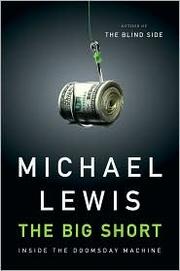
The Big Short: Inside the Doomsday Machine
Outsiders who read the bonds shorted subprime and watched the machine eat itself in 2008.
2,194-word summary · 10 min read
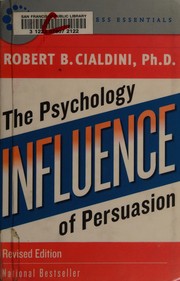
Influence: The Psychology of Persuasion
Six levers plus unity explain why people say yes, learned undercover in salesrooms and labs.
2,030-word summary · 9 min read