
The Gift of the Magi
1,978-word summary 9 min read 26 pages in the book
- First published
- 1905
- Publisher
- Aladdin
- Pages
- 26
- ISBN
- 9780689817014
Reading options
What's inside (8 sections)
I have read The Gift of the Magi every Christmas for years, and it still works on me. That is strange, because I know the ending. I know the watch is gone. I know the hair is gone. I know the gifts are useless. The story is built on a trick so simple that a child can see it coming, and yet the last paragraph still lands. O. Henry was not a subtle writer, but he understood something about generosity that most sentimental stories miss: the value of a gift is not in what it does. It is in what it cost the person who gave it.
One dollar and eighty-seven cents
The story opens on Christmas Eve in a furnished flat in New York. Della Young has one dollar and eighty-seven cents, and sixty cents of it is in pennies. She has saved for months, bargaining with the grocer and the butcher, and she is still short. The rent is eight dollars a week. Her husband, Jim, once made thirty dollars a week, but his income has fallen to twenty. The flat is shabby. The letter box is broken, the doorbell does not work, and the name card outside the door is a joke about the family's pretensions.
Della counts the money three times. That detail is the whole story in miniature. Counting money you already know you do not have is not an economic activity. It is a way of postponing the moment when you have to admit that you cannot buy what you want to buy. She wants to give Jim something worthy of him, and she cannot. She cries on the couch, and the narrator makes a little joke about life being made of sobs, sniffles, and smiles, with sniffles predominating. The joke is not cruel. It is the narrator's way of standing beside her.
The flat and the money are specific, and the specificity matters. This is not a fairy tale about a poor couple in a vague, timeless village. It is New York in the early twentieth century, with rent, wages, and prices. Della's poverty is not romantic. It is arithmetic. The story's sentiment works because the material world is so carefully drawn. You cannot feel the sacrifice unless you understand what is being sacrificed.
The sale
Della looks out the window at a gray cat and a gray fence. Then she looks in the mirror. She lets down her hair. It is long, brown, and beautiful, reaching below her knee. The narrator says it would make the Queen of Sheba jealous. It is Della's one great possession, the thing that makes her feel beautiful in a life that gives her few reasons to feel that way.
She puts on her old brown jacket and hat and goes to Madame Sofronie's shop, where the sign says "Hair Goods of All Kinds." Della asks whether Madame will buy her hair. Madame examines it and offers twenty dollars. Della says to give her the money quickly. The transaction is over in a few lines. There is no dramatic hesitation, no long goodbye. She sells the thing she loves most because she loves Jim more.
With twenty dollars and eighty-seven cents, she goes shopping. She finds a platinum fob chain for Jim's gold watch. It is simple and plain, and she decides it is perfect because it is like Jim: quiet, valuable, and uninterested in show. It costs twenty-one dollars. She pays for it and goes home with eighty-seven cents and a new haircut.
The watch is the second treasure. It belonged to Jim's father and grandfather. He wears it on a leather strap because he cannot afford a chain. The chain is a repair of a small humiliation as much as a gift. Della imagines how the watch will look with a proper chain, and the image gives her pleasure. She is not buying an object. She is buying a version of Jim's dignity.
The combs and the watch
Jim comes home at seven o'clock. He is twenty-two, thin, and serious, and he needs a new overcoat. He stops inside the door and stares at Della. She cannot read his expression. She is afraid he will hate her short hair, so she explains quickly that she sold it, that it will grow back, that she wanted to buy him a present. She says, "Please, God, make him think I am still pretty." It is a small prayer, and it is one of the most human lines in the story.
Jim does not answer at first. He asks whether she cut her hair, and then he repeats it, as if the fact has to be absorbed twice. Then he hugs her. He gives her a package. Inside are the tortoiseshell combs she has admired in a shop window, the ones with jeweled rims, the ones she never thought she would own. They are beautiful, and they are useless now. She bursts into tears.
Then she gives him the chain. She asks for his watch so she can see how it looks. He does not produce it. He sits on the couch, puts his hands behind his head, and smiles. He tells her they should put their presents away for a while because they are too fine to use just yet. Then he explains: he sold the watch to buy the combs.
The reversal is complete. Della sold her hair to buy a chain for a watch that no longer exists. Jim sold his watch to buy combs for hair that no longer exists. The gifts are materially worthless to each other. And yet the story does not end on a note of failure. It ends on a note of recognition. Each of them gave up the thing they treasured most because the other person mattered more.
The narrator's trick
The narrator is the secret weapon of The Gift of the Magi. He is folksy, digressive, and fond of jokes. He compares Della's hair to the Queen of Sheba's jewels and Jim's watch to King Solomon's treasure. He tells us that the Magi were wise men who brought gifts to the baby Jesus, and that their gifts were probably wise, maybe even exchangeable. Then he says that Jim and Della are the foolish children who gave up their greatest treasures.
And then he reverses the judgment. "But in a last word to the wise of these days let it be said that of all who give gifts these two were the wisest. Of all who give and receive gifts, such as they are wisest. Everywhere they are wisest. They are the magi."
The trick is not the plot twist. The trick is the narrator's voice. He spends the whole story pretending to be a playful, slightly cynical observer, and then he delivers a verdict that is completely sincere. The shift works because he has earned it. He has shown us the flat, the pennies, the hair, the watch, the combs, and the chain. He has made us laugh at the couple's poverty without making us feel superior to them. Then he tells us that they are wise, and we believe him.
The Magi allusion is doing more than decoration. The Magi were outsiders who traveled a long way to bring gifts to a child they did not know. Their gifts were gold, frankincense, and myrrh: valuable, symbolic, and not especially useful to a newborn. Jim and Della's gifts are also valuable, symbolic, and not useful. The story is saying that all true gifts are a little impractical. They are not transactions. They are acts of love that cost something the giver cannot easily replace.
Why it still works
The story is over a hundred years old, and it is still a Christmas staple. Part of that is length. It can be read aloud in ten minutes. Part of it is structure. The setup, the two sacrifices, the double reversal, and the final paragraph are as clean as a machine. Part of it is the subject. Almost everyone has been in a situation where they could not afford to be generous and chose to be generous anyway.
O. Henry was the pen name of William Sydney Porter, a North Carolina-born writer who spent time in Texas, Honduras, and New York, and who knew something about financial trouble. He published "The Gift of the Magi" in The New York Sunday World in December 1905, and collected it in The Four Million the following year. The title of that collection refers to the population of New York, and the stories in it are about ordinary people: clerks, shopgirls, thieves, and couples in furnished flats. Porter was famous for surprise endings, and this is the one that outlived most of the others. The twist is not a trick. It is a moral argument disguised as a trick.
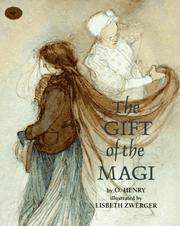
The story has been adapted, parodied, and retold many times. It has been turned into plays, films, television specials, and picture books. The Aladdin edition I have is a slim picture book, twenty-six pages, with illustrations that make Della's hair and Jim's watch look like objects from a fairy tale. The story survives the adaptations because the engine is so simple. Two people love each other. Each sells the thing they value most to buy a gift for the other. The gifts become useless. The love remains.
The story is also a product of its time. O. Henry was writing for a mass audience in the early 1900s, and his stories were designed to be read in a newspaper or a magazine, not studied in a seminar. The prose is colloquial, the jokes are broad, and the sentiment is open. Some readers find it too sweet. Some find the gender dynamics dated: Della's hair is her beauty, Jim's watch is his inheritance, and the story rewards Della for sacrificing her appearance. That is a fair criticism. The story is not a treatise on equality. It is a fable about a particular kind of love.
The criticism that matters most is that the characters are thin. Della and Jim are defined by their poverty and their devotion. They do not have interior lives beyond the immediate crisis. The story does not tell us what they argue about, what they want from the future, or what they will do when the combs and the chain are finally usable. It is a sketch, not a portrait. That is why it works as a short story and why it would not work as a novel.
What it leaves out
The story does not tell us what happens next. It does not tell us whether Jim and Della laugh about the gifts, whether they return them, whether they sell them, or whether they keep them in a drawer as a reminder. It does not tell us whether they stay poor. It does not tell us whether Della's hair grows back or whether Jim ever gets another watch. The ending is a moment, not a resolution.
That omission is part of the story's power. The gifts are useless, but the moment of recognition is not. Jim and Della have both been seen by each other. They have both been understood. The story ends before the practical questions can dilute that. It is a Christmas story, and Christmas stories are allowed to end on a note of grace.
I still read it every year, and I still get a little caught on the line about the magi. It is a strange thing to say about a couple who have just ruined each other's presents. But it is true. They are wise because they know what they have. They have each other, and they have the willingness to give something up. The rest is arithmetic.
FAQ
What is the plot of The Gift of the Magi?
Della sells her hair to buy Jim a watch chain, and Jim sells his watch to buy her combs.
When was it published?
It appeared in The New York Sunday World in 1905 and was collected in The Four Million in 1906.
Who were the Magi?
The biblical wise men who brought gifts to the infant Jesus.
Similar books
The Yellow Wallpaper and Other Stories
A young mother confined for her health fixates on yellow wallpaper, plus 39 other Gilman stories on marriage and work.
2,989-word summary · 13 min read

Revolutionary Road
A Connecticut couple who believe they are too good for the suburbs plan to move to Paris, and the plan slowly exposes everything they cannot say to each other.
2,085-word summary · 9 min read

Howards End
Forster's 1910 novel follows two families, a house in Hertfordshire, and a burned note, asking whether money and feeling can ever be connected.
2,187-word summary · 10 min read
The Lottery
In Jackson's 1948 story, a village draws lots to keep the corn heavy, and the chosen person is stoned by her neighbors.
3,080-word summary · 14 min read
The Memoirs of Sherlock Holmes
Doyle's second Holmes collection gathers twelve Strand stories, including the early case of the Gloria Scott and the confrontation with Moriarty at Reichenbach…
2,390-word summary · 11 min read
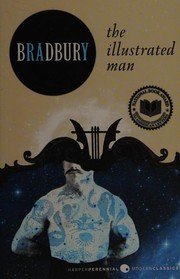
The Illustrated Man
A tattooed drifter's moving pictures retell eighteen Bradbury stories of children, rockets, Mars and the last night of the world.
2,791-word summary · 12 min read
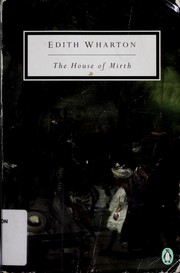
The House of Mirth
Lily Bart, beautiful and penniless at twenty-nine, navigates New York's marriage market until a Dorset yacht scandal strips her of the only currency she has.
2,468-word summary · 11 min read
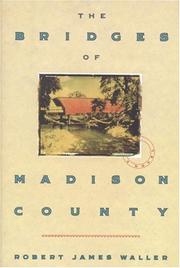
The Bridges of Madison County
A four-day affair between an Iowa farm wife and a photographer asks what a brief happiness is worth against family duty.
2,487-word summary · 11 min read
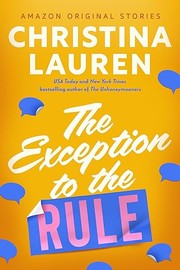
The Exception to the Rule
A typoed Valentine's email turns into yearly notes between two strangers who wonder if they should meet.
2,226-word summary · 10 min read
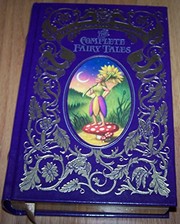
The Complete Fairy Tales
Mermaids, snow queens and tin soldiers in the full Andersen collection.
2,414-word summary · 11 min read
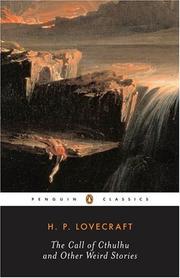
The Call of Cthulhu and Other Weird Stories
Seventeen tales from Dagon to Innsmouth, led by Cthulhu, the Colour, and the Whisperer, in S. T. Joshi careful Penguin edition with notes and corrected texts.
2,593-word summary · 12 min read
The Call of Cthulhu
A professor's papers link a sculptor's dreams, a Louisiana cult raid, and a sailor's voyage to a sleeping god under the sea.
2,530-word summary · 11 min read
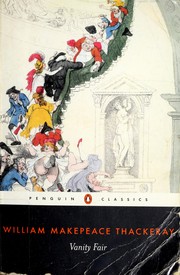
Vanity Fair
Becky Sharp schemes her way up Regency society while loyal Amelia waits, in Thackeray's witty novel without a hero.
2,698-word summary · 12 min read
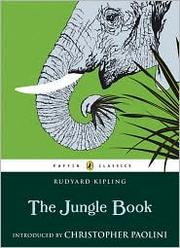
The Jungle Book
Mowgli, raised by wolves in the Seeonee Hills, learns the Law from Baloo and Bagheera while Shere Khan circles. Kipling's 1894 story collection.
2,799-word summary · 12 min read
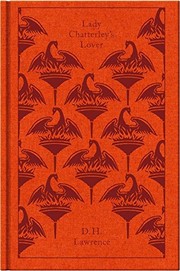
Lady Chatterley's Lover
A baronet's wife, starved in a marriage the war broke, takes the gamekeeper as her lover. Lawrence's banned 1928 novel of class and touch.
2,566-word summary · 11 min read
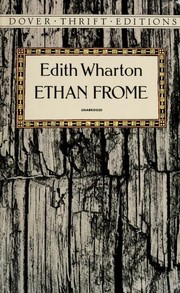
Ethan Frome
In snowy Starkfield, farmer Ethan Frome falls for his wife's young cousin Mattie, and one sled ride ends any hope of escape.
2,558-word summary · 11 min read
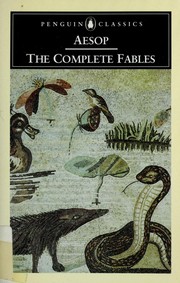
Aesop's Fables
Short animal tales of hares, foxes, ants, and wolves that still sting: old fables in plain modern English.
2,916-word summary · 13 min read
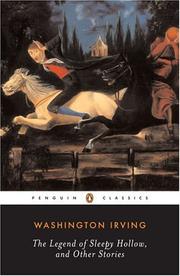
The Legend of Sleepy Hollow
A lanky schoolmaster courts a farmer's daughter in a haunted Dutch valley until a midnight ride by the Headless Horseman ends at the bridge.
2,968-word summary · 13 min read
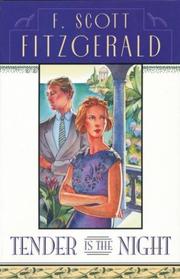
Tender Is the Night
Dick Diver marries his patient Nicole, and their Riviera marriage slowly breaks apart in Fitzgerald's 1934 novel of money, care, and drinking.
2,607-word summary · 12 min read
Nine Stories
Bananafish, Esme, and Teddy anchor Salinger's postwar Glass stories.
2,348-word summary · 10 min read
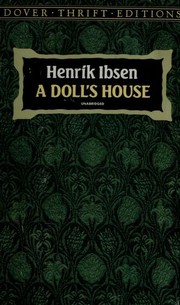
A Doll's House
Nora forges a loan to save Torvald, then walks out on doll life at Christmas.
2,468-word summary · 11 min read
Dubliners
Fifteen Dublin stories from boyhood priests to Gabriel's snow, mapping paralysis that still moves readers.
2,111-word summary · 9 min read
The Taming of the Shrew
Petruchio woos sharp-tongued Kate while suitors scheme for sweet Bianca in Shakespeare's rowdy early comedy of marriage and disguise, first printed in 1623.
3,605-word summary · 16 min read
Middlemarch
Idealistic Dorothea marries dry scholar Casaubon while ambitious doctor Lydgate marries Rosamond, and a Midlands town watches both marriages strain.
2,883-word summary · 13 min read
Landline
A TV writer left alone at Christmas finds her mom's old phone reaches her husband in 1998, before they married.
3,042-word summary · 14 min read

Evidence of the Affair
Two strangers trade letters after learning their spouses are having an affair in 1970s California.
3,000-word summary · 13 min read
White Nights
A lonely dreamer spends four summer nights with Nastenka in Petersburg, listening, hoping, then losing her at dawn.
2,927-word summary · 13 min read
Twelfth Night
Viola disguised as Cesario woos Olivia for Orsino while a forged letter ruins Malvolio in Illyria.
2,546-word summary · 11 min read
The House on Mango Street
Esperanza Cordero grows up on Mango Street in Chicago, watching neighbors closely while dreaming of a house of her own.
2,567-word summary · 11 min read
The Forty Rules of Love
A bored housewife reads a manuscript about Rumi and Shams, and the old story starts to change her life.
2,070-word summary · 9 min read