
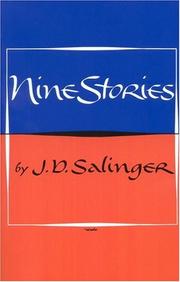
Nine Stories
2,348-word summary 10 min read 320 pages in the book
- First published
- 1953
- Publisher
- Little, Brown and Company
- Pages
- 320
- ISBN
- 9780316767729
Reading options
What's inside (7 sections)
I picked up Nine Stories because The Catcher in the Rye had left me arguing with Salinger in my head. I liked Holden and I was tired of him at the same time. A friend said if you want the rest of him, the funny parts and the sad parts without the sixteen year old voiceover, read the stories. She was right in a way I did not expect. Salinger published Nine Stories in 1953 with Little, Brown and Company, and almost every piece had already appeared in The New Yorker. This is the complete run through, all nine, ending included.
What holds them together is not plot. It is a family and a mood. The Glass family drifts in and out. Seymour, Walt, Boo Boo. Soldiers coming home wrong. Smart kids who talk like college professors and tired adults who drink through the afternoon. The war sits just off the page in most of them. If you want one sentence for the shelf, Bananafish, Esme, and Teddy anchor the set, and the other six fill in how people fail to comfort each other after 1945.
Bananafish and Connecticut marriages
A Perfect Day for Bananafish opens the book and still shocks. Seymour Glass is on a honeymoon in Florida with his wife Muriel. She is in the hotel room on the phone with her mother, talking about Seymour in the next room as if he cannot hear. He called her grandmother a fat old slob, he was staring at trees, he drove too fast, the doctor thinks he might lose control. Muriel is tanned and calm and half listening while she paints her nails. She calls him a cute fellow in a way that makes the phone call worse.
Seymour is down at the beach by himself. He meets Sybil Carpenter, a small girl waiting for her mother. He talks to her seriously, without baby talk. He tells her about the bananafish. A normal fish swims into a hole full of bananas, eats so many it cannot get out, gets banana fever, and dies. They swim out together looking for one. He kisses her foot and tells her to run back.
Then he goes up in the elevator with a woman who is staring at a small mark on his foot and asks to look. Back in room 507 Muriel is asleep. Seymour takes a pistol from his bag and shoots himself in the right temple. That is the end. No explanation.
Salinger never tells you why in plain terms. Seymour was in the war. He has been in a hospital. He sees phoniness the way Holden does, except Seymour is older and married and has nowhere to put it. The tenderness with Sybil makes the last page harder. He can talk to a child straight. He cannot stand the adult room.
Uncle Wiggily in Connecticut belongs next to it because it is also a marriage after the war going soft. Eloise Wengler is drunk in her suburban living room with her old college friend Mary Jane. Her little girl Ramona plays outside and invents a boyfriend named Jimmy Jimmereeno. Eloise keeps pouring drinks and talking about Walt Glass, the boy she loved before her husband Lew, who was killed in the Pacific. Walt was the funny one. Lew is solid and dull and does not get the joke.
Ramona comes in and says Jimmy is eating with her. Eloise snaps and tells her Jimmy is dead. Ramona cries herself to sleep. Eloise goes upstairs and lies beside her in a way that feels like apology and collapse at once. The title comes from a story Walt used to tell. Eloise married the safe man after the bright one died, and now she drinks and takes it out on a child who invents friends because the house is empty.
Both stories show Salinger doing the same move. Put a damaged veteran or a grieving widow next to a child who still says what is true, and watch the adult flinch.
Kids who hear too much
Just Before the War with the Eskimos is the least plotted and maybe the most Salinger in voice. Ginnie Mannox is fifteen, plays tennis on a Saturday morning, and runs into Selena Graff and her brother Franklin after the game. Selena owes her bus fare or lunch money depending how you count. Ginnie goes back to Selena's apartment on the Upper East Side to collect, and gets stuck talking to Franklin instead.
Franklin is home from the war, out of shape, cutting up chicken sandwiches in the kitchen and talking too fast. He tells Ginnie about his job, about a buddy who died, about how Selena cuts up her chicken into tiny pieces. He is kind and needy and a little off. Ginnie is polite and uncomfortable. She leaves without the money.
The Eskimos of the title come from a throwaway line about a movie where Eskimos sit around waiting, or a story Franklin half remembers. Critics argue about what it means. On the page it feels like filler talk while two people avoid saying they are lonely. I read it as Salinger saying teenagers already know when adults are performing. Ginnie sees Franklin is trying to buy company with sandwiches. She does not know what to do with that, so she walks home.
The Laughing Man uses a narrator looking back at age nine. He belonged to a boys club called the Comanches, led by John Gedsudski, called the Chief. The Chief took them to baseball games and told them a continuing story on the bus about the Laughing Man.
The Laughing Man in the story within the story is a deformed hero in a mask who robs on the border and leaves notes. He can talk to animals. The boys love it. Every ride adds a chapter.
The frame breaks when the Chief starts dating a girl named Mary Hudson, pretty and a little out of his league. The boys hate her on sight. The Chief is happy and distracted. The story changes. The Laughing Man starts getting hurt. In the last installment the Chief kills him off, tied up and bleeding, after Mary leaves him. The narrator as a grown man remembers the Chief crying a little on the bus and the boys going quiet.
It is a plain story about how adults use stories to carry feelings they cannot say. The Chief cannot tell nine year olds his girlfriend left him, so the masked man dies instead. When I first read it I thought it was a pastiche. On reread the cruelty lands. The boys wanted adventure. They got a breakup.
Boo Boo and Esme hold the center
Down at the Dinghy is short and almost all dialogue. Boo Boo Tannenbaum Glass is at a lake house with her husband and two boys. Her younger son Lionel has run down to the sailboat dinghy after a fight.
The maid Sandra tells the other help that Lionel called her a big phony and threw his swim fins. Sandra is angry and says she could kill him. Boo Boo comes in, calm in a way that fools nobody, and goes down to the dock herself. She climbs into the dinghy with Lionel, who is hiding under a tarpaulin with a key he says is a magic divider.
What follows is the gentlest interrogation in the book. Boo Boo does not scold. Lionel says Sandra said his father is a big slob. Boo Boo explains Sandra probably talks like that when she is tired. She kisses his feet. By the end Lionel lets her hold him and agrees to come up for lunch.
Boo Boo is Seymour's sister. Knowing that changes the temperature. The Glass kids who survive take care of each other sideways, through children. If Bananafish is about a man who cannot be reached, Dinghy is about a woman who still tries.
For Esme with Love and Squalor is the famous one and earns it. Sergeant X is in Devon in April 1944, waiting for D Day. He goes into town and meets Esme, thirteen, with her little brother Charles. They have tea. Esme asks if he is lonely, tells him she wants to be a jazz singer, says her father was killed in North Africa. She asks him to write a story for her that is not childish.
Then the war. X goes through Normandy and comes out with a breakdown. The second half finds him in Bavaria after V E Day, unable to sleep, hands shaking. He gets a parcel from Esme. She has sent her father's watch and a short letter hoping he returns with all his faculties intact. X sleeps.
People call it sentimental. It is, on purpose. Salinger lets a thirteen year old be the only decent correspondent in a ruined Europe. The love in the title is not romance. It is a kid saying I see you are broken, here is something that mattered to my father. After Bananafish, where no one reaches Seymour, Esme reaches X. That is why the two stories are always paired.
Actors and art school liars
Pretty Mouth and Green My Eyes is almost all phone call. Lee gets a late call from his friend Arthur, who is in a panic because his wife Joanie is late home. Arthur is sure she is with a man Lee once described as having pretty mouth and green eyes. Arthur talks in circles, apologetic and jealous.
Lee listens, makes coffee while holding the phone, tries to calm him. In the background Lee's own girl gets up and leaves. Lee stays on the line.
At the end Joanie comes home. Arthur is relieved and embarrassed. Lee hangs up and finds his own apartment empty. The trick is quiet. Lee gave good advice he cannot use himself. The title phrase, which sounds romantic out of context, is just a physical description turned into suspicion. Jealousy makes poetry out of nothing.
De Daumier Smith's Blue Period is the comic story that turns sad. Jean de Daumier Smith lies his way into a job teaching art in Montreal by claiming he studied under famous painters. He is short, pompous, and unqualified.
At the school, run by M. Yoshoto, he gets three students. Two are hopeless. The third is Sister Irma, a nun who paints strange religious pictures with almost no training but real feeling. De Daumier Smith criticizes technique, praises color, writes long letters home. Then he panics about his own lack of talent and tries to get her dismissed. Yoshoto fires him instead, gently.
The blue period of the title is his own brief sad stretch after he is out, walking Montreal and admitting he knows nothing. The story is funny until you see what Salinger is doing. The fake expert meets real belief and cannot stand it. Sister Irma paints because she must. De Daumier Smith talks because he must be seen. Anyone who has bluffed through a first job will wince.
Both stories are about men performing competence. Lee performs calm friend. De Daumier Smith performs master. Salinger lets the performance crack just enough to show the fear under it.
Teddy and what feels thin now
Teddy is the last story and the strangest. Teddy McArdle is ten, on a liner with his parents and little sister Booper. He is a prodigy. He talks about reincarnation and how parents are just people you happen to be assigned to. His parents treat him like a trick dog.
Most of the story is Teddy talking to a man named Nicholson, who wants to catch Teddy in a contradiction. Teddy explains that logic is limited, that death is just leaving a body. He says he had a vision about a pool and an empty orange peel.
At the end Teddy goes to the pool deck where Booper is playing. There is a scream. Nicholson runs. Salinger cuts before we see. Did Booper push him, did he fall, did he let it happen. The orange peel is there. The story stops.
Readers argue endlessly about whether Teddy willed his death or was murdered by his sister or just slipped. I think Salinger wants the uncertainty. Teddy believes the body is not the self. The ship is full of adults who treat kids as property. The scream is the only fact.
That leaves the Glass question. Seymour, Walt, Boo Boo, and the others are the same family across books. Here you get them in flashes. Seymour dead in Florida. Walt dead in the war. Boo Boo alive and mothering. Salinger never gives a family tree. He gives voices that sound related.
Now the honest complaint. Some of this feels precious now. The wise child who corrects the adult shows up a lot. Sybil, Esme, Ramona, Lionel, Teddy. After the third one you start to hear the device. Women get split into saints and girls on phones. Muriel files her nails while her husband falls apart. Even Boo Boo and Esme are good because they comfort men.
The language is dated in spots too. The soldiers talk in a slang that can read as costume. The rich apartments, the maids, the clubs and trains. It is a New York world where almost everyone is white and money is assumed. If you need a book to show a whole country, this is not it.
Plot can feel thin if you came for events. Ginnie walks home. Lee hangs up. A boy hides in a boat. Salinger bets everything on voice. When it works, as in Esme and Dinghy, it carries. When it does not, as in parts of De Daumier Smith, you want to shake him.
I still keep it next to Catcher. Bananafish tells you what Catcher cannot say about the war. Esme shows kindness mailed in a parcel with a broken watch. Teddy shows Salinger leaving realism for mysticism. Read the nine in one weekend and you hear a writer trying to find a way to be good after seeing bad things.
FAQ
Do you need to read the nine stories in order?
Reading in order helps because Bananafish opens with Seymour and Teddy closes the set, and the Glass references build. Going straight through shows how Salinger keeps returning to the war and to children.
Is Nine Stories connected to Franny and Zooey?
Yes, through the Glass family. Seymour, Walt, and Boo Boo appear here first, and later books add Franny, Zooey, and Buddy with more background.
Why is For Esme with Love and Squalor the most assigned?
It pairs a lonely soldier with a direct teenager who mails him a watch, giving a clear arc from breakdown to sleep without hiding the war.
Similar books
Franny and Zooey
Two Glass family siblings wrestle with faith, phoniness, and breakdown across a weekend visit and a long phone call home.
2,286-word summary · 10 min read

The Long Winter
Dakota Territory, 1880: seven months of blizzards cut a town off from the railroad, and a family survives on twisted hay, ground wheat, and a dangerous wheat…
2,210-word summary · 10 min read

Make Way for Ducklings
A pair of mallards raise eight ducklings on the Charles River and lead them across Boston to the Public Garden, with a little help from a friendly policeman.
2,044-word summary · 9 min read

Little Town on the Prairie
In the spring after the Long Winter, fifteen-year-old Laura sews shirts, studies for a teaching certificate, and helps send her blind sister Mary to college.
2,071-word summary · 9 min read

Howards End
Forster's 1910 novel follows two families, a house in Hertfordshire, and a burned note, asking whether money and feeling can ever be connected.
2,187-word summary · 10 min read

Sophie's Choice
A young Southern writer in 1947 Brooklyn befriends a brilliant, unstable couple and slowly learns the story of the Polish Catholic woman at the center of their…
2,798-word summary · 12 min read

Fathers and Sons
Arkady brings the nihilist Bazarov home to his father's estate, and a generational argument turns into love, a duel, and an early death.
2,192-word summary · 10 min read

Unaccustomed Earth
Lahiri’s second story collection follows Bengali families in America and abroad, tracing the quiet distances between parents and children, spouses, and the…
2,333-word summary · 10 min read

Tales from the Café
Four more visitors to a Tokyo café travel through time under strict rules, each hoping to say the thing they could not say before.
2,242-word summary · 10 min read

The Chosen
A shattered pair of glasses in a 1944 Brooklyn softball game starts a friendship between a Hasidic boy and his Orthodox neighbor, and their fathers pull them…
2,443-word summary · 11 min read
The Lottery
In Jackson's 1948 story, a village draws lots to keep the corn heavy, and the chosen person is stoned by her neighbors.
3,080-word summary · 14 min read

This Is How You Lose Her
Yunior cycles through love affairs and betrayals in nine linked stories, tracing the damage he does and the family history behind it.
2,195-word summary · 10 min read
The Last of the Mohicans
During the French and Indian War, Hawkeye and two Mohican warriors try to save two British sisters from a Huron chief whose revenge will end the Mohican line.
2,017-word summary · 9 min read

The Gift of the Magi
A young couple with almost no money each sells the thing they treasure most to buy a Christmas present for the other.
1,978-word summary · 9 min read
The Borrowers
A family of tiny people live under the floorboards of an English house, borrowing what they need until a lonely boy and a suspicious housekeeper change…
2,164-word summary · 10 min read

Doctor Zhivago
A doctor and poet lives through revolution, war, and love in Pasternak's novel of private life under the pressure of Russian history.
2,213-word summary · 10 min read

The Tiger's Wife
A young doctor in a war-scarred Balkan country chases the stories her grandfather left behind, including a deathless man and a deaf girl who loved an escaped…
2,232-word summary · 10 min read

The Memoirs of Sherlock Holmes
Doyle's second Holmes collection gathers twelve Strand stories, including the early case of the Gloria Scott and the confrontation with Moriarty at Reichenbach…
2,390-word summary · 11 min read

The Illustrated Man
A tattooed drifter's moving pictures retell eighteen Bradbury stories of children, rockets, Mars and the last night of the world.
2,791-word summary · 12 min read

Olive, Again
Elizabeth Strout returns to Crosby, Maine, as Olive Kitteridge marries Jack Kennison, confronts her son, and faces old age, grief, and small-town judgment.
2,333-word summary · 10 min read
A Raisin in the Sun
Lorraine Hansberry's 1959 play follows the Younger family as a $10,000 insurance check, a house in a hostile neighborhood, and a stolen investment test their…
2,444-word summary · 11 min read
On the Banks of Plum Creek
The Ingalls family trades their horses for a dugout on Plum Creek and bets a single wheat harvest on a house above ground, in Wilder's fourth Little House book.
2,090-word summary · 9 min read
The Red Badge of Courage
Henry Fleming runs at Chancellorsville, then returns to stand.
2,486-word summary · 11 min read
The Complete Fairy Tales
Mermaids, snow queens and tin soldiers in the full Andersen collection.
2,414-word summary · 11 min read
Anne's House of Dreams
Newlyweds Anne and Gilbert start in a seaside house with kind neighbors.
2,465-word summary · 11 min read

The Call of Cthulhu and Other Weird Stories
Seventeen tales from Dagon to Innsmouth, led by Cthulhu, the Colour, and the Whisperer, in S. T. Joshi careful Penguin edition with notes and corrected texts.
2,593-word summary · 12 min read
The Call of Cthulhu
A professor's papers link a sculptor's dreams, a Louisiana cult raid, and a sailor's voyage to a sleeping god under the sea.
2,530-word summary · 11 min read

Song of Solomon
Milkman Dead leaves Michigan to hunt for family gold and finds instead the old song of his ancestor Solomon.
2,465-word summary · 11 min read

The Tenant of Wildfell Hall
Helen flees a cruel marriage, hides as Helen Graham at Wildfell Hall, and tells her full story through a long diary young Gilbert Markham must read before…
2,838-word summary · 13 min read

The Island of Missing Trees
A talking fig links 1970s Cyprus lovers Kostas and Defne with their grieving London daughter Ada years later.
3,172-word summary · 14 min read