

Unaccustomed Earth
2,333-word summary 10 min read 352 pages in the book
- First published
- 2008
- Publisher
- Alfred A. Knopf
- Pages
- 352
- ISBN
- 9780307265739
Reading options
What's inside (10 sections)
The first thing I noticed, maybe forty pages in, was how much of this book happens around food. A widower cooks for his daughter in her own kitchen and quietly takes charge of it. A lonely woman in Boston feeds a graduate student who followed her family home from the street. A brother and sister remember smuggling vodka into their parents' house at Christmas, and the memory is warm even though it should not be. Lahiri uses meals the way other writers use weather. They are how her people say the things they cannot say.
This is her second collection, published by Knopf in 2008: five stories and a novella in three parts, 352 pages. The title comes from Hawthorne, an epigraph about children striking roots into unfamiliar ground, which is a fair description of nearly everyone here. It debuted at number one on the New York Times bestseller list and won the Frank O'Connor International Short Story Award. None of that prepares you for the temperature of the thing, which is cool, exact, and much sadder than the jacket suggests.
The father in the garden
Ruma is a lawyer who stopped practicing when her son was born. She lives outside Seattle with Adam, who works long hours, and Akash, who is small enough to follow an adult around a garden for an entire afternoon. Her father, a retired widower from Pennsylvania, comes to stay for a few weeks.
He is Bengali, and in some ways more traditional than she is. He takes his shoes off at the door, eats with his hands, reads the Bengali paper. But the visit reveals something Ruma did not expect, which is that her father has become a person with a life of his own. He travels. He knows how to find his way around a strange city. He has been seeing a woman, and he has not told her.
The story's real subject is the arrangement. Ruma assumes, in the way she was raised to assume, that she should ask him to move in with her. Her father assumes she will not ask, and does not want to be asked. He is not lonely in the way she imagines. He likes his independence, and he has opinions about her career, which he offers with the bluntness of a man who has decided he no longer has to be careful. He thinks she should go back to work. He says so more than once.
Meanwhile Akash falls for his grandfather. The boy follows him around the garden, repeats Bengali words, copies the way he folds a newspaper. The old man is delighted and slightly unnerved, because this American child is the closest thing he has to continuity and also proof of how far the family has traveled.
Then Ruma learns about the woman. Not through a confession; she finds out sideways, the way adult children usually find out about their parents' lives. She has to decide whether to say the name out loud, which would change the terms of the visit and possibly the terms of the rest of their lives. She doesn't. The story ends with a departure and a garden, and the missing conversation sits in the middle of it like a piece of furniture nobody will move.
Hell-Heaven, and the marriage that lasts
Pranab Chakraborty turns up in Boston because he hears Bengali spoken on the street and follows the sound. He is an MIT graduate student, homesick, eating badly, and Aparna takes him home and feeds him. He calls her Boudi, the respectful term for an older brother's wife. She calls him Pranab Kaku. Her husband Shyamal is remote, absorbed in work, not much company.
Usha narrates as an adult, which matters, because the story is partly about what a child sees and stores without understanding. She watches her mother come alive when Pranab is coming to dinner. She watches the cooking change. She watches her mother's loneliness take a shape and then get a name.
Then Deborah. An American woman Pranab brings to the house and eventually marries. Aparna's affection curdles into something uglier. She predicts the marriage will fail, and says so, and the prediction is both cruel and a way of keeping hold of him. The marriage lasts twenty-three years, longer than the prediction deserved, and then it ends anyway. Usha, looking back, has to hold two things at once: her mother's jealousy was not admirable, and her mother was also right about the shape of her own life.
The title phrase is Aparna's, and it has something to do with how completely a person can change, and how little warning there is. I won't pretend I can quote the line exactly. The idea is clear enough, and the story earns it.
A wedding at the old school
Amit and Megan drive to Langford, Amit's old boarding school, for the wedding of Pam, the headmaster's daughter. Amit had something with Pam that was never declared. Megan does not know the shape of it, and the not knowing is the point.
They are both insecure in ways that are funny and then not funny. Amit calls a former classmate by the wrong name and cannot correct himself. Megan worries about a burn mark on her skirt. The wedding is full of people who knew Amit when he was someone else, and he spends the evening being slightly worse than himself.
He drinks spiked punch. He tells a stranger at the bar that he feels detached from his wife, which is the kind of thing you say to a stranger precisely because it is true and you do not want it repeated. Then he goes back to the hotel to call home about their daughters and passes out.
He wakes late. They miss the brunch. Megan's displeasure is quiet and total. They walk the grounds, argue about his sexual past, which is really an argument about whether he is present, and end up having sex in a dorm. It is not a resolution so much as a truce. The story is about a marriage surviving its own anticlimax, and Lahiri is very good at the anticlimax: the hangover, the wrong name, the burned skirt, the fact that nobody says the big thing.
Only Goodness
Wayland, Massachusetts. Sudha and her younger brother Rahul. She is the older one, the achiever, the one who leaves. He is the beloved son who falls apart.
At Christmas she helps him sneak beer and vodka into the house, a small conspiracy that feels like love at the time and looks different later. At Cornell his grades collapse. He is arrested for drinking and driving. Sudha goes to the London School of Economics, becomes engaged to Roger, builds a life that is orderly and far away. Rahul drops out, takes a menial job, gets engaged to Elena, and then at Sudha's wedding he fights with their father over a microphone. The microphone is a perfect detail: a public ceremony, a drunk man, a small object that turns a speech into a scene.
Years later he visits London, sober. He is good with Neel, Sudha and Roger's son, and with Crystal, Elena's daughter. He offers to babysit so the adults can see a movie. They come back to find him passed out and Neel in the bath.
The bath is the horror. Not violence, just water and a child and an unconscious man. Rahul leaves believing he has lost his sister forever, and Sudha is left with the older guilt: she brought the beer home. Lahiri does not resolve this. The last movement belongs to Sudha, and it is neither forgiveness nor condemnation but the recognition that she cannot separate her brother's ruin from her own small act of kindness.
Nobody's Business
Sang, Paul, and Heather share a house. Sang has suitors calling at all hours, and she has Farouk, an Egyptian man who is not exactly her boyfriend and not exactly not. Paul is the observer, a graduate student, decent and a little cowardly.
Sang goes to London. Heather goes skiing. Paul answers the phone and it is Deirdre, calling from Vancouver, another woman involved with Farouk. Paul takes the message. He does not pass it on. When Sang finds out that Deirdre called, Paul explains, and she calls him a liar, which he is, in the specific sense that he withheld.
What I like is that the story does not make Paul a villain. He is guilty of the ordinary thing: he did not want to be the bearer of bad news, and he did not want to lose his place in the house. He arranges for Deirdre to tell Sang herself, which is both a repair and a further cowardice.
Then Sang asks him to drive her to Farouk's apartment. The confrontation is ugly and a little farcical: Farouk pushes Paul, the men fight, Farouk escapes. Later, in Boston, Paul sees Farouk with another woman and a dog, and remembers the barking he heard in the background of Deirdre's calls. The dog was there the whole time. It is a wonderful ending, small and exact, and it makes the point that we are all assembling evidence about people we love from the noise in the background.
Hema and Kaushik, part one and part two
The novella is the best thing in the book. Three parts, two narrators, one omniscient.
"Once in a Lifetime" is Hema speaking to Kaushik in the second person, which should be unbearable and isn't. She recalls the years when his family stayed with hers, two Bengali households in Massachusetts held together by language and food and the assumption that they would always know each other. Then the families drift. The drift is not dramatic. It is the ordinary failure of adults to keep up.
"Year's End" hands the narration to Kaushik. His mother is dead. His father has married Chitra, who has two small daughters, and the house is now occupied by a family that is not his. He goes through his mother's photographs and possessions. He is not cruel to the girls, exactly; he is absent in a way that is worse. Then he leaves, and becomes a photojournalist, a profession that lets him keep looking at the world without having to live in it.
Going Ashore
The third part is the reason the book is remembered. Hema is a classics professor in her late thirties. She has had a long affair with a married man, and she is about to marry Navin, a man she barely knows, in a match that is sensible and probably wrong. Kaushik is a successful photojournalist about to take a desk job in Hong Kong.
They meet by chance in Rome. They travel in Italy. They begin an affair that is not quite an affair because both of them are free, and not quite a romance because they are too old and too damaged for the version they might have had at twenty-five. He asks her to leave Navin and come to Hong Kong. She goes to Calcutta to think, which is where Lahiri puts the decision: in a house full of relatives, in the heat, in the middle of wedding preparations with their own momentum.
And then the tsunami. December 2004, Khao Lak. He is there on one last assignment before the desk job begins. He dies. The choice is never made.
I have read this ending several times and it still lands, and not because it is a twist. It is the cruelest possible version of the book's recurring idea, which is that the conversation you do not have becomes the thing that defines you. Hema will never know what she would have chosen. Neither will we. Lahiri refuses the consolation of a decision.
The rooms, and the limits of restraint
What Lahiri does better than almost anyone is the ordinary room. A kitchen with the wrong light. A hotel corridor. A garden with tomato plants. She is not a lush writer; she is a precise one, and the precision does the emotional work. When a character notices that the house smells different, you know exactly what has changed and nobody has to say it.
Her endings are usually images rather than verdicts. A departure, a dog barking, a bath running. That is a strength, and in a collection this long it is occasionally a mannerism.
Here is the criticism. The restraint can feel airless. Several stories hinge on a single withheld conversation, and by the third or fourth time you notice the mechanism. The melancholy repeats. Ruma does not ask, Hema does not decide, Sudha does not confront, and the cumulative effect is a world where nobody says the thing, which is true to life and also a limitation of the method. Readers who want plot will find this slow. Readers who want resolution will find it withholding.
The collection is also uneven. "A Choice of Accommodations" is the weakest, a marriage story that never quite justifies its length. "Nobody's Business" is the most fun and the least ambitious. The novella is the masterpiece, and it is doing something the shorter stories cannot, which is letting time pass.
But when it works, it works at a level most short fiction does not reach. "Only Goodness" is the one I keep thinking about, because it refuses the easy positions: Rahul is not a monster, Sudha is not innocent, the parents are not villains, and the ending offers no lesson. It just shows you a family rearranged by an illness nobody wanted to name.
The title is finally about the children, the ones who put down roots in unaccustomed earth and then spend the rest of their lives negotiating with the people they left. Lahiri is on their side. She is on their parents' side too, which is harder and rarer, and that double allegiance is what makes these stories hurt in the way they do.
FAQ
Is Unaccustomed Earth a novel or a short story collection?
It is a collection of five stories and a three-part novella, published in 2008. The novella, Hema and Kaushik, is the longest piece.
Where does the title Unaccustomed Earth come from?
It comes from Nathaniel Hawthorne's introduction to The Scarlet Letter, 'The Custom-House,' and is used as the book's epigraph about roots struck in unfamiliar ground.
Do the stories in Unaccustomed Earth need to be read in order?
The five stories stand alone, but the three Hema and Kaushik sections are meant to be read together and in sequence at the end of the collection.
Similar books
Interpreter of Maladies
Nine stories follow Bengali families split between Calcutta and New England, through marriage, grief, and arrival.
2,412-word summary · 11 min read
The Namesake
Jhumpa Lahiri follows Gogol Ganguli from a hated namesake to adult loss, marriage, and family reckoning between Calcutta and Boston.
2,878-word summary · 13 min read

This Is How You Lose Her
Yunior cycles through love affairs and betrayals in nine linked stories, tracing the damage he does and the family history behind it.
2,195-word summary · 10 min read

Olive, Again
Elizabeth Strout returns to Crosby, Maine, as Olive Kitteridge marries Jack Kennison, confronts her son, and faces old age, grief, and small-town judgment.
2,333-word summary · 10 min read

Python's Kiss
Thirteen sharp stories of stones, thieves, ghosts, and an afterlife with billing.
2,027-word summary · 9 min read

Brawler
Nine fierce stories spanning the 1950s to today, following swimmers, siblings and heirs torn between their dark and light angels.
3,103-word summary · 14 min read
There There
Twelve Native characters converge on a powwow in Oakland in Tommy Orange's 2018 debut about identity, family, and survival.
2,157-word summary · 10 min read
On Earth We're Briefly Gorgeous
A son writes to the mother who cannot read him: war, migration, first love, and loss in one Vietnamese American family in Hartford.
3,113-word summary · 14 min read

The Lowland
Two brothers grow up beside a marshy lowland in Calcutta, and the choices of the younger one draw the older into a life of duty, distance, and quiet grief that…
2,213-word summary · 10 min read

The Idiot
A Turkish-American freshman at Harvard falls in love through email with a Hungarian math student and spends a summer in Hungary trying to turn correspondence…
2,019-word summary · 9 min read

Howards End
Forster's 1910 novel follows two families, a house in Hertfordshire, and a burned note, asking whether money and feeling can ever be connected.
2,187-word summary · 10 min read

Fathers and Sons
Arkady brings the nihilist Bazarov home to his father's estate, and a generational argument turns into love, a duel, and an early death.
2,192-word summary · 10 min read
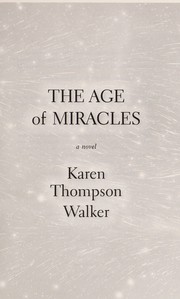
The Age of Miracles
A California girl grows up while the Earth's rotation slows, and ordinary adolescence continues alongside slow catastrophe.
2,417-word summary · 11 min read

Tales from the Café
Four more visitors to a Tokyo café travel through time under strict rules, each hoping to say the thing they could not say before.
2,242-word summary · 10 min read

Peace Like a River
An asthmatic boy in the early 1960s narrates his family's search for his older brother, who is accused of two killings and has escaped custody.
1,969-word summary · 9 min read

We Are Okay
Marin fled San Francisco after her grandfather vanished and stopped answering anyone. When Mabel visits her college dorm, she has to say what happened.
2,253-word summary · 10 min read

The Chosen
A shattered pair of glasses in a 1944 Brooklyn softball game starts a friendship between a Hasidic boy and his Orthodox neighbor, and their fathers pull them…
2,443-word summary · 11 min read

Sing You Home
A music therapist, her new wife and an evangelical ex-husband end up in court over three frozen IVF embryos.
2,952-word summary · 13 min read

Her Body and Other Parties: Stories
Eight stories where bodies, medicine and old fairy tales get taken apart, with a green ribbon running through the whole book.
2,997-word summary · 13 min read

A Spool of Blue Thread
Four generations of the Whitshank family in Baltimore, and the silences, resentments and quiet love they hand down without ever saying so.
2,408-word summary · 11 min read

Flight Behavior
Dellarobia Turnbow is stuck in a Tennessee farm marriage until a valley full of monarch butterflies, and the scientist who comes to study them, force her to…
2,051-word summary · 9 min read
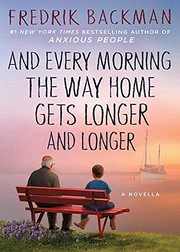
And Every Morning the Way Home Gets Longer and Longer
An elderly grandfather, his son, and his grandson share memories and fears as the old man's mind begins to fade, in a short novel about grief and love.
2,078-word summary · 9 min read
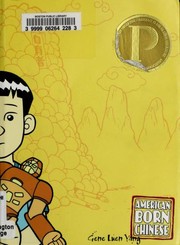
American Born Chinese
Three stories, a monkey king, a Chinese-American boy and a sitcom cousin, converge in a graphic novel about shame, assimilation and learning to accept yourself.
2,107-word summary · 9 min read

The Tiger's Wife
A young doctor in a war-scarred Balkan country chases the stories her grandfather left behind, including a deathless man and a deaf girl who loved an escaped…
2,232-word summary · 10 min read

The Story of Edgar Sawtelle
A mute boy on a Wisconsin dog-breeding farm relives Hamlet as his uncle returns, his father dies in the barn, and the dogs inherit what is left.
2,392-word summary · 11 min read
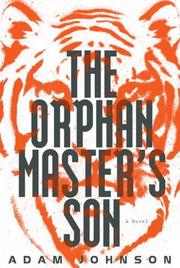
The Orphan Master's Son
Adam Johnson's Pulitzer-winning novel follows Pak Jun Do from a North Korean orphanage to a deadly identity swap, under a state whose loudspeakers never stop…
2,219-word summary · 10 min read
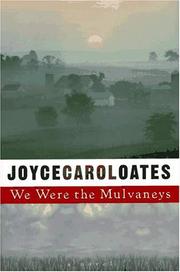
We Were the Mulvaneys
After a rape following a school dance, the Mulvaneys, a family that believed it was blessed, comes apart over fifteen years. Narrated by the youngest son.
2,094-word summary · 9 min read
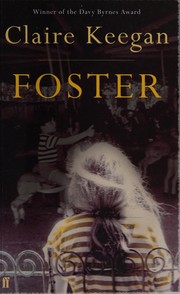
Foster
A girl spends a summer with relatives on a Wexford farm and is cared for properly for the first time. A spare novella about family and what children notice…
2,043-word summary · 9 min read

Clap When You Land
Two half sisters, one in Sosúa and one in Queens, discover each other after their father dies in a plane crash, in Elizabeth Acevedo's novel in verse.
2,890-word summary · 13 min read
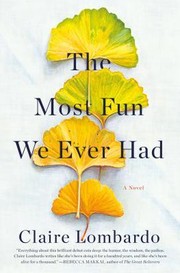
The Most Fun We Ever Had
Four Sorenson sisters orbit perfect parents hiding old cracks.
2,590-word summary · 12 min read