
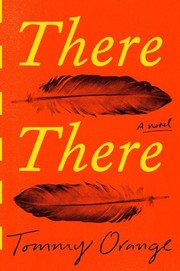
There There
2,157-word summary 10 min read 304 pages in the book
- First published
- 2018
- Publisher
- Knopf
- Pages
- 304
- ISBN
- 9780525520375
Reading options
What's inside (10 sections)
- I picked it up because the prologue kept coming up in conversation
- The prologue is the price of admission
- Tony Loneman and the weight he carries
- Dene Oxendene and the stories project
- Opal, Orvil, and the regalia in the closet
- Jacquie, Edwin, and the family knots
- Everybody arrives at the powwow
- What works, what drags, and who should read it
- Key takeaways
- FAQ
I picked it up because the prologue kept coming up in conversation
A friend told me to read the prologue and then decide. That sounded like a dare, so I tried it, and she was right. The opening pages do more work than most whole novels. They mix American history, old television trivia, and a plainspoken argument about what it means to be Native in a city, and they do it in a voice that feels angry and funny at the same time.
The book itself came out in 2018 from Knopf, and it runs just over 300 pages in hardcover. It was Orange's first novel, and it ended up as a finalist for the Pulitzer Prize, which tells you something about how fast it traveled from debut to required reading. The structure looks tricky on paper. Twelve narrators, each with their own chapters, all moving toward the Big Oakland Powwow. In practice it reads like a relay, one runner handing the story to the next, and the baton never really drops.
The title comes from Gertrude Stein's famous line about Oakland, that there is no there there. Orange takes that sentence apart and rebuilds it across the whole book. The question underneath everything is whether urban Native people, living far from reservations, get to claim a "there" of their own.
The prologue is the price of admission
Before any character shows up, Orange gives you an essay. It opens with the old Indian Head test pattern that used to play on American televisions after the stations signed off for the night. Then it moves through centuries of massacres, broken treaties, and statistics about Native life that land hard because he delivers them flat, without dressing them up.
The point of the prologue is to clear away a stereotype. A lot of readers picture Native life as something that happens on reservations, in the past, in feathers and sepia. Orange writes about the city instead. Most Native people live in cities now, and Oakland has one of the biggest urban Native populations in the country, going back to the relocation programs of the 1950s. He insists that the city counts. Oakland counts. The people waiting for buses and working desk jobs count.
I will admit something here. I almost skipped the prologue the way you skip a foreword. Do not do that. It sets the terms for the whole book, and several images from it come back later in ways that hit harder because you saw them first here.
Tony Loneman and the weight he carries
The first narrator is Tony Loneman, twenty one years old, dealing drugs out of the Indian Center in Oakland. Tony was born with fetal alcohol syndrome, which he calls the Drome, and he writes about his face and his body the way someone describes weather they cannot change. People stare. He stares back. He has learned to live inside the staring.
Tony is one of the saddest and funniest voices in the book. He loves old movies and stories about his grandmother Maxine, who raised him. He also knows he is stuck. The dealing pays for little and costs a lot, and he can feel himself being pulled into something worse when a mid level dealer named Octavio Gomez starts talking about a real score.
Octavio's plan is the engine under the second half of the book. There is prize money at the Big Oakland Powwow, and Octavio wants to rob it. He recruits young men with promises of easy cash, hands out guns, and treats the whole thing like a business deal. Tony says yes because saying no feels impossible when you have no money and no better offer. Watching Tony agree to something he can already tell will end badly is one of the hardest parts of the novel.
Dene Oxendene and the stories project
Dene is twenty, out of work, and obsessed with a storytelling project he inherited from his uncle Lucas, who died when Dene was young. Dene applied for a grant to film Native people in Oakland telling their own stories, and to his shock he actually got the money. So now he rides around the city with camera equipment, interviewing elders and strangers, trying to honor an uncle he barely got to know.
I liked Dene more than almost anyone in the book. He is sincere in a way that could feel corny but does not, because Orange keeps grounding him in small concrete problems. The camera battery dies. People cancel. His mother worries. The grant committee wants reports. And underneath the logistics sits the real question, which is whether pointing a camera at people actually helps them or just turns their pain into content.
Dene's section also gives you the clearest statement of what the novel is doing formally. His uncle used to say there is no such thing as an original story, only new ways of telling the old ones. That is basically Orange describing his own method. Twelve voices, one city, one day, arranged so the overlaps slowly reveal how connected everyone is.
Opal, Orvil, and the regalia in the closet
Opal Viola Victoria Bear Shield is one of the older narrators, a woman who has spent her life looking after other people's children. She lives with three teenage boys in her family, and she parents them with a mix of strictness and exhaustion that felt completely real to me. She works, she cooks, she sets rules, and she carries grief she does not talk about.
Her nephew Orvil, fourteen, finds something in her closet that changes his summer. It is his great uncle's old dance regalia, beadwork and feathers packed away for years. Orvil has been watching videos of powwow dancing online, teaching himself the steps in private. He decides he wants to dance in public for the first time at the Big Oakland Powwow, wearing the old regalia.
The Orvil chapters are my favorite in the book. There is a scene where he puts on the regalia in front of a mirror that I found genuinely moving, because Orange lets the boy feel proud and ridiculous and scared all at once. Orvil also does something stupid before the powwow involving pills he finds around the house, the kind of impulsive teenage mistake that makes you want to reach into the page and stop him. That mistake matters later, and Orange does not let you forget it.
If you remember one image from this book, make it Orvil practicing dance steps alone in his room. Everything the novel wants to say about inheritance and identity and trying to belong is packed into that image.
Jacquie, Edwin, and the family knots
Jacquie Red Feather is Opal's sister, fifty seven, newly sober, working as a substance abuse counselor. She flies into Oakland for the powwow carrying years of wreckage. A failed marriage, a drinking career that cost her almost everything, and a daughter she gave up for adoption as a young woman. Her chapters move between the present and the past, and Orange handles the time shifts smoothly, never leaving you confused about where you are.
Edwin Black is in his early thirties, overweight, lonely, living with his mother and working at the Indian Center. He spends his free time searching the Internet for traces of his father, a man he never knew. Edwin narrates some of the book's funniest passages about modern life, including a job at the center that involves answering phones while his own life falls apart quietly in the background. Then Octavio pulls him into the robbery plan too, and Edwin's chapters turn tense fast.
Blue is the young woman Jacquie gave up as a baby, raised by adoptive parents, now living in Oakland under a new name. Her thread is the one I will say least about, because discovering how her path crosses Jacquie's is one of the book's best slow reveals. What I can say is that Blue's chapters ask the sharpest questions about what adoption gives and what it takes, and Orange refuses to make any of it simple.
There are more narrators woven through. Thomas Frank, a former drummer and recovering alcoholic who works as a janitor and has agreed to play at the powwow. For Thomas, the drums are tangled up with everything he lost to drinking, and his chapters have a tired honesty about relapse and starting over that rings true. He knows exactly how fragile his sobriety is, and he goes to the powwow anyway, because playing again feels like the one way back to himself.
Bill Davis, an older white man on the powwow committee who means well and understands less than he thinks. Calvin Johnson, a young man dealing with mental illness who gets recruited by Octavio and spends his chapters waiting for a moment he dreads. Two teenage brothers, Loother and Lony, who get pulled in as drivers because teenagers with nothing to do are easy to use. Each voice gets enough room to feel like a person rather than a plot device, though some get a lot more room than others.
Everybody arrives at the powwow
The last quarter of the book brings all twelve narrators to the Oakland Coliseum for the Big Oakland Powwow. Orange writes the event itself beautifully. The drums, the dancing, the food stands, the old friends running into each other, the kids running wild. For a little while it feels like a celebration, and Orvil finally dances in public in his regalia, which should be a triumph.
Then the robbery happens. Octavio's crew moves on the prize money with guns made on a 3D printer, smuggled inside, and within minutes the celebration turns into gunfire and panic. Orange tells the shooting from many viewpoints in short bursts, which makes it feel chaotic and fast instead of cinematic. People run. People hide under tables. The money scatters. Some of the young men Orange spent three hundred pages making you care about do terrible things, and some of them pay for it immediately.
I am going to be careful about the specifics of who lives and who does not, because the ending lands harder if you walk into it unprepared. What I will say is that the book does not give you a clean resolution. It ends inside the chaos, with grief and confusion rather than justice or closure. Some readers will find that brave. Some will find it frustrating. I landed somewhere in between, admiring the honesty of it while wishing for one more chapter of aftermath.
What works, what drags, and who should read it
The best things about There There are the voice and the structure. Orange writes sentences with rhythm and bite, and he is funny in places where funny should be impossible. The multi narrator design pays off, because the slow reveal of how everyone connects gives the powwow chapters real force. The prologue, the Orvil chapters, and the Jacquie chapters are as good as anything I read that year.
The fair criticism is that not all twelve voices are equal. A couple of the shorter narrators feel like sketches next to the fully drawn ones, and Bill Davis in particular read to me like an idea more than a person. The middle of the book sags a little as it cycles through backstories, and if you are impatient for plot, the first two hundred pages may test you. The robbery itself depends on a plan that feels thin in places, and the ending's refusal to resolve anything will annoy readers who want to know what happens next.
Who is it for? Readers who like character driven literary fiction, anyone interested in contemporary Native life, and people who enjoyed books with braided narrators. If you need tidy endings or constant action, this might not be your book. If you want to spend time with complicated people in a specific place rendered with love and anger, Oakland as Orange sees it, then clear an afternoon and start with the prologue.
One last thing worth saying is how the book handles history. Orange never lets the past stay in the past. The prologue's stories about massacres and relocation keep echoing through the modern chapters, in the way Tony talks about his body, in the way Opal parents her nephews, in the grants Dene chases and the forms Edwin fills out. The argument is that history is not background here. It is the water everyone swims in. That could feel heavy handed, and once or twice it nearly does, when a narrator pauses to explain the theme of his own chapter. But most of the time Orange earns it through accumulation. By the time the drums start at the coliseum, you understand exactly what is at stake for each person walking through the door, and why a community event can feel like both a homecoming and a risk.
FAQ
When was There There published?
First published in 2018 by Knopf in New York. The standard hardcover runs 304 pages with ISBN 9780525520375.
Is There There part of a series?
No. It is a standalone novel. Orange returned to the same family years later in Wandering Stars.
Did There There win any awards?
It was a finalist for the 2019 Pulitzer Prize in Fiction and won the PEN/Hemingway Award for debut fiction.
Similar books
Unaccustomed Earth
Lahiri’s second story collection follows Bengali families in America and abroad, tracing the quiet distances between parents and children, spouses, and the…
2,333-word summary · 10 min read
The Round House
At thirteen, Joe Coutts hunts for his mother's attacker when the law stalls, in Louise Erdrich's National Book Award novel of family, jurisdiction, and revenge…
2,391-word summary · 11 min read
Interpreter of Maladies
Nine stories follow Bengali families split between Calcutta and New England, through marriage, grief, and arrival.
2,412-word summary · 11 min read
The Namesake
Jhumpa Lahiri follows Gogol Ganguli from a hated namesake to adult loss, marriage, and family reckoning between Calcutta and Boston.
2,878-word summary · 13 min read
The Only Good Indians
Four Blackfeet men who killed a pregnant elk are hunted by her spirit a decade later, and the only person who can end the cycle is a teenage girl who was not…
2,010-word summary · 9 min read
The Idiot
A Turkish-American freshman at Harvard falls in love through email with a Hungarian math student and spends a summer in Hungary trying to turn correspondence…
2,019-word summary · 9 min read

Howards End
Forster's 1910 novel follows two families, a house in Hertfordshire, and a burned note, asking whether money and feeling can ever be connected.
2,187-word summary · 10 min read

Fathers and Sons
Arkady brings the nihilist Bazarov home to his father's estate, and a generational argument turns into love, a duel, and an early death.
2,192-word summary · 10 min read

The Age of Miracles
A California girl grows up while the Earth's rotation slows, and ordinary adolescence continues alongside slow catastrophe.
2,417-word summary · 11 min read
Peace Like a River
An asthmatic boy in the early 1960s narrates his family's search for his older brother, who is accused of two killings and has escaped custody.
1,969-word summary · 9 min read

We Are Okay
Marin fled San Francisco after her grandfather vanished and stopped answering anyone. When Mabel visits her college dorm, she has to say what happened.
2,253-word summary · 10 min read

The Chosen
A shattered pair of glasses in a 1944 Brooklyn softball game starts a friendship between a Hasidic boy and his Orthodox neighbor, and their fathers pull them…
2,443-word summary · 11 min read
Sing You Home
A music therapist, her new wife and an evangelical ex-husband end up in court over three frozen IVF embryos.
2,952-word summary · 13 min read

A Spool of Blue Thread
Four generations of the Whitshank family in Baltimore, and the silences, resentments and quiet love they hand down without ever saying so.
2,408-word summary · 11 min read
This Is How You Lose Her
Yunior cycles through love affairs and betrayals in nine linked stories, tracing the damage he does and the family history behind it.
2,195-word summary · 10 min read
Flight Behavior
Dellarobia Turnbow is stuck in a Tennessee farm marriage until a valley full of monarch butterflies, and the scientist who comes to study them, force her to…
2,051-word summary · 9 min read
And Every Morning the Way Home Gets Longer and Longer
An elderly grandfather, his son, and his grandson share memories and fears as the old man's mind begins to fade, in a short novel about grief and love.
2,078-word summary · 9 min read
The Tiger's Wife
A young doctor in a war-scarred Balkan country chases the stories her grandfather left behind, including a deathless man and a deaf girl who loved an escaped…
2,232-word summary · 10 min read

The Story of Edgar Sawtelle
A mute boy on a Wisconsin dog-breeding farm relives Hamlet as his uncle returns, his father dies in the barn, and the dogs inherit what is left.
2,392-word summary · 11 min read
The Orphan Master's Son
Adam Johnson's Pulitzer-winning novel follows Pak Jun Do from a North Korean orphanage to a deadly identity swap, under a state whose loudspeakers never stop…
2,219-word summary · 10 min read
Olive, Again
Elizabeth Strout returns to Crosby, Maine, as Olive Kitteridge marries Jack Kennison, confronts her son, and faces old age, grief, and small-town judgment.
2,333-word summary · 10 min read
We Were the Mulvaneys
After a rape following a school dance, the Mulvaneys, a family that believed it was blessed, comes apart over fifteen years. Narrated by the youngest son.
2,094-word summary · 9 min read
Foster
A girl spends a summer with relatives on a Wexford farm and is cared for properly for the first time. A spare novella about family and what children notice…
2,043-word summary · 9 min read
The Most Fun We Ever Had
Four Sorenson sisters orbit perfect parents hiding old cracks.
2,590-word summary · 12 min read
The Accidental Tourist
Grieving Macon writes travel guides for haters of travel, then Muriel intrudes.
2,252-word summary · 10 min read
Kitchen
Orphan Mikage finds home in a kitchen with Yuichi and Eriko after loss.
2,597-word summary · 12 min read
Case Histories
A Cambridge PI takes three cold cases that tangle with his own loss.
2,465-word summary · 11 min read
The School for Good Mothers
A mother sent to a reform school fights to keep her daughter under cold surveillance and strict rules.
2,114-word summary · 9 min read
The Perfect Nanny
A trusted nanny kills two children, and the book traces how love and class hid warning signs.
2,200-word summary · 10 min read
Song of Solomon
Milkman Dead leaves Michigan to hunt for family gold and finds instead the old song of his ancestor Solomon.
2,465-word summary · 11 min read