

The Round House
2,391-word summary 11 min read 336 pages in the book
- First published
- 2012
- Publisher
- Harper
- Pages
- 336
- ISBN
- 9781624902741
Reading options
What's inside (9 sections)
I came to The Round House late, after hearing it described as a mystery and then finding it is not really a mystery at all. It is a coming of age story with a crime at its center, told by a boy who wants answers the law cannot give him. Louise Erdrich published it with Harper on October 2, 2012, a 336 page hardcover first edition that went on to win the National Book Award for Fiction in 2012. I read it across three nights and spent most of the second night angry at how little could be done for the victim, which is exactly the anger the book wants you to sit with.
The narrator is Joe Coutts, thirteen years old, Ojibwe, living on a reservation in North Dakota in the summer of 1988. His father Bazil Coutts is a tribal judge, careful and bookish, a man who believes in files and precedent. His mother Geraldine Coutts works for the tribal office, drives her own errands, keeps the house running. Joe is at that age where he still helps his dad pull saplings out of the foundation in the yard and still thinks his parents are fixed points. The book opens with exactly that chore, father and son yanking small trees, joking, waiting for Geraldine to come home. When she finally speeds up the driveway smelling of gasoline and vomit, shaking and nearly unable to speak, that ordinary Sunday breaks in half.
The attack at the round house
Geraldine has been attacked at the round house, the small ceremonial building near the lake. Joe learns the outline at the hospital, not the detail. His mother was beaten and raped, doused with gasoline, left in a place tied to ceremony and community. Police from different jurisdictions take statements. A tribal officer, a state officer, a federal agent, all ask versions of the same questions. Joe is sent home with his aunt Clemence while his parents stay with doctors and forms.
Erdrich does not stage the assault on the page. She stages the aftermath. Geraldine comes home and goes to bed and stays there. She stops eating regular meals. She stops answering the phone. She leaves the curtains closed. Joe brings her toast that goes cold. Bazil sits on the edge of the bed and tries to get her to say where exactly it happened, because where matters more than most readers will expect. Geraldine will not say. It is not stubbornness. It is shock and shame and fear, plus a clear sense that naming the place may not bring help anyway. Her silence becomes the second wound in the house. Joe, who has always been able to ask his mother anything, finds he cannot reach her at all.
What stayed with me in these early chapters is how physical Erdrich makes grief. The house smells of unwashed sheets. The garden Joe and Bazil were weeding goes leggy. Joe listens through walls. He hears his father crying once and pretends he did not. He rides his bike too fast. He picks fights with his friends and then feels sick about it. He is thirteen, so he swings between wanting to comfort his mother and resenting her for disappearing into bed while he needs her.
Bazil's files and the law that cannot hold
Bazil tries to work the case the way he works every case, through paper. He brings home boxes of old tribal court files and spreads them on the table. Joe helps, reading adoptions, assaults, land disputes, looking for a name that connects. One file concerns Linda Lark, a white woman adopted into an Ojibwe family after being abandoned as an infant because of birth defects. Joe marks it as possibly relevant and Bazil does not dismiss him. That small respect matters to Joe, who feels useless everywhere else.
Through Bazil, Erdrich explains the jurisdiction maze that traps the case. If Geraldine was attacked on tribal trust land, one set of rules applies. If it happened on state land, another applies. If the attacker is Native, tribal court may have power. If the attacker is white and not a tribal member, tribal court under the law as it stood then cannot prosecute him, following the Supreme Court rule in Oliphant v. Suquamish. Federal prosecutors can take the case but often decline, especially when the exact location is unclear and the victim cannot or will not testify to detail. Bazil lays this out for Joe not as theory but as daily frustration. He is a judge who knows the codes by heart and knows they leave a hole big enough for a rapist to walk through.
These talk scenes are quiet and devastating. Bazil does not raise his voice. He tells Joe about cases that went nowhere, about evidence that sat because no agency claimed it, about women who stopped reporting because nothing happened the first time. Joe wants his father to be powerful. Bazil shows him the limits of his robe. I found this middle stretch slow on first read, page after page of files and statutes at the kitchen table, but on reflection the slowness is the point. Justice here is not a chase. It is a drawer that will not open.
Cappy, Angus, Zack, and boy detective work
While the adults stall, Joe and his friends start their own investigation. His best friend is Cappy, full name Virgil Lafournais, loyal to the bone, funny when things are easy and steady when they are not. Angus and Zack round out the group, brave in the way thirteen year old boys are brave when together, less brave alone. They ride bikes to the round house, poke around the grass, find a gas can and empty beer cans, including Hamm's, and make the mistake of drinking one of the beers before realizing it might be evidence. That mix of smarts and carelessness feels true. They want to help. They contaminate the scene trying.
They fix on Father Travis, a Catholic priest who has been around the mission and the lake, because he fits a shape they understand from movies, a loner with access. They watch him, follow him, convince themselves for a week. They are wrong, and Erdrich lets them be wrong without mocking them. The error shows how little they know about adult violence and how much they need a target for rage.
Other adults drift through these chapters and fill out the reservation. Uncle Whitey runs the gas station where Joe later pumps gas and earns a little money. Sonja, Whitey's partner, a former dancer, treats Joe with a rough kindness that confuses him. He is starting to notice women as women, which shames him now that his mother has been hurt by a man. Mooshum, an elder, tells stories about wiindigoo monsters and old killings, stories that sound like myth until they start to sound like warnings. Clemence feeds everyone. The priest comes and goes. The lake keeps its level. Life does not pause for the Coutts family, which makes their pause lonelier.
Joe also finds a doll by the lake with money hidden inside, a discovery that later connects to Mayla, a young Native woman who worked for a local political figure and who has gone missing. He trusts Sonja with the money and she spends it, a betrayal that stings him and teaches him that adults fail in small ways as well as large ones. He blackmails Sonja at one point, then hates himself when she tells him he is acting like the men she has tried to escape. That scene is hard to read and important. Joe is learning manhood from broken models while trying to avenge his mother, and he does not always choose well.
Linden Lark comes into focus
The name that hardens out of Bazil's files and Linda Lark's story is Linden Lark, Linda's twin brother. Linda was adopted and raised with love in an Ojibwe home. Linden was kept by their birth parents and grew into a violent racist, a man with a history of cruelty toward Native women. Bazil marks him as a suspect. Joe watches him from a distance and feels the hate settle into something cold.
Erdrich gives Linden no glamour. He is not a mastermind. He is a hateful man who drinks, brags, works odd jobs, and uses his whiteness as cover. When Joe pumps his gas at Whitey's station and realizes who is in the car, the moment is plain and chilling. No music. Just a man paying for gas while a boy memorizes his face. Later, when Bazil sees Linden in a grocery store, father and son confront him and Linden slips away. Bazil, already strained, suffers a heart episode after the clash and lands in the hospital. For Joe, that collapse ends the idea that his father can fix this. If Bazil cannot stand up without falling, Joe will stand up himself.
Geraldine still will not name her attacker directly, but her fear around certain names and places tells Joe enough. Linda Lark, who loves her brother even as she fears him, fills in the rest when Joe seeks her out. She explains what Linden did to Mayla, the young woman whose car is later pulled from the lake, and what he did to Geraldine at the round house. The details are sordid, involving abduction, rape, gasoline, and murder, and Erdrich delivers them through Linda's tired voice rather than as thriller set pieces. The horror is in the flatness. This man did these things and expected to keep walking around.
What Joe and Cappy decide to do
Joe decides to kill Linden. He does not phrase it as justice in his head. He phrases it as protection, as the only way to keep his mother from living in fear and to keep Linden from hurting someone else. Cappy agrees without a long debate, out of loyalty and out of his own anger. They steal a rifle, practice, plan to catch Linden on the golf course where he caddies or loiters, a wide open place where a white man feels safe and visible.
The shooting sequence is clumsy, which makes it believable. Joe fires and wounds but does not kill. His hands shake. The noise is bigger than he imagined. Cappy takes the rifle and fires the shot that kills Linden. They run, ditch the rifle under Linda's porch, swear themselves to silence. Linda finds the gun and understands at once what the boys did. She does not turn them in. She tells Joe why Linden hated, how their family split, how the tribe took her in and left him to sour, not to excuse him but to place him. Then she keeps his secret, another adult carrying weight so a child does not have to carry it alone in court.
You expect relief after this. Erdrich does not give it cleanly. Joe feels less afraid and more stained. Geraldine slowly comes back to the kitchen, to work, to sleep without screaming every night, but she is not the mother from the sapling afternoon. Bazil recovers enough to come home, older and quieter. The house functions, but Joe sees his parents now as people who can be broken, and that knowledge does not wash off.
The drive and Cappy's death
The last movement follows the boys trying to be boys again. Cappy has fallen for a girl from a visiting mission group, Zelia, who lives toward Montana. The friends pile into a car with beer for a trip that feels like freedom, loud music, bad jokes, windows down. Cappy drives too fast on an unfamiliar road. The car crashes. Cappy dies. Angus and Zack are hurt. Joe walks away with the kind of guilt that stacks on top of the earlier guilt until he can barely name what he feels.
I found this ending both cruel and right. The book refuses to let murder be a clean solution that restores youth. Joe gets what he thought he wanted, Linden gone, and loses what he actually needed, his best friend, his easy summers, his belief that action fixes grief. The final pages bring Geraldine and Bazil to collect Joe, a quiet drive home, no speeches. Erdrich trusts the image. A family in a car, together, damaged, continuing.
What holds and what drags
The Round House holds because Joe's voice holds. He is funny about Catholic school, tender about his dad's snoring, observant about fry bread and gas station coffee and the way lake light moves in late afternoon. Erdrich writes reservation life in 1988 with texture, not thesis. The humor around the boys, their schemes, their crushes, their fear of nuns and dogs, keeps the dark center from swallowing the book. The legal education lands without lectures because it comes through a son watching his judge father fail in real time.
The fair criticisms matter too. The middle sags when files and statutes pile up at the kitchen table. Readers who came for a mystery may feel cheated, because the question is never really who did it after a certain point, but whether anyone will be allowed to punish him. The book is bleak in a way that can feel airless, especially the weeks Geraldine spends in bed while Joe circles the house. And Joe can feel passive for long stretches, watching, listening, running errands, while adults talk around him. That passivity is realistic for thirteen, but it tests patience near page two hundred when you want him to act and he still cannot.
I would still press it on readers who like serious fiction that does not flinch. It pairs well with Erdrich's earlier reservation novels and with her later LaRose, which continues the justice thread. Go in knowing the 336 pages move between boy adventure and courtroom lesson and mourning journal. The National Book Award tag on the cover is earned, not for polish but for nerve. Erdrich asks what a child owes a mother who cannot speak, what a father owes a son when the law ties his hands, and what a community owes its women when outside courts look away. She does not answer cleanly. She leaves you with Joe, older, driving home with parents who love him, carrying two deaths that no file will ever close.
FAQ
When was The Round House published?
Harper published it on October 2, 2012. The hardcover first edition runs 336 pages and won the National Book Award for Fiction in 2012.
Who attacked Geraldine Coutts?
Linden Lark, twin brother of Linda Lark. His identity emerges through Bazil's files and Linda's account, but jurisdiction blocks prosecution.
Is The Round House mainly a mystery?
Not quite. It uses a crime to frame a coming of age story about Joe, his parents Bazil and Geraldine, and friends Cappy, Angus, and Zack.
Similar books
Case Histories
A Cambridge PI takes three cold cases that tangle with his own loss.
2,465-word summary · 11 min read
Notes on an Execution
Ansel waits on death row while three women carry what he broke.
2,527-word summary · 11 min read
Keep It in the Family
Mia and Finn renovate a long empty house and find seven children hidden in the attic.
2,270-word summary · 10 min read

We Begin at the End
Thirteen-year-old Duchess Day Radley shields her little brother Robin after their mother dies, as freed killer Vincent King returns and sick chief Walk tries…
2,956-word summary · 13 min read
Long Bright River
Philadelphia officer Mickey patrols Kensington amid the opioid crisis, hunts a killer of vulnerable women, and searches for her missing addict sister Kacey…
2,986-word summary · 13 min read
What Lies Between Us
Nina keeps mother Maggie locked upstairs for years, trading lies about sisters and deaths that unravel fast.
2,062-word summary · 9 min read
The Chain
Rachel must kidnap another child to save kidnapped Kylie, entering a chain where parents pass crime forward.
2,021-word summary · 9 min read

Pieces of Her
After her mother kills a mall shooter with shocking skill, Andy Oliver uncovers a hidden 1980s past of radicals and wealth.
2,791-word summary · 12 min read
Whidbey
Three women orbit one murdered abuser in this tense island whodunnit.
2,221-word summary · 10 min read
The Life We Bury
A college junior interviews a dying convict for class and reopens a 30-year-old murder case in Minnesota.
2,708-word summary · 12 min read
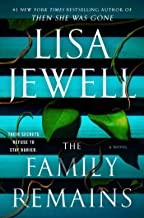
The Family Remains
Lucy returns to London as bones on the Thames reopen the Chelsea mansion deaths.
2,304-word summary · 10 min read

The Crossroads
Shot and comatose, Joe Pickett lies still while his daughters hunt the shooters.
2,099-word summary · 9 min read

Mystic River
Three Boston friends reunite when one daughter is murdered.
2,230-word summary · 10 min read
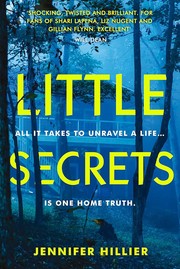
Little Secrets
A mother missing a son finds her husband cheating and handles both herself.
2,008-word summary · 9 min read
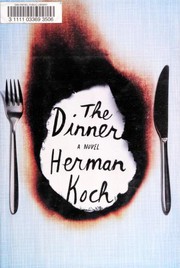
The Dinner
Two couples meet for dinner in Amsterdam to decide what to do about a violent crime their teenage sons committed.
2,958-word summary · 13 min read
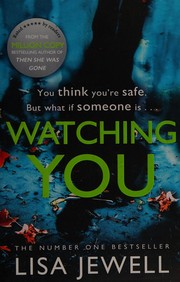
Watching You
A new wife in Bristol fixates on a charismatic neighbor while a teen boy logs every move before a murder.
2,363-word summary · 11 min read
There There
Twelve Native characters converge on a powwow in Oakland in Tommy Orange's 2018 debut about identity, family, and survival.
2,157-word summary · 10 min read
The Truth About the Harry Quebert Affair
A blocked writer tries to clear his mentor Harry Quebert after a girl missing since 1975 is found buried with his famous manuscript.
2,192-word summary · 10 min read
The Good Daughter
Twenty eight years after a home invasion shattered her family, a lawyer witnesses a school shooting that reopens old wounds.
2,505-word summary · 11 min read
Defending Jacob
A Newton prosecutor defends his fourteen year old son after a classmate is stabbed in the park.
2,994-word summary · 13 min read
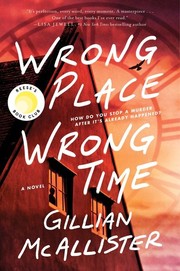
Wrong Place Wrong Time
Jen sees her son Todd kill a stranger, then wakes the day before, slipping back in time to stop the murder.
2,522-word summary · 11 min read

The Locked Door
Surgeon Nora Davis hides serial killer father while patients die.
2,465-word summary · 11 min read
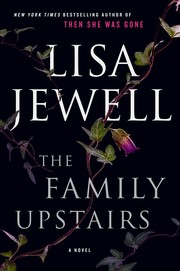
The Family Upstairs
Libby Jones inherits a Chelsea mansion and a past tied to a cult house, two runaways, and a baby left waiting.
3,300-word summary · 15 min read
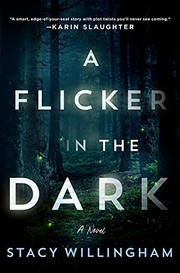
A Flicker in the Dark
Psychologist Chloe Davis faces copycat disappearances in Baton Rouge twenty years after her father confessed to murders.
3,074-word summary · 14 min read
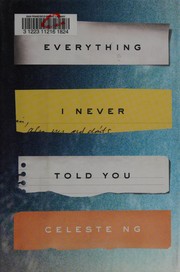
Everything I Never Told You
In 1977 Ohio, sixteen-year-old Lydia Lee is found dead in a lake, forcing her interracial family to face the secret pressures around race, school and duty that…
2,711-word summary · 12 min read
Dark Places
Libby Day, sole survivor of family murders, is paid to rethink her testimony.
1,910-word summary · 8 min read
The Curious Incident of the Dog in the Night-Time
Curious Incident retold: Christopher finds Wellington dead, maps primes, seeks truth in Swindon.
2,146-word summary · 10 min read
Python's Kiss
Thirteen sharp stories of stones, thieves, ghosts, and an afterlife with billing.
2,027-word summary · 9 min read

What She Knew
Rachel lets her eight-year-old son run ahead in a Bristol park, and the nine-day search turns her into a suspect in the public eye.
2,952-word summary · 13 min read
The Only Good Indians
Four Blackfeet men who killed a pregnant elk are hunted by her spirit a decade later, and the only person who can end the cycle is a teenage girl who was not…
2,010-word summary · 9 min read