
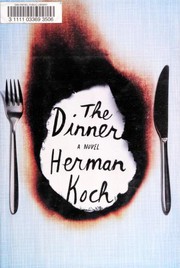
The Dinner
2,958-word summary 13 min read 304 pages in the book
- First published
- 2009
- Publisher
- Hogarth
- Pages
- 304
- ISBN
- 9780770437855
- Original title
- Het Diner
Reading options
What's inside (8 sections)
A friend pressed this one on me with a warning that still fits. She said you will hate everyone at the table and you will not stop reading. She was right on both counts. The Dinner is short for the weight it carries, 304 pages in the American Hogarth edition from 2013, and it all takes place around one meal in Amsterdam. Two brothers and their wives sit down to talk about what their sons did. The food keeps coming. The talk keeps circling. By coffee you understand these people are capable of much more than rude remarks.
Herman Koch first published the book in Dutch as Het Diner in 2009 with Ambo Anthos in the Netherlands. Sam Garrett translated it into English, with the British edition in 2012 through Atlantic Books and the American edition in 2013 from Hogarth. It went on to sell in the millions, spent a long run on bestseller lists, and was filmed several times in different countries. I came to it late, after hearing it described as a thriller. That label is half true. It has a crime at the center, but the interest is not in clues. It is in watching parents bargain with themselves.
The setup is simple enough to explain in a minute. Paul Lohman, a former history teacher, and his wife Claire meet Paul's older brother Serge and Serge's wife Babette at a fashionable restaurant. Serge is a well known politician who may become the next prime minister of the Netherlands. Babette is polished in the way that suggests long practice. The four have ordered before. This dinner is different because they need to discuss their sons. Paul and Claire's boy Michel is fifteen. Serge and Babette's boy Rick is fifteen. The two cousins, along with another boy who was with them at the start of the evening in question, attacked a homeless woman sleeping near an ATM. They beat her and set her bedding on fire. She died. A security camera caught part of it. The footage ran on television. So far the boys have not been named in public. The question for the table is whether they ever will be.
Koch tells the whole thing through Paul, and Paul is a problem from page one. He opens by complaining about the restaurant, the waiters, the small portions, the way Serge picks places that require booking months ahead. I laughed at first. Paul is funny about pretension. He notices the manager's pinky, the solemn description of a potato, the prices that make a simple dinner feel like a ceremony. Then the jokes keep a sharp edge too long and you start to feel uneasy. Paul hates his brother with a focus that seems out of proportion. He remembers childhood slights in detail. He describes Serge as a common man playing a great man. He mocks Serge and Babette for adopting a child from Burkina Faso, comparing it to taking in a stray animal. That passage made me put the book down for a bit. It is meant to repel. You are supposed to ask what kind of narrator says such things so casually.
The answer comes slowly, and that delay is the engine of the book. Koch organizes the chapters by the courses of the meal. Aperitif, appetizer, main course, dessert, digestif, with numbered sections inside each. Between courses Paul drifts into memory. He tells you about his teaching career and why it ended. He tells you about his health, a condition that calls for daily pills which he often refuses to take. He tells you about Claire, who seems calm and practical next to him. He tells you about Michel, who can be sweet at home and cold outside it. None of this arrives as straight confession. It arrives the way people talk when they are avoiding a subject, in loops and corrections. Paul admits he leaves things out. He admits he shapes stories to favor himself. Once you notice that habit, you reread earlier pages with new eyes.
The restaurant nobody wants to be in
The restaurant deserves its own mention because Koch uses it as a pressure cooker. It is the kind of place where the staff explains each plate as if presenting evidence. Paul hates it on principle. Claire tolerates it. Serge loves it because being recognized there confirms his place. Babette works the room without seeming to work it. They cannot shout. They cannot leave without making a scene. So they smile at waiters and whisper about prison.
I liked this choice more as the book went on. Most family fights happen in kitchens and cars, where voices can rise. Here every hard sentence has to pass through politeness. Serge wants to talk about his plans. Paul wants to talk about anything else. The food arrives and interrupts at the worst moments. A waiter leans in to grate something while Paul is trying to say that his son may be in deep trouble. The effect is comic at first, then sickening. Civil manners keep covering an uncivil subject.
Koch also gets a lot from class without making speeches about it. These are comfortable people. Good schools, good doctors, holidays, connections. The restaurant bill would feed the woman who died for weeks. Nobody at the table says that. They talk about wine. The contrast sits there without underlining, and it hit me harder than any lecture would. When Paul sneers at rich habits while enjoying rich protection for his own child, you see the trap. He wants the benefits of his brother's world and the right to despise it.
If you have ever sat through a tense dinner with relatives, the early pages will feel familiar in the worst way. The small talk, the checking of phones, the private jokes that exclude one person. Koch stretches that discomfort for a long time before he gives you the crime in full. Some readers will find the start slow. I did in places. The payoff is that when the subject finally breaks the surface, the politeness cracks in a way that feels earned.
Aperitif and appetizer, or Paul talks around everything
The first two courses are mostly Paul stalling, and Koch lets him stall. Paul describes the aperitif, the bread, the appetizer, the people at nearby tables. He tells stories about Serge's rise, about television interviews, about the way Babette smooths over awkward pauses. He recalls Michel as a small boy, then as a teenager who answers in short sentences. He recalls Rick as the cousin who follows Michel's lead. He mentions the other boy, Beau, who was present early that night and then went home, a detail that matters later more than it seems to at first.
What Paul avoids is the center. He refers to something bad, something on the news, something the boys may have seen. He criticizes the media for showing the security footage over and over. He criticizes viewers for acting shocked. He sounds almost reasonable when he says teenagers do stupid things and the press feeds on it. Then a sentence lands wrong and you pause. He knows too much about that night. His anger at the coverage feels personal rather than principled.
Claire watches him during these pages in a way I only appreciated on reflection. She corrects him gently. She touches his arm. She changes the subject when he goes too far. At the time I read her as the steady wife managing a difficult husband. Later scenes force you to revise that reading completely. Koch plants her calm early so the later reveal has force. It is clever construction, though it means Claire can feel thin in the first third. She is mostly seen through Paul, and Paul does not see her clearly.
Babette, too, stays at the edge for a while. She worries about Serge, about the election, about appearances. She asks about school, about holidays, about Michel. Paul treats her as an extension of Serge. That is Paul's blind spot, not Koch's. When Babette finally speaks plainly near the end, her concerns turn out to be concrete and self interested in a different way from the men's. I wished she had more room earlier, but I understand why Koch held her back. The book wants you to underestimate the wives.
Main course, or what the boys did
The main course is where Paul stops circling. I will describe it plainly because the book does, and because summaries that hide it mislead about the kind of novel this is. Michel and Rick, with Beau there at the beginning, came across a homeless woman sleeping in the vestibule of a bank with an ATM. They mocked her. They pushed her things around. Michel threw objects at her shelter. Then Michel set fire to her bedding. The fire killed her. The boys left. Parts were caught on camera. The images were broadcast. The police asked for help identifying the figures. The families recognized their sons and said nothing yet.
Koch does not write this as a twist. He writes it as something Paul has been carrying while discussing appetizers. The horror is in the ordinariness around it. Michel went to school the next day. Rick played sports. The parents made breakfast. Paul kept teaching his opinions about society while knowing his son had watched a woman burn. When Paul describes Michel laughing on a phone video the boys made, my stomach turned. Michel shows no sense that he ended a life. He worries about being caught. He asks practical questions. That absence of feeling is the scariest part of the book, more than the fire itself.
The book also makes clear that Michel led and Rick followed. Rick is not innocent, but his role was smaller and his fear afterward looks more like shame. Beau left before the worst of it, which does not clear him in every sense but puts him in a different category. These differences matter because the parents use them as bargaining chips. Paul argues about degrees of blame. Serge talks about responsibility. Claire focuses on outcome. Babette focuses on what exposure would do to everyone. Each version serves the speaker.
One detail that stayed with me is how much phones matter. The security camera made the crime public without names. The boys' own phones made it private and permanent inside the family. Michel kept images. He showed them. He refused to delete them when Paul demanded it. That refusal tells you more about Michel than any speech could. He treats the recording as a trophy. Paul, who fancies himself honest, realizes his son collects proof of cruelty and feels nothing. For a moment Paul seems to see clearly. Then self protection takes over again.
Dessert, or the parents split open
By dessert the table stops pretending this is a normal dinner. Serge says what he came to say. He plans to step forward, to hold a press conference, to take Rick to the police, and he thinks Paul and Claire should do the same with Michel. He frames it as duty. A future prime minister cannot hide a crime in his family. He also frames it as moral example. Owning the truth will let the boys face consequences and change. Paul hears it as performance. He thinks Serge wants a noble scandal that he can survive, with tears on camera and polls afterward.
This is where the book is strongest and most uncomfortable. Nobody sounds entirely wrong, and nobody sounds clean. Serge is right that hiding a killing corrupts everyone. He is also using the moment to protect his career by controlling it. Babette supports parts of his plan and resists others. She fears what a confession will do to Rick, who is more fragile than Michel, and she fears what it will do to the family if Serge throws away his chance. She asks Paul and Claire to help talk Serge out of going public. Her plea is practical. It is also a request to join a cover up.
Claire is the surprise of this section. The calm wife becomes the fiercest defender. She has thought further ahead than Paul. She has considered money, lawyers, stories, timelines. She speaks about Michel with a protectiveness that goes past reason into something cold. Without giving away every line, she makes clear she will do what it takes to keep her son out of a cell, even if that means hurting others who might talk. I found her scenes chilling because they are so composed. Paul rants. Claire plans. Between the two of them, Michel has a wall around him.
Paul, for his part, swings between fury and pride. He hates Serge's moralizing. He also hates that Michel needs Serge's world of lawyers to survive. He remembers his own violent episodes, moments when he lashed out and told himself the other person deserved it. Koch has prepared this carefully. Paul's past is not a separate subplot. It is the proof that Michel learned some of this at home. Paul sees the likeness and cannot face it straight. So he turns it into contempt for his brother. It is easier to hate Serge than to admit his son is like him at his worst.
Digestif, or the decision after dinner
The final course is short and bitter. Coffee and small drinks. The restaurant empties a little. The four cannot agree in any honest way, so they agree to delay. Serge will think about timing. Babette will manage Rick. Paul and Claire will manage Michel. Everyone will say nothing for now. It sounds temporary. It reads as permanent to me. Once you decide to wait a day, you can decide to wait another.
What happens after the table matters more than the table, and Koch handles it without grand speeches. There are phone calls, a visit, pressure on Beau and his family, talk of money to keep people quiet. Claire leads much of this. Paul follows, then takes an action of his own that is violent and impulsive and entirely in character. I will not lay out the last pages beat by beat because they land harder when you meet them in Paul's voice. What I can say is that no one is rescued by conscience. The people with power use it. The people without it get moved aside.
The ending divided readers I know, and I see why. If you want punishment or redemption, you will not get it in a neat form. Serge does not become a hero. Paul does not learn in the way school stories teach learning. Claire does not break down. Michel does not confess with tears. The book closes with the family intact in one sense and broken in another. They have protected their own. They have lost any claim to be decent. Koch leaves you to decide whether you would act differently with your own child on the line. I sat with that question longer than I expected.
What sticks and what slides
What sticks, days later, is the voice. Paul is awful company and excellent narration. He is funny about waiters and merciless about himself without knowing it. Reading him is like listening to a friend who keeps telling stories that make him look worse. You want to correct him. You cannot. That tension kept me turning pages even when I disliked every adult in the room. Koch trusts the reader to judge without a guide. There is no wise outsider who explains the moral. The structure does that work quietly.
What sticks also is the question of ordinary evil. Michel is not a cartoon monster. He is polite to his mother, bored at school, cruel when he thinks no one who matters is watching. Rick is weaker, eager to impress an older cousin. Their victim is a woman the city had already learned not to see. Koch suggests that neglect made the crime easier before it happened and after. The news cycle moves on. The restaurant fills again. That social coldness bothered me more than any single act in the book.
What slides, for me, is the middle. The long buildup through drinks and starters tests patience, especially if you were told this is a fast thriller. It is not fast. It is a slow squeeze. A few flashbacks repeat the point about Paul's temper. A few jokes about fine dining run long. Babette and Claire could have been given one more scene each early on so their later moves feel less sudden. And readers who need one person to root for will struggle. There is no such person here by design. If that is a deal breaker, skip this one.
Still, I recommend it to the right reader. If you like books that put you inside an unpleasant mind, this is strong. It sits beside other novels about families protecting children past reason. You do not need to know Dutch politics to follow it. Serge's campaign could be any campaign.
A practical note on editions, since this book has many. I read around the American Hogarth hardcover from February 2013, 304 pages, ISBN 9780770437855, translated by Sam Garrett. The British Atlantic edition from 2012 uses the same translation. The Dutch original is Het Diner from 2009. Counts vary by print, but the story is the same.
I closed the book thinking about my friend's warning. Hate everyone, keep reading. She understated the second half of the effect. I kept thinking afterward too, about how quickly love for a child can turn into willingness to harm a stranger. Koch does not excuse that turn. He shows how ordinary it sounds when spoken softly over dessert. That softness is what frightens me still.
FAQ
When was The Dinner first published?
It was first published in Dutch as Het Diner in 2009 by Ambo Anthos. Sam Garrett translated it into English, published in Britain in 2012 and in the US by Hogarth in 2013.
Is The Dinner part of a series?
No, it is a standalone novel. Koch has written other novels, but Paul and Claire's story ends in this book.
Do I need to know Dutch politics to enjoy it?
No. Serge is a Dutch politician, but the family pressure and media scrutiny translate anywhere. The course-by-course dinner structure carries the story.
Similar books

Case Histories
A Cambridge PI takes three cold cases that tangle with his own loss.
2,465-word summary · 11 min read

The Perfect Nanny
A trusted nanny kills two children, and the book traces how love and class hid warning signs.
2,200-word summary · 10 min read

The Round House
At thirteen, Joe Coutts hunts for his mother's attacker when the law stalls, in Louise Erdrich's National Book Award novel of family, jurisdiction, and revenge…
2,391-word summary · 11 min read

What She Knew
Rachel lets her eight-year-old son run ahead in a Bristol park, and the nine-day search turns her into a suspect in the public eye.
2,952-word summary · 13 min read
Silas Marner
A falsely accused weaver hoards gold in Raveloe until a stolen hoard and an abandoned child remake his narrow life.
2,699-word summary · 12 min read

Howards End
Forster's 1910 novel follows two families, a house in Hertfordshire, and a burned note, asking whether money and feeling can ever be connected.
2,187-word summary · 10 min read

Fathers and Sons
Arkady brings the nihilist Bazarov home to his father's estate, and a generational argument turns into love, a duel, and an early death.
2,192-word summary · 10 min read

Unaccustomed Earth
Lahiri’s second story collection follows Bengali families in America and abroad, tracing the quiet distances between parents and children, spouses, and the…
2,333-word summary · 10 min read

The Age of Miracles
A California girl grows up while the Earth's rotation slows, and ordinary adolescence continues alongside slow catastrophe.
2,417-word summary · 11 min read

Peace Like a River
An asthmatic boy in the early 1960s narrates his family's search for his older brother, who is accused of two killings and has escaped custody.
1,969-word summary · 9 min read

We Are Okay
Marin fled San Francisco after her grandfather vanished and stopped answering anyone. When Mabel visits her college dorm, she has to say what happened.
2,253-word summary · 10 min read

The Chosen
A shattered pair of glasses in a 1944 Brooklyn softball game starts a friendship between a Hasidic boy and his Orthodox neighbor, and their fathers pull them…
2,443-word summary · 11 min read

Still Missing
A realtor is abducted at a Vancouver Island open house and held for more than a year. Told through therapy sessions, the novel follows her escape and the hunt…
2,466-word summary · 11 min read

Saving Noah
A seventeen-year-old swimmer confesses to molesting two girls he coached, and his mother must decide what unconditional love is worth.
2,976-word summary · 13 min read

A Spool of Blue Thread
Four generations of the Whitshank family in Baltimore, and the silences, resentments and quiet love they hand down without ever saying so.
2,408-word summary · 11 min read

This Is How You Lose Her
Yunior cycles through love affairs and betrayals in nine linked stories, tracing the damage he does and the family history behind it.
2,195-word summary · 10 min read

The Ex
Cassie thinks her new boyfriend's ex is the woman harassing her, but Freida McFadden's thriller keeps rearranging who the ex actually is.
2,103-word summary · 9 min read
Mother Night
Howard W. Campbell Jr., a Nazi propagandist and American spy, tells the story of his double life from an Israeli prison cell while waiting to be tried for war…
1,988-word summary · 9 min read

Flight Behavior
Dellarobia Turnbow is stuck in a Tennessee farm marriage until a valley full of monarch butterflies, and the scientist who comes to study them, force her to…
2,051-word summary · 9 min read

And Every Morning the Way Home Gets Longer and Longer
An elderly grandfather, his son, and his grandson share memories and fears as the old man's mind begins to fade, in a short novel about grief and love.
2,078-word summary · 9 min read

A Painted House
In 1952 Arkansas, seven-year-old Luke Chandler picks cotton with his family and learns how quickly poverty, violence, and adult secrets can end a childhood.
2,060-word summary · 9 min read

The Tiger's Wife
A young doctor in a war-scarred Balkan country chases the stories her grandfather left behind, including a deathless man and a deaf girl who loved an escaped…
2,232-word summary · 10 min read

The Story of Edgar Sawtelle
A mute boy on a Wisconsin dog-breeding farm relives Hamlet as his uncle returns, his father dies in the barn, and the dogs inherit what is left.
2,392-word summary · 11 min read

The Drowning Woman
Living in her car in Seattle, Lee saves a wealthy stranger from drowning. The friendship that follows draws her into abuse, murder, and a plan to disappear.
2,578-word summary · 11 min read

Olive, Again
Elizabeth Strout returns to Crosby, Maine, as Olive Kitteridge marries Jack Kennison, confronts her son, and faces old age, grief, and small-town judgment.
2,333-word summary · 10 min read

We Were the Mulvaneys
After a rape following a school dance, the Mulvaneys, a family that believed it was blessed, comes apart over fifteen years. Narrated by the youngest son.
2,094-word summary · 9 min read
Foster
A girl spends a summer with relatives on a Wexford farm and is cared for properly for the first time. A spare novella about family and what children notice…
2,043-word summary · 9 min read

The Widow
A widow of a suspected criminal faces reporters and police while hiding what her marriage really cost.
2,599-word summary · 12 min read

The Night Swim
A true crime podcaster covers a rape trial while probing an old drowning in a small town.
2,260-word summary · 10 min read
The Most Fun We Ever Had
Four Sorenson sisters orbit perfect parents hiding old cracks.
2,590-word summary · 12 min read