

The Story of Edgar Sawtelle
2,392-word summary 11 min read 576 pages in the book
- First published
- 2008
- Publisher
- Ecco
- Pages
- 576
- ISBN
- 9780061374227
Reading options
What's inside (10 sections)
The first thing worth saying about this book is that it is a novel about dogs, and then a novel about a boy, and only finally, and completely, a novel about a father who dies. David Wroblewski's debut appeared in 2008 from Ecco, the HarperCollins imprint, and it arrived with the kind of reception most first novelists only imagine: a New York Times bestseller by the end of June, an Oprah's Book Club selection that September, and a nomination for the Los Angeles Times Art Seidenbaum Award for First Fiction. It is also a retelling of Hamlet, moved from Elsinore to a dog-breeding farm in northern Wisconsin, and it never once apologizes for the transplant. The ghosts are still ghosts, the poison is still poison, and the prince is a mute boy who speaks to his animals in signs.
People who hear "Hamlet with dogs" tend to picture something soft. Wroblewski did not write something soft. He wrote a long, slow, grieving book, the kind that earns its deaths, and he wrote it with an attentiveness to the inner life of dogs that has kept it in readers' hands for years. That length and that ending have divided people since the week it was published, and both are worth talking about honestly. The hardcover runs 576 pages, and it uses nearly every one of them.
The Farm and Its Dogs
The Sawtelle line begins with a grandfather, John Sawtelle, who buys a patch of Wisconsin land, rents out the fields to neighbors, and starts raising dogs. That decision becomes a family identity. His two sons take opposite paths: Gar stays and inherits the work, and Claude leaves, restless and unresolved, to find whatever it is he thinks he is missing. Gar marries Trudy, they struggle for years to have a child, and the farm folds around them as the center of their lives.
What makes the Sawtelles different from any kennel down the road is a philosophy. They are not breeding for speed, or for the show ring, or for the sharpness that makes a dog useful on a hunt. They are breeding for temperament and for judgment, selecting animals that can think through a problem and choose well when no one is telling them what to do. The family keeps records on every dog, generation after generation, and those records amount to a private science. Training on this farm is less about commands than about education. A Sawtelle dog is meant to be a partner that reasons, not a machine that obeys.
This is the part of the novel that feels most invented and most true at the same time. Wroblewski grew up around a breeding kennel in northern Wisconsin, and the texture of that life is everywhere: the whelping box, the runs, the feeding schedules, the way a litter divides into personalities before it is even weaned. The kennel and the barn run on routines and hardware that Edgar will later know by heart, down to the tumbler lock that guards the runs and the way the day is measured out in meals.
Almondine and the Mute Boy
Edgar is born able to hear and unable to speak. The cause is never explained, and the novel treats that silence as one of its fixed conditions rather than a puzzle to solve. His parents learn sign language alongside him, part formal and part invented, so the household develops its own private tongue. Edgar grows up inside that language, and inside the dogs.
His constant companion is Almondine, a dog who belongs to him in a way that is hard to describe without sounding sentimental and which the book somehow avoids. Almondine reads him. She is beside him when his parents are not, and in a household where speech is impossible for the boy, she functions as a kind of second voice, the living proof that understanding does not require words. When Edgar is old enough, his parents hand him a litter of his own to raise, and the act of giving him that responsibility is also an act of trust in who he is becoming.
The early chapters are patient in a way that will either charm you or try you. Wroblewski takes his time with the farm, the dogs, the marriage, the mute boy learning to be at home in a world built for speakers. Nothing terrible has happened yet. The book is quietly loading a spring.
Claude Comes Home
Then Claude returns. The prodigal brother drifts back to the farm, helps around the house and the barn for a while, and unsettles everything simply by being there. He and Gar are the kind of brothers whose old arguments never finished. One night the tension boils over into a drunken fight, and Claude leaves again. That should be the end of it. It is not.
A short time later Edgar discovers his father in the barn, dying and inexplicable. Gar has been poisoned, though no one says so yet, and Edgar, who cannot call for help, can only stand there and watch his father die while the one tool he needs, his voice, is the one thing he does not have. It is the cruelest possible version of the boy's condition, and Wroblewski stages it with real restraint. There is no screaming. There is a mute child and a dying man and a barn, and then there is a funeral.
The Death in the Barn
After the burial, Edgar and Trudy try to keep the business alive without Gar, and for a while the effort holds them together. Trudy then falls ill with pneumonia, and Edgar, still a boy, tries to run the farm alone. He grows careless from exhaustion. One night he falls asleep in the barn, wakes late, and feeds the whole kennel in a hurry by dumping a pile of kibble into the runs. Two dogs fight badly. With the regular vet unreachable, the family has to call Claude back for help.
Claude treats the injured dogs, Trudy recovers, and the two adults begin to sleep together. Edgar watches his mother and his uncle draw close, and something in him goes cold. Then comes the night that reorders the whole book. The dogs start barking at something out in the weather, and Edgar goes into the storm to find out what. In the rain he sees the outline of his father's ghost, and the figure leads him, through signs, to a syringe, the instrument that almost certainly killed Gar and one Edgar has seen in Claude's hands before.
Wroblewski handles the supernatural with a light touch. The ghost is not a special effect. It is a grief that has taken a shape, and the novel is careful to let you decide how much of it is real. What cannot be argued with is the syringe. Edgar now has a suspicion he cannot prove and cannot speak, which is the central predicament of the entire story.
Three Griefs and the Long Flight North
Unable to bear living under the same roof as Claude, Edgar looks for a way to test him. When a buyer comes to inspect the dogs, Edgar seizes the moment and stages a scene. He gets the dogs to act out a little wordless play, a dumbshow, in which one dog carries a syringe and touches another, and the touched dog falls over and plays dead. The final dog touches Claude's leg. Claude flinches and storms out, furious, and to Edgar that reaction is a confession.
The confrontation with Trudy goes wrong almost immediately. Mother and son argue, the fight turns physical, and Edgar, seeing a figure he takes for Claude, swings a hay hook and sends the man tumbling down the stairs to his death. The dead man is not Claude. It is Dr. Papineau, the family's veterinarian. Trudy understands in an instant what has happened and what it will mean, and she tells her son to run. Three dogs from his litter follow him into the woods, and the novel leaves the farm behind.
The middle movement, titled around the forest and the lake country, is the part of the book that most tests a reader's patience. Edgar drifts through the wilderness, robbing the occasional empty cabin to eat, heading north toward Canada and a commune he imagines will take him in. The dogs are his only company and his only responsibility. One of them is injured, and the injury forces Edgar to knock on a door he had just robbed.
Henry Lamb, the Tornado, and the Dumbshow's Echo
The door belongs to Henry Lamb, a widower living alone, who takes the boy and the hurt dog in without much fuss. Because Edgar cannot speak, the two of them communicate by writing on paper, and something quietly healing happens in that house. Henry is not a savior and the book does not pretend he is. He is simply a decent man who recognizes that the boy at his door needs help and gives it.
Once the dog has healed, Henry offers to drive Edgar north to the place he has been aiming for, and on the road they are caught in a tornado. The storm scatters them, and in its aftermath Edgar makes a decision that has been building for hundreds of pages: he turns around. He leaves two of the dogs with Henry, keeps the third, and goes home. Whatever there is to settle, he intends to settle it where it started.
The Return, the Poison, and the Fire
Edgar comes back to a farm that has moved on without him. He visits his father's grave and learns that Almondine is dead, a loss the book delivers almost in passing and which lands harder for being delivered that way. He leaves a note in the house for his mother, and Claude finds it first. Claude carries the news to Glen, a police officer and the son of the dead veterinarian, who has his own reasons to believe Edgar killed his father.
The last movement is titled for poison, and it earns the name. Spooked by Edgar's return, Claude moves a bottle of poison in the barn, and Edgar sees him do it. Edgar persuades Trudy to give him a night alone in the barn so he can search for what Claude moved, while Claude and Glen set their own trap: Glen wants Edgar alone, and he wants to question him in a way that will not involve anyone else.
Glen surprises Edgar in the barn and tries to subdue him with a rag soaked in ether. Edgar gets hold of some quicklime and throws it into the officer's face, blinding him temporarily. The ether meets a lamp, and the barn goes up. Thinking first of the dog records, his father's life's work, Edgar starts hauling the files out through the smoke while the building burns, and Trudy, held by the blinded Glen, cannot stop him. Claude appears to help with the papers. He has hidden the poison among them. He takes the bottle, and while Edgar is turned away he drives a syringe into the boy.
Then the fire does what the law and the family never managed. Claude, waiting for the poison to finish its work, tries to escape the burning barn and cannot. He sees his brother's figure in the smoke, and the smoke closes over both of them. Edgar and Claude die together in the barn that has contained the whole story, and the Sawtelle dogs, let loose by the chaos, run off into the wild country to fend for themselves.
What the Book Gets Right, and Where It Tests You
As a piece of writing, the novel is frequently extraordinary. Wroblewski has an ear for the way rural people actually talk, and an unusual ability to describe a dog's attention without turning the dog into a person in a fur coat. The breeding philosophy, the records, the long education of a litter, all of it is rendered with enough specificity to feel like reportage. The grief is the strongest thing in the book. Gar's death and Edgar's inability to cry out for help is one of the most effective scenes of its kind in recent American fiction, and the ghost in the rain is its proper echo.
The length is the first real complaint, and it is a fair one. At 576 pages, the novel gives whole stretches to Edgar's wanderings that could have been leaner, and readers who come for the Hamlet machinery sometimes find themselves stranded in the woods for a long time before the plot remembers where it was going. The middle is beautiful and slow, and slow is not always the same as necessary.
The ending is the other complaint, and it is more serious. The fire, the syringe, the double death, the ambiguous ghost closing the door on Claude: it is a deliberate refusal of the tidy resolution that a lesser book would have supplied, and some readers experience it as profound while others experience it as a cheat. A plot this patient arguably owes its audience a clearer account of what just happened, and the novel declines to give one. Even readers who admire the choice tend to wish the last fifty pages had more room to breathe.
Then there is the question of who this book is for. It is a Hamlet retelling, so it rewards readers who know the play and enjoy watching the pieces get reassigned. It is a dog novel, and it will devastate anyone who has loved a dog. It is a slow literary tragedy, which means readers who want a fast plot or a warm ending should look elsewhere, and readers who need an explanation for everything should prepare to be denied one. What it is not, despite the Oprah sticker and the bestseller lists, is a comfortable book club crowd-pleaser. It is a serious, sorrowful, sometimes overlong novel that takes a very old story and makes it feel like it happened on a farm you could drive to. If that sounds like your kind of bargain, the 576 pages will not feel wasted. If it does not, no one will blame you for putting it down, though the dogs may haunt you a little regardless.
FAQ
Is The Story of Edgar Sawtelle based on Hamlet?
Yes. It is a modern retelling of William Shakespeare's Hamlet, moved from Elsinore to a dog-breeding farm in rural Wisconsin. Edgar takes the prince's role, Claude the usurping uncle's, Trudy the queen's, and Gar the murdered father whose ghost appears in the rain.
When was The Story of Edgar Sawtelle published?
It was first published in 2008 by Ecco, a HarperCollins imprint, and became a New York Times bestseller that June. Oprah Winfrey selected it for her book club in September 2008. The 576-page count and ISBN on this page come from the Ecco hardcover.
Why do readers argue about the ending?
The climax kills Edgar and Claude together in a burning barn, lets the dogs run loose, and never fully explains the ghost or the poison. Some readers find the ambiguity earned and devastating; others find it abrupt and unsatisfying after so long a book.
Similar books
The God of Small Things
Twins Rahel and Estha grow up in Kerala in 1969, where family rules and caste lines shape a loss that follows them into adulthood.
2,646-word summary · 12 min read

The Age of Miracles
A California girl grows up while the Earth's rotation slows, and ordinary adolescence continues alongside slow catastrophe.
2,417-word summary · 11 min read
Peace Like a River
An asthmatic boy in the early 1960s narrates his family's search for his older brother, who is accused of two killings and has escaped custody.
1,969-word summary · 9 min read

The Chosen
A shattered pair of glasses in a 1944 Brooklyn softball game starts a friendship between a Hasidic boy and his Orthodox neighbor, and their fathers pull them…
2,443-word summary · 11 min read
Old Yeller
Travis Coates takes in a stray yellow dog that protects his family on the Texas frontier, and learns about loyalty and loss.
2,165-word summary · 10 min read
We Were the Mulvaneys
After a rape following a school dance, the Mulvaneys, a family that believed it was blessed, comes apart over fifteen years. Narrated by the youngest son.
2,094-word summary · 9 min read
Foster
A girl spends a summer with relatives on a Wexford farm and is cared for properly for the first time. A spare novella about family and what children notice…
2,043-word summary · 9 min read
Summer Sisters
Vix and Caitlin share Martha's Vineyard summers from age twelve into adulthood, through first love, grief, marriage, and a disappearance that still haunts Vix.
3,633-word summary · 16 min read
The Tenth Circle
After Trixie accuses Jason of rape and he dies off a bridge, parents Daniel and Laura hide guilt and grace in Alaska flight.
2,164-word summary · 10 min read
Purple Hibiscus
Kambili, fifteen, watches her devout factory-owner father rule the Enugu house through fear until a Nsukka visit teaches her speech and freedom.
2,595-word summary · 12 min read
Handle with Care
Parents of brittle bone daughter Willow sue best friend OB for wrongful birth, splitting marriage and friendships.
2,231-word summary · 10 min read
We Need to Talk About Kevin
In letters to her dead husband, Eva reconstructs how her son Kevin grew from a cold child into a school killer.
2,041-word summary · 9 min read
The Elegance of the Hedgehog
A Paris concierge hides her brilliant mind while a gifted girl plans her death, until a new tenant sees through them both.
2,248-word summary · 10 min read
The Cider House Rules
Homer Wells grows up in a Maine orphanage under Dr. Larch, who delivers babies and performs illegal abortions.
2,985-word summary · 13 min read
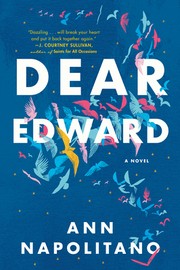
Dear Edward
Twelve-year-old Edward Adler survives a plane crash that kills his family, then learns how to live with grief, letters, and love.
2,903-word summary · 13 min read
King Lear
An old king divides his realm by flattery, and learns too late which daughter loved him in silence.
2,123-word summary · 9 min read
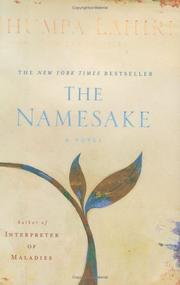
The Namesake
Jhumpa Lahiri follows Gogol Ganguli from a hated namesake to adult loss, marriage, and family reckoning between Calcutta and Boston.
2,878-word summary · 13 min read
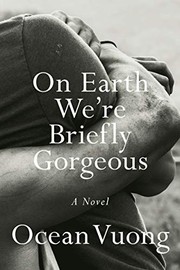
On Earth We're Briefly Gorgeous
A son writes to the mother who cannot read him: war, migration, first love, and loss in one Vietnamese American family in Hartford.
3,113-word summary · 14 min read
Hamnet
Agnes Hathaway holds her Stratford family together while her husband works in London, until plague takes eleven-year-old Hamnet in 1596.
3,164-word summary · 14 min read
Go Set a Watchman
Jean Louise Finch returns to Maycomb and finds her father changed: Lee's contested 2015 draft about family loyalty and race in Alabama.
3,478-word summary · 15 min read
White Oleander
Astrid cycles foster homes after mother Ingrid murders boyfriend.
2,569-word summary · 11 min read

The Virgin Suicides
Five Lisbon sisters die in 1970s Grosse Pointe as boys watch.
2,559-word summary · 11 min read
She's Come Undone
Abused as a girl, divorced and struggling with weight, Dolores Price slowly finds healing after years of trauma.
2,550-word summary · 11 min read
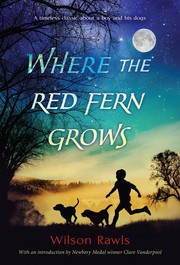
Where the Red Fern Grows
Billy earns two hounds and hunts raccoons in the Ozarks with love and loss.
2,990-word summary · 13 min read
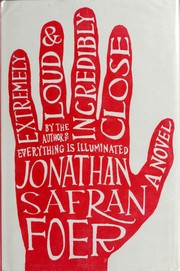
Extremely Loud and Incredibly Close
Nine year old Oskar searches New York for a lock matching his father's key after 9/11.
2,999-word summary · 13 min read
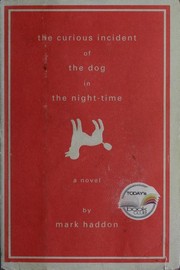
The Curious Incident of the Dog in the Night-Time
Curious Incident retold: Christopher finds Wellington dead, maps primes, seeks truth in Swindon.
2,146-word summary · 10 min read

What Happened to Goodbye
Mclean has reinvented herself in four towns since her parents divorced. In Lakeview she uses her real name, and for the first time staying put becomes a choice.
2,796-word summary · 12 min read
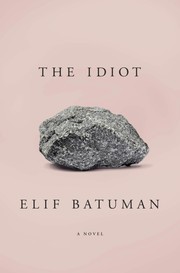
The Idiot
A Turkish-American freshman at Harvard falls in love through email with a Hungarian math student and spends a summer in Hungary trying to turn correspondence…
2,019-word summary · 9 min read

Revolutionary Road
A Connecticut couple who believe they are too good for the suburbs plan to move to Paris, and the plan slowly exposes everything they cannot say to each other.
2,085-word summary · 9 min read
Brown Girl Dreaming
Jacqueline Woodson retells her childhood in verse, moving from Ohio to South Carolina to Brooklyn while the civil rights movement reshapes the world around her.
2,727-word summary · 12 min read