
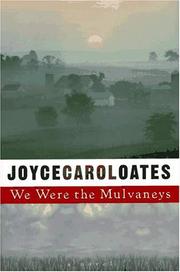
We Were the Mulvaneys
2,094-word summary 9 min read 454 pages in the book
- First published
- 1996
- Publisher
- Dutton
- Pages
- 454
- ISBN
- 9780525942238
Reading options
What's inside (8 sections)
The title is in the past tense, and that tense is the entire novel. We Were the Mulvaneys is not about a family being destroyed. It is about a family that has already been destroyed by the time the story starts telling itself, and the slow work of a narrator trying to explain what happened between the "were" and the "are."
Joyce Carol Oates published it in 1996 with Dutton. The first edition runs 454 pages. It became a number one bestseller in 2001 when Oprah's Book Club picked it, which is how most people my age found it, and it was adapted into a 2002 Lifetime film that was nominated for three Emmys, with Blythe Danner's performance as Corinne singled out by critics. I had avoided it for years because it sounded like homework. It is not homework, but it is heavy, and I understand why some readers put it down.
High Point Farm
The Mulvaneys live on High Point Farm, outside the fictional town of Mt. Ephraim in upstate New York, and they are that family. You know the one: Michael Sr. runs a roofing company he built himself, Corinne keeps the house and collects antiques and animals, and their four children, Mike Jr., Patrick, Marianne, and Judd, are good-looking, well-liked, and going places. The neighbors envy them in the specific way that small towns envy. The family knows it, and enjoys it, and mistakes the enjoyment for safety.
Oates spends a long time making you live in that household, and the time is not wasted even though it tests your patience. The Mulvaneys' happiness has texture: the farm chores, the animals, the high school, the family dinners, the rituals around the roofing business. Judd, the youngest, narrates the book from years later, and his love for what his family used to be is the most convincing thing in the novel. He wants you to understand that there was a real thing there before the falling, not just an illusion about to be exposed. Mystery writers tell you the perfect family was fake all along. Oates does something harder. She shows you a family that was genuinely good at being happy and genuinely unprepared for being hurt.
The prom
The turning point is the St. Valentine's Prom in 1976. Marianne, the daughter, is sixteen, and she goes to the dance and drinks more than she should, and she is raped by Zachary Lundt, the son of a local businessman and a figure in the same small-town network that has made the Mulvaneys feel secure. The details arrive the way such details actually arrive, in fragments and gaps, which Marianne cannot fully fill in and which the town prefers not to examine. She does not press charges. The town, via its institutions and its gossip, conveys that pressing charges is not something a nice girl does to a nice family's son.
The book's most devastating scenes are not the assault itself but the little meetings and silences afterward. Marianne is not disbelieved so much as managed. The men in the family orbit the question of what to do, and their answers reveal each of them. Michael Sr. cannot look at his daughter, and the inability hardens into something closer to banishment: she is sent to live with a distant relative of Corinne's in Salamanca, New York. There, and in a sequence of other arrangements, she waits for a call from her father that does not come. She is a teenager, essentially exiled, with the exile described by the family in the vocabulary of helping.
What Marianne receives instead of justice is a lesson in how families preserve the story they tell about themselves. The Mulvaneys could survive a daughter who was hurt. They cannot survive a daughter who makes them feel damaged, so they remove the feeling by removing the daughter, and the novel lets you watch every person involved pretend it is about anything else.
The unraveling
The second half of the book is a fifteen-year account of consequences. Michael Sr.'s social drinking becomes alcoholism, and the roofing business, built on relationships, begins losing them. The bank situation gets worse, then final. The farm is sold. He and Corinne separate. He dies in 1986, alone and broken, a man who could not figure out what he had done.
The children scatter, each in their own direction and each carrying a version of the same anger. Mike Jr., the oldest, joins the Marines, which is the family's understanding of how a person leaves. Patrick, the intellectual, quits college and at one point does something that I will not detail except to say it is a scene of vigilante justice with no catharsis in it, only aftermath. Marianne keeps drifting, and then, slowly, builds a life out of small jobs and animals and the kindness of strangers who become not strangers.
And Corinne, the mother, is the one who gets up. She buys a small farm with her friend Sable Mills and opens an antique barn, which is an unglamorous form of rebuilding and therefore the right one for this book. The Mulvaneys' story is told by the men and about the men, but the repair is largely done by the women. Oates is careful to make that both inspiring and unromantic. Corinne's rebuild has no orchestra.
The town
Mt. Ephraim is the second antagonist of the novel, and it is a subtler one than it first appears. It is a place where the Mulvaneys are admired, which sounds like protection and functions like credit, extended and revocable. When the scandal comes, the town does not attack the family. It withdraws the admiration, which is worse, because the withdrawal is polite and deniable. The churches, the school, the business relationships, the social invitations: all of it recalibrates, and the family feels the temperature change without anyone saying a word.
Patrick is the reader's proxy for the town's complicity in another way. He is the family intellectual, the one who wants to reason his way out, and he is also the one who cannot leave the insult alone. His response to what happened to Marianne is the book's darkest thread, and Oates handles it the way she handles everything: by showing the act, the aftermath, and the absence of catharsis, in that order. Vigilante justice in this novel is not a release valve. It is another thing the family will have to live with, and its most interesting consequence is what it reveals about the kind of story Patrick had been telling himself about his own cleverness.
The bishop of the region, the family doctor, the men who worked for the roofing company, the friends who stopped calling: Oates assembles a full portrait of how a scandal propagates through a small society, and it is one of the reasons the 454 pages feel necessary. A shorter book could have told you the family fell apart. Only a long one shows you the exact social machinery of the falling, and makes you understand that the family was not destroyed by a single man. It was destroyed by everyone in town who decided, individually, that a little distance was prudent.
Judd
The choice of narrator is the book's masterstroke, and the narration itself is the book's biggest stylistic risk. Judd tells the story from years after the events, and he tells it the way a reporter would if the story were his own family: he interviews, he reconstructs, he steps back. He is in some ways the least affected Mulvaney, and in others the most, since he inherited the whole of the family memory and is the only one still interested in cataloguing it.
That retrospective voice lets Oates braid multiple perspectives without chaos. Judd reports what Patrick thinks, what Corinne said, what the neighbors believed. But it also produces the one criticism I cannot fully dismiss: the novel is long, and some sections circle the same pain twice. Oates herself is a famously maximalist writer, and there are passages about the texture of the family's former happiness, and later about each sibling's wandering years, where 454 pages could have been 380 without losing much. It is the kind of book you have to be willing to live in, with a pace that is deliberately the pace of remembering. If you read it for plot, it will feel slow. If you read it for the family, it earns its length.
One more thing about the narrator. Judd is a journalist by profession, and it becomes clear that the book you are reading is, among other things, the book he had to write to put his family down. The structure is an act of love disguised as an act of reporting, and that is exactly what Oates is doing with the whole American family myth.
The ending
I am going to be careful here, because the ending's meaning is in how ordinary it is. The novel closes on the Fourth of July, 1993, at Corinne's new home. The surviving Mulvaneys gather: Mike Jr. with a wife and children, Marianne with her husband, Whit West, who runs the animal shelter where she worked, and their babies, and Judd and Patrick, who have not been in a room together in years. They remember their father, and the argument the book makes, quietly, is that remembering him is now allowed, which it was not ten years earlier.
The family that gathers is not the family that broke. It is smaller, chosen, scattered and reassembled, and the reconciliation has no dramatic scene. It has grandchildren, and food, and the kind of talk that carries old hurts without reopening them. After fifteen years and a death and a pile of ruined businesses, Oates gives her family the one ending most American novels deny: a life that continues past the catastrophe and does not have to justify itself.
This is why the book has lasted. It is a family saga about the toxic version of the American dream, the small town where reputation is a currency and appearances are load-bearing walls. The novel is hard on fathers and gentle with its broken daughter, who survives by refusing to be ruined. It is 454 pages long because the fall of something worthwhile takes a long time to narrate honestly.
There is also a version of this book that over-explains, and Oates mostly resists it. The fourth sibling, Mike Jr., gets the least page time and the least justification, which some readers will find a hole in the family portrait. His arc, the Marines, the marriage, the return for the final gathering, is summarized more than dramatized, and in a book this long that omission reads less like a choice and more like a survivor of the cutting floor. If the novel has a weak flank, it is there, in the sibling whose damage is told instead of shown. It is a small tax on an otherwise complete accounting.
Given the choice between a fast book about a family's destruction and a slow one about its slow repair, I'll take the slow one when it is done this well. The Mulvaneys' flaw was believing their happiness was insurance. The novel's gift is showing you what it costs when a family decides, too late, that it would rather protect its story than its daughter, and then showing you, almost as an afterthought, that the daughter can still keep going. We were the Mulvaneys. We are what is left. The distance between those two sentences is the book.
If you want a comparison to place it: this is the same darkness Oates brings to everything, but caged in a family saga instead of a horror novel, and the effect is closer to reading a case history than a thriller. It rewards a patient reader and punishes a fast one. I read it slowly, in the winter, and by the last chapter I understood why Oprah's audience took it to number one. It is not a comforting book, but it is a book that believes in the possibility of going on, and after 454 pages of one family learning how, the Fourth of July reunion feels like something actually earned. The Mulvaneys do not get justice and they do not get answers. They get a table, and grandchildren, and permission to remember their father without the memory burning, and Oates makes you understand that this is not a small thing. It is the whole thing.
FAQ
What happens to Marianne in We Were the Mulvaneys?
She is raped by Zachary Lundt after the prom, is sent away by her family, and eventually builds a life working with animals and marries Whit West.
Who narrates We Were the Mulvaneys?
Judd, the youngest Mulvaney, tells the story retrospectively from years after the events, assembling his family's history.
Why is We Were the Mulvaneys so famous?
It became a number one bestseller after Oprah's Book Club selected it in 2001, and it was adapted into an Emmy-nominated television film in 2002.
Similar books

Revolutionary Road
A Connecticut couple who believe they are too good for the suburbs plan to move to Paris, and the plan slowly exposes everything they cannot say to each other.
2,085-word summary · 9 min read

A Spool of Blue Thread
Four generations of the Whitshank family in Baltimore, and the silences, resentments and quiet love they hand down without ever saying so.
2,408-word summary · 11 min read

The Story of Edgar Sawtelle
A mute boy on a Wisconsin dog-breeding farm relives Hamlet as his uncle returns, his father dies in the barn, and the dogs inherit what is left.
2,392-word summary · 11 min read

The Berry Pickers
A four year old vanishes from a Maine blueberry camp in 1962, and two families carry the loss for decades until Joe and Norma face the truth.
2,606-word summary · 12 min read
The Tenth Circle
After Trixie accuses Jason of rape and he dies off a bridge, parents Daniel and Laura hide guilt and grace in Alaska flight.
2,164-word summary · 10 min read
Handle with Care
Parents of brittle bone daughter Willow sue best friend OB for wrongful birth, splitting marriage and friendships.
2,231-word summary · 10 min read
We Need to Talk About Kevin
In letters to her dead husband, Eva reconstructs how her son Kevin grew from a cold child into a school killer.
2,041-word summary · 9 min read
The World According to Garp
Writer Garp navigates fame, marriage, and loss with bears and wrestling.
2,072-word summary · 9 min read
The God of Small Things
Twins Rahel and Estha grow up in Kerala in 1969, where family rules and caste lines shape a loss that follows them into adulthood.
2,646-word summary · 12 min read
Go Set a Watchman
Jean Louise Finch returns to Maycomb and finds her father changed: Lee's contested 2015 draft about family loyalty and race in Alabama.
3,478-word summary · 15 min read
The Great Gatsby
The Great Gatsby through Nick Carraway: Gatsby's parties, the green light, Daisy and Tom, and why Fitzgerald's 1925 novel ends as a judgment on the American…
2,501-word summary · 11 min read

Violeta
A woman born in 1920 writes her life story to her grandson, from one pandemic to another, through wealth, ruin, passion, and dictatorship in South America.
2,555-word summary · 11 min read

The Shadow Sister
Star D'Apliese steps out of her sister's shadow and follows a bookshop clue into the Edwardian life of Flora MacNichol, a woman who gave up love for duty.
2,260-word summary · 10 min read
Less Than Zero
Clay returns to Los Angeles for Christmas and drifts through parties, drugs, and old friends, including one who is selling himself to survive.
1,926-word summary · 9 min read

Mrs. Everything
Two Jewish sisters in Detroit grow up, apart and together, across seven decades of American life, from the 1950s to the 2016 election.
2,362-word summary · 10 min read

Howards End
Forster's 1910 novel follows two families, a house in Hertfordshire, and a burned note, asking whether money and feeling can ever be connected.
2,187-word summary · 10 min read

Sophie's Choice
A young Southern writer in 1947 Brooklyn befriends a brilliant, unstable couple and slowly learns the story of the Polish Catholic woman at the center of their…
2,798-word summary · 12 min read

James
Percival Everett retells Huckleberry Finn from Jim's side, giving him a library, a hidden school, and a voice the novel lets loose.
2,211-word summary · 10 min read

Fathers and Sons
Arkady brings the nihilist Bazarov home to his father's estate, and a generational argument turns into love, a duel, and an early death.
2,192-word summary · 10 min read
Unaccustomed Earth
Lahiri’s second story collection follows Bengali families in America and abroad, tracing the quiet distances between parents and children, spouses, and the…
2,333-word summary · 10 min read

The Age of Miracles
A California girl grows up while the Earth's rotation slows, and ordinary adolescence continues alongside slow catastrophe.
2,417-word summary · 11 min read
Naked Lunch
Burroughs's banned 1959 collage novel follows Bill Lee through addiction, Tangier, and the nightmare bureaucracy of the Interzone.
2,082-word summary · 9 min read
The Lowland
Two brothers grow up beside a marshy lowland in Calcutta, and the choices of the younger one draw the older into a life of duty, distance, and quiet grief that…
2,213-word summary · 10 min read
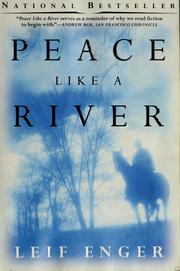
Peace Like a River
An asthmatic boy in the early 1960s narrates his family's search for his older brother, who is accused of two killings and has escaped custody.
1,969-word summary · 9 min read

We Are Okay
Marin fled San Francisco after her grandfather vanished and stopped answering anyone. When Mabel visits her college dorm, she has to say what happened.
2,253-word summary · 10 min read

The Chosen
A shattered pair of glasses in a 1944 Brooklyn softball game starts a friendship between a Hasidic boy and his Orthodox neighbor, and their fathers pull them…
2,443-word summary · 11 min read
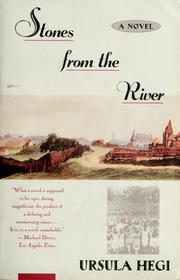
Stones from the River
Trudi Montag is born a dwarf in a small German river town in 1915 and grows up to keep the town's library and its secrets, from the First World War to the…
2,818-word summary · 13 min read

This Is How You Lose Her
Yunior cycles through love affairs and betrayals in nine linked stories, tracing the damage he does and the family history behind it.
2,195-word summary · 10 min read

Flight Behavior
Dellarobia Turnbow is stuck in a Tennessee farm marriage until a valley full of monarch butterflies, and the scientist who comes to study them, force her to…
2,051-word summary · 9 min read
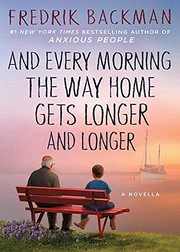
And Every Morning the Way Home Gets Longer and Longer
An elderly grandfather, his son, and his grandson share memories and fears as the old man's mind begins to fade, in a short novel about grief and love.
2,078-word summary · 9 min read