
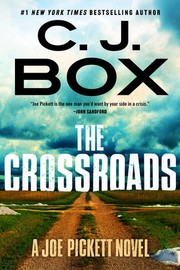
The Crossroads
2,099-word summary 9 min read 352 pages in the book
- First published
- 2026
- Publisher
- G. P. Putnam's Sons
- Pages
- 352
- ISBN
- 9780593851098
- Series
- Joe Pickett (#26)
Reading options
What's inside (16 sections)
- Shot at the junction
- Three daughters split up
- Hired guns and hidden bosses
- Joe in the margins
- Family at the center
- Western weather
- Daughters take the lead
- Marybeth holds everything
- Wyoming noir deepens
- Series at twenty-six
- Verdict from the stands
- The long view
- What the ambush cost
- County politics up close
- Key takeaways
- FAQ
Twenty-six books in, Box benches his hero and hands the series to the Pickett women. Joe takes a bullet to the head in the opening pages and spends most of the book unconscious. Marybeth, Sheridan, April, and Lucy do the detecting. The gamble mostly pays off, though Joe-sized holes show throughout.
The setup is brutally efficient. Antler Creek Junction, three ranches, three dangerous families, one game warden who did not say where he was going. By page fifty Joe is fighting for life and his daughters are splitting up to investigate. Series fans get the shock. Newcomers get a clean entry. Everybody gets Wyoming.
Shot at the junction
The ambush lands hard because Box plays it straight. No heroic last stand, no warning. Joe found in his truck with a head wound, alive by luck and inches. The medical chapters that follow are grim and grounded: swelling, waiting, machines, Marybeth holding vigil while making decisions no spouse should face alone.
Marybeth steps up magnificently. Longtime readers know she has always been formidable. Here she runs the family investigation while managing hospital time, sheriff politics, and three adult daughters with ideas. Her grief stays functional rather than decorative. She cries in cars between tasks, then walks back in composed. That rhythm feels true.
The new sheriff's role adds fresh dynamics. Without Joe's history to lean on, procedure must carry what relationships used to. Box uses the outsider perspective to show how much the series normally runs on accumulated goodwill. Starting cold, everything is harder. That difficulty becomes the book's texture.
Three daughters split up
Sheridan, April, and Lucy each take a ranch family, and the split-POV structure gives the book its energy. Three investigations, three tones. Sheridan methodical. April impulsive. Lucy observant in ways that surprise her sisters. Their sister dynamics, affectionate and abrasive by turns, provide warmth the grim premise needs.
Each ranch family gets distinct menace. One runs on old money and older grudges. One on cartel connections and new ruthlessness. One on plain crazy with guns. Box differentiates them well enough that readers can track three parallel probes without a scorecard. Motives stay murky past the midpoint, which is proper.
The daughters' competence varies, and critics noted them taking long to see through the plot. Fair, but the book frames their slowness as inexperience rather than stupidity. They are civilians playing detective for the first time. Mistakes cost them. That learning curve gives the middle its tension.
Hired guns and hidden bosses
Dorn Peddy and James Dale O'Bryan amuse more than they terrify. Dim-witted guns for hire with delusions of professionalism, they bumble through menace in ways that lighten the book's darkest stretches. Box clearly enjoys them. Readers will too, though anyone wanting terrifying hitmen should adjust expectations.
The hidden paymaster mystery sustains the back half. Knowing the shooters early shifts interest from who to who-paid, a classic Box move. The reveal lands with appropriate ugliness rather than shock. Corruption runs on greed and connections, not genius. Wyoming noir in its purest form.
Energy empires, cartels, land grabs: the backdrop reflects current Western anxieties without speechifying. Box lets setting do argumentative work. Who owns land, who works it, who profits: the thriller plot keeps circling these questions. The politics stay admirably light-handed for such loaded material.
Joe in the margins
Joe's absence shapes everything. Characters make choices based on what he would want, then doubt those readings. Marybeth second-guesses twenty years of marriage knowledge. The daughters perform competence for an unconscious audience. His silence functions as negative space the whole book orbits.
Flashback fragments and hospital scenes keep him present without cheating the coma. Small movements, machines, memories surfacing in other characters. Box resists miracle-recovery shortcuts until the earned ending. The restraint honors the injury's seriousness. Head wounds do not resolve on schedule.
Longtime fans may still miss their hero. Joe's wry voice and physical competence defined twenty-five books. Watching others do his job underlines how much quiet work he normally performs. The book doubles as appreciation for its own protagonist by removing him. Clever, if occasionally frustrating.
Family at the center
This is Box's most family-centered book, fitting for a series that always treated the Picketts as its real subject. Marriage, daughters, loyalty, cost: the thriller mechanics serve domestic drama rather than the reverse. The final chapters resolve both registers together, which is harder than it sounds.
The King blurb on the cover promises comfort, and comfort arrives with complications. Justice gets done after a fashion. Healing starts without finishing. The family endures, changed. For book twenty-six of anything, that counts as triumph.
Newcomers can start here safely. Backstory gets filled efficiently. Wyoming does the rest. Series readers get a necessary experiment that mostly succeeds. Joe will be back. His family proved they can hold the fort, which was exactly the point.
Western weather
Box's Wyoming remains the series' best character. Antler Creek Junction feels specific: dust, distances, bars with opinions, ranches with histories. Weather does plot work. Light does mood work. Readers come for murders and stay for landscape. This entry maintains the standard.
The daughters' inheritance theme resonates beyond plot. Each Pickett girl carries Joe's stubbornness in different packaging. Watching those traits work without Joe around argues for nature, nurture, and Wyoming in roughly equal measure. Family as ecosystem: Box's enduring subject in miniature.
Predictable in spots, warm throughout, exciting when it counts. The Crossroads keeps a great series alive by trusting its bench. Marybeth and the girls earned their caps. Joe's jersey hangs in the locker, waiting. Everyone will be back for the next game.
Daughters take the lead
Each Pickett girl gets a distinct investigation style that reflects her history. Sheridan, the eldest, works methodically, building timelines and checking alibis. Her years of dealing with Joe's chaos taught her process. Watching her apply those lessons without his guidance shows how much she absorbed. Competence as inheritance.
April brings impulsiveness that worries everyone including herself. She charges fences literal and otherwise, forcing confrontations her sisters would stage-manage. Her recklessness generates both breakthroughs and disasters in roughly equal measure. The book neither punishes nor rewards her temperament. It just shows its costs accurately.
Lucy surprises most. Quiet observation mistaken for passivity turns out to be deep attention. She notices what confident people miss: a handler's flinch, a wife's glance, a story with one detail too many. Her chapters argue for the power of watching over acting. In a loud family, the listener learns most.
Marybeth holds everything
Marybeth Pickett has always been the series' steel spine, and this book finally centers her. Hospital vigils by day, investigation management by night, grief held at bay by sheer scheduling. Her competence awes even characters who have known her for decades. Readers will finish with new respect for a familiar figure.
Her marriage scenes, conducted at a bedside, carry devastating quiet power. Talking to an unconscious husband about groceries, bills, old fights: love expressed as continuity. She refuses both despair and false hope with equal discipline. Nurses recognize a veteran of hard waits. So will many readers.
Her relationship with the new sheriff shows professional grace under pressure. Sharing jurisdiction without ego, accepting help without surrendering lead. Older female competence mentoring younger male authority could have felt schematic. Instead it feels like two decent professionals adapting. Mutual respect, earned visibly.
Wyoming noir deepens
The three-ranch structure lets Box map county corruption with unusual clarity. Each family represents a different rot: inherited entitlement, cartel modernity, plain armed crazy. Together they describe a West where old and new predators compete for the same shrinking pie. Joe's absence lets the landscape speak louder than usual.
Energy politics simmer underneath without speechifying. Land use, mineral rights, water: the material stakes behind personal feuds. Box trusts readers to connect extraction economics to violence without underlining. The restraint works. Preaching would cheapen what setting already argues.
Weather and distance do their usual co-starring work. Response times measured in hours. Neighbors as first responders by default. The vastness that makes Wyoming beautiful also makes it lawless in practice. Three daughters driving separate directions through big empty country visualizes both freedom and vulnerability.
Series at twenty-six
Long series face a choice: repeat or evolve. Box evolves by subtraction here, removing Joe to reveal the ensemble. The experiment's success suggests future installments could rotate leads more freely. Sheridan could carry a book. Marybeth already has. The bench runs deep by design, now proven by test.
Critics of the daughters' slowness have a point but miss context. First-time investigators should fumble. Their mistakes cost time rather than lives, mostly, which keeps frustration manageable. Watching them learn the job their father made look easy deepens appreciation for all twenty-five prior books retroactively.
The villains' thinness is the fairest knock. Peddy and O'Bryan entertain but never threaten at the level the premise promises. The hidden paymaster compensates partially. Still, menace deficits show against series highs. Fun henchmen, forgettable architects. The family material carries what the villains cannot.
Verdict from the stands
Step back and the experiment reads as a success with asterisks. Benching Joe risked the series' core appeal and proved the ensemble instead. The daughters earned their place. Marybeth dominated every scene. Wyoming held everything together as always.
Box's gamble deserves respect regardless of quibbles. Twenty-six books in, most authors coast on formula. He benched his hero, split the point of view four ways, and let newcomers carry a flagship. That courage counts for plenty even where execution wobbles. Series this old rarely take real risks. This one did.
The flaws are visible but forgivable. Slow daughters learning on the job. Soft villains doing their bosses' bidding. A hero unconscious through his own book. Each choice serves the larger test being run. Whether the test needed running is a fair question. That it ran honorably is beyond dispute.
For fans, essential if unusual. For newcomers, welcoming. For everyone, a reminder that long series stay alive by changing shape. This one changed shape successfully. The next can put Joe back in front. Balance restored, lessons learned, family intact.
The long view
Critics split mildly, with some finding the daughters slow and the villains soft. Both charges stick somewhat. But the book's pleasures outweigh its sags. Wyoming, family, decency under pressure: the Box formula administered with care.
For fans, essential if unusual. For newcomers, welcoming. For everyone, a reminder that long series stay alive by changing shape. This one changed shape successfully. The bench proved deep, the family held, and Joe's eventual return will mean more for his absence.
What the ambush cost
Beyond plot mechanics, the shooting's aftermath gets honest treatment. Medical uncertainty stretches for chapters. Bills mount. The family learns hospital rhythms nobody should know. Box resists rushing recovery for narrative convenience. Healing takes the time it takes, which frustrates characters and honors readers.
Marybeth's bedside freelancing, running the investigation between doctor updates, shows crisis multitasking familiar to anyone who has managed catastrophe. Life does not pause for grief. Groceries still run out. The contrast between mundane errands and mortal stakes gives these chapters their queasy power.
The daughters take shifts, and those rotations reveal birth order in action. Eldest organizes. Middle improvises. Youngest observes. Stress strips everyone to defaults, and the defaults differ productively. Family systems theory dramatized without jargon. Readers with siblings will recognize every pattern uncomfortably.
County politics up close
Small-county power structures get rare scrutiny. Commissioners, sheriffs, ranchers, energy reps: a whole ecosystem of influence operating below state attention. The book maps who owes whom with patient clarity. Understanding the ambush requires understanding the county, and Box teaches both together.
The new sheriff's learning curve mirrors the reader's. Every introduction doubles as orientation. Who holds which grudges, who married into what, who sold which parcel when. Procedural realism serves worldbuilding throughout. By the finale, readers could draw the power map themselves. That is craft disguised as plot.
Energy money versus ranch tradition forms the deeper conflict beneath the shooting. Extraction wealth against land stewardship, new ruthlessness against old codes. Box refuses villains on either side of that divide, showing decent people trapped by economic logic. The shooting grows from soil both sides helped poison.
Deputies, ranch hands, nurses, and neighbors fill the margins with lived-in competence. Box populates his county the way other writers populate cities: densely, with overlapping histories. Every minor figure implies a novel of their own. That density makes Wyoming feel inhabited rather than staged.
FAQ
When was The Crossroads published?
G. P. Putnam's Sons published it on February 24, 2026. The hardcover runs 352 pages with ISBN 9780593851098.
Where does it fit in the series?
It is Joe Pickett book twenty-six, after Battle Mountain. It works for newcomers but rewards regulars.
Who carries it?
Joe and Marybeth Pickett, daughters Sheridan, April, and Lucy, plus hired guns Peddy and O'Bryan.
Similar books
More from Joe Pickett first, then related titles.
Case Histories
A Cambridge PI takes three cold cases that tangle with his own loss.
2,465-word summary · 11 min read
Keep It in the Family
Mia and Finn renovate a long empty house and find seven children hidden in the attic.
2,270-word summary · 10 min read

We Begin at the End
Thirteen-year-old Duchess Day Radley shields her little brother Robin after their mother dies, as freed killer Vincent King returns and sick chief Walk tries…
2,956-word summary · 13 min read

The Round House
At thirteen, Joe Coutts hunts for his mother's attacker when the law stalls, in Louise Erdrich's National Book Award novel of family, jurisdiction, and revenge…
2,391-word summary · 11 min read
Long Bright River
Philadelphia officer Mickey patrols Kensington amid the opioid crisis, hunts a killer of vulnerable women, and searches for her missing addict sister Kacey…
2,986-word summary · 13 min read
What Lies Between Us
Nina keeps mother Maggie locked upstairs for years, trading lies about sisters and deaths that unravel fast.
2,062-word summary · 9 min read
The Chain
Rachel must kidnap another child to save kidnapped Kylie, entering a chain where parents pass crime forward.
2,021-word summary · 9 min read
Pieces of Her
After her mother kills a mall shooter with shocking skill, Andy Oliver uncovers a hidden 1980s past of radicals and wealth.
2,791-word summary · 12 min read
The Life We Bury
A college junior interviews a dying convict for class and reopens a 30-year-old murder case in Minnesota.
2,708-word summary · 12 min read
The Family Remains
Lucy returns to London as bones on the Thames reopen the Chelsea mansion deaths.
2,304-word summary · 10 min read

Mystic River
Three Boston friends reunite when one daughter is murdered.
2,230-word summary · 10 min read
Little Secrets
A mother missing a son finds her husband cheating and handles both herself.
2,008-word summary · 9 min read
Watching You
A new wife in Bristol fixates on a charismatic neighbor while a teen boy logs every move before a murder.
2,363-word summary · 11 min read
The Good Daughter
Twenty eight years after a home invasion shattered her family, a lawyer witnesses a school shooting that reopens old wounds.
2,505-word summary · 11 min read
Defending Jacob
A Newton prosecutor defends his fourteen year old son after a classmate is stabbed in the park.
2,994-word summary · 13 min read
Wrong Place Wrong Time
Jen sees her son Todd kill a stranger, then wakes the day before, slipping back in time to stop the murder.
2,522-word summary · 11 min read
The Locked Door
Surgeon Nora Davis hides serial killer father while patients die.
2,465-word summary · 11 min read
The Family Upstairs
Libby Jones inherits a Chelsea mansion and a past tied to a cult house, two runaways, and a baby left waiting.
3,300-word summary · 15 min read
A Flicker in the Dark
Psychologist Chloe Davis faces copycat disappearances in Baton Rouge twenty years after her father confessed to murders.
3,074-word summary · 14 min read
Dark Places
Libby Day, sole survivor of family murders, is paid to rethink her testimony.
1,910-word summary · 8 min read

What She Knew
Rachel lets her eight-year-old son run ahead in a Bristol park, and the nine-day search turns her into a suspect in the public eye.
2,952-word summary · 13 min read

The Beach House
A young valet is beaten to death at a Hamptons party, and his law-student brother spends a year building a case against the family that covered it up.
2,049-word summary · 9 min read
The Art Forger
A disgraced Boston painter agrees to copy a Degas stolen from the Gardner Museum, then begins to suspect the original she is copying is itself a forgery.
2,117-word summary · 9 min read

Six Years
A professor who promised to forget the woman he loved sees her husband's obituary and discovers that the wedding, the marriage, and the woman herself may never…
2,076-word summary · 9 min read

How the Light Gets In
Gamache investigates the murder of the last Ouellet quintuplet while the Sûreté he served is dismantled from inside by the man who took his protégé.
2,279-word summary · 10 min read
Bury Your Dead
Recovering from a failed raid that killed his officers, Gamache investigates a murder in a Quebec City library while Beauvoir reopens a case in Three Pines.
2,022-word summary · 9 min read

The Trespasser
A Dublin Murder Squad detective investigates a staged dinner-party killing and finds a cover-up that reaches into her own department.
2,051-word summary · 9 min read

Rules of Prey
Minneapolis detective Lucas Davenport hunts a killer who leaves a new rule at every scene and treats murder as a game of wits.
1,914-word summary · 9 min read

The Late Show
Exiled to the LAPD night shift after accusing her supervisor, Renée Ballard keeps two cases that were meant to be handed off at dawn: a brutal assault and a…
2,563-word summary · 11 min read
The Black Dahlia
James Ellroy builds a fiction around the real Black Dahlia murder, following two Los Angeles cops whose partnership and obsessions destroy them.
2,533-word summary · 11 min read