
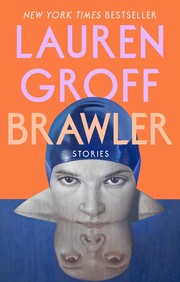
Brawler
3,103-word summary 14 min read 288 pages in the book
- First published
- 2026
- Publisher
- Riverhead Books
- Pages
- 288
- ISBN
- 9780593418420
Reading options
What's inside (9 sections)
I picked up Brawler because Florida left a mark on me years ago and I wanted to see what Lauren Groff could do with people outside that feverish swamp. The first thing to get straight is what this book is. Brawler, published by Riverhead Books in 2026 at 288 pages, is not a novel. It is a collection of nine short stories, her first since Florida in 2018, and it reads like one. Each piece stands on its own. People, places, and decades change. What carries across is a set of obsessions: bodies under strain, family love that curdles into control, and the fight inside every person between cruelty and care. Groff puts it bluntly through one of her characters. In every human there is both an animal and a god wrestling unto death. The stories range from the 1950s to the present and move from New England to Florida to California. Among the people caught in that match are a young woman suddenly responsible for her disabled sibling, a hot tempered high school swimmer in need of an adult, a mother blinded by the loss of her family, and a banking scion with a stranger kind of inheritance. This summary walks through those stories and the ones around them, the way they talk to each other, and where the collection stumbles.
Several of these stories first appeared in magazines. The title story ran in The New Yorker in 2019. Birdie appeared in The Atlantic in 2020. The Wind ran in The New Yorker in 2021, Annunciation in 2022, and Mother of Men in late 2025. Knowing that helped me read the book correctly. These were not chapters drafted toward one arc. They were separate attempts, written years apart, gathered and arranged so their echoes line up. Read alone, each is a contained punch. Read together, they build a sustained argument about love and fear that no single one could carry.
The title story and the swimmer who needs an adult
The story called Brawler centers on a high school swimmer with a hot temper, a kid whose talent in the pool is matched by a habit of swinging at the world. Groff writes athletes well. She swam and rowed herself, and her sister is an Olympian, and you feel that physical literacy in the way she describes training. Breath counts. Shoulders burning. The particular loneliness of staring at a black line on the pool floor while your thoughts get louder. The swimmer here is good enough that adults make plans around the kid, and volatile enough that every plan includes a backup apology.
What gives the story its charge is the absence at its middle. This is a teenager in need of a steady adult, and the adults on hand are distracted, self serving, or simply outmatched. Coaches see a relay slot. Parents see a scholarship or a problem, depending on the day. Nobody quite sees the frightened kid inside the fast body. Groff does not excuse the violence. Swings thrown in anger land on people who did not deserve them, and she shows the damage plainly. But she keeps asking what the temper is protecting. Fear, mostly. Shame. A home life that taught the kid that hitting first is safer than waiting to be hit.
I found this one of the strongest entries because it refuses the easy sports story shapes. There is no big race that fixes everything, no coach speech that lands like a cure. Progress, where it comes, is small and reversible. A practice where the kid holds it together. A conversation that almost goes somewhere honest. Then a setback that feels truer than the progress did. That rhythm will be familiar to anyone who has coached, taught, or raised a volatile teenager. Change comes in patches and tears out again.
The prose in this story is also a good sample of Groff at her most physical. She writes the body from the inside. Lactic acid, chlorine smell, the slap of water. Then she pivots to interior weather without signaling the turn, so a paragraph about flip turns becomes a paragraph about dread. Readers who only know her historical novels may be surprised by how contemporary and plainspoken she can be here. The sentences are shorter. The diction is school hallways and pool decks, not abbeys. It suits the material.
A young woman handed her disabled sibling
Another story follows a young woman who becomes suddenly responsible for her disabled sibling, and it may be the emotional center of the book. The setup is the kind of family emergency that rearranges a life in a weekend. A parent fails or falls ill or simply walks away from the job, and a sister in her twenties looks up to find the caregiving role has landed on her. Groff is unsparing about what that does to a person. Love does not vanish. It gets tired. It gets resentful. It keeps showing up anyway, and the showing up starts to feel like a cage built out of your own decency.
What I admired here is how Groff handles the sibling. Disabled characters in fiction too often exist to teach the nondisabled protagonist a lesson, glowing with innocence or deployed for tears. Groff gives this sibling interiority and stubbornness. There are jokes, refusals, bad moods, preferences that have nothing to do with the sister. The sibling is a person, not a moral. That choice makes the sister's ambivalence harder to judge and harder to dismiss. She is not a saint tending an angel. She is a young woman whose own plans are dissolving while she tends someone she loves and sometimes resents, and both feelings are true at once.
The story also understands money. Caregiving in America is a financial event before it is a spiritual one, and Groff shows the math. Missed shifts. Forms. Aides who quit. A house that does not fit a wheelchair or a routine. The sister does calculations at the kitchen table that will determine the next five years, and the numbers do not work, and she keeps recalculating as if persistence could change arithmetic. Anyone who has priced care for a family member will recognize the specific nausea of that scene. It is one of the places where the collection's long time span pays off. The safety nets change by decade, but the gap between what families need and what exists stays wide.
There is a scene type Groff returns to across the book that appears here in strong form. A character tries to do the right thing, blocked partly by circumstance and partly by someone else's good intentions. A relative swoops in with help that helps the helper. A professional offers a plan that fits the brochure better than the person. The sister learns to say no to the wrong help, which costs her the little support she had. That double bind, where accepting aid and refusing it both wound, runs through Brawler like a bass note.
A mother blinded by loss
The story of the mother who loses her family and goes blind to everything else is the hardest to read and maybe the hardest to forgive. Grief in this book is not ennobling. It narrows. This mother, emptied by loss, stops being able to see the living people in front of her. She tends the memory of the dead with a devotion she never quite managed for them alive, and the people still breathing get the leftovers of her attention. Groff shows this without melodrama. Meals get made wrong. Birthdays get missed. A surviving child says something important and the mother hears it as static.
I want to be careful describing this one, because its power depends on accumulation rather than incident. The story moves through small failures of attention that would each be forgivable alone. Together they form a pattern the reader sees before the mother does. That dramatic irony could feel cruel, but Groff keeps the narration close enough to the mother's pain that judgment softens into recognition. Most of us have been the unattended person and the inattentive one. Grief just turns the volume up until the pattern is undeniable.
The story connects backward to Groff's earlier work in interesting ways. Florida was full of mothers fraying at the edges of a hostile landscape. Here the landscape is interior. Weather still intrudes, Florida humidity or New England cold pressing on windows, but the real storm is the mother's inability to look at what remains. One passage I kept thinking about describes the mother handling objects the dead left behind as if attention to things could substitute for attention to people. It cannot, and she half knows it, and she keeps doing it. That half knowing is pure Groff territory. Her characters so often understand their failure exactly and continue failing.
If there is a criticism of this story, it is that it risks repeating the collection's bleakest move. Several stories here show love curdling under pressure, and by the middle of the book a reader might start bracing for every tenderness to sour. This story earns its darkness more than most, but placed among so many bruised households it can feel like one more verse of a song you already know. I will say more about that repetition below. It is my main reservation about the book.
A banking scion and a different inheritance
The banking scion story shifts the collection into moneyed rooms, and the change of scenery clarifies what Groff is doing with class. This heir grows up inside wealth that presents itself as virtue. Good schools, good manners, good intentions. The inheritance in question is not only money, though money is certainly there. It is temperament, appetite, a family style of taking what it wants while calling the taking stewardship. The scion senses the rot early and spends the story trying to decide whether escape is possible or whether the family operating system runs too deep to uninstall.
Groff is good on rich people without turning them into cartoons. The family talks about philanthropy at dinner and means it, sort of. They love each other in the distracted way of people who outsource attention. The scion's rebellion is correspondingly muddled. There are grand gestures that change nothing and quiet refusals that change more. A trust fund complicates every moral stance, since even the money used to flee was made the dirty way. I thought of this as the collection's most quietly political story. It asks whether goodness is possible on a foundation of unearned advantage, and it refuses to let either yes or no feel clean.
The story also stretches the book's time span in useful ways. Banking dynasties think in generations, and Groff uses that long view to show how the family's original sins get laundered into respectability over decades. A grandfather's ruthlessness becomes a father's shrewdness becomes the scion's opportunity. Each generation renames the money and keeps spending it. Against that backdrop, the scion's personal struggle can look small, and Groff knows it. She keeps the frame tight on one conscience anyway, suggesting that the only place inheritance can actually be refused is inside a single person, one decision at a time.
Readers who track Groff's biography may hear echoes here of old New England money and institutional polish, the world of her Cooperstown upbringing and elite schooling. She does not write autobiography, but she writes with the confidence of someone who has observed these rooms from the inside. Small details carry weight. The way a trustee says your name. The temperature of a club dining room. The particular smile deployed when someone mentions where money comes from. These textures make the story feel reported as well as imagined.
Nine stories across seventy years
Stepping back, the architecture deserves attention. Nine stories set between the 1950s and the present, spread across New England, Florida, and California. That spread lets Groff show how American family pressure changes costume without changing character. A 1950s household exerts control through propriety and silence. A present day one does it through therapy language and group chats. The tools update. The grip stays familiar. Characters in every decade try to do the right thing for as long as they can, as the jacket copy puts it, and run up against the double edges of other people's good intentions.
The regional movement matters too. New England stories feel older, more held in, with violence kept behind clapboard and manners. Florida stories sweat. The landscape presses in, alligators and hurricanes and mold, and people's inner weather matches the sky. California stories shimmer with a different promise, reinvention available for purchase, and Groff is skeptical of the sales pitch. I liked how the collection lets place do characterization work. You can often tell which state you are in by how a character handles a confrontation. New Englanders go cold. Floridians boil over. Californians process.
The previously published stories slot into this design in ways that feel deliberate rather than chronological. Birdie, which ran in The Atlantic, brings a different temperature than the New Yorker pieces around it. The Wind and Annunciation show Groff working at different lengths and pressures. Mother of Men, the most recent, feels like a culmination, a late style that trusts silence more than her earlier work did. I will not spoil individual endings, since stories this compressed depend on their final turns, but I will say the collection's sequencing builds toward its bleakest and most tender notes at once. The last stories ask the most of the reader and give the most back.
One more structural point. Short story collections often include one weaker piece that feels like filler, and Brawler mostly avoids that. Even the slighter entries justify themselves through resonance. A minor character's dilemma in one story becomes the central crisis of another. Images recur. Water, teeth, hands, houses that do not fit their occupants. Reading with attention to these threads pays off. Reading casually still works, since each story carries its own weight, but the hum the publisher promises is real. These pieces vibrate against each other.
Dark angels and light ones
The announced theme is the battle between humans' dark and light angels, and Groff neither explains it away nor leans on it as a slogan. Instead each story stages the match differently. Sometimes the dark angel is temper, a fist thrown before thought catches up. Sometimes it is coldness, a mother's turned face. Sometimes it is appetite dressed as legacy. The light angel is rarely heroic. It is usually just persistence. Showing up. Saying the true thing once. Holding a hand that is hard to hold. Groff's moral vision here is modest in the best way. People do not transform. They choose, moment by moment, which angel gets fed, and the score is never final.
That modesty gives the collection its spiritual undertow without making it religious fiction. Annunciation, as its title suggests, brushes the biblical. Other stories brush it too, mothers and children arranged in poses that recall old paintings. But Groff keeps the frame human. Grace, where it appears, comes through people tolerating each other past the point of comfort. There is a line of thought running through the book that love is not a feeling that rescues but a practice that wounds and still continues. Readers allergic to uplift will find plenty of company here. Readers hungry for hope will find it, but only in small, unadvertised doses.
I also want to note how the book handles masculinity. The swimmer, the scion, various fathers and brothers, all perform versions of hardness that the stories patiently dismantle. Groff does not hate these boys and men. She shows what hardness costs them and the people near them. The animal in her epigraph is not only male, mothers and sisters have teeth too, but the book keeps returning to boys taught to hit, take, or freeze. In that sense Brawler belongs on the shelf with recent fiction rethinking American boyhood, though Groff arrived at these questions through her own route and her own sentences.
What frustrated me, and who should read it
My main criticism is repetition of effect. Groff's ferocity is her signature, and across nine stories the ferocity can start to feel like a setting rather than a discovery. Households bruise. Good intentions cut. Someone tries, fails, tries again smaller. After the sixth or seventh iteration, I occasionally felt I knew the shape of a story's turn before it arrived. The sentences stay remarkable throughout, but surprise matters in short fiction, and the collection's thematic unity costs some unpredictability. Readers who mainline the book in two sittings may feel this more than readers who space it out. This is a book that benefits from pauses between stories.
A smaller complaint concerns proportion. At 288 pages for nine stories, some entries are necessarily compact, and one or two end just as I was settling into their world. A linked collection can get away with brevity through accumulation, and mostly Brawler does, but I closed one story feeling I had read a brilliant premise with its middle compressed. Against that, the longer stories use their space beautifully, so the unevenness reads as a cost of the form rather than a failure of craft.
Who should read it? Anyone who follows American short fiction, obviously. Readers of Florida will find a companion piece, cooler in setting but just as intense. Readers of Groff's novels should adjust expectations. There is no abbey, no colonial wilderness, no single sustained plot. What you get instead is range, nine casts, nine crises, one sensibility testing itself against different lives. Book groups will find plenty to argue about, especially the sibling story and the scion story, where judgments about responsibility and money split rooms fast. Newcomers to Groff might actually do well to start here rather than with the novels. If her sentences thrill you in small doses, the longer books await. If they exhaust you, you will know quickly and cheaply.
I closed Brawler thinking about the title. A brawler fights because fighting is what the body knows. Every character here knows some version of that reflex. The question each story asks is whether the reflex can be set down, even briefly, even once. Sometimes it can. Often it cannot. Groff honors both outcomes without flinching, and across seventy years of American life that honesty accumulates into something substantial. This is a fierce, sad, precisely written collection from a writer at full power, best taken one story at a time with room to breathe between rounds.
FAQ
Is Brawler a novel?
No. It is a collection of nine short stories spanning the 1950s to the present, moving from New England to Florida to California. Each story stands alone.
When was Brawler published?
Riverhead Books published it on February 24, 2026. The hardcover runs 288 pages and the ISBN is 9780593418420.
Who are the main characters?
A hot tempered high school swimmer, a young woman caring for her disabled sibling, a grieving mother, and a banking scion with a complicated inheritance.
Similar books
Python's Kiss
Thirteen sharp stories of stones, thieves, ghosts, and an afterlife with billing.
2,027-word summary · 9 min read
Unaccustomed Earth
Lahiri’s second story collection follows Bengali families in America and abroad, tracing the quiet distances between parents and children, spouses, and the…
2,333-word summary · 10 min read
This Is How You Lose Her
Yunior cycles through love affairs and betrayals in nine linked stories, tracing the damage he does and the family history behind it.
2,195-word summary · 10 min read
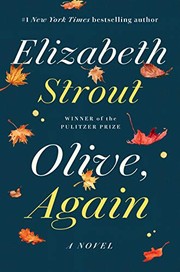
Olive, Again
Elizabeth Strout returns to Crosby, Maine, as Olive Kitteridge marries Jack Kennison, confronts her son, and faces old age, grief, and small-town judgment.
2,333-word summary · 10 min read
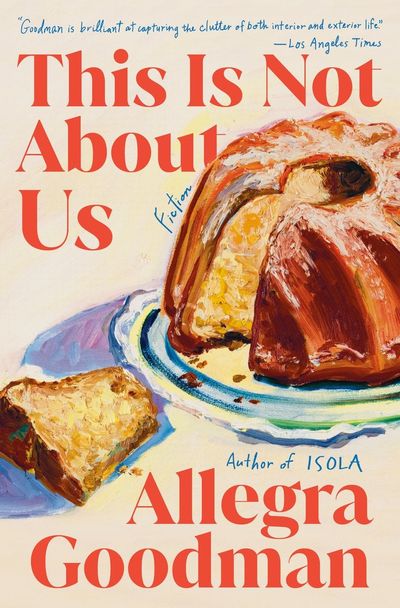
This Is Not About Us
Sisters Sylvia and Helen Rubinstein feud over apple cake in linked stories spanning divorces, bat mitzvahs and three generations of family life.
2,064-word summary · 9 min read
Interpreter of Maladies
Nine stories follow Bengali families split between Calcutta and New England, through marriage, grief, and arrival.
2,412-word summary · 11 min read
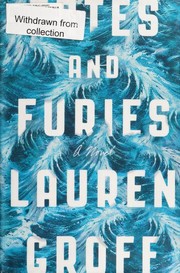
Fates and Furies
Lauren Groff tells one 24 year marriage twice, first through Lotto's bright luck, then through Mathilde's hidden past and quiet control.
2,992-word summary · 13 min read

Howards End
Forster's 1910 novel follows two families, a house in Hertfordshire, and a burned note, asking whether money and feeling can ever be connected.
2,187-word summary · 10 min read

Fathers and Sons
Arkady brings the nihilist Bazarov home to his father's estate, and a generational argument turns into love, a duel, and an early death.
2,192-word summary · 10 min read

The Age of Miracles
A California girl grows up while the Earth's rotation slows, and ordinary adolescence continues alongside slow catastrophe.
2,417-word summary · 11 min read

Tales from the Café
Four more visitors to a Tokyo café travel through time under strict rules, each hoping to say the thing they could not say before.
2,242-word summary · 10 min read
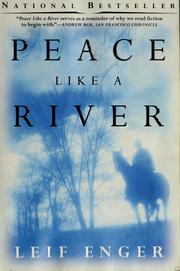
Peace Like a River
An asthmatic boy in the early 1960s narrates his family's search for his older brother, who is accused of two killings and has escaped custody.
1,969-word summary · 9 min read

We Are Okay
Marin fled San Francisco after her grandfather vanished and stopped answering anyone. When Mabel visits her college dorm, she has to say what happened.
2,253-word summary · 10 min read

The Chosen
A shattered pair of glasses in a 1944 Brooklyn softball game starts a friendship between a Hasidic boy and his Orthodox neighbor, and their fathers pull them…
2,443-word summary · 11 min read
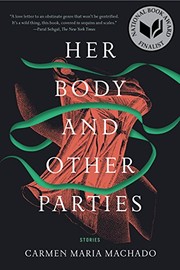
Her Body and Other Parties: Stories
Eight stories where bodies, medicine and old fairy tales get taken apart, with a green ribbon running through the whole book.
2,997-word summary · 13 min read

A Spool of Blue Thread
Four generations of the Whitshank family in Baltimore, and the silences, resentments and quiet love they hand down without ever saying so.
2,408-word summary · 11 min read
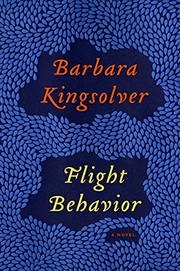
Flight Behavior
Dellarobia Turnbow is stuck in a Tennessee farm marriage until a valley full of monarch butterflies, and the scientist who comes to study them, force her to…
2,051-word summary · 9 min read
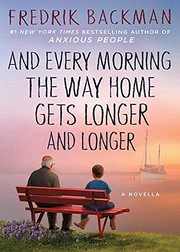
And Every Morning the Way Home Gets Longer and Longer
An elderly grandfather, his son, and his grandson share memories and fears as the old man's mind begins to fade, in a short novel about grief and love.
2,078-word summary · 9 min read
The Tiger's Wife
A young doctor in a war-scarred Balkan country chases the stories her grandfather left behind, including a deathless man and a deaf girl who loved an escaped…
2,232-word summary · 10 min read
The Story of Edgar Sawtelle
A mute boy on a Wisconsin dog-breeding farm relives Hamlet as his uncle returns, his father dies in the barn, and the dogs inherit what is left.
2,392-word summary · 11 min read
We Were the Mulvaneys
After a rape following a school dance, the Mulvaneys, a family that believed it was blessed, comes apart over fifteen years. Narrated by the youngest son.
2,094-word summary · 9 min read
Foster
A girl spends a summer with relatives on a Wexford farm and is cared for properly for the first time. A spare novella about family and what children notice…
2,043-word summary · 9 min read
The Most Fun We Ever Had
Four Sorenson sisters orbit perfect parents hiding old cracks.
2,590-word summary · 12 min read
The Accidental Tourist
Grieving Macon writes travel guides for haters of travel, then Muriel intrudes.
2,252-word summary · 10 min read
Men Without Women
Seven stories about men living after women leave, die, or stay distant.
2,673-word summary · 12 min read

Kitchen
Orphan Mikage finds home in a kitchen with Yuichi and Eriko after loss.
2,597-word summary · 12 min read
Case Histories
A Cambridge PI takes three cold cases that tangle with his own loss.
2,465-word summary · 11 min read
The School for Good Mothers
A mother sent to a reform school fights to keep her daughter under cold surveillance and strict rules.
2,114-word summary · 9 min read

The Perfect Nanny
A trusted nanny kills two children, and the book traces how love and class hid warning signs.
2,200-word summary · 10 min read
Song of Solomon
Milkman Dead leaves Michigan to hunt for family gold and finds instead the old song of his ancestor Solomon.
2,465-word summary · 11 min read