
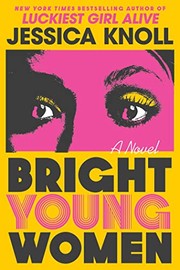
Bright Young Women
2,377-word summary 11 min read 384 pages in the book
- First published
- 2023
- Publisher
- Marysue Rucci Books
- Pages
- 384
- ISBN
- 9781501153228
Reading options
What's inside (7 sections)
I put off reading this one for months because I was tired of serial killer stories. Every podcast seemed to have the same whispery host and the samepromise that this time the victims would come first, and then the killer got all the good lines anyway. A friend who loved Luckiest Girl Alive kept pushing it across the table and saying Knoll actually means it here. Jessica Knoll published it in 2023 with Marysue Rucci Books, part of Simon and Schuster, and the hardcover first edition runs 384 pages. I read it across a weekend, mostly on the couch with my phone in another room, and I finished it feeling wrung out in a way I had not expected.
The title comes from a real courtroom moment. When Ted Bundy was sentenced, the judge called him a bright young man and wished him well. Knoll never gives her killer a name. She calls him The Defendant through the whole book and keeps the camera on the women instead. That choice sounds simple on paper. In practice it changes how every scene plays, because you are always watching what the women lose and what they have to clean up after.
The night Pamela stayed home
Pamela Schumacher is the president of her sorority at Florida State University in Tallahassee. It is January 1978, a Saturday night, and the house is mostly empty because everyone went out. Pamela stays in to catch up on paperwork, a decision that feels boring at the time and later feels like the hinge her whole life swings on. Around three in the morning a strange sound wakes her. She gets up to check, thinking a sister came home drunk or a pipe burst, and steps into a hallway that does not make sense.
Two of her sisters are dead. Two others are badly hurt. Pamela sees a man leaving the house. She becomes the only person who can describe him, which puts her in a strange spot. She is grieving and in shock, and at the same time police and reporters need her to be precise about shapes and sounds she barely registered.
What stayed with me in these early chapters is how physical Knoll makes the confusion. Pamela keeps replaying small things, like whether she locked a door or left a light on, the way people do after a car crash. Her parents call and do not know what to say. Her boyfriend tries to help and says the wrong things. The other women in the house cling to each other and then snap at each other. Nobody acts noble. They act like college students who just saw something terrible and still have to decide who sleeps in which room.
Pamela also has to deal with being looked at. Neighbors stare. Classmates ask questions that are really just curiosity. A few men on campus act protective in a way that is more about them than about her. The house that felt safe on Friday feels watched by Monday, and Pamela hates that feeling. She wants to go back to planning formals and balancing the house budget. Instead she is sitting with detectives, trying to remember a face she saw for seconds in bad light.
Ruth and Tina in Seattle
Four years before Tallahassee, in the Seattle area, a younger woman named Ruth Wachowsky meets an older woman named Tina Cannon. Both have known loss. Ruth is twenty five and stuck, living near the suburbs and trying to figure out what kind of life she is allowed to want. Tina has more money and more age on her, and she has been through a hard stretch herself. They meet after painful periods in their lives and form a fast bond. Ruth tells Tina things she has not told other people. Tina listens without trying to fix everything at once.
Then Ruth vanishes from Lake Sammamish State Park on a bright summer day. Thousands of people are around. Another young woman disappears the same day. Both are gone without a trace, in daylight, with families waiting in parking lots and friends holding towels. Tina is sure the man the papers call the All American Sex Killer took Ruth. She says so to anyone who will listen, and most people do not listen for long.
This part of the book hurt to read because Knoll is clear about why Ruth gets less attention. Ruth and Tina love each other in a way that the police and the papers in 1974 do not know how to file. Officers write Tina down as a friend and move on. Reporters want a simpler story about a missing girl with a boyfriend at home. Tina keeps saying no, you have it wrong, she was with me, and the correction never quite lands. Her grief has nowhere official to go, so it turns into a private file she keeps in her head. Dates. Descriptions. Clippings.
I thought Knoll handled Tina with a lot of care. Tina is not a detective. She works, she pays bills, she shows up for people, and she keeps asking questions that make officials impatient. She is not charming about it either. She can be blunt and she can be wrong about small things, which makes her more believable when she is right about the big thing.
The search that takes decades
When Tina reads about the Tallahassee attack, she gets on a plane to Florida. She is convinced the same man killed Ruth and attacked the sorority. Pamela, still raw, does not welcome her at first. Pamela has her own witness memories and her own guilt about surviving, and here comes a stranger from across the country saying your tragedy is connected to mine. Their early meetings are awkward. Tina talks too much. Pamela shuts down. They circle each other.
Slowly they start comparing notes. The method matches. The type of young woman targeted matches. The way the man charms his way close and then turns violent matches. A young reporter helps them pull records and knock on doors that police have stopped knocking on. The three of them make an odd team. Pamela knows the sorority world and what the house looked like that night. Tina knows the Seattle disappearances and what the police failed to write down. The reporter knows how to request files and how to get clerks to talk.
The middle of the book follows this work across years, and Knoll lets it feel slow the way real searches feel slow. They find a file. The file leads to a name that leads nowhere. A witness remembers a car but not a plate. A lab loses something. A cop retires and his replacement does not care. Pamela finishes school and tries to build a career while carrying this second unpaid job of remembering. Tina gets older and gets tired and keeps going anyway. There are small wins, like getting someone on the record or placing the man in the right town on the right date, and then long flat stretches where nothing moves.
The case does move toward a courtroom in the later timeline, around 2021 in the book's present, when the man faces trial under the label All American Sex Killer. Knoll writes the trial scenes with barely hidden anger. The Defendant acts as his own lawyer at points and gets to question witnesses, which means women who survived have to sit in a room and answer his questions while he performs for cameras. Groupies show up to watch him. Cameras love him. Pamela has to testify and stay steady while he tries to rattle her. I had to put the book down during these pages and walk around my kitchen. The procedure is legal and it is awful, and Knoll does not soften that.
What Knoll is actually arguing
On the surface this is a thriller about catching a killer. Under that, it is an argument about who gets called smart.
The papers and the TV crews keep describing The Defendant as brilliant and charming, a law student who outwitted everyone. Knoll keeps showing the opposite. He is average looking and average in school. He quits or fails out of the paths he brags about. He needs tricks to get women to trust him, like wearing a fake cast and asking for help carrying books to his car. He picks young women who are polite enough to help a stranger. That is not genius. That is cruelty aimed at kindness, and it works because people are decent, not because he is special.
Pamela sees this clearly by the end. She watched him up close for seconds, and she spends years watching the myth grow from far away. Every magazine profile that calls him magnetic makes her angrier, because she remembers panic and blood and a hallway, not charm. Tina sees it too. She remembers how fast the police filed Ruth away, and how much energy went into profiling him instead of finding the missing women. Attention is a resource, and in this story almost all of it goes to the man.
Knoll also writes about how grief bends a life without breaking it in one clean snap. Pamela does not get over it and move on in a straight line. She graduates, she works, she dates, she pulls away, she comes back. Survivor guilt shows up in odd places, like turning down praise at work or picking fights about nothing. Tina's grief is lonelier because her bond with Ruth was never fully recognized. She parents no children with Ruth, shares no lease that the law respects, so strangers treat her loss as smaller. Knoll treats it as central. The book keeps returning to their apartment mornings and drives and jokes, small domestic details that say this was a real life together even if no form ever recorded it.
There is a thread here about the seventies that I thought was well done without turning into a lecture. Women could be sorority presidents and still be told to smile for the cameras after their friends were killed. A woman who loved another woman could lose her and still be called a friend by the detective writing the report. Reporters asked what the victims wore and where they walked. Knoll does not pause the plot to explain sexism. She just shows Pamela and Tina running into it at every desk they visit, until you feel the weight of it yourself.
Where it wore me down
I admired this book more than I breezed through it, and the middle is the reason. The investigation chapters repeat. Another archive, another clerk, another maybe. I understand Knoll wants the reader to feel the grind, and for a while it works. After a few hundred pages, though, I started skimming descriptions of files and phone calls. Pamela and Tina are strong on the page together, but they spend a lot of the book apart, writing letters or thinking about each other, and I wanted more scenes of them actually talking. When they are in a room together the book hums. When they are in separate timelines it can stall.
The time jumps confused me twice. Knoll moves between 1974 and 1978 and the present letter frame, and most jumps are marked well. A few are not, especially when a memory slides in without warning. I had to flip back and check what year I was in. That may be me reading too fast late at night, but I wished the transitions were cleaner.
The ending also moves fast after so much slow buildup. Without spoiling the exact beats, I will say the final confrontation and the legal resolution arrive quickly, and one piece about destroyed records left me puzzled. A character says files are gone, and then other papers turn up through someone connected to the case. Maybe I missed a line explaining the gap. Either way I had to reread those pages. The emotional payoff still worked for me, because it belongs to Pamela and Tina and not to the court, but the plotting in the last fifty pages feels hurried compared to the patience of the rest.
A content note matters here. This is a book about the murder of young women, and Knoll does not look away from injuries and autopsy detail when it serves the story. She is not graphic for fun, and she never eroticizes the violence, but the Tallahassee chapters and parts of the trial are blunt. If you are sensitive to descriptions of assault, read in daylight and take breaks. I did.
Who should pick it up? Readers who like character driven crime stories with a clear point of view will get a lot from it. If you loved the voice in Luckiest Girl Alive, you will recognize Knoll's rhythm in Pamela's dry observations about men who explain her own case to her. If you only read thrillers for twists, this may frustrate you. There is suspense here, real suspense, but the killer's identity is not the puzzle. The puzzle is whether anyone will listen to the women in time, and what listening costs them.
I closed the 384 page edition thinking about the sorority hallway and the lake beach in the same frame. Two public places where young women should have been safe, a house and a park on a sunny day, and how fast both turned. Pamela and Tina never get those hours back. What they get is each other, late and imperfectly, and a record that says what happened in their own words. For me that was enough to carry the slow patches. I still think about Tina keeping her private file for years while officials shrugged, and Pamela learning to say what she saw without apologizing for how she saw it.
If you read it, give the Seattle chapters time. They start quiet and they become the heart of the book. Keep a bookmark in the early Tallahassee section too, because details from that night come back late in ways worth catching. And expect to be angry at the cameras and the courtroom crowds. Knoll wants you angry there. I was, all the way to the last page.
FAQ
When was Bright Young Women published?
It was first published on September 19, 2023 by Marysue Rucci Books, part of Simon and Schuster. The hardcover first edition runs 384 pages with ISBN 9781501153228.
Is the book about Ted Bundy?
It is inspired by his crimes but never names him. Knoll calls him The Defendant and keeps the focus on Pamela, Tina, and Ruth rather than his psychology.
Does the book describe the murders in graphic detail?
The Tallahassee attack and parts of the trial are blunt about injuries without eroticizing the violence. Readers sensitive to descriptions of assault should read in daylight and take breaks.
Similar books
Notes on an Execution
Ansel waits on death row while three women carry what he broke.
2,527-word summary · 11 min read

A Hymn to Life
Gisele Pelicot tells her own story, from a shattering 2020 phone call to the open Mazan trial where shame changed sides.
2,456-word summary · 11 min read
Truly Devious
True crime buff Stevie Bell arrives at Ellingham to solve its 1936 kidnapping as present murder strikes.
2,072-word summary · 9 min read
Listen for the Lie
Lucy Chase cannot remember the night her best friend Savvy died in Plumpton, Texas, until a true crime podcast pulls her back.
2,160-word summary · 10 min read
Know My Name
Chanel Miller reclaims her story after the Stanford assault case, tracing family support, trial strain, her viral 2016 statement, and leaving Emily Doe for her…
3,092-word summary · 14 min read

All Good People Here
A journalist returns home to care for her uncle and reopens a 20 year old child murder tied to a new abduction.
2,006-word summary · 9 min read
Luckiest Girl Alive
Ani FaNelli reinvents herself as a glossy New Yorker, but a documentary about her Bradley past threatens to expose everything.
2,222-word summary · 10 min read

What She Knew
Rachel lets her eight-year-old son run ahead in a Bristol park, and the nine-day search turns her into a suspect in the public eye.
2,952-word summary · 13 min read

The Beach House
A young valet is beaten to death at a Hamptons party, and his law-student brother spends a year building a case against the family that covered it up.
2,049-word summary · 9 min read

Take My Hand
In 1973 Montgomery, a young nurse discovers that two sisters were sterilized without consent, and spends the rest of her life living with what she could not…
2,126-word summary · 9 min read

Six Years
A professor who promised to forget the woman he loved sees her husband's obituary and discovers that the wedding, the marriage, and the woman herself may never…
2,076-word summary · 9 min read

The Trespasser
A Dublin Murder Squad detective investigates a staged dinner-party killing and finds a cover-up that reaches into her own department.
2,051-word summary · 9 min read

Rules of Prey
Minneapolis detective Lucas Davenport hunts a killer who leaves a new rule at every scene and treats murder as a game of wits.
1,914-word summary · 9 min read

Ace of Spades
Two Black seniors at an elite academy are celebrated by day and hunted by an anonymous texter in this YA thriller about institutional racism.
2,066-word summary · 9 min read
The Once and Future Witches
Three estranged sisters bring witchcraft back to an 1893 city where magic hides in nursery rhymes and the fight for the vote is also a fight for power.
2,132-word summary · 9 min read

Iron Widow
Wu Zetian enlists to avenge her sister, kills her pilot, and becomes an Iron Widow in a mecha Huaxia where the machines are built to kill women.
2,444-word summary · 11 min read

Infidel
Ayaan Hirsi Ali's memoir of a Somali childhood, a forced marriage, a Dutch asylum claim, and the political fight that followed the murder of Theo van Gogh.
2,041-word summary · 9 min read

The Late Show
Exiled to the LAPD night shift after accusing her supervisor, Renée Ballard keeps two cases that were meant to be handed off at dawn: a brutal assault and a…
2,563-word summary · 11 min read

Night Film
A disgraced journalist investigates the death of a reclusive horror director's daughter, following a red coat through hospitals, secret clubs, and a family…
2,690-word summary · 12 min read

4th of July
Lindsay Boxer shoots two armed teenagers in self-defense, faces a wrongful-death trial, and spends her leave chasing a string of throat-slashing murders in…
2,192-word summary · 10 min read

The Camel Club
Four Washington misfits witness a murder on Roosevelt Island and stumble into a conspiracy that reaches the Oval Office, with a hostage president and a nuclear…
2,354-word summary · 10 min read
Sleeping Giants
A girl falls into a field and lands in a giant metal hand. Years later a secret team assembles the rest of the machine, and it chooses its own pilots.
2,466-word summary · 11 min read
Persuader
Reacher goes undercover in a Maine crime family to find a missing DEA agent and the man he once failed to kill, and Lee Child keeps the whole thing tight,…
2,278-word summary · 10 min read

61 Hours
A bus crash strands Jack Reacher in a snowbound South Dakota town where a drug gang, a corrupt police force, and a single witness are on a collision course.
2,227-word summary · 10 min read
The Rooster Bar
Three law students buried in debt discover their for-profit law school is a scam, and decide the only way out is to con their way into practicing law before…
2,837-word summary · 13 min read
One to Watch
A plus-size fashion blogger takes the lead role on a reality dating show to prove she belongs on television, and finds she might want what the cameras offer.
2,478-word summary · 11 min read
Columbine
Ten years of reporting on the 1999 school massacre, including a journalist's correction of the myths he helped create in the first hours.
2,232-word summary · 10 min read
American Assassin
Before he became the CIA's most feared counterterrorist, Mitch Rapp was a Syracuse student mourning his girlfriend, killed on Pan Am Flight 103. Then came…
2,114-word summary · 9 min read
The Troop
A Boy Scout troop on a Canadian island takes in a stranger who cannot stop eating, and the worm inside him turns a camping trip into a war.
2,457-word summary · 11 min read
The Last Mile
Melvin Mars is hours from execution for his parents' murder when another man confesses, and FBI cold case detective Amos Decker goes looking for the trap.
2,746-word summary · 12 min read