
Reading options
What's inside (9 sections)
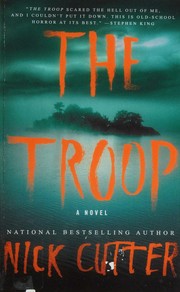
I picked this up expecting the sort of horror that works by suggestion, fog and an unreliable narrator, and I got something much louder: five fourteen-year-old boys, a doctor who doubles as their scoutmaster, and a parasite that eats its host from the inside while making him hungrier the more he feeds. The book is physical in a way that a lot of modern horror is not. People are opened up. Limbs go wrong. The dread comes from arithmetic rather than atmosphere: who is infected, how much food is left, how long before the adults notice. I read it in two sittings and then sat for a while doing not much, which is what I want from this kind of story.
Gallery Books published the American hardcover in New York on 25 February 2014, 358 pages, ISBN 9781476717715, with Headline bringing out the British edition the same day. Page counts vary a little between listings and printings, so the number you find depends on the copy you pick up. It is a standalone novel, no series and no sequel, and the author has not attempted a repeat of the trick. Nick Cutter is the pen name of Craig Davidson, the Canadian writer who also publishes literary fiction such as Rust and Bone and The Saturday Night Ghost Club under his own name and who was shortlisted for the Giller Prize in 2013 for Cataract City. The novel won the inaugural James Herbert Award for Horror Writing in 2015.
The hungry man of Prince County
The novel opens with a document rather than a scene. A tabloid story from the Weird News Network describes the Hungry Man of Prince County, a man who walked into a diner outside the small fishing town of Lower Montague, ate five Hungry Man breakfast platters, ate the napkins, paid for his food and stole the waitress's truck. His stomach has already ruptured and he does not notice, because his attention is on something else entirely.
Next comes a Natural Resources Canada geographical survey report on Falstaff Island, a government nature preserve off the coast with plenty of wildlife and no permanent human residents, plus a shelter used in emergencies and for educational visits. Then a local paper reports that the military has cordoned off North Point Wharf and set up a no-fly, no-watercraft zone. Read together, the three documents put a hook in the reader's stomach before a single boy has spoken.
That structure is the book's real signature, and Cutter says in his acknowledgements that Stephen King's Carrie was the inspiration. Throughout, the island narrative is interrupted by things that look like evidence: newspaper items, a counselling diary kept by one boy's therapist, the sworn testimony of a man called Stonewall Brewer, a laboratory log kept by the scientist at the centre of it all, and finally a long magazine piece published after the events, in GQ, called Legacy of the Modified Hydratid. Because the reader sees the cordon and the military boats long before the boys do, the text is saturated with dramatic irony. Every chapter of the island story happens underneath a warning the characters cannot read.
Troop 52 and a stranger at the door
Dr. Tim Riggs is the only general practitioner in North Point. He is in his forties, unmarried, without children, and he takes the troop to Falstaff Island once a year because the boys need the practice and he enjoys being useful. This is probably the last trip, since the boys are getting too old for it. He brings a radio for emergencies and no phones, on purpose, and the island has one cabin, one shelter and nothing else.
The troop is Troop 52, five boys of about fourteen. Kent is the jock, the biggest, and the son of the police chief, so he pushes at authority out of habit. Ephraim, called Eef, is Max's best friend and fights with himself; his therapist's diary, where homework on his anger turns into something sadder, is one of the book's interstitials. Max is mild and observant, and his father is the local coroner and taxidermist, which turns out to matter. Newt is the overweight, clever outsider the others tease. Shelley is the one nobody worries about and should have worried about, a loner who tortures small animals and likes to touch girls' hair.
On the first night, with the boys in bed and Tim drinking scotch on the porch, Ephraim tells a story about Gurkhas, the child soldiers whose plane supposedly crashed near the island, and Kent spends the hike the next day taking the walkie-talkie off Max, leading them off the route and onto a cliff where they can see boats they have never seen patrolling their home water. Above them, a black military helicopter crosses the sky and turns back to the mainland.
Then Tim hears a boat that nobody is supposed to be arriving. The man who comes up the path is eating dirt. Something moves under his shirt. The tag on his clothes says XL, so Tim knows the man was not always this thin. Tim is a doctor before he is anything else, and a doctor does not turn a sick man away in the dark, so he feeds him, puts him on the couch and locks the boys in the bedroom. The stranger breaks the radio, coughs something wet onto Tim's face and has to be sedated. Tim says he has the munchies when the boys hear him eating in the middle of the night.
The surgery in the cabin
The next morning Tim has lost at least twenty-five pounds in a night and the empty containers are in the rubbish. He sends the boys hiking and stays behind, then asks Max to help him with what he has to do. That is why Max's father's job matters: the boy knows how to cut things open.
They open the stranger's stomach and a white worm comes out of the wound, huge, and it kills the man while Tim is working on him. Tim cuts the worm down. Then Tim does the worst thing in the book, which is drink from the bottle of scotch that has been sitting near the infection, because he is thirsty and frightened and the alcohol is the only thing in the cabin. The boys find Tim ill, find the stranger dead and find the boat the man came in cannot start, since its spark plugs are missing and the man has clearly swallowed them.
Kent, who has been waiting for a chance to take over, locks the infected scoutmaster in a closet and takes a victory sip of the contaminated whisky to prove he is not afraid. He is not the only one who is now infected. The storm comes, the boys sleep outside, and a tree comes down on the cabin wall and kills Tim in the closet with the worms still in him. The adult who could have got them off the island is dead in the first third of the book, and the monster has become the least of the problems.
Shelley and the radio
What follows is the part reviewers keep coming back to, because the worst thing on the island is not a worm. Shelley has always enjoyed hurting animals and he is now in the position to try it on people. Using the radio, he talks Ephraim into believing that the worms are already inside him, and Ephraim, who has spent his life being told that his anger is his father's fault and his father's fault is that he is in prison, believes it. He starts cutting himself open with his knife, hunting for something slippery under his skin, and he is still bleeding when the others find him.
Shelley meanwhile takes the disfigured Kent into the ocean and drowns him, and the boy's body answers by emptying thousands of tiny worms into the water, which is how Shelley gets infected. He keeps going anyway. He burns Ephraim alive. He takes the spark plugs that Max and Newt have dug out of the stranger's stomach and hides in a cave, and when the two of them come for them the three of them fight and Shelley's stomach bursts and the worms come out of him.
Max and Newt get the plugs back, fill the tank with petrol from a spare can in the cellar and take the boat off the island. Along the way they kill a turtle on the beach and then bury it instead of eating it, which is one of the most disturbing things in the novel and also one of the saddest. The boys talk on the way in, and what they say is about childhood, and about whether being a child is any protection at all.
What the documents say
The inserts assemble into a case. Dr. Clive Edgerton is a brilliant, amoral scientist working on a modified hydatid, a tapeworm rewritten so that it eats its host fast while the host keeps consuming food and stays alive. The stated idea was a diet pill, with a second pill to get rid of the worms afterwards. Tom Padgett was one of his human subjects, a large man who was handed an envelope of cash and did not understand what he had signed up for. Edgerton took military grants and the project turned into something with a battlefield use, and the island was being watched.
Stonewall Brewer sits on a board that approved Edgerton's grant and claims never to have heard of the man. The interviewer finds a locksmith called Claude Lafleur, stationed at the same naval base, who was given administrative leave the day before Padgett escaped and whose fingerprints were later found on the back door of Edgerton's lab. The conclusion the interviewer presses is ugly: the military released a contagious man toward a populated island and let five boys serve as the trial. A separate testimony explains why Newt was shot: the officers on the cordon were given a list of trigger words, and hunger was one of them.
Max alone
Newt says he is hungry on the shore, and he is shot in the head. Max is pointed at with a gun, then spared, then kept. Months later a journalist from the magazine that ran Legacy of the Modified Hydratid visits him in a clinic. Max is fifteen, behind glass, wearing paper clothes that are burned after a single use, and the investigators suspect he was kept alive because he was worth studying.
The interview is the quietest, saddest part of the book. Max remembers Tim as a special adult who treated the scouts like adults rather than children. Ephraim always stood up for him. Kent was like Superman, and Max is still surprised that he did not swim three miles home. Newt was the strongest and cleverest and would have made the best father. Max is not sorry that Shelley is gone, and he notices himself not being sorry, and that is what he chooses to say about it.
The last page turns that mood over. Max cannot go back to school. People keep their distance. And he takes a boat out at night and rows back to Falstaff Island, which the military has cleared and left desolate, carrying an unnamed hunger inside him that the clinic never found. It is possible to read the ending as a relapse, as trauma, as a child who was returned to the only place where he felt like he belonged. It is also possible to read it as the worms having already won. The book does not settle it.
What works and what does not
The documentary structure is the book's best idea, and it earns its keep. The reader gets the outside world's version of events in pieces while the boys live inside the version that is happening to them, and the collision of the two is where the real suspense lives. The island plot itself is expertly built. Cutter is very good on scarcity: food disappears, the radio dies, the boat will not start, the adults are not coming, and every solution creates a new problem.
The gore is extreme and unsparing. Bodies are opened, animals die, and one boy's own knife does work that no child should watch. The prose is competent and mostly straight, and the scariest writing is the early material with the stranger at the door, when nothing has happened yet and the reader can see the shape of what is coming. The weak point is the cast. Niall Alexander in Tor.com found the boys broadly characterised and said he found himself markedly more interested in Tim, and he called the book a coming-of-age tale that depends on disgust where it might have reached for dread. Publishers Weekly made a related complaint, that Cutter's appeal to the military-industrial complex will strike many as pro forma rather than built on real outrage. Both criticisms are fair. Shelley is the one villain who feels like a person, and the difference in the writing between him and the others is obvious.
The ending is grim in a way that some readers will not want. Nobody is redeemed, the island is not a place where anyone grows up, and the last page is not hopeful in any way that a spoiler-free description could hide. The novel won the inaugural James Herbert Award, and Stephen King put his name behind it early:
"The Troop scared the hell out of me, and I couldn't put it down. This is old-school horror at its best. Not for the faint-hearted, but for the rest of us sick puppies, it's a perfect gift for a winter night." Stephen King
If you want the honest version of what that prize buys you, it is a gripping, frequently vile book about what happens when an adult institution decides that some children are an acceptable cost. Readers who come to King through Lord of the Flies, The Body and Dreamcatcher, and anyone who likes 28 Days Later will have a good time. Readers who are squeamish about body horror, and readers who want their horror with a moral at the end, will not.
It is still the book I recommend when someone asks me for horror that trusts the reader. The documents, the arithmetic of an island with no food on it, and that final image of a boy going back to the worst place he has ever been: the prose is plain, the fear is specific, and the thing underneath the worms is a question about what adults are allowed to spend.
FAQ
Who is Nick Cutter?
Nick Cutter is the pen name of Craig Davidson, the Canadian writer of Rust and Bone and The Saturday Night Ghost Club. The Troop is the horror novel he published under the pseudonym in 2014.
Is The Troop part of a series?
No. It is a standalone novel with no sequel or prequel. Gallery Books published the US hardcover on 25 February 2014, and Headline released the British edition the same day.
How graphic is The Troop?
Very. Reviews describe explicit body horror, animal deaths and self-inflicted injuries, and one reviewer suggested reading it in a well-lit room. Readers who are squeamish about gore should know that before starting.
Similar books

Final Girls
A survivor of a cabin massacre tries to live normally until another Final Girl dies and a second one shows up at her door.
2,176-word summary · 10 min read
Wilder Girls
At a quarantined boarding school off Maine, three girls with strange mutations search for a missing friend and learn what the adults have hidden.
2,594-word summary · 12 min read

Still Missing
A realtor is abducted at a Vancouver Island open house and held for more than a year. Told through therapy sessions, the novel follows her escape and the hunt…
2,466-word summary · 11 min read

Bad Luck and Trouble
A deposit of $1,030 summons Jack Reacher back to his old army unit, which is being picked off one name at a time.
2,366-word summary · 11 min read
The Last House on Needless Street
A lonely man, a cat and a mysterious neighbor pull you into a house full of buried trauma.
2,627-word summary · 12 min read
The Chalk Man
Childhood chalk codes lead to a murder that follows friends thirty years later.
2,350-word summary · 10 min read
Relic
A museum beast kills during an exhibition while an agent investigates.
2,066-word summary · 9 min read
Gone Tomorrow
Reacher stops a suicide bomber on the subway, then hunts her handlers.
2,308-word summary · 10 min read
Full Dark, No Stars
Four novellas about revenge where ordinary people do terrible things and live with it.
2,646-word summary · 12 min read
Rose Madder
After fourteen years of abuse, Rosie Daniels flees her cop husband and finds a painting that opens into a dangerous mythic world.
2,349-word summary · 10 min read
We Were Never Here
Best friends Emily and Kristen hide a backpacker death in Chile, then face another in Vietnam with trust cracking.
2,076-word summary · 9 min read
Skeleton Crew
King's 1985 collection pairs The Mist with The Jaunt, The Raft, and Survivor Type: 22 stories of Maine dread.
3,209-word summary · 14 min read
Before the Fall
A private jet falls off Martha's Vineyard. A painter and a small boy survive, then face grief and the news cycle.
2,185-word summary · 10 min read
The Enemy
In January 1990, MP major Jack Reacher investigates a dead general, a stolen briefcase, and three murders tied to an Army power struggle.
2,123-word summary · 9 min read
Rosemary's Baby
A young couple's dream apartment in the Bramford turns dark when helpful neighbors and a trusted doctor take over Rosemary's pregnancy.
2,665-word summary · 12 min read
Reckless Girls
Six young travelers chase paradise on remote Meroe Island, where old lies, smashed radios and hidden cash turn sun and sand deadly.
2,703-word summary · 12 min read
Nowhere Burning
Siblings flee to a burnt ranch commune in the Rockies where old fires still smolder.
2,232-word summary · 10 min read
The Sun Down Motel
In 1982 Viv vanishes from a Fell motel desk; in 2017 niece Carly takes the same shift to find her.
2,150-word summary · 10 min read
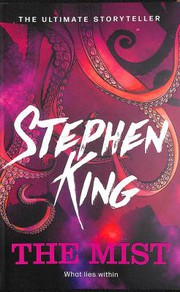
The Mist
Mist full of creatures traps a Maine supermarket while Mrs. Carmody builds a congregation inside.
2,104-word summary · 9 min read
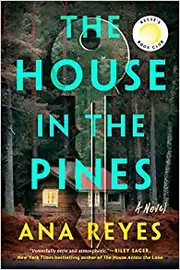
The House in the Pines
Maya's best friend died at seventeen; seven years later a video of Frank with another dead girl pulls her home.
2,081-word summary · 9 min read

The Final Girl Support Group
Aging final girls reunite when someone hunts them in order.
2,052-word summary · 9 min read
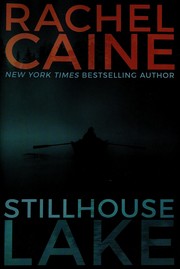
Stillhouse Lake
Acquitted wife of a serial killer becomes armed Gwen Proctor, but trolls and followers find her lake refuge.
2,086-word summary · 9 min read
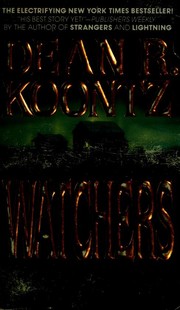
Watchers
A lonely veteran and a shy woman shelter a genius dog while a lab-made killer hunts them.
2,823-word summary · 13 min read
The Girl Who Loved Tom Gordon
Nine-year-old Trisha McFarland strays off the Appalachian Trail and spends days lost in Maine woods with a Walkman and Tom Gordon on her mind.
2,957-word summary · 13 min read

Gerald's Game
Handcuffed to a bed after her husband dies, Jessie Burlingame faces thirst, a stray dog, and buried memories over 28 hours.
2,940-word summary · 13 min read
The Long Walk
One hundred boys walk until one remains, watched by soldiers and the Major, in Bachman's 1979 contest story.
3,056-word summary · 14 min read
Bird Box
A mother and two small children risk a blindfolded river trip after sight itself turns deadly.
3,229-word summary · 14 min read
Lock Every Door
Broke Jules apartment sits at the Bartholomew where another sitter vanished.
2,224-word summary · 10 min read

Under the Dome
Chester's Mill is sealed under an invisible dome as cook Barbie and editor Julia face Big Jim Rennie's rule.
2,731-word summary · 12 min read