
Reading options
What's inside (8 sections)
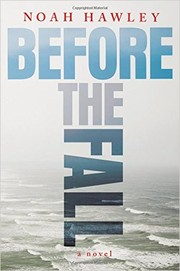
I came to Before the Fall because I knew Noah Hawley from Fargo and wanted to see what he does on the page when he cannot cut away to a snowfield. Noah Hawley published it in 2016 with Grand Central Publishing in the United States. My reading follows the 391 page first hardcover edition. It won the Edgar Award for Best Novel in 2017. It is a standalone about a private plane that goes down off the coast near Martha's Vineyard, the two people who live through it, and the storm of blame and grief that follows.
The hook is clean. On a foggy summer night a small private jet leaves the Vineyard for New York and falls into the sea minutes after takeoff. The only survivors are Scott Burroughs, a middle aged painter hitching a ride, and JJ Bateman, a four year old boy. Everyone else aboard dies, including the boy's parents and sister and the crew and a pair of family friends. Hawley then does what he does best. He rewinds. He follows each passenger through the days before the flight. He follows the investigators, the relatives, the cable news hosts, and the painter as he swims, heals, and tries to understand why he lived.
If you like character driven suspense with social bite, this will suit you. If you want a straight crash procedural or a courtroom finish, know that Hawley cares more about people and pressure than about dials and checklists.
The night the plane goes down
The opening chapters are short and wet. Scott is in the water, holding a child, kicking toward lights that may or may not be shore. Hawley writes swimming the way some writers write fights, in breaths. A wave, a mouthful of salt, a count, a rest on the back while holding the boy clear. The boy is silent with shock. Scott talks to keep them both awake. He picks a star and swims at it. He thinks about his own father. He thinks about paint.
They reach land on the Connecticut or Rhode Island side after hours in the water, scraped, cold, half gone. A farmer or a couple finds them. Blankets. A phone call. An ambulance. From there the book splits into two tracks that run to the end. What happened in the air, and what happens on land once the cameras arrive.
I found these water pages convincing because Hawley keeps them physical and limited. Scott cannot see far. He cannot hear rescue. He can only hold, kick, and count. The boy's weight keeps changing as sleep and cold take him. When they crawl onto beach grass, relief lands harder for being plain. No speech. Just shaking and a borrowed coat.
A note on content. The crash and its aftermath include death, drowning, injury, grief, and heavy media pressure on a small child. Hawley does not linger on broken bodies, but loss is everywhere. If plane scenes rattle you, the first forty pages are the hardest part. It gets calmer, then sadder in a different way.
Scott Burroughs, the man who lived
Scott is the kind of hero television rarely allows. Fiftyish, divorced, decent, not rich, not famous, living off old promise as a painter. His best work was years ago. He drinks more than he should. He takes the seat on the Bateman plane as a favor, a lift back to the city after a summer visit. He has no money story, no revenge story, no secret that explains why fate picked him.
Hawley gives Scott a full past without turning him into a case study. A mother who left. A father who stayed and drank. Art school. Early shows. A marriage that thinned. A sister who worries. Mornings in a small studio, scraping paint, trying to see honestly. Swimming, it turns out, is something he knows from childhood summers, the kind of dumb luck skill that saves lives once in a million tries.
After the rescue Scott becomes two people at once. To investigators he is a witness. To cable news he is a character. Cameras want him to be either saint or suspect. He looks rough. He speaks slowly. He will not cry on cue. When he says he does not remember much from the last minute in the air, some hosts hear guilt. When he takes the boy's hand at the hospital, some viewers see grace and others see performance.
What I liked is how Scott handles it. He does not give big speeches. He goes back to work when he can. He checks on JJ. He answers honest questions and walks away from traps. He drinks when the pressure spikes and then stops when he sees where that road leads. Hawley lets him be awkward on camera, which feels true. A man who paints for a living is not trained to spar with hosts who talk for one.
There is a love thread with the boy's aunt, who becomes JJ's guardian, and Hawley writes it with care. No rush. Two tired adults, both wrung by loss, circling trust. She needs to know Scott is safe for JJ. He needs to prove it by showing up, not by saying so. Those scenes are quiet and among my favorites.
The Batemans and the Kiplings
Hawley structures much of the book as portraits. Each chapter takes a passenger and walks back through recent days, so by the time the plane lifts you know the weight aboard.
David Bateman is a money man who built and ran a cable news network with a sharp partisan edge. He is rich, controlled, used to winning, married to Maggie, father to a young daughter and to JJ. At home he is warmer than his public image, though work follows him to the Vineyard table. Phone calls at dinner. A live segment he cannot skip. Hawley shows a man who believes he protects his family by building walls of wealth and influence, then finds those walls mean nothing in fog at eight thousand feet.
Maggie Bateman gets some of the book's tenderest pages. She loves her kids with tired ferocity. She manages the house, the staff, the school calls, the small wars of family life. She worries about David's hours and about what his channel puts into living rooms. On the Vineyard she swims, reads, mothers, and tries to bank summer calm for winter. You dread the flight because you like her.
Ben Kipling and his wife Sarah are the other couple aboard. Ben is David's associate in finance, louder, flashier, under strain from deals and debts that Hawley peels back layer by layer. Sarah is cool, watchful, unhappy in ways she hides at parties. Their marriage has a crack that money widens. Hawley does not paint them as villains. He paints them as tired people who made trades and now hear the bill coming due.
The crew get portraits too, the pilots and the flight attendant, working people with schedules, training, families, small irritations on the day. Hawley respects that labor. A delayed takeoff. A weather brief. A choice about routing around fog. Nothing flashy. That ordinariness is the point. Most flights are routine until one is not.
My advice is to read these portraits slowly. Names blur if you rush. Keep a finger on who is married to whom and who works for whom. The payoff is real. When the plane is in the air again in your mind, you feel the full load, not just a count.
The noise machine
The second half of the book is almost a novel about news itself. Once Scott and JJ survive, the question everyone asks is why the plane fell. Investigators from the safety board do careful work with radar, wreckage, maintenance logs, and interviews. They move at the speed of fact, which is slow. Cable news moves at the speed of fear, which is instant.
Hawley knows this world from the inside. He gives us a network host modeled on the shout and sneer style David Bateman's own channel helped spread. That host needs a story that bleeds, so he builds one around Scott. Why was a nobody painter on a billionaire's jet. Why did he survive. What is he hiding. Old photos surface. An ex is coaxed on air. A bar story becomes a segment. Each denial becomes a chyron.
At the same time the families grieve in private while lawyers and relatives argue about JJ's future. The aunt steps in. Trusts are read. Reporters knock. A driver learns to take back roads. Hawley writes grief without polish. A child's empty room. A phone that keeps ringing for a dead man. A sister who cannot decide whether to hate the survivor for living.
Bill Cunningham, the lead federal investigator in the book, is a welcome counterweight. He is methodical, tired, allergic to cameras. He tells his team to follow metal and weather, not ratings. Scenes where divers bring up seats and panels, where engineers lay wreckage on a hangar floor like a cruel puzzle, carry quiet force. No single clue shouts. The picture forms dot by dot.
If there is a thesis here, it is that disaster has two crashes. The first is physical. The second is social, when fear and money rush into the gap where facts have not yet arrived. Hawley, who made Fargo about decent people under pressure from violent myth, makes this about decent people under pressure from profitable myth. I thought of real crashes I watched on TV as a kid, the early wrong guesses presented as banners, and felt chastened.
Backstories as suspense
Readers sometimes ask if the middle sags. It can, if you want only the crash. Hawley spends long chapters on lives that end in the water, and some readers will skim. I would ask you not to. The portraits are the engine.
Take the Kipling money trouble. Hawley lays it out through lunches, calls, and a security chief's warnings, so you understand why some hosts later scream conspiracy. Take David's network politics, with anchors and producers fighting over tone, so you see why his death becomes a political football. Take Scott's painting life, with a gallery owner and old canvases, so his swim means more than luck. Each thread plants a motive that later gets misread on air.
Hawley also uses time well. He cuts from a birthday party a week before to the hangar now, from a marriage fight to a radar replay. The cuts are not tricks. They ask a steady question. What do we actually know about anyone. Lovers misread lovers. Bosses misread staff. Viewers misread survivors. The investigator's discipline is to wait. The host's skill is to fill silence first.
The prose helps. Hawley writes clean, image rich sentences without showing off. Water, light, paint, food, rooms. He likes lists of small true things, the contents of a fridge, the tools on a bench, to ground a life fast. Dialogue sounds like people, not positions. When he wants awe, he earns it with a single held image, fog closing over a runway, a boy asleep with a bandaged hand.
A fair criticism. A few late reveals lean on coincidence and on one character's hidden actions that careful readers may find thin. Hawley wants human cause, not grand plot, and that choice is right for the theme, but the final chain of why has a link or two that feel found rather than forged. I accepted it because the theme held. We want one reason. Real falls have several.
Who should read it and how to take it
Read this if you like literary suspense with heart, books like Defending Jacob or The Dinner that mix family and public judgment, or shows like The Night Of that study how process bends under cameras. Do not read it for a tech manual on flight. The cockpit detail is enough to follow, not enough to satisfy a pilot.
Practical notes. My cited edition is the Grand Central Publishing hardcover from 2016 at 391 pages with ISBN 9781455561780. It reads fast for its size because chapters are short and many end on a small turn. Give it three sittings. Vineyard and portraits first. Crash and rescue second. Investigation and aftermath third. Keep a bookmark for the passenger list until you know who is who.
What stays with me is not a twist but a stance. Hawley asks us to sit with not knowing a little longer. To let divers dive. To let a boy sleep. To let a painter paint. To resist the host who tells us to be certain by the next break. In a culture that rewards the fastest verdict, that patience feels almost brave.
I closed the book thinking about Scott in his studio after, trying to paint water he survived. He cannot get it right and keeps trying. That image holds the whole novel for me. Some things we live through stay unpaintable. We still owe them attention. Hawley pays it, and asks us to pay it too, past the noise, toward the people.
FAQ
When was Before the Fall published?
Grand Central Publishing published it in 2016. The first hardcover runs 391 pages with ISBN 9781455561780, and it won the 2017 Edgar for Best Novel.
Who survives the crash in Before the Fall?
Scott Burroughs, a middle aged painter, survives with four year old JJ Bateman after hours in the water.
Is Before the Fall part of a series?
No. It is a standalone novel about one crash, its passengers, the investigation, and cable news pressure.
Similar books

Six Years
A professor who promised to forget the woman he loved sees her husband's obituary and discovers that the wedding, the marriage, and the woman herself may never…
2,076-word summary · 9 min read

Still Missing
A realtor is abducted at a Vancouver Island open house and held for more than a year. Told through therapy sessions, the novel follows her escape and the hunt…
2,466-word summary · 11 min read
When No One Is Watching
Sydney Green watches her Brooklyn block's Black residents vanish one by one in Cole's Edgar-winning thriller about gentrification as a crime scene.
2,165-word summary · 10 min read

The Woods
Twenty years after two teenagers were murdered and two vanished at summer camp, prosecutor Paul Copeland identifies a fresh corpse as one of the missing.
2,490-word summary · 11 min read
Stillhouse Lake
Acquitted wife of a serial killer becomes armed Gwen Proctor, but trolls and followers find her lake refuge.
2,086-word summary · 9 min read
Tell No One
Harlan Coben's Tell No One fully retold: Beck, his wife's murder eight years back, a tell no one email, and a run from police. A 2001 Delacorte standalone with…
3,579-word summary · 16 min read

Final Girls
A survivor of a cabin massacre tries to live normally until another Final Girl dies and a second one shows up at her door.
2,176-word summary · 10 min read
Inferno
Dan Brown's Inferno retold: Robert Langdon wakes in Florence with lost memory, follows Dante's clues with Sienna Brooks from Palazzo Vecchio to Venice and…
2,395-word summary · 11 min read
The Da Vinci Code
Dan Brown's The Da Vinci Code retold: a Louvre murder, Sophie Neveu, the Grail cryptex, and the chase to Rosslyn.
2,590-word summary · 12 min read

Angels & Demons
Dan Brown's Angels & Demons explained: a murdered physicist, the Illuminati, four missing cardinals, and Robert Langdon racing through Rome to stop an…
2,548-word summary · 11 min read

What She Knew
Rachel lets her eight-year-old son run ahead in a Bristol park, and the nine-day search turns her into a suspect in the public eye.
2,952-word summary · 13 min read

The Beach House
A young valet is beaten to death at a Hamptons party, and his law-student brother spends a year building a case against the family that covered it up.
2,049-word summary · 9 min read

Rules of Prey
Minneapolis detective Lucas Davenport hunts a killer who leaves a new rule at every scene and treats murder as a game of wits.
1,914-word summary · 9 min read

4th of July
Lindsay Boxer shoots two armed teenagers in self-defense, faces a wrongful-death trial, and spends her leave chasing a string of throat-slashing murders in…
2,192-word summary · 10 min read

The Camel Club
Four Washington misfits witness a murder on Roosevelt Island and stumble into a conspiracy that reaches the Oval Office, with a hostage president and a nuclear…
2,354-word summary · 10 min read

Sleeping Giants
A girl falls into a field and lands in a giant metal hand. Years later a secret team assembles the rest of the machine, and it chooses its own pilots.
2,466-word summary · 11 min read

61 Hours
A bus crash strands Jack Reacher in a snowbound South Dakota town where a drug gang, a corrupt police force, and a single witness are on a collision course.
2,227-word summary · 10 min read
The Rooster Bar
Three law students buried in debt discover their for-profit law school is a scam, and decide the only way out is to con their way into practicing law before…
2,837-word summary · 13 min read
The Troop
A Boy Scout troop on a Canadian island takes in a stranger who cannot stop eating, and the worm inside him turns a camping trip into a war.
2,457-word summary · 11 min read

Bad Luck and Trouble
A deposit of $1,030 summons Jack Reacher back to his old army unit, which is being picked off one name at a time.
2,366-word summary · 11 min read

3rd Degree
The third Women's Murder Club novel follows a San Francisco terror cell and a three-day killing schedule, and it costs the club a member.
2,685-word summary · 12 min read

Worth Dying For
Reacher stops for one night in rural Nebraska and finds a family that runs the county, a missing girl and a shipment worth killing for.
2,021-word summary · 9 min read
Tinker, Tailor, Soldier, Spy
Retired spymaster George Smiley is brought back to find a Soviet mole inside British intelligence, and the trail leads through old friends, old betrayals, and…
2,092-word summary · 9 min read

The Best of Friends
Three lifelong friends discover their teenage sons were hiding more than anyone knew after a night that leaves one dead, one in a coma and one silent.
2,040-word summary · 9 min read

Say You're Sorry
A widowed prosecutor defends the teenager accused of killing her babysitter, uncovering a small town's secrets and a killer hiding in plain sight.
2,116-word summary · 9 min read

Echo Burning
Reacher hitches a ride with a Texas woman who wants her abusive husband killed, then has to prove she did not murder him when he comes home.
2,209-word summary · 10 min read
The Survivors
Kieran Elliott returns to Evelyn Bay twelve years after a storm killed his brother, and a young woman's murder forces the town to face what it has concealed.
2,571-word summary · 11 min read

The End of Her
A sleep-deprived mother of twins faces a stranger's accusation that her husband murdered his first wife in Shari Lapena's domestic suspense novel.
2,383-word summary · 11 min read

Girl, Forgotten
A rookie US marshal guards a judge with a stalker and ends up reopening the 1982 prom-night murder of the judge's pregnant daughter.
2,111-word summary · 9 min read

The Boy from the Woods
Wilde, found feral in a New Jersey forest in 1986, hunts for a missing teenager while a senator's secrets tear a wealthy town apart.
2,270-word summary · 10 min read